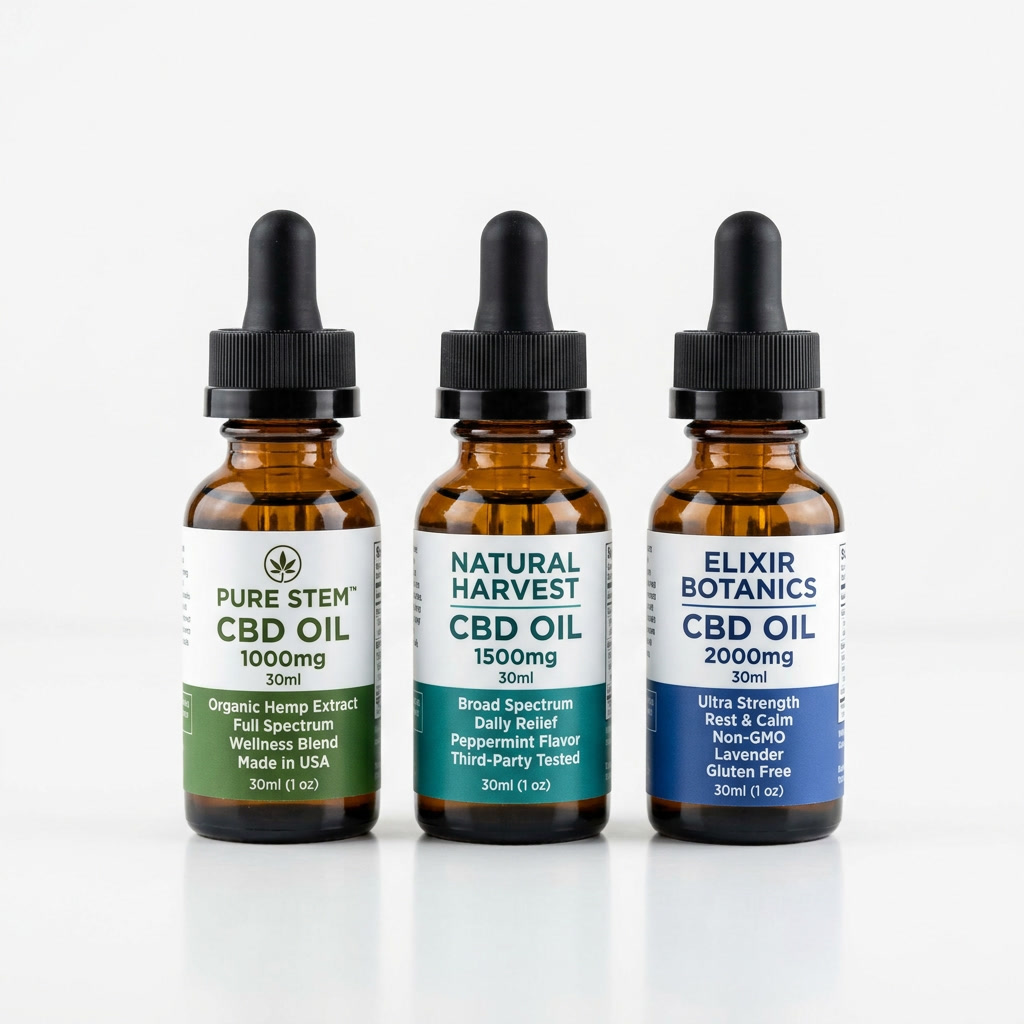
CBD for Osteoarthritis: What the 2023-2026 Research Says About Joint Degeneration, Pain, and What Actually Helps

You feel it first on the stairs. A dull ache behind the kneecap that used to show up after long walks now arrives before you've left the driveway. You mention it to a friend, and they say what a dozen people have said: "Have you tried CBD?"
It's a fair question, and a frustrating one. Osteoarthritis is not "arthritis" in the vague, catch-all sense. It is a specific joint disease defined by cartilage breakdown and structural degeneration. Search "CBD for osteoarthritis" and you'll find a wall of confident product pages promising relief. Almost none will tell you that the best 2026 evidence — a systematic review and meta-analysis — found the opposite of what those pages imply.
This article walks through what the 2023-2026 research shows: the mechanisms that make cannabinoids biologically interesting for joint disease, the human trials that have now been run, why the results disappointed, and how to think practically about topicals, capsules, and oils.
Osteoarthritis Is a Joint Disease, Not Generic Arthritis
Words matter here, because the research does. Osteoarthritis (OA) is a degenerative joint disease. The cartilage that cushions the ends of your bones gradually wears down, and the joint's whole environment — synovial fluid, synovium, subchondral bone — changes with it. It most commonly affects the knees, hips, hands, and spine.
That is a different disease from rheumatoid arthritis, an autoimmune condition in which the immune system attacks the synovium. It is also different from gout, which is driven by uric acid crystals. This distinction determines which studies are relevant to you.
Standard care relies on exercise, weight management, physical therapy, NSAIDs, and eventually joint replacement. NSAIDs work, but they carry gastrointestinal, cardiovascular, and kidney risks that make long-term use unattractive — which is precisely why patients go looking for alternatives.
For readers who want the broader picture of how cannabinoids interact with inflammation, our guide to CBD and inflammation covers the underlying biology in more depth.
The Evidence Structure: Two Very Different Bodies of Research
Here is the most important framing idea in this article, and it comes from the best 2026 evidence available.
The 2026 systematic review and meta-analysis published in Pain Research & Management pooled 26 studies — 20 preclinical and 6 clinical — on cannabis extracts for osteoarthritis. Its authors split the evidence into two streams, and the streams point in opposite directions.
> "Preclinical evidence provides preliminary, low-certainty support for the anti-inflammatory, analgesic, and chondroprotective properties of cannabinoid-based therapies in OA. Current clinical evidence remains insufficient to establish efficacy for pain or function."
In animals and cells, cannabinoids do genuinely interesting things to osteoarthritic joints. In humans, when researchers ran controlled trials, the benefits did not show up. Both halves of that sentence are true. Anyone who quotes only the first half is selling you something. Anyone who quotes only the second half is ignoring a real scientific signal. Hold both.
What the Preclinical Work Actually Found
The preclinical half of that meta-analysis is more detailed than most summaries admit. Across the 20 animal and laboratory studies, researchers measured three categories of outcome:
- Structural changes (cartilage condition) in 8 studies
- Proinflammatory modulation in 9 studies
- Pain (hyperalgesia, allodynia) in 13 studies
The findings described chondroprotective effects (protecting cartilage), chondrogenerative effects (supporting cartilage formation), anti-inflammatory effects, and analgesic effects. In animal models, treated subjects showed reduced hyperalgesia and less mechanical and thermal allodynia — the clinical terms for heightened pain sensitivity and pain from stimuli that shouldn't hurt.
Notably, the preclinical pool included domestic dogs with spontaneous osteoarthritis — a meaningful step closer to real-world joint disease than a chemically induced rat knee.
A Dog Trial Worth Reading Closely
One canine study stands on its own. A 2024 double-blind randomized controlled trial in The Veterinary Journal tested cannabidiol plus krill oil in 30 dogs with chronic stifle (knee) osteoarthritis.
The results were encouraging — but read the fine print:
- The CBD plus krill oil group showed significantly improved pain scores
- Improvements appeared after two weeks
- That group outperformed both placebo and krill oil alone
- However, the difference between the CBD group and the krill oil group did not reach statistical significance
Part of the benefit may have come from the krill oil, part from the CBD, and the trial could not cleanly separate them. This is a recurring theme: cannabinoid research often bundles CBD with other ingredients, then struggles to attribute the effect.
For pet owners, we cover the veterinary evidence separately in our look at CBD for cats.
The Human Trials: Where the Promise Met Reality
This is the section the product pages leave out.
The meta-analysis identified 6 clinical studies examining pain, quality of life, and function in people with osteoarthritis. Of those, 4 were randomized controlled trials — and here is the finding, stated plainly:
> "Four randomized controlled trials found no significant benefits in pain relief, QoL, or functional improvement with cannabis extracts."
Four out of four controlled human trials found no significant benefit. Adverse effects were generally mild, but tolerability is not efficacy.
The CANOA Trial: A Well-Designed Study That Didn't Win
The clearest single piece of human evidence is the CANOA trial — "cannabis for osteoarthritis" — published in *2025 in Frontiers in Pharmacology***. It deserves attention because the design was reasonable.
The trial randomized patients with knee osteoarthritis to either placebo or a CBD-rich full-spectrum Cannabis sativa oil for 60 days. The cannabis group received a daily oral CBD dose of 45 mg. The primary outcome was pain intensity measured by the WOMAC index, with secondary outcomes covering mood, sleep quality, and quality of life.
The result:
- Both the placebo and cannabis groups improved in pain scores
- There was no statistically significant difference in pain intensity between groups
- Secondary outcomes (mood, sleep, quality of life) also showed no significant differences
- The CBD-rich oil was well tolerated, with no serious adverse events and no clinically significant changes in serum biomarkers
This is a genuinely informative trial. It shows that CBD-rich cannabis oil at 45 mg daily is safe in OA patients over two months — a useful finding. It also shows that, at that dose, in that formulation, it did not beat placebo. The authors concluded that further trials should explore alternative dosages and formulations, including THC and other cannabinoids.
A Real-World Study That Suggests Something More Complicated
Not every human dataset is a null result. A 2026 real-world evidence study in Clinical Therapeutics found a more nuanced picture.
It recruited California adults with fibromyalgia, rheumatoid arthritis, and osteoarthritis of the knee and/or hip — 75 in the OA group — randomly assigned to one of three oral capsule formulations for 12 weeks:
- Product 1: 12.5 mg CBD + 12.5 mg THC (intoxicating)
- Product 2: 10 mg THCA + 10 mg CBDA + 5 mg CBG + 3 mg CBC (non-intoxicating)
- Product 3: 10 mg CBD + 10 mg CBDA (non-intoxicating)
Per-protocol analyses found significant improvements across symptoms — effects from small to large — and most effects did not differ in magnitude across product type or pain condition.
The caveat is real: only 168 of 276 participants (60.9%) completed all questionnaires, and the analysis was per-protocol rather than intention-to-treat. That limits how much weight these results can carry. But the direction is notable — non-intoxicating cannabinoids like CBD and CBDA were associated with symptom relief, exactly the signal the placebo-controlled trials failed to confirm.
A *2026 scoping review in Clinical Rheumatology*** tried to reconcile this mixed picture:
> "Initial clinical studies using different CBD formulations and dosages suggest potential benefits for relieving OA symptoms, with topical CBD showing the most encouraging results and an acceptable safety profile. Nonetheless, the overall strength of the evidence is constrained by considerable variability in CBD dosing and product types."
That review's conclusion is blunt: cannabinoids have a strong biological basis as a potential adjunct for osteoarthritis pain, but the current evidence does not justify routine clinical use.
The Mechanism Question: Why Cannabinoids Are Biologically Interesting
So why does anyone study this at all, if human trials keep coming up empty? Because the biology is plausible — and the 2023-2026 research has gotten specific about it.
The CB2 Receptor and Synovial Pain
A *2025 study in Cureus*** examined synovial tissue and fluid from patients with knee osteoarthritis undergoing total knee replacement. Researchers grouped patients by pain level and looked at cannabinoid receptor type 2 (CB2R), the vanilloid receptor TRPV1, and endocannabinoid levels.
The finding was directly relevant:
- Higher reported pain and more severe synovitis were linked to significantly lower synovial CB2R and higher TRPV1 expression
- Higher synovial fluid 2-AG (an endocannabinoid) was found in the high-pain group
- The pattern suggested a dysregulated TRPV1/CB2R balance in painful OA joints
Translated: painful osteoarthritic joints appear to have less of the receptor system that cannabinoids act on. That is a plausible mechanism for why raising cannabinoid levels might help — and a potential explanation for why oral CBD at modest doses may not reach high enough concentrations in a joint to matter.
The Synovium as a Treatment Target
A *2024 review in the International Journal of Molecular Sciences*** argued that cannabinoid signalling in the inflamed synovium can itself be a target for treating rheumatic diseases. The synovial membrane is where much of the inflammatory action in a painful joint happens, and it is studded with receptors the body's own endocannabinoid system talks to.
The mechanistic literature is not fringe. What it is, at this stage, is incomplete. Demonstrating that a receptor is expressed in a joint and correlates with pain is not the same as demonstrating that a supplement changes the outcome.
CBD vs NSAIDs for Osteoarthritis Pain
This comparison deserves an honest answer rather than a marketing one.
NSAIDs win on evidence. That is simply true, and no honest CBD article should pretend otherwise. But NSAIDs are not problem-free: long-term use carries meaningful gastrointestinal, cardiovascular, and kidney risk, which is why patients search for alternatives.
> The practical framing: CBD's case rests on tolerability and mechanism, not proven superiority. The CANOA trial confirmed that 45 mg of CBD-rich oil daily was well tolerated — a genuine advantage if it had also done something. It didn't beat placebo.
If NSAID risks are your concern, we go deeper in our CBD vs ibuprofen breakdown.
Topical vs Capsule vs Oil: What to Look For
If you've read this far and still want to explore cannabinoids for OA, the formulation question matters most. Notably, the 2026 Clinical Rheumatology scoping review singled out topical CBD as showing the most encouraging results among the delivery formats it examined.
Topical CBD (Creams, Balms, Salves)
Topical products are applied directly to the painful joint. They offer limited systemic absorption, meaning fewer drug-interaction concerns and targeted delivery to the knee, hip, or hand.
- Best for: Localized knee, hip, or hand pain
- Advantages: Low systemic exposure, easy to trial
- Limitations: Must be reapplied; evidence base is still thin
- Look for: Third-party lab testing and clear mg-per-dose labelling
Browse these in our CBD topicals and creams category; for format differences, our balm vs cream vs salve guide is the practical starting point.
Oral Capsules
Capsules deliver consistent dosing, which makes them useful for tracking. The strongest human OA trial tested oral delivery — and found no benefit over placebo at 45 mg daily.
- Best for: Convenience, consistent dosing, systemic effect
- Advantages: Precise mg amounts, portable
- Limitations: Slow onset; the best OA oral trial was null
- Look for: Explicit mg-per-capsule potency and independent lab verification
See our CBD capsules and softgels range.
Oils and Tinctures
Oils and tinctures are placed under the tongue or swallowed, offering flexible dosing and the most common route for systemic use.
- Best for: Flexible dosing and systemic anti-inflammatory support
- Advantages: Adjustable to the mg, wide potency range
- Limitations: Variable absorption; must be tracked carefully
- Look for: Full- or broad-spectrum labelling and current COAs
Browse CBD oils and tinctures, and if dosing is your sticking point, our dosage by weight guide breaks it down.
Safety, Dosing, and the Interaction Question
The safety profile in the OA trials has been reassuringly boring: adverse effects were generally mild, and the CANOA trial reported no serious adverse events and no clinically significant biomarker changes over 60 days.
But "well tolerated" is not "no risk," and osteoarthritis patients are often on several medications at once — NSAIDs, antihypertensives, anticoagulants, cholesterol and diabetes drugs. CBD is metabolized by CYP enzymes that overlap with many of these.
If you take prescription medication, read our guide to CBD and drug interactions and bring it to your prescriber rather than making the call alone.
Realistic Dosing Expectations
- The studied dose: 45 mg CBD daily in the CANOA trial — well tolerated, no benefit over placebo
- Common starting point: 10-20 mg daily for oils, adjusted gradually
- Topicals: Applied directly, no systemic dose protocol established
- Adjustment: Increase slowly, but don't assume more will succeed where 45 mg failed
Action Steps If You Want to Try CBD for Osteoarthritis
If you decide to explore this, here is a responsible sequence.
1. Get a proper diagnosis from a clinician — confirm it's osteoarthritis and understand your joint status.
2. Review your full medication list with a pharmacist or prescriber before adding any cannabinoid, especially anticoagulants and NSAIDs.
3. Do not reduce or stop prescribed OA treatment to try CBD. Exercise, weight management, and physical therapy have outcome data CBD does not.
4. Start with a topical if your pain is localized to one joint — the format the 2026 review found most encouraging, with the lowest systemic exposure.
5. If you try an oral product, start at 10-20 mg daily and track dose, timing, and pain scores for 3-4 weeks.
6. Keep a written log. Without data, you cannot tell a real effect from the placebo response — which the CANOA trial showed is substantial in OA.
7. Set an honest review point. If nothing changes in 4-6 weeks, stop — do not keep escalating on hope.
Frequently Asked Questions About CBD and Osteoarthritis
Does CBD help osteoarthritis pain?
The best 2026 evidence says we don't know, and the controlled trials lean negative. The 2026 meta-analysis in Pain Research & Management examined 26 studies and found that four randomized controlled trials showed no significant benefits in pain, quality of life, or function. Preclinical models are more encouraging, but animal joints and human joints are not the same thing.
Is CBD better than NSAIDs for osteoarthritis?
No. NSAIDs have decades of controlled evidence for OA pain; CBD has four null RCTs. CBD's argument is tolerability and a plausible mechanism, not proven superiority. That said, long-term NSAID use carries real gastrointestinal, cardiovascular, and kidney risks, which is why alternatives are worth researching — just not worth overstating.
What did the CANOA trial find?
The 2025 CANOA trial in Frontiers in Pharmacology randomized knee OA patients to a CBD-rich full-spectrum cannabis oil at 45 mg CBD daily or placebo for 60 days. Both groups improved, but there was no statistically significant difference between them in pain or any secondary outcome.
Is topical CBD better than oral CBD for osteoarthritis?
The 2026 scoping review in Clinical Rheumatology found topical CBD showed the most encouraging results of the formats it examined. Topicals also expose the rest of your body to far less of the compound, which reduces interaction concerns. The trade-off is a thinner evidence base.
How much CBD should I take for knee or hip osteoarthritis?
There is no established OA dose. The best-studied human dose — 45 mg daily — was well tolerated but ineffective versus placebo. Common practice for oils starts at 10-20 mg daily, adjusted slowly. Treat any trial as an experiment with a defined review point.
Can CBD rebuild cartilage?
No. Nothing in the 2023-2026 human literature shows that any cannabinoid reverses cartilage loss in people. The chondroprotective findings come from preclinical models and are described by their own reviewers as low-certainty.
Is CBD safe to take with my osteoarthritis medication?
It depends on what you take. CBD is metabolized by liver enzymes that overlap with many common prescriptions, and OA patients frequently take NSAIDs, blood pressure medications, and anticoagulants. A pharmacist or prescriber who knows your list is the only safe source of an answer.
The Bottom Line
Osteoarthritis is a specific degenerative joint disease, and the 2023-2026 research on cannabinoids for it produces a clear, two-part verdict.
In the laboratory and in animal models — including dogs with spontaneous OA — cannabis extracts show genuine chondroprotective, anti-inflammatory, and analgesic signals. The receptor biology is real: painful OA joints show reduced CB2 receptor expression and elevated TRPV1, giving researchers a plausible target.
In humans, the picture collapses. Four randomized controlled trials found no significant benefit for pain, function, or quality of life, and the best-designed trial — CANOA, at 45 mg CBD daily — matched placebo exactly. Safety has been consistently reassuring, but tolerability without efficacy is not a reason to buy.
So where does that leave you? CBD is not a treatment for osteoarthritis, and it is not a reason to stop the interventions that actually work: exercise, weight management, physical therapy, and prescribed medication. If you want to experiment, do it as an experiment — start with a topical for a single joint, track your pain honestly, involve your clinician, and set a deadline for deciding whether it's doing anything.
The next few years may deliver the well-designed trials this field keeps calling for. Until then, treat the confident product pages with the skepticism their evidence has earned.
Find Your Perfect CBD Product
Take our 2-minute quiz to get personalized recommendations based on your needs.
Take the Quiz →Disclaimer: This article is for informational purposes only and does not constitute medical advice. CBD products are not FDA-approved to treat, cure, or prevent any disease. Always consult with a qualified healthcare professional before starting any new supplement, especially if you have a medical condition or take medications.