CBD for Cats: What the 2023–2026 Research Really Shows About Feline Dosing, Safety, and Relief
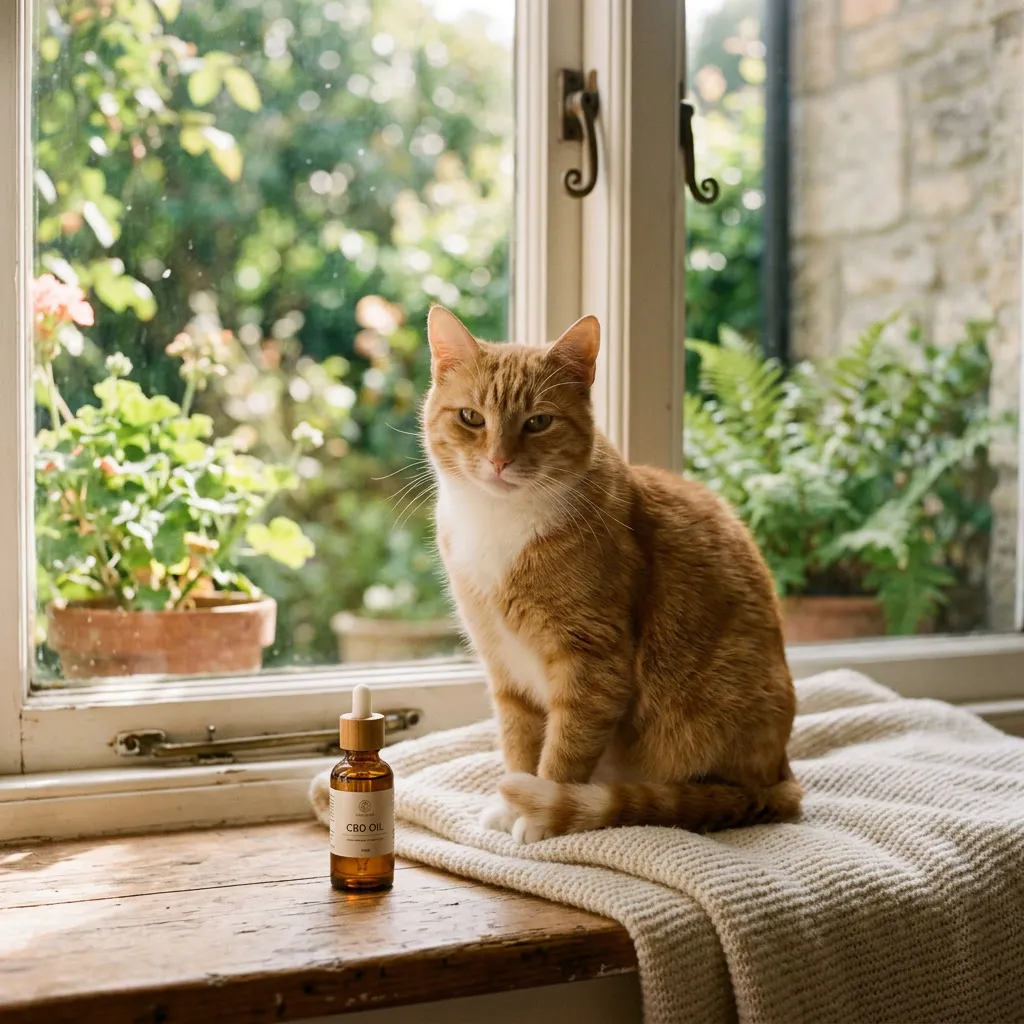
It starts the same way every time. The carrier comes out, and Biscuit disappears under the couch. By the time you get him to the vet, he's panting, pupils wide, a ball of pure terror. Later that same week you catch him flinching when he jumps off the kitchen counter, favoring a hip you never noticed before. And somewhere between the two, a friend swears CBD fixed her cat's anxiety and arthritis overnight.
If that sounds familiar, you're not alone — and neither is your skepticism. CBD for cats is everywhere, but the marketing usually runs far ahead of the evidence. Here's the honest version: the 2023–2026 research is genuinely promising, genuinely early, and a lot more honest about its limits than the pet-food aisle is. This guide walks you through what the science really shows about feline dosing, safety, and relief — and what it doesn't.
Why Cats Are Different From Dogs
The first thing every cat owner needs to understand is that a cat is not a small dog. Biologically, the two process CBD — and a whole class of compounds around it — very differently.
The most important difference is metabolic. Cats are famously poor at glucuronidation, the liver pathway many species use to break down and clear drugs and plant compounds. Veterinary pharmacologists have long flagged that cats lack key liver enzymes that dogs, humans, and other animals rely on — which is why a compound safe for a Labrador can be dangerous for a tabby, and why so many owners reach for a "dog formula" and end up with a problem cat.
It also matters for something specific to cats: terpene sensitivity. Terpenes are the aromatic compounds that give hemp and cannabis their smell — think limonene (citrus) or linalool (lavender). Cats process these poorly, and veterinary sources warn that some terpenes can be toxic or irritating to cats in concentrations harmless to dogs or humans. A heavily "full-spectrum" product packed with terpenes and botanicals is not automatically good for a cat — for a species that handles these compounds poorly, a cleaner, more minimal formulation is often safer.
This is also why, before any benefit question, the safety conversation has to come first for cats specifically.
How CBD Works in a Cat's Body
The reassuring part of the science is that cats — like dogs and humans — have their own endocannabinoid system (ECS), a network of receptors and signaling molecules that helps regulate pain, mood, appetite, stress, and sleep. A 2025 review in the Journal of Feline Medicine and Surgery, by veterinary specialists including researchers at Cornell, laid out the basics: cannabinoids interact with this system, and CBD does so gently, modulating rather than binding directly and causing intoxication the way THC does.
So the premise is sound — cats aren't being fed something their bodies have no mechanism for. But the review is blunt about the gap: clinical utility of CBD is "gradually emerging" in dogs, while the evidence in cats "remains limited." It also flagged newer work showing "dramatic differences in bioavailability" between formulations — not all CBD products deliver the same levels into a cat's bloodstream, even at identical doses.
That last point matters more than almost anything else. Bioavailability is the gap between what the label says is in the bottle and what actually reaches your cat's system. We'll come back to it when we talk about products.
The Big Red Line: Zero THC
Here is the non-negotiable for cats, stated as plainly as possible:
Never give a cat a product with THC.
THC is the psychoactive compound in cannabis, and while it's the part that gets people high, it's the part that can genuinely poison a cat. Cats are acutely sensitive to THC's negative effects, and accidental exposure is a documented veterinary emergency — vomiting, drooling, wobbliness, tremors, and in severe cases seizures. There is no meaningful medical reason to expose a cat to THC, and a real risk of harm.
So you're not looking for "low THC" or "a little THC." You're looking for zero THC, verified by a lab test — ideally a broad-spectrum or CBD isolate product third-party tested to confirm the absence of psychoactive compounds. If a brand can't show a Certificate of Analysis proving no THC, it's not a cat product.
What the 2023–2026 Research Actually Shows
Before diving into specific uses, it helps to get a baseline of what the recent literature actually covers. When you search the medical literature for CBD and cats, a few things jump out. The published 2023–2026 feline research clusters around four areas: chronic pain and osteoarthritis, anxiety and stress, sedation and handling, and owner/veterinarian use patterns. There is almost no randomized, placebo-controlled trial in cats for any condition — the field is still young. What exists are small studies, a couple of crossover trials, and survey data on how real people are using these products.
One thing the surveys confirm is that cats are genuinely being used. A 2026 survey of French pet owners in the Veterinary Journal found CBD use was notable — 13% of cat owners reported giving CBD, compared to 29% of dog owners, with pain and behavioral issues the top reasons. A 2026 survey of Portuguese small-animal veterinarians in the Journal of Animal Physiology and Animal Nutrition found that of practitioners using CBD supplements, 59% used them frequently in cats, and most reported being satisfied for managing chronic pain and behavioral stress.
That's real-world usage and a genuine signal — but it's self-reported, not proof of efficacy. What the controlled studies add is where it gets interesting.
Osteoarthritis and Chronic Pain: The Strongest Evidence
If there's one place the feline CBD research gets closest to "this looks real," it's chronic pain — specifically osteoarthritis.
A 2025 randomized, double-blinded, placebo-controlled crossover study in the Journal of Feline Medicine and Surgery tested a CBD/cannabidiol acid (CBD-AR-CBDA)-rich hemp paste in cats with osteoarthritis. The design was rigorous — the gold standard for veterinary pain research:
> "CBD/CBDA paste significantly reduced TRiP and DORFOP scores after 6 weeks of administration, with changes in DORFOP starting after 2 weeks."
Both of those are validated scoring tools for feline musculoskeletal pain — the TRiP (Translational Research in Pain) index and the DORFOP (Dutch Orthopaedic Rating). On blinded scoring, the CBD group showed measurable pain reduction, and no differences in clinical biochemistry appeared between CBD and placebo at week six — a reassuring safety signal.
But the study also delivered a critical honesty gut check. Of the 26 cats enrolled, 12 dropped out — primarily because they refused to eat the paste, and in some cases because of vomiting. Only 14 cats completed the study. The authors concluded the paste "effectively reduced pain in cats, but the high drop-out rate is concerning" and called for "further research with larger sample sizes and longer treatment durations."
That single study captures the whole tension of feline CBD: a real signal of benefit wrapped in a big practical problem — cats often won't take it. We'll return to that in the dosing and delivery section.
Anxiety and Stress: A Mixed, Honest Picture
If pain is the strongest story, anxiety is the most complicated — and the most likely to be oversold. A 2024 study in Frontiers in Veterinary Science tested whether a single dose of THC-free CBD reduced stress in cats being transported in a carrier and meeting a stranger in an unfamiliar room. The setup successfully triggered a stress response — cortisol rose significantly. But the CBD had no significant effect on stress measures, behavior, or latency to approach the novel person. That's an honest, important negative finding: CBD is not a universal calm button, and a single dose before a scary event isn't reliably enough.
A 2025 study in the Veterinary Sciences took a different approach, comparing a single dose of CBD against gabapentin and synthetic facial pheromones for cat fear. The authors reported that all three appeared to alter cats' physiological responses to a fear-inducing scenario compared to a control, suggesting CBD had a pharmacological effect. But it was a smaller study, and the measures were indirect.
The picture across these is genuinely mixed. Some cats may get real calming benefit, especially with regular use; others may not respond at all, especially to an occasional dose. If anxiety is the goal, expect uncertainty, not a guarantee.
Sedation, Handling, and Everyday Comfort
A less-traveled area of the feline research, but with real practical relevance, is how CBD affects sedation and handling — useful for the vet-visit cat and the cat who resists handling.
A 2025 study in the journal Animals gave healthy cats a higher dose of CBD oil (8 mg/kg) by capsule and measured sedation, compliance, and behavior. The result:
> "CBD induces mild sedation and reduces handling resistance in healthy cats without affecting nociceptive thresholds or physiological stability."
In plain terms, the cats got a little drowsy and fussing during restraint noticeably dropped, while heart rate, breathing, and body temperature stayed stable — and, importantly, they didn't lose normal pain sensing. A companion 2025 study in the same journal found CBD oil reduced the isoflurane anesthesia needed by about 11% in healthy cats, without significant physiological disturbance.
That's a concrete, mechanistic benefit veterinary practice could build on — the kind of use where a predictable, quality product matters most.
Dosing by Weight: What's Actually Supported
Now the question every owner actually has: how much do I give?
Be honest about the evidence first. There is no single FDA-approved or universally standardized dose for CBD in cats. What we have is the dosing used in the actual feline studies, plus clinical recommendations from the researchers who ran them — and those vary.
Here's a rough picture from the 2023–2026 feline studies:
- 1–2 mg/kg twice daily — the low-to-mid range, used in several behavioral and pain studies
- 2–4 mg/kg twice daily — the most commonly tested range for anxiety, sedation, and chronic pain
- Up to 8 mg/kg — tested in the sedation/handling studies, generally as a single dose
The consistent theme is weight-based dosing, split into two daily doses, starting low then going slow. A cat is measured in kilograms, not "drops," and a 3 kg cat needs a very different amount than a 7 kg cat. A responsible default is to start around 1–2 mg/kg twice daily, observe for a week or two, and adjust only with your vet's input.
The popular claim that there's a universal "0.1–0.5 mg/kg" rule is more common in marketing than in the peer-reviewed feline literature — the studies above used higher amounts. The honest takeaway: expect more in the 1–4 mg/kg range, but start low and confirm dosing with a veterinarian who knows your specific cat and product. Never eyeball drops.
Oil vs. Treats: How to Give It
The drop-out rate from the osteoarthritis trial — cats refusing to eat paste — tells you everything about the real challenge of giving CBD to a cat. Efficacy matters, but if the cat won't take it, it doesn't matter at all.
Oil/tincture is generally the most practical form. A dropper lets you dose precisely by body weight (the mg/kg math works best with a dropper), and you can mix it into wet food, a lickable treat, or a bit of salmon — cats tolerate the flavor of a well-made oil far better than a paste. The downside: oral CBD has variable bioavailability, which the 2025 feline review flagged as a key reason products differ.
Treats are easier but worse for dosing. A treat has a fixed amount of CBD, so you can't fine-tune by the exact mg/kg the way you can with a dropper. Treats also sit more poorly with picky cats, and some contain extra ingredients (flavors, sugars, botanicals) you may not want. If you do use treats, treat them as a convenient, rough-dose option rather than the precision tool.
The shared rule with either form: make sure it's designed for cats, be consistent, give it at the same times daily, and track both dose and response.
What to Look for in a Product
Given that the science depends so much on the product, choosing well is half the battle. Here's a clean checklist for a cat-specific product:
- Zero THC, verified. The most important line on the certificate. A cat product must be broad-spectrum or isolate, and the lab test must show no THC. No exceptions.
- Third-party COA. An independent lab test that confirms the CBD content matches the label and that the product is free of THC and contaminants. Our full guide to reading a COA walks through what to check line by line.
- Clean formulation, cat-friendly. Avoid products loaded with terpenes, essential oils, or flavors that cats are known to process poorly. For cats, simpler is often safer.
- Clear mg per dose. You need to know how many milligrams of CBD are in a dropper or treat so you can dose by weight. If a label says only "hemp extract" with no number, pass.
- Pet-specific, not human. Human products can contain xylitol, chocolate, or other cat-toxic ingredients. A true pet product avoids those.
For cats specifically, you're better off leaning toward a broad-spectrum or isolate formulation with no THC and minimal botanicals, rather than a heavily terpene-forward "full-spectrum" blend that suits dogs better — a direct consequence of the metabolic differences we covered at the top.
The Honest Limits of the Research
Let me state the most important context plainly: the feline CBD evidence base is still small, and most of it is extrapolated. A large share of what's marketed for cats leans on canine studies and even rat data, projected to cats by analogy — not on cats themselves. The 2025 Journal of Feline Medicine and Surgery review made exactly this point: the pharmacokinetics look favorable, but the number of actual clinical studies in feline pain and anxiety states is "a handful." There is no large, multi-center, placebo-controlled trial proving CBD treats a feline condition, and no vet body has approved it for cats.
That doesn't make the current evidence worthless — a randomized controlled trial showing pain reduction in osteoarthritic cats is real, meaningful progress. But it means a responsible approach is: consider CBD as a complementary tool, not a replacement for veterinary care, and never base it on the "CBD cures everything for cats" content that fills the internet.
Action Steps
If you're weighing CBD for your cat, work through these steps in order:
1. Talk to your veterinarian first — especially if your cat is on other medications or has liver, kidney, or cardiac disease. CBD interacts with some drugs.
2. Confirm the goal. Pick one thing — arthritis pain, anxiety, ease at the vet — and track whether it actually changes.
3. Rule out the danger. Use only a pet-specific product verified by a COA to contain zero THC. No exceptions for cats.
4. Start low and go slow. Begin around 1–2 mg/kg twice daily, observe for two weeks, and adjust only with your vet's guidance.
5. Use a dropper, not just treats. Precision dosing by weight works best with an oil and syringe or dropper, mixed into food.
6. Keep a simple log of dose, time, and changes in comfort, behavior, appetite, or energy. Side effects (drowsiness, low energy, stomach upset) are a signal to stop and reassess.
7. Reassess honestly. If there's no improvement after a fair trial, the product may not be helping — stop and talk to your vet rather than increasing blindly.
If you decide to try CBD for your cat, start with the product that meets the standards above — a cat-safe, THC-free option with published lab results. You can browse our reviewed CBD for pets selection to compare potencies and transparency in one place, and our broader guide to CBD for pets covers the dog-and-cat picture in more detail.
Bottom Line
The 2023–2026 research on CBD for cats is genuinely more sophisticated than it was a few years ago, and it's honest about what it does and doesn't know. The strongest signal is in osteoarthritis pain, where a randomized placebo-controlled trial found real, measurable relief in cats — alongside a troubling drop-out rate because cats refuse to eat it. The anxiety evidence is more mixed: some studies show a calming effect, others find single doses don't help. Across all of it, three rules stand above everything else: never give a cat THC, choose a zero-THC, third-party-tested product with minimal terpenes, and dose by weight starting low and slow. The feline evidence base is still thin and largely extrapolated from dogs and rats, so treat CBD as a complementary tool under veterinary guidance, not as a cure. Done that way, it's a reasonable thing to consider for a cat in pain — done the way the internet suggests, it can be risky.
For larger animals, see our new deep dive on CBD for horses.
Find Your Perfect CBD Product
Take our 2-minute quiz to get personalized recommendations based on your needs.
Take the Quiz →Disclaimer: This article is for informational purposes only and does not constitute medical advice. CBD products are not FDA-approved to treat, cure, or prevent any disease. Always consult with a qualified healthcare professional before starting any new supplement, especially if you have a medical condition or take medications.