CBD Dosage by Weight: A Practical 2026 Guide to Finding Your Sweet Spot
You just bought your first bottle of CBD oil. You twist off the dropper, read the label, and immediately hit a wall: "Full-spectrum hemp extract, 500mg." Five hundred milligrams of what? Is that a dose, or the whole bottle? How many drops do you put under your tongue if you weigh 68kg and you're mostly chasing sleep, not pain? Then you search online, and every site tells you something different. Sound familiar?
You're not alone. This confusion is one of the biggest reasons people try CBD once and give up. The truth is that dosing CBD is less mysterious than the marketing makes it seem. There's a sensible, science-backed starting framework, built around two things you actually know: your body weight and your goal. This guide walks you through it step by step, with a practical weight-based table, real research from 2023 to 2026, and a simple system to find your sweet spot.
Why Weight Matters for CBD Dosing
Here's the key idea: CBD doesn't dose like a fixed number that works for everyone. It doses like a medicine, meaning it scales with body size. Researchers express this in milligrams per kilogram of body weight (mg/kg), and it's the standard way clinical trials report their numbers.
A 2026 clinical trial in children and adolescents with autism spectrum disorder, published in the Journal of Child and Adolescent Psychopharmacology, tested CBD at exactly 3, 6, and 9 mg/kg per day using a Bayesian dosing design. The highest response rate (62%) came at the top dose of 9 mg/kg/day. Translating that to a 70kg adult is roughly 210mg daily — far above what most retail products recommend, and a reminder that "one size fits all" isn't the scientific reality (PMID: 42204954).
Similarly, a *2026 randomized trial in The International Journal of Eating Disorders*** up-titrated participants from 1.25 mg/kg twice daily up to a maximum of 6.25 mg/kg twice daily (PMID: 41906184). Both studies anchored their doses to body weight rather than a flat number.
The Problem With One-Size-Fits-All Labels
Walk into any shop and you'll see bottles marketed as "10mg per serving" or "25mg per gummy," often with no weight context at all. That's a feature of the retail market, not a flaw you need to accept.
A *2026 review in the British Journal of Clinical Pharmacology* noted that non-prescription CBD dose recommendations typically range from about 10 to 70 mg per day (PMID: 42473010). That's a seven-fold spread. The same review made a striking point: at these lower doses, there is "very little evidence of any biological effect or therapeutic value" in healthy volunteers, and blood levels can be 5- to 100-fold lower** than what you'd see from a pharmaceutical-grade 20 mg/kg dose (PMID: 42473010).
What does that tell you? Two things. First, the low doses common on store shelves may genuinely under-deliver for many people. Second, and just as important, the range of "what works" is wide — which is exactly why a personalized, weight-aware approach beats picking a random number off a label.
How to Convert "mg/kg" to a Real Dose
The math is simple, and you only have to do it once.
Dose (mg) = your body weight (kg) × mg/kg target
So if you weigh 80kg and want to aim for a 1 mg/kg dose, that's 80mg. If you weigh 55kg and want the same relative dose, that's just 55mg. The heavier you are, the more CBD you'll typically need to reach the same blood level — which is precisely why two people can take the same 25mg gummy and get completely different results.
One more piece of the puzzle: CBD's absorption is famously variable. A 2026 EFSA safety statement (the European Food Safety Authority, the body that regulates CBD as a novel food) confirmed that CBD's bioavailability is inconsistent, influenced by the delivery matrix and whether you take it with food (PMID: 41668771). In practical terms, that means the same oral dose can behave differently from person to person — another reason to start low, observe, and adjust.
The Weight-Based Dosage Table
Here's your practical starting framework. Use your weight and your primary goal to find a sensible starting dose. These are general guidance ranges (not medical prescriptions), and they align with how clinical research scales CBD by body weight.
Read the table this way: the column is your goal, the row is your weight, and the number is a starting point to test — not a ceiling or a guarantee. Pain and sleep generally need more, wellness needs least, and anxiety sits in between.
> "The highest response (62%) was observed at 9 mg/kg/day." — Lawson et al., Journal of Child and Adolescent Psychopharmacology, 2026 (PMID: 42204954)
That quote is from a pediatric trial, so don't treat 9 mg/kg as your goal — but it illustrates the principle that higher per-kg doses often drive stronger responses, and that dosing is fundamentally weight-dependent.
General Wellness: The "Low and Slow" Baseline
If you're using CBD for everyday balance, stress relief, or a general sense of calm, you're in the lowest part of the range. Think of this as the baseline dose — enough to notice whether CBD agrees with you, without overcommitting. Not sure how to read that signal? See how to tell if your CBD is actually working.
A reasonable approach for wellness is roughly 0.2 to 0.5 mg/kg per day. For a 70kg person, that's about 15 to 35mg daily, split across one or two servings. Many people find a CBD oil or tincture easiest to fine-tune here, because the dropper lets you adjust in small, precise increments rather than being locked into a fixed gummy size.
Keep a simple log for two weeks: dose, time of day, and how you feel. If you're not noticing anything after consistent use, that's the signal to move up.
Mild Anxiety: Finding a Calmer Baseline
For occasional anxious moments or a steady sense of "wired but tired," the research points to the middle of the range — roughly 0.5 to 1 mg/kg per day. For most adults that lands between 20 and 60mg, often split into morning and evening servings.
The good news is that CBD appears generally well tolerated even in higher ranges. In a 2026 randomized placebo-controlled trial in Cannabis and Cannabinoid Research, adults took 1 mg/kg of full-spectrum CBD twice daily for 12 weeks with no clinically meaningful changes in liver or kidney function (PMID: 41934259). The bad news is that effects on anxiety are highly individual, so your sweet spot may sit at either end of that range.
If you prefer a measured, portioned option, CBD capsules and softgels or CBD gummies and edibles take the guesswork out of counting drops. Just remember: with edibles, effects come on more slowly and last longer, so give them time before adding more.
Pain Support: Higher Doses, Real-World Results
Pain is where CBD research gets most interesting, and where dosing tends to climb.
A *2025 study in Pain Management*** followed people with chronic non-cancer pain who were taking opioid medications and added medicinal cannabis oil to their regimen. Doses were titrated upward from a starting point of 2.5mg/day, and by 12 months the median maintenance dose contained 15mg of CBD (alongside 15mg THC). Among those who tolerated the treatment, opioid consumption dropped significantly, from a median of 40mg/day down to 2.7mg/day, with improvements in disability and sleep as well (PMID: 40788193).
For pain, a practical target is roughly 1 to 2 mg/kg per day, or about 70 to 140mg for a 70kg adult. That's a meaningful step up from wellness doses, and it often works best split into two or three servings so blood levels stay steadier throughout the day.
If the discomfort is localized — a sore shoulder, an achy knee — pair your oral routine with a CBD topical or cream applied directly to the area. And be patient: pain responds to consistency over days and weeks, not a single heroic dose.
Sleep Support: The Evening Routine
CBD for sleep is one of the most popular uses, but the research is genuinely mixed — and that's worth knowing before you over-invest.
The *2026 British Journal of Clinical Pharmacology review* found that in sleep-disorder studies, low-dose CBD improved a "small selection of endpoints" (for example, a 160mg dose lengthened sleep duration in one study), but the results weren't consistent across trials (PMID: 42473010). In other words, CBD may help some people sleep better, but it's not a universal sleeping pill.
For sleep, a practical approach is roughly 1 to 2 mg/kg about 30 to 60 minutes before bed, starting on the lower end of that range. For a 70kg adult, that's around 70 to 140mg. A CBD for sleep product, or a CBD for anxiety formula if racing thoughts are your bedtime enemy, can help you build the routine.
One practical tip: if a high bedtime dose leaves you groggy the next morning, you've likely overshot. Back down 10 to 20mg and see if the sleep benefit holds with a cleaner wake-up.
Titration: The Art of Finding Your Sweet Spot
The single most reliable piece of dosing advice — echoed across virtually every recent review — is to start low and go slow, then increase until you find your minimum effective dose. This process, called titration, is how the clinical trials themselves work.
In the 2026 eating-disorder trial, doses were "up-titrated weekly" from 1.25 mg/kg twice daily up to a maximum of 6.25 mg/kg twice daily (PMID: 41906184). Titration isn't a hack; it's the standard method.
Here's a simple system you can follow:
1. Start at the low end of your weight-goal row in the table above
2. Hold that dose for 5 to 7 days to let your body adjust
3. Track your response daily (mood, pain, sleep, any side effects)
4. If you feel nothing, increase by 5 to 10mg every few days
5. Stop once you hit your desired effect — that's your minimum effective dose
6. If you feel side effects, drop back down and hold
> "CBD demonstrated the expected pharmacokinetics with limited and nonserious adverse events." — Sahota et al., The International Journal of Eating Disorders, 2026 (PMID: 41906184)
That's the pattern you're aiming for: a dose that produces the benefit you want with minimal or no side effects.
The Two Things Nobody Tells You: Genetics and Drug Interactions
Two recent findings should shape how seriously you take your dose choice.
Your genetics matter more than you'd think. A *2026 study in Clinical and Translational Science*** found that CBD is broken down by enzymes (CYP2C9, CYP2C19, CYP3A5) that vary genetically between people. Participants with certain genotype combinations had significantly different CBD and metabolite exposure, and diarrhea was reported more often in one genotype group (39% vs 7%) (PMID: 41451876). In plain English: two people of the same weight can need different doses, and some are simply more sensitive.
CBD can interact with your medications. In a *2026 FDA-run study in Clinical Pharmacology & Therapeutics***, healthy adults taking CBD at 2.5 mg/kg twice daily alongside the common antidepressant citalopram saw the drug's overall exposure rise by about 43% (PMID: 41622700). Interactions with morphine were more limited, but the point stands: if you take prescription medication, especially anything processed by the liver, talk to your doctor before starting CBD — don't just wing it.
> ⚠️ Important: If you take antidepressants, blood thinners, seizure medications, or anything that warns about liver metabolism, speak with your healthcare provider before adding CBD. The EFSA panel concluded that the safety of CBD "cannot be established" for people on concurrent medications (PMID: 41668771).
Choosing a Product That Makes Dosing Easier
Your product format directly affects how easy it is to dial in your dose.
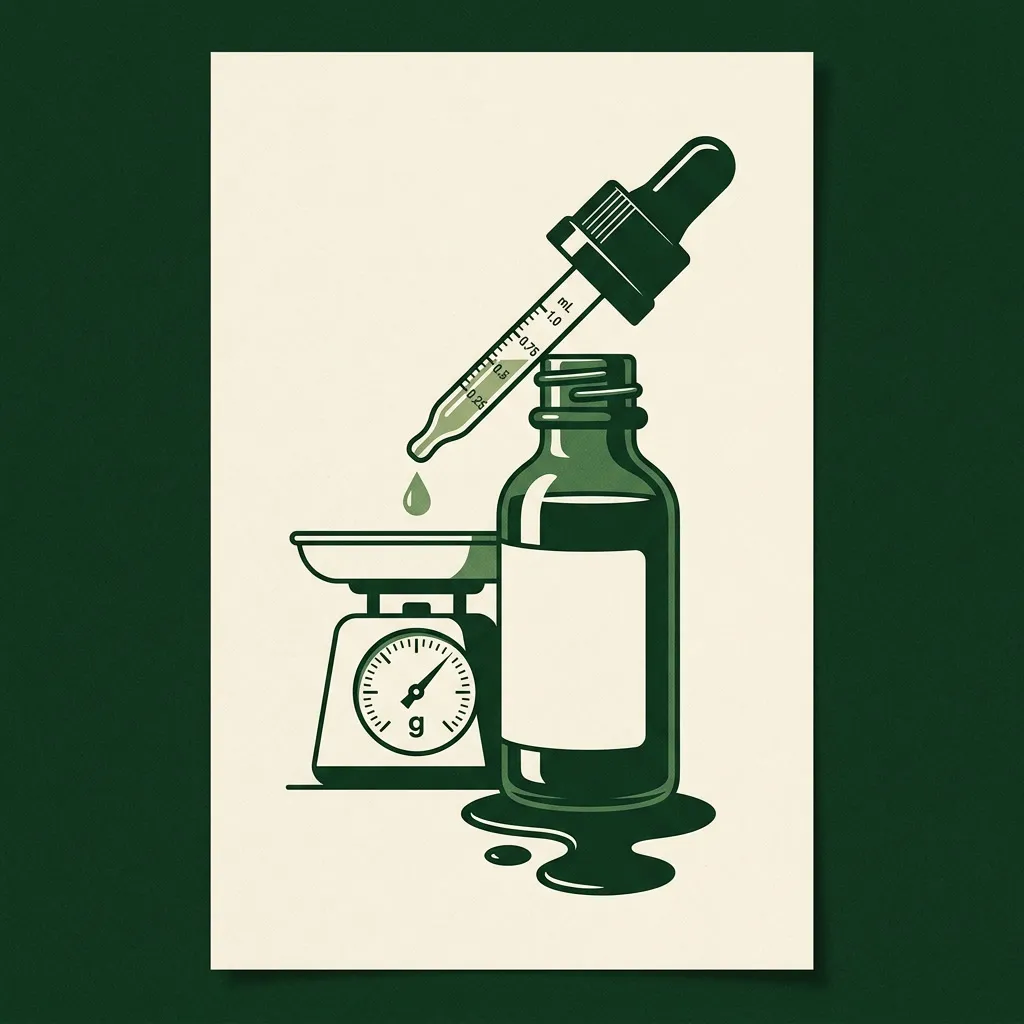
- CBD oils and tinctures give you the most control — you can measure precise drops and adjust in small steps, ideal for titration
- CBD gummies and edibles are convenient and pre-dosed, but you're locked into that fixed amount
- CBD capsules and softgels sit in between: precise and easy, with less flexibility
- CBD topicals and creams are for targeted relief and won't enter your bloodstream the same way
For a first-time user, starting with a CBD oil or tincture is usually the smartest choice, precisely because you can fine-tune the dose as you learn your sweet spot. Once you've figured out your number, a CBD gummy or edible or CBD capsule option can simplify the daily routine.
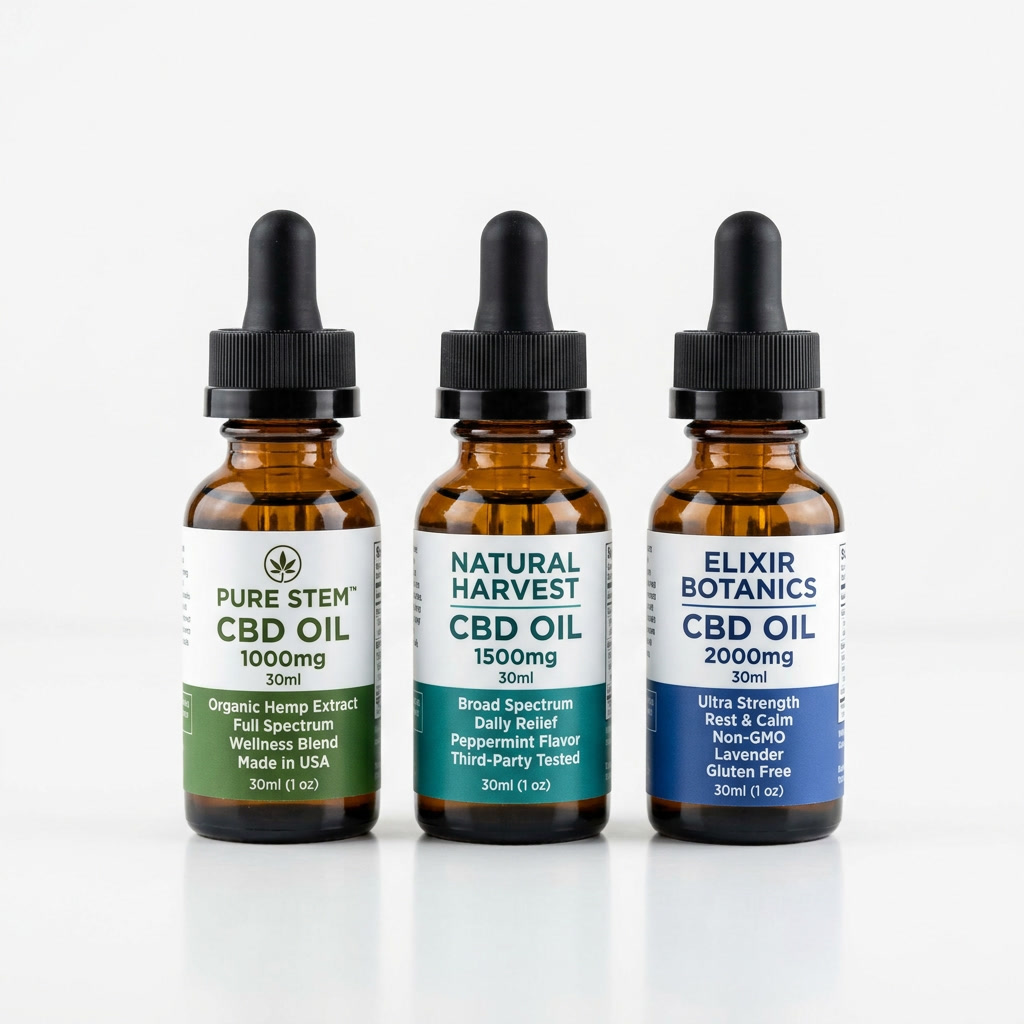
Whichever format you choose, check the label for the CBD per serving (not just per bottle), and look for third-party lab results so the dose you're measuring is real. A bottle claiming "500mg" is only useful if you know how many drops equal 25mg — do that math before your first dose, not after.
How Long Until You Feel It?
Set your expectations, because timing varies wildly by format.
With a sublingual oil held under the tongue, you typically start to feel effects within 15 to 45 minutes. With an edible like a gummy, it can take 45 to 90 minutes (or longer) because the CBD has to pass through digestion, and the 2026 EFSA statement noted that the delivery matrix meaningfully changes absorption (PMID: 41668771).
Because effects are delayed with edibles, the most common beginner mistake is eating a second gummy too soon and overshooting. With edibles, wait at least 90 minutes — ideally two hours — before deciding whether to take more.
The Bottom Line
Finding your CBD sweet spot isn't magic, and it isn't a single number on a bottle. It's a weight-aware, goal-driven process: pick a starting dose from the table, hold it for a week, track how you feel, and titrate up in small steps until you hit your minimum effective dose. The research from 2023 to 2026 consistently confirms two things — CBD is generally well tolerated across a wide range of doses, and individual response varies enormously based on weight, genetics, and the product itself.
Start low, go slow, and let your own results — not the marketing — tell you what works. If you take medication or have a health condition, check with your doctor first. Otherwise, grab a dropper, do the math for your weight, and give your body two honest weeks. That's how you find your number.
Ready to start? Browse the CBD oils and tinctures collection to begin your titration, or jump straight to the CBD for pain, CBD for sleep, or CBD for anxiety pages to match a product to your goal.
Related Reading
Find Your Perfect CBD Product
Take our 2-minute quiz to get personalized recommendations based on your needs.
Take the Quiz →Disclaimer: This article is for informational purposes only and does not constitute medical advice. CBD products are not FDA-approved to treat, cure, or prevent any disease. Always consult with a qualified healthcare professional before starting any new supplement, especially if you have a medical condition or take medications.