CBD and Drug Interactions: What You Can and Can't Mix in 2026
You've been considering CBD for months. Maybe it's for chronic pain that keeps you up at night, or anxiety that makes your chest tight before meetings, or inflammation that won't quit after workouts. You've done some research, read the success stories, and you're ready to try it. Then you pause. You take medication daily — maybe for blood pressure, depression, or seizures. Your friend mentioned something about CBD interacting with prescriptions. Your doctor hasn't brought it up. The internet is full of conflicting advice, from "it's totally safe" to "never mix them." So what's actually true? Can you take CBD with your medications, or are you risking something serious? This guide cuts through the noise with evidence-based information about CBD drug interactions, what the latest 2025-2026 research shows, and practical steps to stay safe while exploring what CBD might offer you.
The CYP450 Problem: Why CBD Messes With Medications
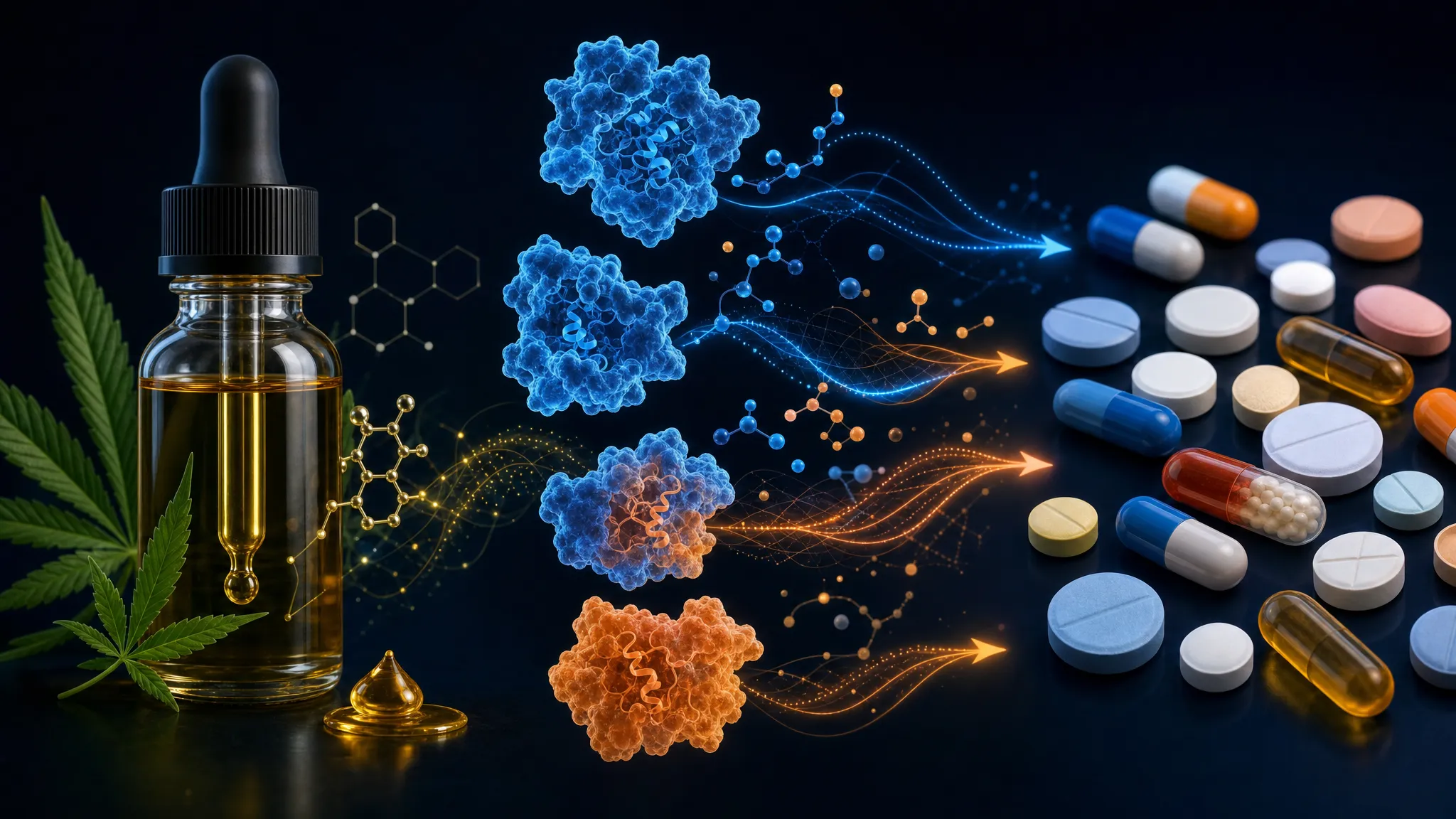
Your liver is essentially your body's chemical processing plant. Inside it live enzymes called cytochrome P450 (CYP450), and they're responsible for breaking down approximately 80% of all therapeutic drugs on the market. Think of these enzymes as tiny workers on an assembly line, each one specialized in processing specific medications.
CBD enters this system and essentially tells those workers to slow down or stop entirely. When CYP450 enzymes get inhibited, medications that normally get processed and cleared from your body start accumulating. This can lead to higher drug levels in your bloodstream than intended — sometimes dangerously high.
A systematic literature review published in January 2026 in the European Journal of Drug Metabolism and Pharmacokinetics examined how CBD and THC influence hepatic CYP450 enzymes. The researchers, led by Dos Santos MC, found that CBD can modulate and inhibit CYP450 function, which potentially affects drug levels across multiple medication classes. This isn't theoretical — it's a well-documented pharmacological effect that has real clinical implications.
The key enzymes affected include:
- CYP3A4 — processes roughly half of all prescription drugs
- CYP2C19 — handles antidepressants, anti-seizure meds, and blood thinners
- CYP2C9 — metabolizes NSAIDs, diabetes medications, and warfarin
When CBD inhibits these enzymes, it's not picky. It affects everything that runs through that pathway, which is why the interaction potential is so broad.
The Grapefruit Connection
If you've ever taken a medication with a warning label that says "avoid grapefruit," you already have a framework for understanding CBD interactions. Both grapefruit and CBD affect the same CYP3A4 enzyme pathway.
Grapefruit contains compounds called furanocoumarins that irreversibly inhibit CYP3A4. CBD doesn't work identically, but it achieves a similar end result: reduced enzyme activity leading to increased drug concentrations. Some clinicians now refer to this as the "grapefruit effect," and CBD absolutely falls into this category.
This matters because millions of people take medications with grapefruit warnings — certain statins for cholesterol, calcium channel blockers for blood pressure, immunosuppressants for autoimmune conditions, and many anxiety medications. If your prescription comes with that grapefruit caution, CBD deserves the same level of scrutiny.
The practical takeaway is simple: if your medication label warns against grapefruit, treat CBD with equivalent caution. That doesn't automatically mean you can't use both, but it does mean you need medical supervision and possibly dose adjustments.
What CBD Does to Liver Enzymes
Beyond enzyme inhibition, CBD can directly affect liver function in ways that matter for medication safety. The liver produces enzymes like ALT and AST (transaminases) that serve as markers of liver health. When these elevate, it signals liver stress or damage.
Research published in Biomolecules in November 2025 reviewed CBD's pharmacological and pharmacokinetic profile specifically in human epilepsy patients. Authors Na JH and Lee YM documented clinically relevant drug-drug interactions, including increased transaminases when CBD was co-administered with valproate, a common anti-seizure medication. This elevation in liver enzymes wasn't universal, but it occurred frequently enough to warrant monitoring.
The mechanism appears to involve both direct hepatotoxicity at high doses and metabolic competition when CBD shares pathways with other medications. For most healthy adults taking moderate CBD doses, liver enzyme changes remain subclinical. But combine CBD with medications that also stress the liver — certain antifungals, tuberculosis treatments, or high-dose acetaminophen — and you're stacking risk factors.
Clinical trials of Epidiolex (the FDA-approved CBD medication for seizures) required regular liver enzyme monitoring precisely because of this concern. While over-the-counter CBD products contain lower doses than pharmaceutical-grade Epidiolex, the principle remains: your liver is processing both substances, and that creates potential for interaction.
High-Risk Combinations: What Not to Mix
Some medication combinations with CBD carry enough risk that you should avoid them entirely unless under direct medical supervision with clear monitoring protocols. These aren't "maybe be careful" situations — these are combinations where adverse events have been documented.
Warfarin and Blood Thinners
Warfarin (Coumadin) has a narrow therapeutic window — too little and you risk clots, too much and you risk bleeding. CBD inhibits CYP2C9, the enzyme that metabolizes warfarin. Multiple case reports document elevated INR (international normalized ratio) values when patients added CBD to their warfarin regimen, sometimes reaching dangerous levels within days.
If you take warfarin, apixaban, rivaroxaban, or any anticoagulant, adding CBD without medical oversight is risky. Your prescriber may recommend more frequent INR checks, dose adjustments, or advise against CBD entirely depending on your individual situation.
Clobazam and Certain Anti-Seizure Medications
The Biomolecules review from 2025 specifically highlighted CYP2C19-mediated elevation of N-desmethylclobazam, an active metabolite of the seizure medication clobazam. When CBD inhibits CYP2C19, this metabolite accumulates, leading to increased sedation, cognitive impairment, and potential toxicity even when clobazam doses remain unchanged.
This interaction is so predictable that it's now part of standard prescribing guidance for clobazam. Patients starting CBD while on clobazam typically need their clobazam dose reduced by 25-50% to maintain safe levels.
Valproate
The same 2025 review noted increased transaminases when CBD was co-administered with valproate (Depakote). This combination requires baseline liver enzyme testing followed by regular monitoring — typically at 1 month, 3 months, and then quarterly if stable.
Tacrolimus and Cyclosporine
These immunosuppressants, used after organ transplants and for autoimmune conditions, have narrow therapeutic ranges and are metabolized by CYP3A4. CBD inhibition can cause toxic accumulation. Transplant patients should not use CBD without explicit approval from their transplant team.
Moderate-Risk Interactions: Use With Caution
These combinations don't require automatic avoidance, but they do warrant conversation with your healthcare provider and attention to how you feel. Watch for signs that medication effects are intensifying.
Benzodiazepines (Clonazepam, Alprazolam, Diazepam)
CBD and benzodiazepines both produce calming, sedative effects through different mechanisms. When combined, these effects can be additive. You might experience increased drowsiness, slower reaction times, or enhanced cognitive impairment. This matters particularly for activities requiring alertness — driving, operating machinery, or making quick decisions.
The interaction isn't purely metabolic. Even without CYP450 involvement, two central nervous system depressants together will amplify each other. Start with very low CBD doses if you're also taking benzodiazepines, and assess your response before increasing.
SSRIs and SNRIs (Antidepressants)
Most selective serotonin reuptake inhibitors and serotonin-norepinephrine reuptake inhibitors are generally compatible with CBD, but there are exceptions. Fluoxetine (Prozac) and fluvoxamine (Luvox) are metabolized by CYP2C19 and CYP3A4 — the same enzymes CBD affects. Sertraline (Zoloft) and escitalopram (Lexapro) have less interaction potential but still warrant monitoring.
Watch for signs of increased SSRI levels. For context, our guide on CBD vs traditional anxiety medications covers how CBD compares to benzodiazepines and SSRIs in detail: nausea, headache, insomnia, sexual dysfunction, or agitation. Most people tolerate the combination fine, but some experience intensified side effects that resolve with dose adjustment of either medication.
Statins (Cholesterol Medications)
Many statins — particularly atorvastatin (Lipitor), simvastatin (Zocor), and lovastatin — rely heavily on CYP3A4 for metabolism. CBD inhibition can increase statin blood levels, potentially raising the risk of muscle pain, weakness, or the rare but serious condition called rhabdomyolysis.
Rosuvastatin (Crestor) and pravastatin have less CYP3A4 dependence and may be better choices if you're committed to using CBD alongside statin therapy. Discuss options with your prescriber rather than making changes independently.
Opioid Pain Medications
Both CBD and opioids can cause sedation and respiratory depression. While CBD alone doesn't significantly suppress breathing, combining it with opioids may enhance these effects. Additionally, CBD's impact on CYP3A4 can alter metabolism of oxycodone, hydrocodone, and fentanyl.
Some emerging research suggests CBD might allow opioid dose reduction. For chronic pain alternatives, see our guide on CBD for inflammation by enhancing pain relief through different pathways, but this should only be attempted under medical supervision with careful titration.
Generally Safe Combinations
Not every medication interacts problematically with CBD. Many people safely use CBD alongside their prescriptions without issues. Understanding which categories tend to be lower-risk can provide reassurance while maintaining appropriate caution.
Thyroid Medications
Levothyroxine (Synthroid) and other thyroid hormones don't rely heavily on CYP450 metabolism. No significant interactions have been documented between CBD and thyroid medications. Standard practice involves routine TSH monitoring anyway, which would catch any unexpected changes.
Most Blood Pressure Medications
While calcium channel blockers (amlodipine, nifedipine) fall into the moderate-risk category due to CYP3A4 metabolism, ACE inhibitors (lisinopril), ARBs (losartan), and beta-blockers (metoprolol) have minimal CYP450 involvement. CBD may actually complement blood pressure management through its own mild hypotensive effects, though this requires monitoring to avoid excessive lowering.
Metformin and Most Diabetes Medications
Metformin isn't metabolized by the liver — it's excreted unchanged by the kidneys. This bypasses CYP450 entirely, making interaction unlikely. Other diabetes medications vary, but most have acceptable safety profiles with CBD when blood glucose is monitored regularly.
Topical Medications
Medications applied to skin, eyes, or inhaled directly into lungs generally avoid first-pass liver metabolism. Topical corticosteroids, eye drops for CBD and eye health, and inhaled asthma medications have minimal interaction potential with oral CBD.
Vitamins and Supplements
Most vitamins, minerals, and herbal supplements don't compete for CYP450 pathways. Exceptions include St. John's Wort (which induces CYP3A4 and can reduce CBD effectiveness) and high-dose vitamin E (which may have additive blood-thinning effects). Standard multivitamins pose no known concerns.
How to Check Your Medications
Before starting CBD, take inventory of everything you're taking — prescription medications, over-the-counter drugs, supplements, and herbal products. Create a complete list with dosages and frequencies. This becomes your reference point for evaluating interaction risk.
Several resources can help you assess specific medications:
Ask Your Pharmacist
Pharmacists are medication interaction experts and often more accessible than physicians for this type of consultation. Bring your complete medication list and ask specifically about CYP450 metabolism pathways. Most pharmacists can quickly identify which of your medications carry interaction risk.
Use Online Interaction Checkers
Reputable drug interaction databases exist, though few specifically include CBD yet. Tools like Drugs.com, WebMD, and Medscape offer interaction checkers where you can input your medications. While CBD may not always appear in these databases, checking your prescription medications against each other reveals their metabolic pathways.
Look for the Grapefruit Warning
As mentioned earlier, if your medication carries a grapefruit warning, assume CBD requires similar caution. Check your prescription bottle labels and patient information leaflets for this specific language.
Request CYP450 Testing
Some specialty labs offer pharmacogenetic testing that reveals your specific CYP450 enzyme activity patterns. People naturally vary in how efficiently they metabolize drugs — some are "poor metabolizers" while others are "ultra-rapid metabolizers." Knowing your genotype can inform both medication selection and CBD dosing decisions.
Timing Matters: When You Take Both
Even when CBD and a medication share metabolic pathways, strategic timing can reduce interaction severity. The goal is avoiding peak concentrations of both substances simultaneously.
Separate Dosing by Several Hours
Taking CBD and your medication at different times allows your liver to process each substance more independently. A minimum 2-4 hour separation is reasonable for most medications, though this doesn't eliminate interaction risk entirely — enzyme inhibition persists beyond the immediate presence of CBD in your system.
Consider CBD Form and Onset
Different CBD products reach peak blood concentrations at different rates:
- Sublingual oils/tinctures: Peak in 15-45 minutes, faster onset
- Capsules/edibles: Peak in 1-3 hours, slower onset but longer duration
- Topicals: Minimal systemic absorption, lowest interaction risk
If you're concerned about interactions, topical CBD products offer localized benefits with negligible systemic exposure. Capsules taken at bedtime may reduce daytime interaction with morning medications.
Monitor Consistently
Whatever timing strategy you choose, maintain consistency. Taking CBD at the same time relative to your medications creates predictable patterns that you and your healthcare provider can monitor. Frequent changes in timing make it harder to identify whether symptoms relate to interactions or other factors.
What the Latest Research Shows
The past two years have produced significant advances in understanding CBD drug interactions, moving from theoretical concerns to documented clinical evidence.
A November 2025 review in Biomedicine & Pharmacotherapy by Kaszewska M and colleagues examined pharmacokinetic studies of THC and CBD in humans across different administration routes. The researchers confirmed that oral CBD undergoes extensive first-pass metabolism, creating substantial opportunity for drug-drug interactions at the hepatic level. They noted that interaction severity varies by dose, frequency, and individual metabolic factors.
Current Drug Discovery Technologies published an overview in 2025 examining CBD's health benefits while acknowledging its capacity to interfere with drug metabolism and liver function. The authors emphasized that therapeutic potential doesn't eliminate interaction risk — both realities coexist and require balanced consideration.
Perhaps most notably, a February 2026 study in the Journal of Pharmacology and Experimental Therapeutics demonstrated CBD's inhibition of CYP2A6-mediated nicotine metabolism. This finding extends the interaction concern beyond traditional prescription medications to include nicotine replacement therapies and tobacco products. Smokers or vaping individuals using nicotine patches or gum alongside CBD may experience altered nicotine levels, potentially affecting cessation efforts.
The 2026 European Journal systematic review by Dos Santos MC consolidated findings across multiple studies, confirming that CYP450 modulation by cannabinoids represents a clinically significant phenomenon requiring attention in polypharmacy scenarios. The authors called for standardized monitoring protocols and improved clinician education on cannabinoid-drug interactions.
What emerges from this research is nuance. CBD interactions aren't universally dangerous, nor are they trivial. They're medication-specific, dose-dependent, and individually variable. The science supports cautious optimism rather than blanket warnings or dismissive reassurance.
Action Steps: Stay Safe While Using CBD
Knowledge without action doesn't protect you. Here's a practical checklist for approaching CBD safely when you take medications:
Before Starting CBD:
- Make a complete list of all medications and supplements you take
- Identify which ones carry grapefruit warnings
- Schedule a conversation with your doctor or pharmacist
- Ask specifically about CYP3A4, CYP2C19, and CYP2C9 pathways
- Establish baseline liver enzyme levels if taking hepatotoxic medications
- Start with the lowest possible CBD dose (5-10 mg)
During Initial Use:
- Keep a daily log of CBD dose, timing, and any symptoms
- Watch for signs of medication intensification: unusual drowsiness, dizziness, nausea, confusion
- Monitor for signs of reduced medication effectiveness: breakthrough symptoms, worsening conditions
- Avoid driving or hazardous activities until you know how you respond
- Don't change prescription doses without medical guidance
Ongoing Monitoring:
- Schedule follow-up lab work as recommended (typically 4-8 weeks after starting)
- Report any new or worsening symptoms promptly
- Reassess your medication list whenever prescriptions change
- Maintain consistent CBD dosing and timing for accurate assessment
- Consider keeping emergency contact information accessible if taking high-risk combinations
Red Flags Requiring Immediate Medical Attention:
- Unusual bleeding or bruising (blood thinner interaction)
- Severe drowsiness or difficulty staying awake
- Confusion or cognitive changes
- Yellowing of skin or eyes (liver dysfunction)
- Muscle pain or weakness with dark urine (statin interaction)
- Seizures or seizure frequency changes (anti-epileptic interaction)
Remember that quality matters when selecting CBD products. Look for third-party lab testing. Our best CBD products of 2026 list only includes lab-tested options verifying CBD content and absence of contaminants. Products with inaccurate labeling create unpredictable interaction risks. Our CBD oils undergo rigorous testing for potency and purity, as do our capsules and gummies, providing reliable dosing for safer integration with your medication regimen.
The Bottom Line
CBD drug interactions are real, well-documented, and worthy of serious consideration — but they don't automatically disqualify you from using CBD if you take medications. The key is informed caution rather than fear or dismissal.
Approximately 80% of prescription drugs rely on CYP450 enzymes that CBD can inhibit. This creates genuine potential for altered drug levels, sometimes dangerously so. High-risk combinations like warfarin, clobazam, valproate, and immunosuppressants require medical supervision or avoidance. Moderate-risk medications including benzodiazepines, certain antidepressants, and statins warrant monitoring and possible dose adjustments. Many other medications appear compatible with CBD when used thoughtfully.
The research landscape continues evolving. Studies published in 2025 and 2026 have strengthened our understanding of which interactions matter clinically and which remain theoretical. What hasn't changed is the fundamental principle: your liver processes both CBD and your medications, and that creates opportunities for interaction that deserve respect.
Talk to your healthcare provider before starting CBD. For a broader overview of CBD safety, see our CBD safety guide for 2026. Bring your complete medication list. Ask about your specific risk profile. Start low and go slow with dosing. Monitor yourself carefully and report concerning symptoms promptly. With appropriate precautions, many people successfully integrate CBD into their wellness routines alongside necessary medications.
Your health is too important for guesswork. Armed with accurate information and medical partnership, you can make decisions about CBD that honor both your wellness goals and your medication needs. That's not just safe — it's smart.
Find Your Perfect CBD Product
Take our 2-minute quiz to get personalized recommendations based on your needs.
Take the Quiz →Disclaimer: This article is for informational purposes only and does not constitute medical advice. CBD products are not FDA-approved to treat, cure, or prevent any disease. Always consult with a qualified healthcare professional before starting any new supplement, especially if you have a medical condition or take medications.