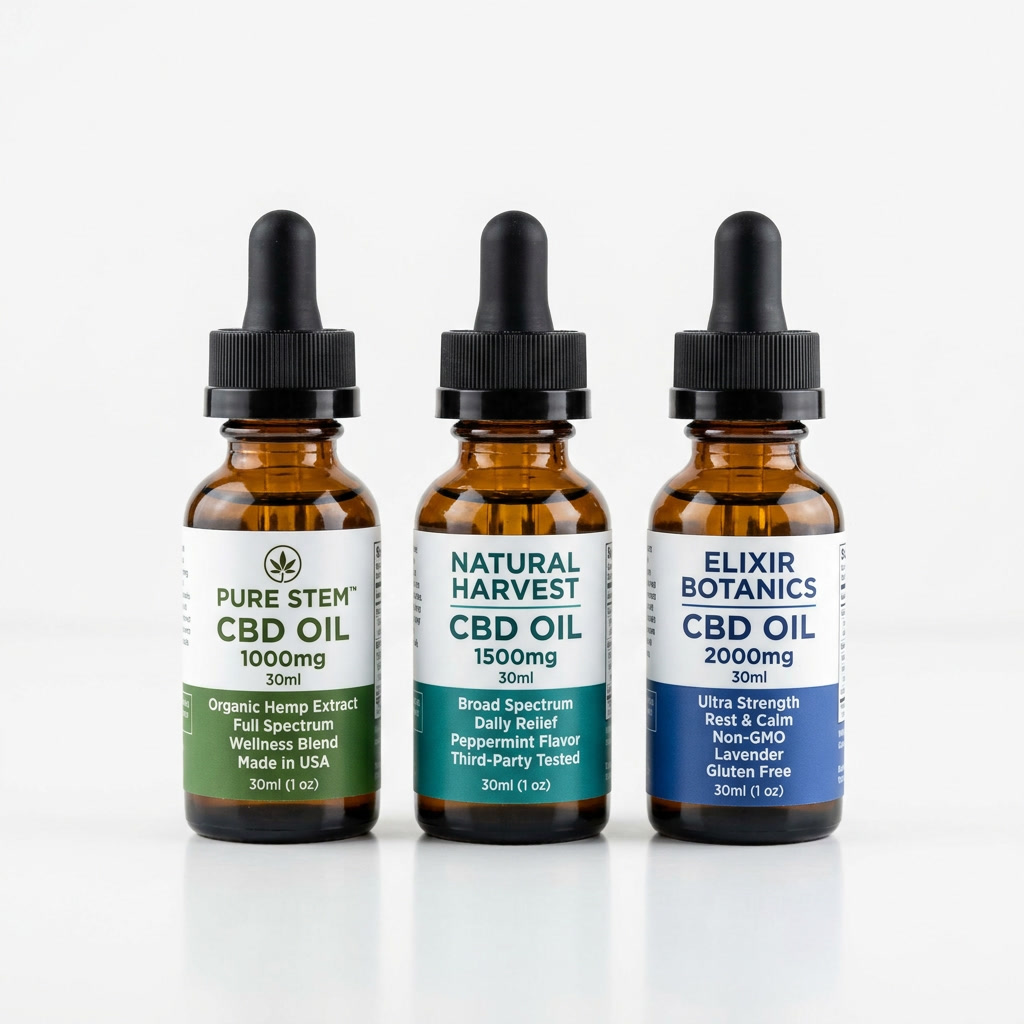
CBD vs. Melatonin for Sleep: What the 2026 Science Actually Says

It's 11:40 p.m. You're in bed, the lights are off, and your mind is doing laps. You've been here before — scrolling for the answer between a bottle of melatonin gummies and the CBD tincture a friend swears by. Both promise a better night's sleep. Both sit in the same wellness aisle. So which one do you actually reach for?
It's a genuinely good question, and the answer is more interesting than "one works and one doesn't." Melatonin and CBD work through completely different mechanisms, they help with different sleep problems, and — here's the part most brands won't tell you — the evidence behind them is not equal. Melatonin has decades of solid research behind it. CBD has a fraction of that, with a much thinner (though intriguing) evidence base.
The honest version: for most people, melatonin is the better-supported tool for falling asleep. CBD is more of a wildcard — promising for some, but with research that's still catching up to the marketing. Let me break down exactly what the science says about each, what they're each good at, and how to choose — without the hype.
How Melatonin Actually Works
Melatonin isn't a sedative. This is the first thing most people get wrong. It doesn't knock you out like a sleeping pill — it's a hormone that your brain naturally produces when light levels drop, signalling that it's time to wind down.
Your pineal gland starts releasing melatonin in the evening, peaking in the middle of the night, and tapering off as morning approaches. When you take a melatonin supplement, you're essentially giving your body an earlier "it's getting dark" signal. That's why it's genuinely excellent at one specific job: shifting your sleep onset — helping you fall asleep faster, especially if your internal clock is out of sync.
The research reflects this. A comprehensive evidence review on melatonin for sleep disorders found that the strongest, most consistent benefit was a modest reduction in the time it takes to fall asleep (sleep onset latency). It's most reliably helpful for:
- Jet lag — re-syncing your clock after crossing time zones
- Shift work — when your schedule fights your natural rhythm
- Delayed sleep phase — when you naturally fall asleep very late and want to shift earlier
Where melatonin is weaker is sleep maintenance — staying asleep through the night. If your problem is waking up at 3 a.m. and staring at the ceiling, melatonin is often less helpful than its reputation suggests. It's primarily a "falling asleep" tool, and doses that are too high can even leave some people feeling groggy the next morning.
What the Melatonin Research Really Shows
Here's the honest picture on melatonin's evidence. It's one of the most-studied sleep supplements in existence, which is both its strength and its limitation.
The good news: the evidence for melatonin helping with sleep onset is solid. Multiple analyses have found it reduces the time to fall asleep, with the most consistent effects in people with circadian rhythm issues rather than general insomnia.
The honest caveats:
- Effects on total sleep time and sleep quality are more modest and inconsistent across studies
- Dosing matters and is often wrong — many people take 5-10mg when the effective range for sleep onset is often closer to 0.5-3mg. Higher doses don't work better and can cause next-day grogginess or vivid dreams
- It's a timing-sensitive supplement — take it too late or at the wrong dose and it can backfire
- Long-term nightly use is less well-studied than short-term use
> "Melatonin has the most evidence for helping people fall asleep, particularly when circadian rhythm is disrupted. For staying asleep, the evidence is less robust."
That's the key takeaway: melatonin is a well-researched, effective tool — but specifically for falling asleep and resetting your clock, not as a universal sleep fix.
How CBD Works for Sleep
CBD's story is completely different — and that's the point. Where melatonin is a hormone that acts directly on your sleep-wake clock, CBD works through your endocannabinoid system (ECS), a network of receptors that helps regulate mood, stress, pain, and — indirectly — sleep.
CBD doesn't put you to sleep like a sedative. Instead, the leading theory is that CBD helps sleep by addressing the things that keep you awake: anxiety, racing thoughts, chronic pain, and stress. If your insomnia is driven by an anxious mind, CBD's calming effects may help you wind down — but that's a different mechanism than melatonin's. Research on how CBD interacts with stress hormones is covered in our CBD and cortisol deep-dive.
The evidence for CBD and sleep is where you need to be honest, because the marketing is running far ahead of the research.
The most-cited study is a 2019 retrospective case series in the Permanente Journal that followed adults taking CBD for anxiety and sleep. It found that about two-thirds of participants reported improved sleep within the first month. But — and this is crucial — it was retrospective, had no placebo group, and relied on self-report. It's a signal worth taking seriously, but it's not a controlled trial. If you're deep-diving the broader picture on insomnia, our full guide to CBD for insomnia walks through the 2026 clinical research on sleep quality.
More recent work is starting to fill the gap. A 2025 randomized, double-blind, placebo-controlled pilot trial in Health Science Reports gave adults with subthreshold insomnia a supplement containing CBD, CBN, a small amount of THC, and terpenes. It found improvements in sleep quality and mood compared to placebo — but it was a small pilot (20 people) and used a combination product, not CBD alone, which makes it hard to isolate CBD's specific contribution.
> "CBD's sleep benefits appear real for some people, but the research is still thin — most studies are small, short, or use combination products. Anyone telling you CBD definitively cures insomnia is overselling the data."
That's the honest state of the science: CBD shows genuine promise for sleep, particularly when anxiety or pain is the root cause, but it's a fraction of the evidence base that melatonin has.
CBD vs. Melatonin: The Head-to-Head
Let me put the two side by side in plain terms, because they're not really competitors — they're different tools.
Falling Asleep
- Melatonin: Strong evidence. Reduces sleep onset latency, especially for circadian issues. This is its home turf.
- CBD: Weaker evidence. May help if anxiety is keeping you up, but not a proven sleep-onset aid.
Staying Asleep
- Melatonin: Modest, inconsistent evidence.
- CBD: Some promising signals (especially with CBN), but limited research. Possibly helpful if pain or stress causes nighttime waking. We break down the science on CBN and the entourage effect in our CBN sleep guide.
Root Cause
- Melatonin: Best for a disrupted body clock (jet lag, shift work, late schedule).
- CBD: Best for anxiety-driven or pain-driven insomnia — calming the system rather than shifting the clock.
Onset of Effect
- Melatonin: Works on a 30-60 minute timeline, timing-sensitive.
- CBD: Variable; effects can take 30-90 minutes depending on form (oil under tongue is faster than edibles). Delivery method matters a lot — our bioavailability guide explains why.
Side Effects & Safety
- Melatonin: Well-tolerated short-term. Can cause grogginess, vivid dreams, or morning drowsiness at higher doses. Less studied for long-term nightly use.
- CBD: Generally well-tolerated. Can cause dry mouth, drowsiness, or GI upset. Important: CBD interacts with certain medications through the liver's CYP450 enzymes — always check with a doctor if you take prescription meds.
Dependence Risk
- Melatonin: No physical dependence.
- CBD: No known physical dependence.
Cost
- Melatonin: Inexpensive, widely available.
- CBD: More expensive, especially for quality lab-tested products.
How to Choose: A Practical Framework
The honest answer is that the right choice depends on why you can't sleep. Here's a simple way to decide.
Choose melatonin first if:
- Your problem is falling asleep, especially after travel or schedule changes
- You have a delayed sleep phase (you naturally fall asleep very late)
- You want the best-evidenced, cheapest, most straightforward option
- You're looking for a short-term reset rather than a nightly habit
Consider CBD if:
- Anxiety, stress, or racing thoughts are the main thing keeping you up
- Chronic pain disrupts your sleep
- You've tried melatonin and it didn't help (or caused grogginess)
- You prefer a more "whole-system" approach to winding down
You can even combine them — some people find a low dose of melatonin to fall asleep plus a calming CBD product works well. The key is to change one variable at a time so you know what's actually helping.
Practical Tips for Better Sleep (Regardless of Which You Pick)
Before you reach for either, it's worth checking the basics — because no supplement fixes bad sleep hygiene.
1. Keep a consistent sleep schedule — even on weekends. Your body clock runs on routine.
2. Dim lights and avoid screens 60-90 minutes before bed. Blue light suppresses your own melatonin.
3. If using melatonin, take it 30-60 minutes before bed and start low (0.5-3mg), not 10mg.
4. If using CBD, give it time — oils under the tongue work fastest; give it 2-3 weeks of consistent use before judging.
5. Watch caffeine after noon and avoid alcohol close to bed (it fragments sleep).
6. Keep your bedroom cool and dark — around 65°F (18°C) is ideal for most people.
Safety First: What to Know Before You Start
Both melatonin and CBD are generally well-tolerated, but safety matters, especially if you have health conditions or take medication.
- Melatonin is fine for most adults short-term, but it's not recommended to treat insomnia in a self-directed way for long stretches without checking in with a doctor. It's also not recommended during pregnancy or for children without medical guidance.
- CBD interacts with the cytochrome P450 enzyme system, which processes many common medications — blood thinners, certain antidepressants, seizure meds, and more. If you take any prescription medication, talk to your doctor before using CBD. This is non-negotiable.
If you're pregnant, nursing, or under 21, neither is recommended without medical advice.
The Bottom Line
Melatonin and CBD aren't really competing for the same job. Melatonin is the well-evidenced, affordable, targeted tool for falling asleep — especially when your body clock is off. CBD is the less-proven but genuinely promising option for people whose sleep problems stem from anxiety, stress, or pain. If your issue is falling asleep after travel or a late schedule, melatonin has the research on its side. If racing thoughts or chronic discomfort keep you wired, CBD may be worth a careful, doctor-informed try. And for many people, fixing the basics — light, schedule, caffeine — does more than either supplement. Start with what matches your actual problem, change one thing at a time, and give it a fair shot before judging.
Looking for a lab-tested place to start? If you're leaning toward CBD for sleep, browse our CBD sleep products — including gummies with CBN, which combine CBD's calming effects with a cannabinoid specifically studied for sleep. Not sure which format suits you? Take our CBD Product Finder Quiz and we'll match you based on your sleep goals, budget, and preferences — no guesswork.
Find Your Perfect CBD Product
Take our 2-minute quiz to get personalized recommendations based on your needs.
Take the Quiz →Disclaimer: This article is for informational purposes only and does not constitute medical advice. CBD products are not FDA-approved to treat, cure, or prevent any disease. Always consult with a qualified healthcare professional before starting any new supplement, especially if you have a medical condition or take medications.