CBD & Your Circadian Rhythm: Jet Lag, Shift Work, and Better Sleep-Wake Cycles
You know the feeling. You land in a new time zone, check into the hotel, and your body insists it's mid-afternoon while the clock insists it's 2 a.m. You're wired, restless, staring at a ceiling you don't recognize. Or maybe it's the night-shift life — your coworkers head to bed while you brew coffee at 11 p.m., and by your days off your sleep-wake cycle feels like a toddler drew it with a crayon.
Sleep is our most non-negotiable biological currency, and when your internal clock drifts out of sync with the world, everything suffers — mood, focus, digestion, even recovery. That's why "circadian rhythm" has become a buzzword in sleep and wellness circles. But does a plant-derived compound like CBD actually have anything to say about jet lag, shift work, and resetting your internal clock?
The honest answer: CBD isn't a magic jet-lag cure, but the emerging science — including several 2023–2025 studies — points to a genuinely interesting relationship between the endocannabinoid system and the body's internal timekeeping. Let's unpack what's happening and how to use CBD as a support tool rather than a cure-all.
What Is a Circadian Rhythm, Anyway?
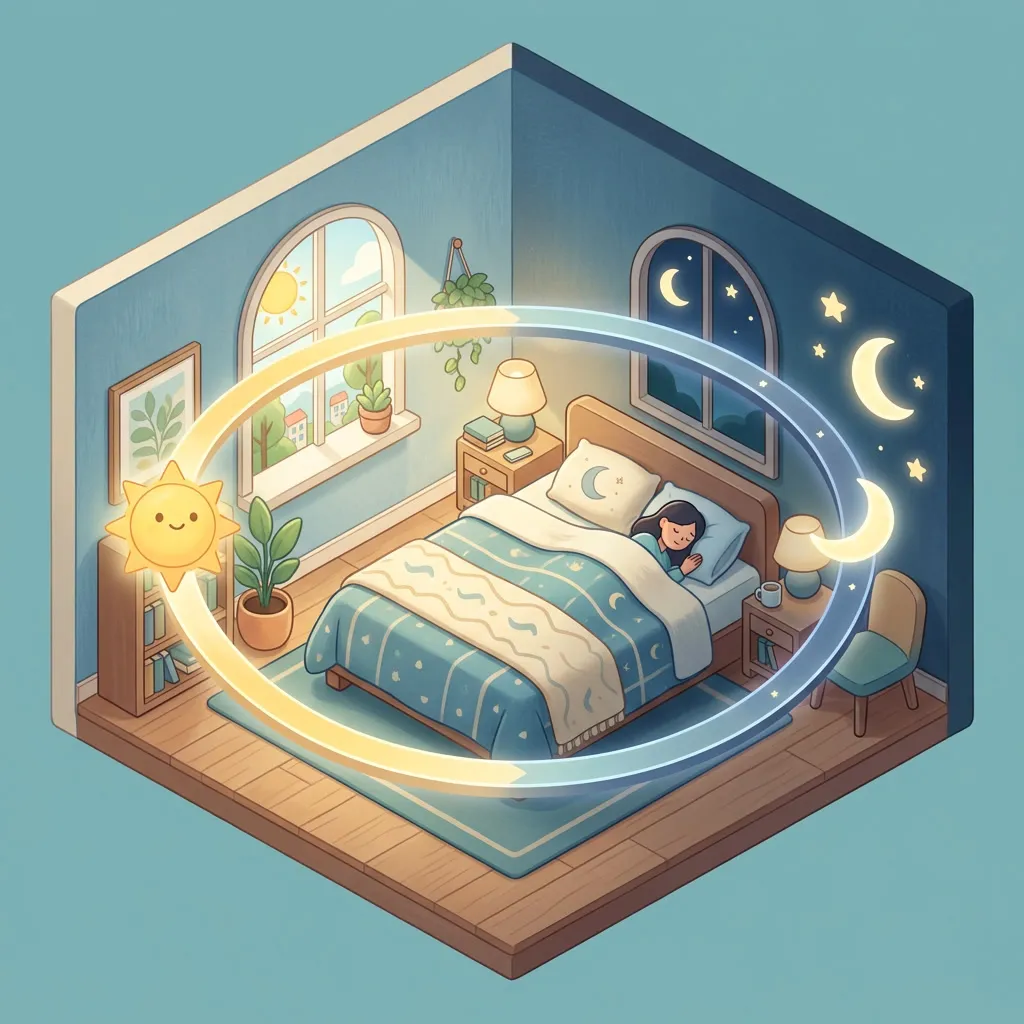
Before we talk about whether CBD helps, it's worth being precise. Your circadian rhythm is a roughly 24-hour internal clock that governs nearly every biological process — when you feel sleepy, when you feel hungry, when body temperature rises and falls, and when key hormones like melatonin and cortisol are released.
This master clock lives in a brain region called the suprachiasmatic nucleus (SCN) and is driven by light. Bright morning light signals "daytime"; fading light signals "time to wind down." External cues — light, meal timing, temperature, exercise — are called zeitgebers (German for "time-givers"), and they keep your internal clock synchronized with the world.
Jet lag and shift work force a mismatch: your brain's clock tells your body one thing, but your schedule demands another. The result isn't just feeling tired — it's biological desynchronization that research links to worse sleep, poorer mood, and reduced daytime performance.
The Endocannabinoid System: Your Body's Built-In Balancer
Here's where it gets interesting. The endocannabinoid system (ECS) is a widespread signaling network that helps your body maintain balance — the state physiologists call homeostasis. It regulates sleep, mood, appetite, pain perception, stress response, and the timing and daily ebb and flow of many processes.
The ECS works through naturally produced compounds called endocannabinoids, which bind to receptors throughout the brain and body. Phytocannabinoids — including CBD, the non-intoxicating compound in hemp — interact with this same system, which is one reason researchers are curious about whether CBD can nudge sleep and circadian timing.
Here's the key nuance: the ECS doesn't have a single "on/off" switch for sleep. It's a modulatory system — more a thermostat or tuning dial than a light switch. CBD influences the ECS indirectly, supporting calm and helping the system find balance, rather than forcing the brain into sleep like a hypnotic might.
What the 2023–2025 Research Actually Says
A lot of the CBD-and-sleep conversation online is hype, so let's ground this in recent, peer-reviewed work. These are the studies that give us the most honest picture — and notice how carefully worded they are compared with the marketing claims.
Evidence for Better Sleep Quality in Insomnia
The strongest human trial comes from a 2023 study in the Journal of Sleep Research, a randomised double-blind placebo-controlled trial. In adults with insomnia, medicinal cannabis (which contained CBD among other compounds) was associated with improvements in sleep — with the caveat that not every participant responded the same way. It's one of the better-controlled human sleep studies in recent years, but it also reminds us that "improves sleep" doesn't mean "cures insomnia in everyone."
> "Cannabis — including CBD-dominant products — shows promise as a support for sleep, but individual response varies and it should not be seen as a guaranteed cure for insomnia."
CBD and the Circadian Period
Perhaps the most directly on-topic research comes from a *2025 study in Biogerontology*, which examined the effects of cannabidiol on circadian period, sleep, and life span**. This is significant because it explicitly links CBD to the circadian rhythm itself, not just sleep quality. The finding hints that CBD may influence the period of the internal clock — a relevant detail for anyone thinking about travel or off-schedule living.
CBD, Circadian Rhythm, and Recovery in Rats
A *2025 study in the Nan Fang Yi Ke Da Xue Xue Bao* (the Journal of Southern Medical University) took this further, reporting that cannabidiol regulates circadian rhythm and helped improve sleep disorders following general anesthesia in rats**. Animal models aren't the same as human evidence, but they're valuable for demonstrating that CBD's effect on sleep appears to flow at least partly through its effects on circadian timing, not just sedating the animal.
Evidence from Fruit Flies
Finally, a *2024 study in Cannabis and Cannabinoid Research* examined the influence of cannabinoids on behaviors and longevity** in Drosophila (fruit flies). It's an unusual but revealing model for circadian research, since flies have their own circadian clocks. The study shows cannabinoids can shift behavioral timing — supporting the idea that these compounds have real circadian cross-talk, even if flies are a long way from humans.
CBD vs. Melatonin: Which Is Better for Sleep?
One of the most common questions people ask when they're looking at CBD for sleep is whether it beats melatonin. It's a fair question, but the honest answer is that they're doing different things.
Melatonin is a hormone — a direct signaling molecule for sleep timing. Its main job is to tell your brain "night is coming," which makes it uniquely useful for jet lag and shift work. It's the most direct "shift my clock" tool we have. This is one reason CBD is used as a support for the body's own balance rather than a direct sleep-timing signal.
CBD, on the other hand, works through the endocannabinoid system to support a calm, balanced nervous system. It's not a strong sedative, and it won't force your clock to reset the way melatonin timing can. Where it shines is the combination of ease and the general physical and mental calm that makes it easier to fall asleep and stay asleep once your clock is aligned.
If you're deciding between them, the pragmatic split is usually: use melatonin strategically to nudge the clock at the right moment (like on travel days), and use CBD consistently to support overall sleep quality and relaxation. Many people find that pairing them — with proper timing and dosing — works better than either alone. For a deeper look, our guide to CBD versus melatonin covers the full comparison.
Realistic Expectations for CBD and Jet Lag
Let's be clear about what CBD will and won't do for jet lag, because the marketing around this can get ahead of the evidence.
What CBD can plausibly help with: the general restless, "wired but tired" feeling that comes with a scrambled clock, and supporting your body's calm baseline during the days it takes to adjust. If much of your jet lag is tension, worry, and an overactive mind at bedtime, that's exactly the territory CBD's support is most relevant for.
What CBD won't do: it won't magically shift your clock five hours to the new time zone. Jet lag is fundamentally a light-and-timing problem, and no supplement replaces the need for morning sunlight and a disciplined schedule. No 2023–2025 study claims CBD resets your circadian period dramatically in humans; the most encouraging findings there are preclinical.
So the realistic framing is this: CBD can be a helpful support to take the edge off while your body does the slow work of re-syncing. Think of it as making the transition more comfortable, not as shortening the biological clock's adjustment time.
Best Timing for CBD Around Sleep
Timing matters a lot when you're using CBD for sleep or rhythm support — probably more than most people realize.
For most people, the most common approach is to take CBD roughly 30 to 60 minutes before your target bedtime, allowing it to come on gradually as you wind down. If you're using an oil or tincture (sublingually), it absorbs more quickly than an edible, so it's easier to dial in.
For shift-work or jet-lag scenarios, there's an extra wrinkle: your "bedtime" might be at a strange hour. In that case, use CBD as a consistent anchor around your new scheduled sleep time — not around an arbitrary clock hour. Your body learns context, not just time of day.
Start low and be consistent for several days rather than expecting a single dose to do heavy lifting. Sleep rhythms are slow-moving systems; they respond better to repetition than to dramatic one-night experiments.
How Much CBD Should You Take?
There's no universal "right" dose — it depends on your body weight, your sensitivity, the type of product, and what you're trying to accomplish. Dosing is one of the trickiest parts of using CBD, and this is where careful self-experimentation beats a one-size-fits-all number.
- If you're new to CBD for sleep, a low dose to start and observing how you respond is the sensible baseline.
- The oil is usually easier to dose precisely (a few drops at a time) than a gummy, which is pre-measured.
- Keep a simple log for a few nights — dose, timing, sleep quality, next-morning grogginess — and adjust from there.
- If you're also using melatonin, be mindful of total stack, especially if you feel groggy the next day.
For a more detailed, step-by-step breakdown of finding your sweet spot, our [CBD dosage guide](/cbd-101/cbd-dosage-guide) walks you through the variables in plain language.
Choosing the Right Product for Sleep Support
If you're exploring CBD to support your sleep-wake cycle, product format affects how it fits into your routine. Here are the options to consider:
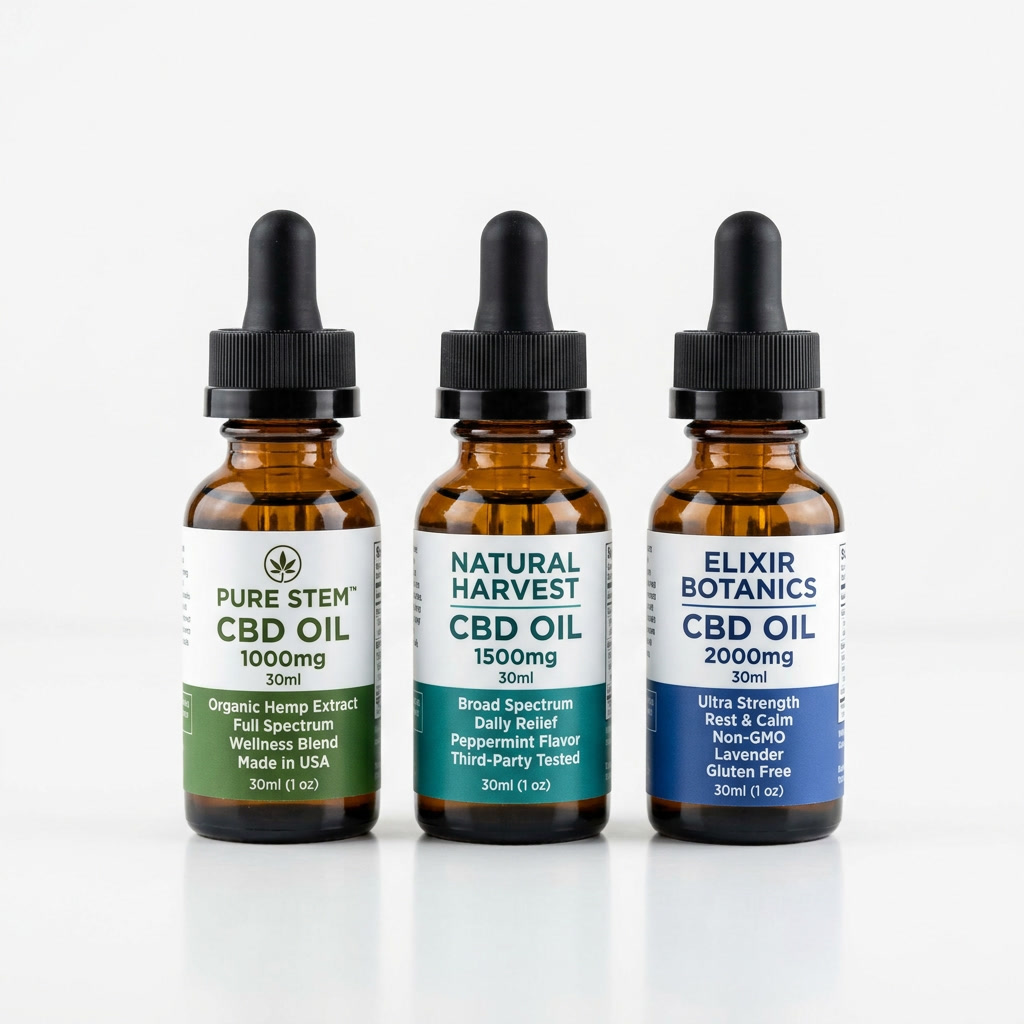
- CBD oils and tinctures — the most flexible for timing and precise dosing, and the easiest to dial in to the right amount. Great if you want to fine-tune your dose for bedtime or shift-work anchors.
- CBD gummies and edibles — convenient, pre-measured, and taste-friendly, but slower to absorb. They're best when you want an "set it and forget it" consistent dose at the same time each night.
Both can support the same underlying endocannabinoid system; the choice mostly comes down to how much control you want over dosing and how quickly you want it to act. You can browse our [CBD oils and tinctures](/products?category=cbd-oils-and-tinctures) and [CBD gummies and edibles](/products?category=cbd-gummies-and-edibles) to compare what fits your routine.
Safety, Side Effects, and What to Watch For
CBD is generally well-tolerated for most adults, but "generally well-tolerated" isn't the same as "zero considerations." It's worth being clear-eyed about safety before you build it into a routine.
The most common side effects people notice are mild: dry mouth, slight drowsiness, or sometimes loose stools. These tend to be dose-related and usually ease up at a lower dose.
Drug interactions matter. CBD can interact with certain prescription medications — most notably drugs the body breaks down through specific liver enzymes (the CYP450 pathway). If you take a prescription medication, especially for blood pressure, seizures, or anxiety, it's worth a conversation with your doctor first.
Drowsiness is a real consideration for shift work and driving. If you're taking CBD for sleep support and feel groggy the next morning, don't drive until you understand your response. The goal is to wake up refreshed — not medicated.
A note on product quality: because CBD is a loosely regulated marketplace, quality varies wildly. Look for third-party lab testing you can actually see, clear CBD (not vague "hemp extract") on the label, and clean, transparent sourcing. Trustworthy reviews help separate genuinely useful brands from marketing-first ones.
Practical Rhythm-Reset Checklist for Jet Lag and Shift Work
Combine CBD as a support with the biological basics that actually reset your clock. Here's a simple, evidence-informed checklist to use while you adjust:
- Get bright light exposure in the morning to the new schedule. Light is your single most powerful rhythm cue.
- Anchor your meals to local time — feeding sends strong "it's daytime" signals to your brain.
- Get moderate exercise during the daylight hours to reinforce your wake phase.
- Respect your new bedtime — same time each night, even if it's an unusual hour.
- Use CBD as a calm support 30–60 minutes before your new scheduled sleep time, and dose consistently across a few nights.
- Avoid screens in the final hour before bed; blue light is a strong "keep you awake" signal that fights your whole routine.
- Give yourself grace — jet lag usually resolves in a few days, but shift-work rhythm disruption can be a longer-term negotiation.
Action Bottom Line
If you've read this far, you want the practical takeaway without the fluff. Here it is.
Your circadian rhythm is driven primarily by light and schedule, and no supplement replaces morning sunlight and a disciplined routine. But the endocannabinoid system is part of the balance, and a growing body of recent research — including 2025 studies on CBD and circadian period and CBD regulating circadian rhythm — points to CBD as a reasonable support for sleep quality and calm while your clock re-syncs. It's not a guaranteed insomnia cure, and it won't beam you instantly across time zones, but as a consistent, well-timed bedtime ritual, it can genuinely help take the edge off.
Bottom Line
CBD is best understood as a sleep support — not a circadian cure. Pair it with morning light, anchored meals, and a consistent sleep window, take it 30–60 minutes before your new bedtime, and dose consistently across several nights. Choose oils if you want fine-tuned dosing or gummies if you want easy convenience. And if you're new to CBD entirely, start low, keep a short log, and give your body a few nights to respond before judging the result. For the full melatonin comparison, see our guide to [CBD vs melatonin](/blog/blog-cbd-vs-melatonin-sleep-2026-08-03), and if you want to go deeper on sleep support, visit our [CBD for sleep](/wellness/cbd-for-sleep) section. Most of all, be kind to your body as it adjusts — a little patience (and a good night's sleep) goes a long way.
Find Your Perfect CBD Product
Take our 2-minute quiz to get personalized recommendations based on your needs.
Take the Quiz →Disclaimer: This article is for informational purposes only and does not constitute medical advice. CBD products are not FDA-approved to treat, cure, or prevent any disease. Always consult with a qualified healthcare professional before starting any new supplement, especially if you have a medical condition or take medications.