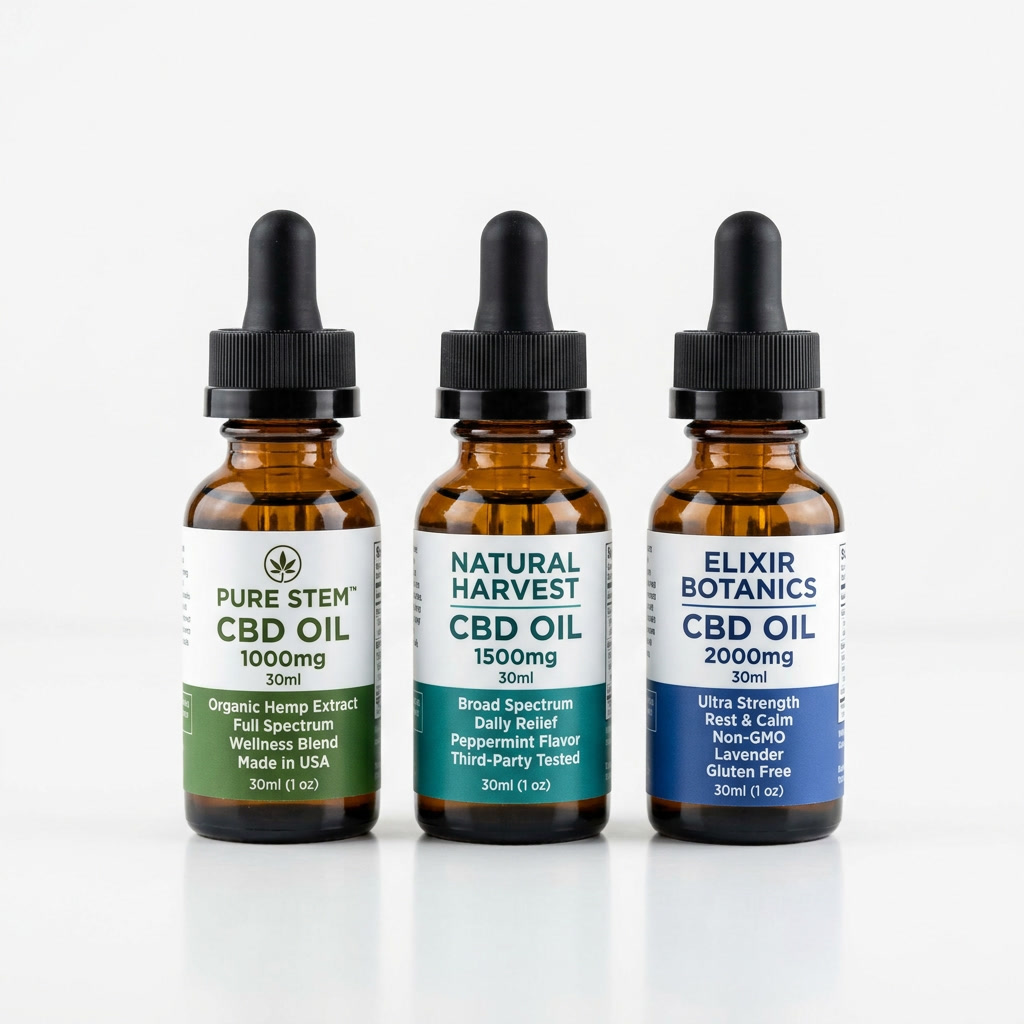
Is CBD Safe With Codeine? The Interaction Nobody Screens For

Someone has a molar extraction on Thursday. The dentist hands over a script for codeine and paracetamol, and on the way home they take their evening CBD oil, which they have taken every evening for eight months to help them sleep. Nobody in that chain asked a single question about the combination. The dentist did not ask. The pharmacy label does not mention it. The CBD bottle certainly does not mention codeine. And yet two substances that both act on the central nervous system, one of which depends on a specific liver enzyme to work at all, are now circulating in the same bloodstream.
This is the gap worth writing about, because it is not a rare scenario. Codeine remains one of the most commonly dispensed opioids in Europe for short-term moderate pain, and CBD has moved from a niche supplement to something sold in supermarkets and petrol stations. The overlap between those two populations is large and almost entirely unscreened. What follows is an honest account of how little direct evidence exists, and where the reasoning comes from instead.
The scenario that keeps coming up
The typical case is not a person deliberately mixing drugs. It is a person with an established CBD routine who is suddenly prescribed an opioid for a few days, or a person on a short opioid course after surgery who reads that CBD helps with pain and adds it. Both directions of the same collision.
There is a third version that is more subtle and probably more common than either. A person is taking a combination product, perhaps a cough syrup or a branded pain tablet, that contains codeine without that being the headline on the box. Codeine appears in numerous over-the-counter and prescription combinations in countries where it is still available in low doses without a prescription, and people do not always know what they are taking.
Add to that the fact that CBD is rarely taken in isolation. Most commercial oils also contain some THC, and many users also take an antidepressant, a blood thinner or a statin. The interaction question is never really about two substances. It is about a liver enzyme system that is already busy.
How codeine actually works in the body
Here is the part that surprises most people. Codeine is not really a painkiller in its own right. It is a prodrug, which means it is largely inactive as swallowed and has to be converted inside the body into something that does the work.
That conversion is performed mainly by an enzyme called CYP2D6, a member of the cytochrome P450 family in the liver. CYP2D6 turns codeine into morphine, which then binds mu-opioid receptors in the brain and spinal cord and produces analgesia. Roughly speaking, the pain relief from codeine is the pain relief from the morphine your own liver manufactured.
A smaller share of codeine is converted by CYP3A4 into norcodeine, which is far less potent, and the rest is excreted. So the fate of a dose is a competition between a pathway that creates the active drug and one that creates a mostly inactive one. Shift the balance toward more CYP2D6 conversion and you get more morphine than intended. Shift it the other way and you get less relief plus more parent drug circulating, which has its own side effects.
Why the enzyme matters more than the dose
Doctors already know this, which is why codeine carries warnings in several countries against use in children under twelve and in ultra-rapid metabolisers. Those warnings exist because people with duplicate copies of the CYP2D6 gene convert codeine so efficiently that standard doses have caused fatal respiratory depression in children. The drug's safety is dependent on a genetic variable nobody checks at the pharmacy counter.
What CYP2D6 means for a CBD user
CYP2D6 is one of the most polymorphic enzymes in the human genome. Individuals fall into rough categories, poor, intermediate, normal and ultra-rapid metabolisers, and this is well established independently of the CBD question.
Does cannabidiol change CYP2D6 activity? The honest answer is that the picture is complicated and the direction is not uniform across studies. CBD is a known inhibitor of several cytochrome P450 enzymes in laboratory preparations, and the clinical relevance of that inhibition depends heavily on dose, route and how the enzyme is being probed.
A 2026 systematic review in the European Journal of Drug Metabolism and Pharmacokinetics examined the effects of CBD and THC on human hepatic cytochrome P450 enzymes and concluded that the interaction potential is real but that the magnitude varies considerably between enzymes and between study designs. That is a careful way of saying the enzyme-level signal exists without promising a specific number for any given drug.
An earlier review in the European Journal of Internal Medicine in 2023 reached a similar place, describing CBD as capable of affecting drug metabolisation through several routes while noting that much of the human data comes from small studies with narrow dosing ranges. A 2023 evaluation in Clinical Pharmacology and Therapeutics probed CYP-mediated cannabinoid-drug interactions in healthy adults, which is the closest thing to controlled human mechanistic data in this area.
The reasoning step, clearly labelled
There are, as far as the published literature goes, no clinical trials of CBD co-administered with codeine in humans. None. So anything said about that specific pair is extrapolation, and it should be labelled as such.
The extrapolation runs like this. Codeine's analgesic effect depends on CYP2D6 conversion to morphine. CBD has demonstrated effects on hepatic cytochrome P450 enzymes including, in some experimental settings, CYP2D6. Therefore co-administration could plausibly alter morphine exposure, in either direction depending on net effect and individual genotype. That is a pharmacological hypothesis, well grounded in mechanism, and it is not the same thing as a measured human outcome.
Anyone who tells you confidently that CBD doubles your codeine effect, or that it blocks it, is going beyond the data. The defensible statement is that the combination is mechanistically plausible as an interaction and has not been characterised in humans.
What the CBD and opioid studies actually measured
This is where the evidence gets more interesting, and where careful reading matters, because almost all of it is animal work and almost all of it uses oxycodone rather than codeine.
A 2026 paper in Biomedicine and Pharmacotherapy reported behavioural, pharmacokinetic and genetic evidence of a CBD and oxycodone drug interaction in mice. The pharmacokinetic element is the important part. If CBD changes oxycodone blood levels, that is direct evidence of a metabolic interaction rather than just an additive pharmacological effect, and the genetic component suggests the interaction is not uniform across individuals.
A 2026 study in the Journal of Pain described selective opioid-sparing effects of CBD on opioid analgesia in rats. Opioid-sparing means CBD allowed a lower opioid dose to achieve comparable analgesia. That is the finding most people hope for, and it is genuinely encouraging.
A 2026 paper in Scientific Reports found that CBD reduced oxycodone self-administration while preserving analgesic efficacy in a rat model. Note the two halves of that sentence. Reduced self-administration is a reward and dependence signal. Preserved analgesia is a pain signal. Both moving in the desired direction is a meaningful result.
A 2025 study in Pharmacology Biochemistry and Behavior examined CBD interactions with oxycodone analgesia using an operant orofacial assay, a model built to measure pain behaviour with more precision than simple reflex tests. A 2024 paper in the International Journal of Molecular Sciences looked at CBD and reinstatement of oxycodone conditioned place preference in rats, which is a model of relapse rather than of acute pain.
Why oxycodone is not codeine
Every one of those studies used oxycodone. That matters for anyone taking codeine, and the reason is mechanistic.
Oxycodone is an active drug. It binds opioid receptors directly and produces analgesia without needing conversion. It is metabolised partly by CYP2D6 into oxymorphone, which is more potent, but the parent compound is already doing the work.
Codeine is the opposite. It is inert until CYP2D6 converts it. A metabolic interaction that changes oxycodone exposure by twenty percent is a modest adjustment. The same proportional change applied to codeine's conversion step could be a much larger change in the morphine produced, because you are altering the rate-limiting step of activation rather than the clearance of an active molecule. That is reasoning, not measurement, but it is why codeine deserves more caution, not less.
The opioid-sparing signal and what it might mean
The opioid-sparing findings are the most clinically interesting part of this area, and the easiest to over-read.
If CBD reliably allowed a thirty percent reduction in opioid dose with equal pain control, that would be a significant public health tool given the size of the opioid dependence problem. The animal data points that way. A 2023 Cochrane review of cannabis-based medicines for cancer pain found evidence of modest benefit for pain but with substantial uncertainty and a high rate of adverse events, a reminder that promising mechanisms frequently shrink on contact with human trials.
There is one human trial in the citation list that is directly relevant to pain. A 2026 randomised crossover comparison in the Journal of Cataract and Refractive Surgery compared oral CBD with an oral opioid for postoperative pain. Crossover designs are efficient and this is real human data in a real clinical pain model, but it compared CBD against an opioid rather than combining them, which answers a different question. It tells you something about CBD as an alternative, not about what happens when both are present.
That distinction is the one that gets lost in wellness writing. "CBD works for pain" and "CBD is safe to combine with your codeine" are entirely separate claims, and the second one has far less support.
The safety worries that matter more than metabolism
Metabolism is intellectually interesting. Sedation is the practical risk.
Codeine causes drowsiness, dizziness, nausea and slowed breathing. CBD causes drowsiness in a meaningful proportion of users, particularly at higher doses and in the first weeks. Those effects are not separate. They converge on the same central nervous system, and the combination is very likely to be more sedating than either alone. That is a straightforward additive effect and it does not require any enzyme interaction to occur.
Respiratory depression is the serious end of that spectrum. Opioids suppress the brainstem drive to breathe, and the risk rises with dose, with concurrent sedatives, and in people with sleep apnoea or lung disease. Whether CBD meaningfully adds to that in humans is not established. What is established is that adding any sedating agent to an opioid increases risk, and that such combinations have caused real deaths. Treating CBD as exempt because it is sold in health food shops is a mistake.
Driving and machinery
The practical question people ask is whether they can drive. The answer with codeine alone is often already no, especially at the start of a course. Adding CBD does not make that better. The combination of an opioid and a sedating cannabinoid is a poor basis for operating anything, and feeling fine does not reliably mean reaction time is intact.
There is also the testing question. CBD products vary in THC content, and cumulative THC exposure from a "THC-free" product taken daily is not always zero. Anyone in a safety-sensitive job should read the certificate of analysis rather than the front of the bottle. Our piece on CBD drug interactions goes into the broader testing and metabolism picture.
Practical guidance if you are on both
Here is a clear sequence of actions, because the pharmacological uncertainty does not translate into uncertainty about what a person should do.
First, tell the prescriber. Not the internet, not the supplement shop, the person who wrote the codeine script. Say the dose of CBD, the product, and how long you have taken it. Most clinicians will not have a specific answer, but they can adjust the opioid dose, choose a different analgesic, or monitor more closely. That conversation is the intervention.
Second, do not start CBD and codeine on the same day if you can avoid it. If you are already a regular CBD user, continuing at a stable dose while taking a short codeine course is a different risk profile from introducing a new CBD product alongside a new opioid.
Third, do not use CBD to stretch an opioid supply or to reduce a dose on your own. The opioid-sparing data is animal data, and self-tapering based on a rat study is not a strategy.
Fourth, watch for the specific signs of too much opioid effect, which are excessive sleepiness, slow or shallow breathing, pinpoint pupils and confusion. Those warrant urgent medical attention, not a dose adjustment at home.
If you are a regular CBD user facing surgery
Anaesthetists want to know about everything you take, and that includes CBD, because it can interact with anaesthetic agents and post-operative analgesics. Say it at the pre-assessment, not on the morning of the operation. Our article on CBD and post-surgery pain covers timing in more depth.
Who should be extra careful
Some groups carry more risk than others, and it is worth naming them plainly. People with reduced CYP2D6 activity, whether from genetics or from other drugs, convert less codeine to morphine and may get poor pain relief, which leads to dose escalation. People with duplicate CYP2D6 genes convert more and risk morphine toxicity at standard doses. Neither group is identified in routine practice.
Older adults metabolise everything more slowly and are more sensitive to sedation and falls. The combination of an opioid, a cannabinoid and a diuretic in an eighty year old is a fall waiting to happen. Anyone with liver impairment also deserves a mention, because both codeine activation and CBD clearance run through the liver. Our CBD liver safety article covers the enzyme and liver injury questions in detail.
What to ask a pharmacist
Pharmacists are underused here and they are often the most accessible clinician with real pharmacology training. A short, specific script works better than a vague question. Ask whether the codeine product contains anything else, since combination products are common. Ask whether your CBD dose is high enough to matter for enzyme inhibition, and be ready to give a number in milligrams rather than "a few drops". Ask whether a non-opioid alternative exists, and what signs should send you to urgent care.
And ask the question that rarely gets asked, which is whether the combination is worth it at all. For most short-term pain, paracetamol and ibuprofen at adequate doses handle a surprising amount, and the codeine adds side effects more reliably than it adds relief.
A note on dose
There is no established safe combination dose, because the combination has not been studied. What can be said is that the enzyme effects of CBD are generally dose-dependent, so 5 milligrams is a different proposition from 200 milligrams, and most of the interaction concern in the literature sits at the higher end of the clinical range. Our guide to CBD dosage by weight explains why milligram accuracy matters more than drop counting.
The bigger picture, dependence and why this keeps being studied
There is a reason this research programme exists. The opioid crisis has made opioid-sparing an urgent goal, and cannabinoids are one of the few adjunct classes with plausible mechanistic support and a large existing user base.
The 2026 rat work on reduced oxycodone self-administration and the 2024 work on reinstatement of conditioned place preference both point at the reward and relapse side of the problem rather than the analgesia side. That is where the potential value is largest, and where overclaiming is most tempting. A rat choosing less oxycodone is a long way from a person with opioid use disorder staying in recovery. Our article on CBD and opioid use disorder walks through where that evidence currently sits.
Codeine is also genuinely habit-forming. A three day course after a dental procedure is low risk. A three month course taken because the pain did not resolve is a different situation, and CBD is not a substitute for asking why the pain persisted.
Questions people actually ask
Can I take CBD at the same time as my codeine tablet? Nobody has tested that exact combination in humans, so the cautious answer is not at the same time. Separating doses by a few hours does not remove a liver enzyme interaction, because the effect on CYP2D6 and other enzymes lasts longer than the CBD itself stays in the blood. If you want to try CBD while taking codeine, do it with the prescriber informed, at a low dose, and with someone watching for unusual sedation in the first days.
Does CBD make codeine stronger or weaker? Both are plausible, and that is the problem. Slower clearance through CYP2D6 could raise morphine exposure and with it the risk of sedation and breathing depression. Competition at other enzymes, or altered absorption, could instead reduce the analgesic effect and tempt a person to take more codeine than prescribed. The honest position is that the direction of the effect is unknown for codeine specifically, which is a reason for supervision rather than a reason to guess.
Is a full spectrum product riskier than an isolate? For this interaction, the CBD content is the main variable, so a product with a known milligram dose is easier to reason about than a full spectrum oil with unlisted cannabinoids. Trace THC adds its own sedative load, which matters when codeine is already depressing the central nervous system. Whatever you choose, the label should state CBD in milligrams per millilitre and a THC limit.
What about cough syrup with codeine? Treat it as the same question with an extra variable, because cough syrups often carry other active ingredients such as antihistamines, decongestants or paracetamol. Combining any of those with CBD adds sedation or liver load on top of the opioid interaction. Read the full ingredient panel, not just the front of the box, and ask a pharmacist rather than a forum.
Bottom line
There are no human trials of CBD with codeine, and anyone claiming certainty in either direction is inventing it. What exists is a well described mechanism, a prodrug that depends entirely on CYP2D6 for its effect, evidence that CBD affects hepatic cytochrome P450 enzymes to a variable and incompletely quantified degree, and animal studies using oxycodone that suggest both interaction and possible benefit but do not transfer cleanly to a drug that has to be activated first.
The practical conclusion is not to avoid the combination in terror, and it is certainly not to use it casually. It is to treat it as a real interaction of unknown magnitude, to tell the prescriber and the pharmacist what you take in milligrams, to avoid starting both at once, to watch for sedation and slowed breathing rather than assuming a supplement is benign, and to recognise that the most useful clinical decision is often choosing an analgesic that does not require the conversation at all.
Find Your Perfect CBD Product
Take our 2-minute quiz to get personalized recommendations based on your needs.
Take the Quiz →Disclaimer: This article is for informational purposes only and does not constitute medical advice. CBD products are not FDA-approved to treat, cure, or prevent any disease. Always consult with a qualified healthcare professional before starting any new supplement, especially if you have a medical condition or take medications.