CBC and CBDV Are Suddenly Everywhere — Here's What They Can and Cannot Do
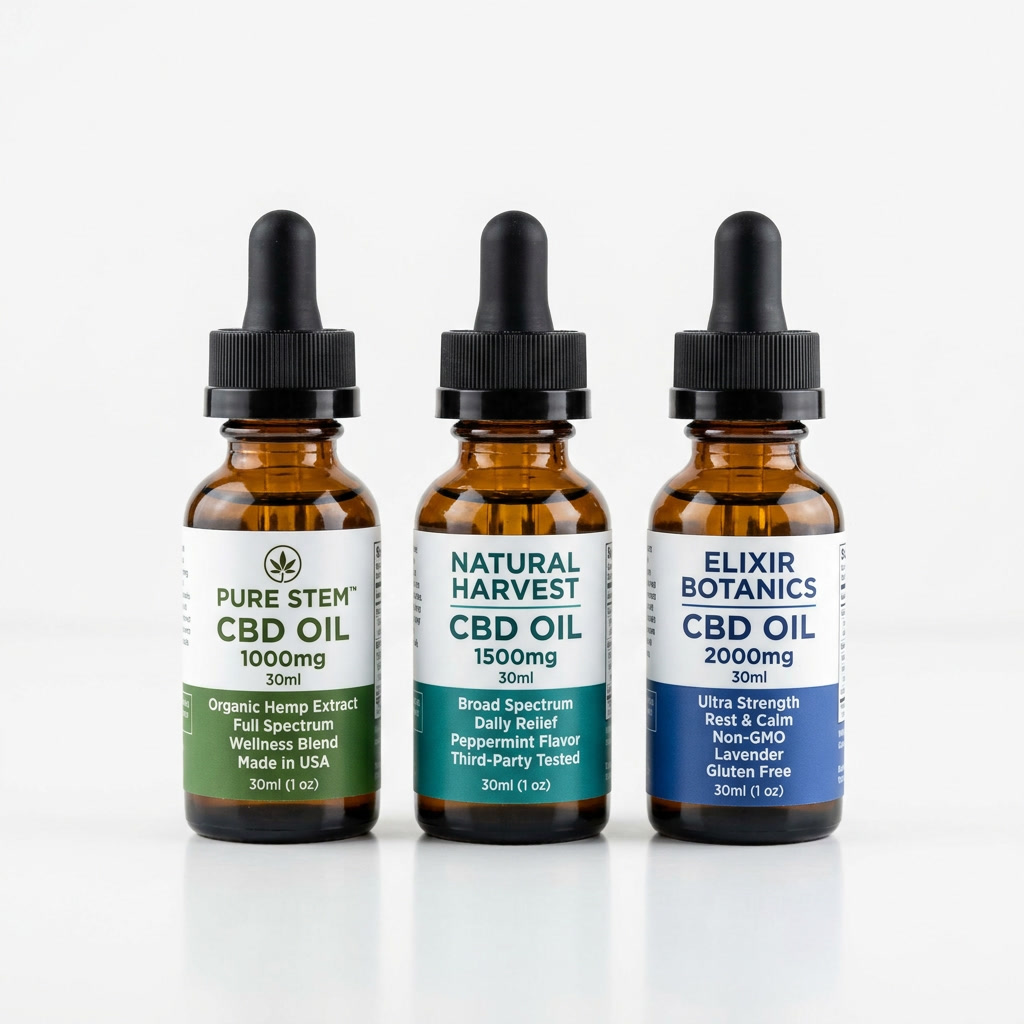
You're scrolling a hemp brand's website, or standing in a dispensary, and the label stops you cold: CBDV 25mg, CBC 15mg, CBD 10mg. The price tag is double what you'd pay for a plain CBD bottle. A little graphic promises "full-spectrum rare cannabinoid synergy." A badge says "next-generation formula."
You've been taking CBD oil for a year. You know what it does and doesn't do. Now you're being told the good stuff was hiding in the two minor ingredients all along.
So is this a genuine upgrade — or a clever way to charge more for the same plant? This article answers that question. We'll cover what CBC and cannabidivarin actually are, why they're flooding the market, what the laboratory science really shows, and how to decide whether the premium is worth it for you.
Cannabichromene (CBC) and cannabidivarin (CBDV) are two of the "minor" cannabinoids — real molecules with real laboratory science behind them, and right now the single hottest marketing story in the hemp industry. They're sold at a steep premium on the strength of studies that have mostly never been tested in humans.
What Are CBC and CBDV, Exactly?
Cannabis sativa produces more than 150 phytocannabinoids, and the vast majority are "minor" — present in amounts too small to dominate any plant. CBC and CBDV sit in that crowd alongside CBG, CBN, and THCV, all of which we've covered in our guide to the other minor cannabinoids.
The key distinction from the start: these are not intoxicating. CBC and CBDV are non-psychoactive, like CBD. That is exactly what makes them commercially attractive — a molecule that might do something without getting you high is a molecule you can sell to anyone.
The Chemistry in Plain English
CBC and CBDV share a starting point with CBD and THC. The plant builds a precursor called cannabigerolic acid (CBGA), then enzymes fold it into different finished compounds. CBC comes from the enzyme CBC synthase (CBCAS); CBDV comes from a shortened version of the same pathway that produces CBD, with a smaller chemical tail.
That structural difference matters. CBC's distinctive profile, according to a 2026 comprehensive review in the Journal of Cannabis Research (PMID 42464425), is that it barely touches the classic CB1 and CB2 cannabinoid receptors. Instead it acts strongly on TRP channels — TRPV1, TRPA1, TRPV3, TRPV4 — a family of receptors involved in pain, heat, and inflammation signalling, and it indirectly raises endocannabinoid tone by slowing the breakdown of anandamide. CBDV, by contrast, is best known for interacting with TRPV1 and modulating neuronal excitability.
Why They're Called "Minor"
"Minor" is a quantity label, not an importance label. Most hemp plants naturally produce CBC and CBDV at a fraction of their CBD, so isolating them is expensive and the doses in commercial products are often tiny relative to the CBD alongside them.
Why Minor Cannabinoids Are Suddenly Everywhere
If you feel like CBC and CBDV appeared out of nowhere in the last two years, you're right. Three forces are driving it.
First, CBD got boring. After a decade of explosive growth, plain CBD is a commodity. Prices have collapsed, and every brand sells the same thing. To stand out, companies need a story — and a rare plant compound with a patentable name is a much better story than "our CBD is also CBD."
Second, the science is finally catching up. Published studies on CBC and CBDV have climbed sharply since 2023, including a wave of reviews and mechanism studies — and brands quote them.
Third, formulation trends favour blends. The modern product is a stack: CBD plus CBG plus CBC, or CBD plus CBDV. The idea borrows from the entourage effect — the theory that cannabinoids work better together than alone. There's now real mechanistic support for specific pairings, which gives marketing a scientific hook.
The Price Premium Problem
Here's the uncomfortable part. Because CBC and CBDV are harder to extract and isolate, they genuinely cost more to produce. Some of the premium is real cost. But some is pure storytelling — a few milligrams of a minor cannabinoid used to justify a 50% higher price. Paying more is not inherently wrong, but you should know which part of the premium you're paying for.
What the Preclinical Evidence Says About CBC
Now the actual science. Read every finding below with one word in mind: preclinical. Almost all CBC research has been done in cells and animals, not people. A mouse is not a person, and a petri dish is not a body.
Antimicrobial Activity
CBC has shown antimicrobial promise in the lab. A 2026 study in the Journal of Applied Microbiology (PMID 41983582) found that a triple combination of silver with cannabichromene and cannabigerol produced broad-spectrum bactericidal synergy against healthcare-associated pathogens — meaning the cannabinoids made silver more effective, not just additive.
This is genuinely interesting, and it is also the kind of result that historically fails to translate. Killing bacteria in a dish tells you nothing yet about whether a cannabinoid can reach the right tissue at the right concentration in a human body.
Anti-Inflammatory and Pain Signalling
CBC's anti-inflammatory profile is the most studied area. A 2026 study in the Journal of Cannabis Research (PMID 42343451) examined how CBC regulates inflammatory signalling pathways in a collagen-induced arthritis model in rodents, mapping out which cytokine networks it touches in rheumatoid-arthritis-like inflammation.
Separately, a 2026 study in the Journal of Pharmacology and Experimental Therapeutics (PMID 42139799) found that CBC activates a distinctive population of sensory neurons — predominantly larger ones — with a dose-response that differed from CBD. The authors propose combinations of minor cannabinoids could give complementary pain signalling effects. Notice the language: hypothesized, propose. That is a mechanism paper, not a treatment.
And a 2026 animal study in the Journal of Cannabis Research (PMID 41680865) tested several minor cannabinoids in mice. CBC's relatives CBN and CBL showed some activity only at very high doses — doses that also caused hypothermia and catalepsy. A useful reality check: even in animals, meaningful effects sometimes appear only alongside side effects.
Cancer Cells in a Dish, Not People
A 2026 study in Antioxidants (PMID 42352060) reported that cannabigerol and cannabichromene induced cell death in lung cancer cells. It's a legitimate finding and a popular one for marketers to imply translates into a cancer treatment.
It does not. No cannabinoid is an approved cancer therapy, and cell-culture experiments are routinely cited to sell products they cannot possibly deliver on. Treat any "CBC fights cancer" claim as a red flag.
What the Preclinical Evidence Says About CBDV
CBDV's story is more neurologically focused — and slightly more advanced in one specific way we'll get to.
Seizures and Neuronal Excitability
CBDV first drew attention as a possible anticonvulsant. Its research lineage runs through childhood epilepsy, where a sibling compound — CBD — did eventually become an FDA-approved medicine. That's probably why CBDV became a favourite of epilepsy-adjacent marketing.
But the human evidence has not kept pace. A 2026 narrative review in Pharmaceuticals (PMID 42653723) assessed minor-cannabinoid pharmacology and described CBDV's human efficacy in epilepsy and neuropathic pain as inconclusive. That's the honest word from the literature itself.
The Autism and Rett Connection
This is where CBDV has its strongest preclinical case. CBDV has been studied in models of neurodevelopmental conditions, including Rett syndrome, Fragile X syndrome, and autism-relevant behaviour.
A 2025 study in Life Sciences (PMID 40633901) found that chronic CBDV treatment in a female mouse model of Rett syndrome mitigated motor-coordination impairments and preserved some cognitive function, though it did not prevent deficits in general locomotor activity. A 2025 study in the Journal of Psychopharmacology (PMID 41159452) showed CBDV improved cognitive and social deficits in a rat model relevant to schizophrenia — the first demonstration of its kind in that model.
These are encouraging animal results from reputable labs. They are also exactly the kind of results that can look promising in mice and then evaporate in randomised human trials. The most rigorous human check available, a 2026 systematic review in the Journal of Child and Adolescent Psychopharmacology (PMID 42339654), looked across 17 studies of cannabinoid products in children and adolescents with autism, Fragile X, and Rett syndrome. Its conclusion is sobering: the products showed mild-to-moderate side effects and low discontinuation, with descriptive hints of behavioural improvement, but "current evidence is insufficient to support routine clinical use."
Inflammation and the Gut
A 2025 study in Biomedicine & Pharmacotherapy (PMID 41237459) found that a CBD-to-CBDV combination at a 20:1 ratio reduced CXCR4 expression in immune cells and alleviated colitis in mice — with the effect disappearing in CB2-knockout mice, confirming it worked through the CB2 receptor. This is one of the clearest mechanistic arguments for the entourage effect: CBDV made CBD work better in a way neither did alone.
Other work has explored CBDV in neuronal hypersensitivity models (PMID 41322279) and in endometrial cell signalling (PMID 40706771), and one animal study found sex differences in how minor cannabinoids attenuated pain (PMID 41221301). The theme is consistent — mechanisms are being mapped, mostly in cells and rodents.
The Gap Between the Lab Bench and the Human Body
Here is the single most important thing to understand about minor cannabinoids, and the thing marketing materials almost never say out loud.
Almost none of this research has been done in humans. The overwhelming majority of CBC and CBDV findings come from cell cultures and animal models. We do not have large, placebo-controlled human trials showing that oral CBC reduces human pain, or that CBDV improves human autism symptoms, or that either changes a real clinical outcome.
That gap exists for a mundane reason: human trials are expensive, and minor cannabinoids are hard to patent. A company can spend tens of millions proving a synthetic drug works and then own the market. It cannot easily own a plant compound anyone can extract, so the funding that would move CBC and CBDV from mice to people mostly isn't there.
The result is a strange landscape: more papers than ever, more products than ever, and still very little idea what either compound does in a human body at a real dose.
Why "Rare" Usually Means "Expensive and Under-Studied"
"Rare" sounds like "precious." In practice it means two things at once.
It means low abundance. CBC and CBDV appear in small quantities, so isolating meaningful amounts requires more plant material, more solvent, and more processing. That's genuine cost.
It means low bioavailability and little dosing data. The 2026 CBC review (PMID 42464425) notes CBC's "notably low oral bioavailability" — it's broken down by liver enzymes before much reaches your bloodstream. We have no established human dosing for CBC or CBDV, so every product on the shelf is running its own untested dosing experiment.
Those two facts explain the premium — and they also explain why the premium should make you cautious, not impressed. You are paying more for a compound we understand less.
How to Read a Label That Claims a Minor Cannabinoid
Because CBC and CBDV are the new selling point, labels get creative. Here's how to cut through it.
Check the Actual Milligrams
A product that says "with CBC" might contain 2mg in a 30ml bottle. Look for a per-serving milligram figure for the minor cannabinoid specifically, not just a total "full-spectrum" number.
Read the COA
Every credible brand publishes a certificate of analysis from a third-party lab. It should list CBC, CBDV, CBD, and THC separately. If a brand claims CBC but its COA doesn't quantify CBC, that's a problem. Our guide to reading a CBD COA lab report walks through exactly what to look for.
Watch for These Red Flags
- A minor cannabinoid named on the front label but missing from the lab panel
- "Proprietary blend" instead of individual milligram amounts
- Any specific disease claim ("treats seizures," "kills cancer cells") attached to a CBD product
- A price premium with no corresponding label transparency
Should You Pay the Premium?
This is a personal call, and the honest answer is: not yet, for most people, on the strength of CBC or CBDV alone.
If you already get good results from a quality full-spectrum CBD product, the evidence does not yet justify paying double for a CBC- or CBDV-forward formula. The mechanism stories are real, but the human outcomes are unproven — you'd be paying for a hypothesis.
A minor-cannabinoid blend is only reasonable if a product transparently reports its minor-cannabinoid content and you can afford the experiment.
Minor Cannabinoids Beyond CBC and CBDV
CBC and CBDV are the current stars of the "rare cannabinoid" boom, but they're not the whole cast. CBG has its own anti-inflammatory research and is often called the plant's "stem cell" precursor. CBN is the famous (and overstated) "sleep cannabinoid." THCV is the appetite-and-focus molecule with mild CB1 activity.
Our CBG, CBN, and THCV guide covers the rest. The pattern is identical across all of them: promising preclinical science, aggressive marketing, and very little human proof.
How to Try a Minor Cannabinoid Safely
If you've decided to experiment, here's how to do it sensibly.
1. Start with a product that reports its minor-cannabinoid content per serving on a third-party COA.
2. Begin at the lowest dose and keep the rest of your routine unchanged, so you can tell what's actually doing something.
3. Track your response in a simple log — dose, timing, effects, side effects — for two to three weeks.
4. Be patient with delivery. Oral cannabinoids are poorly absorbed — delivery method matters more than dose; a tincture held under the tongue or a topical may behave very differently from a swallowed capsule.
5. Talk to your doctor before combining anything with prescription medications. CBC and CBDV interact with the same liver enzymes as CBD, which means real drug-interaction potential.
6. If you feel nothing after a reasonable trial, don't buy a stronger version out of hope. Not every compound works for every person.
The Bottom Line
CBC and CBDV are real compounds with real science behind them — and that science is almost entirely preclinical. The laboratory work on CBC's anti-inflammatory, antimicrobial, and pain-signalling activity, and on CBDV's effects in neurodevelopmental models, is legitimately interesting. But the 2026 systematic review of pediatric cannabinoid research says plainly that the evidence is not yet sufficient for routine clinical use. Nobody has published the large human trial that would settle the question.
So the boom is running ahead of the evidence. That doesn't make these molecules fake; it makes the marketing premature. A rare cannabinoid is often genuinely rarer, costlier, and less understood than the CBD you already know.
If you're curious, try it with clear eyes: demand transparent labels, start low, track honestly, and don't pay a premium for a promise the research hasn't made yet. If you're happy with a quality full-spectrum CBD, there's no hurry — the science will still be here when the human trials finally arrive.
Find Your Perfect CBD Product
Take our 2-minute quiz to get personalized recommendations based on your needs.
Take the Quiz →Disclaimer: This article is for informational purposes only and does not constitute medical advice. CBD products are not FDA-approved to treat, cure, or prevent any disease. Always consult with a qualified healthcare professional before starting any new supplement, especially if you have a medical condition or take medications.