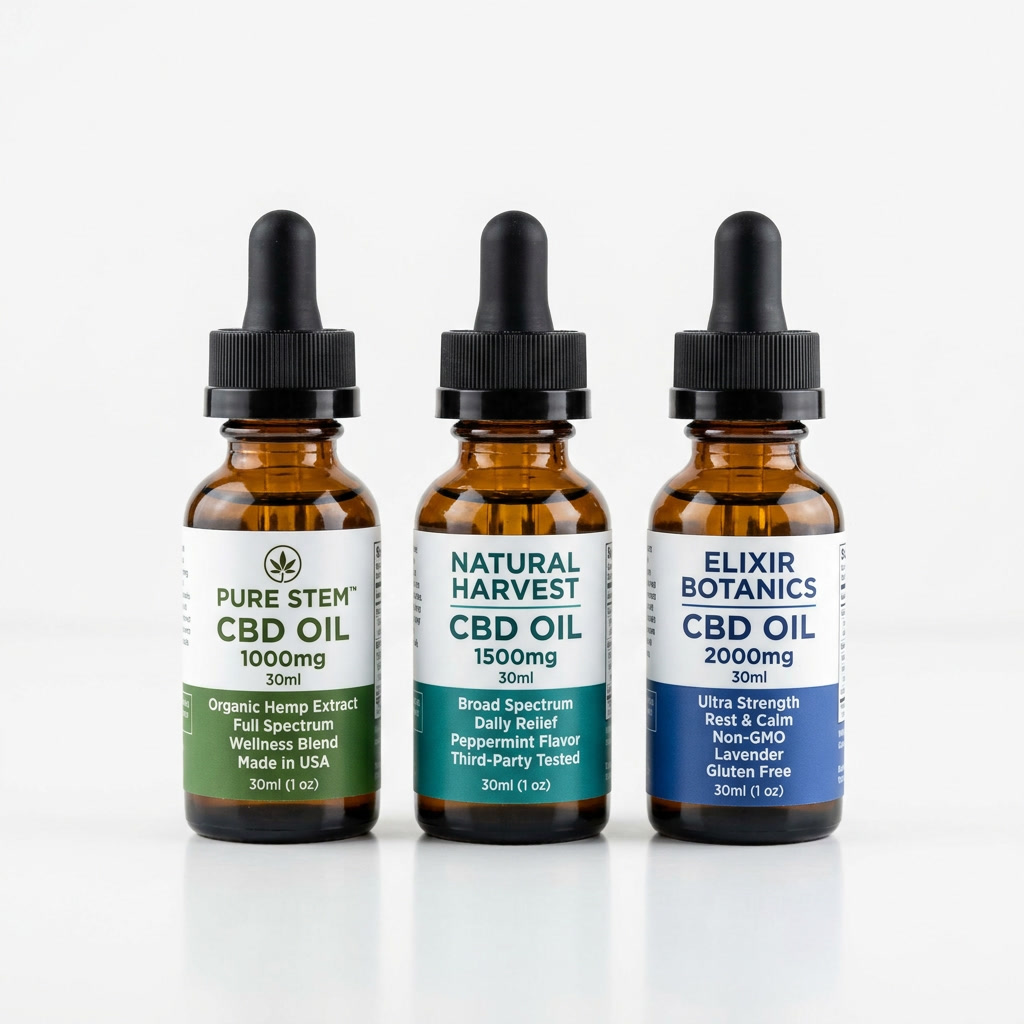
How to Read a CBD COA Lab Report (2026 Complete Guide)
The CBD Industry Has a Transparency Problem
You're standing in the supplement aisle (or scrolling through CBD products at 2 AM). Every bottle makes the same promises: "Pure," "Potent," "Third-Party Tested."
But here's the uncomfortable truth: Only 31% of CBD products are accurately labeled, according to a 2023 FDA study. That means 69% of products contain more, less, or completely different ingredients than what's printed on the label.
Some contain unsafe levels of pesticides or heavy metals. Others have virtually no CBD at all. A shocking number contain enough THC to trigger a drug test—even when labeled "THC-free."
So how do you separate the legitimate products from the snake oil?
The Certificate of Analysis (COA). This is your only reliable proof that a CBD product actually contains what it claims—and nothing it shouldn't.
But here's the problem: Most COAs look like confusing technical documents filled with jargon, abbreviations, and numbers that mean nothing to the average person.
Not anymore. This guide will teach you exactly how to read a CBD COA—section by section, line by line.
---
What Is a COA and Why Does It Matter?
A Certificate of Analysis (COA) is a document issued by an independent, third-party laboratory that verifies the contents of a specific batch of product.
Think of it like a nutrition label—but way more detailed and legally binding. While a nutrition label tells you calories and macros, a COA tells you:
- Exact cannabinoid profile (CBD, THC, CBG, CBN, etc.)
- Presence of contaminants (pesticides, heavy metals, microbes, solvents)
- Whether the product meets safety standards
- The specific batch that was tested
Why "Third-Party" Matters
There are three types of CBD testing:
1. In-House Testing (Red Flag 🚩)
The brand tests its own products in its own lab. This is like grading your own homework. Never trust a brand that only does in-house testing.
2. Contracted Testing (Better, But Not Perfect)
The brand pays a lab to test products. More reliable than in-house, but the lab is still financially dependent on the brand.
3. Independent Third-Party Testing (Gold Standard ✅)
The lab has no financial relationship with the brand beyond the testing fee. Results are uploaded to a public database. The lab's reputation depends on accuracy.
Look for COAs from accredited, independent labs: SC Labs, Kaycha Labs, Columbia Laboratories, Botanacor, Digipath Labs.
---
Section 1: Product & Batch Information
The top of every COA should clearly identify what was tested and when.
What to Look For:
Product Name: CBD Oil Tincture 1000mg
Batch/Lot Number: 2026-02-A15
Test Date: February 26, 2026
Report Date: February 28, 2026
Why Batch Numbers Are Critical
CBD is an agricultural product. Hemp grown in different fields, harvested at different times, or extracted in different runs will have different chemical profiles.
The COA only applies to the specific batch listed. If the batch number on your bottle doesn't match the batch number on the COA, that test result is meaningless for your product.
Red Flag 🚩: A brand shows you a COA, but the batch number doesn't match your bottle. This is "COA shopping."
What to do: Before buying, check if the brand lists batch-specific COAs. After buying, verify the batch number matches. If they can't provide it within 48 hours, consider returning.
---
Section 2: Cannabinoid Profile (The Potency Test)
This is the main event—the section that tells you exactly how much CBD, THC, and other cannabinoids are in the product.
Typical Format:
| Cannabinoid | Result (mg/g) | Label Claim | Within Spec? |
|-------------|---------------|-------------|--------------|
| CBD         | 67.3 mg/g     | 20 mg       | ✅ Yes        |
| THC         | ND            | 0.0 mg      | ✅ Yes        |
| CBG         | 2.1 mg/g      | -           | -            |
| CBN         | 0.4 mg/g      | -           | -            |
Understanding the Units
mg/g (milligrams per gram): Tells you concentration. If a 30mL bottle contains 30g of oil and has 67.3 mg/g CBD: 30g × 67.3 mg/g = 2,019mg CBD total.
mg/serving: Tells you how much per dose. If serving is 0.3g (one dropper): 67.3 mg/g × 0.3g = 20.2mg CBD per serving.
% (percentage): 6.73% CBD = 67.3 mg/g (they're equivalent: 1% = 10 mg/g).
THC: The "Non-Detect" Confusion
"ND" or "<LOQ" means "Non-Detect" or "Below Limit of Quantitation."
What it means: The lab's equipment can't detect THC below a certain threshold (usually 0.01% or 0.1 mg/g). This doesn't mean zero THC—it means less than the detection limit.
Is this a problem? For most people, no. "ND" THC in a broad-spectrum product is expected and safe.
---
💰 Calculate Your CBD Costs
Now that you know how to verify potency, let's talk value. Use our calculator:
🔥 CBD Price Per Mg Calculator
Stop getting ripped off. Calculate the REAL cost of CBD.
Usually 30 for 1oz tinctures, or number of gummies
💡 Market Reference (2026):
- Budget: $0.03-0.04/mg (Lazarus Naturals)
- Average: $0.05-0.07/mg (Medterra, cbdMD)
- Premium: $0.08-0.10/mg (Joy Organics, organic)
Updated February 2026 • Data from 20+ CBD brands analyzed
---
Note: The COA images section will be updated with actual brand COA screenshots shortly.
Within Spec: Does It Match the Label?
Acceptable variance: Industry standard is ±10%. If the label says 20mg CBD, actual content should be 18-22mg.
Red Flags 🚩:
- More than 20% less than label: You're being ripped off
- More than 20% more than label: Quality control issues
- No "Within Spec" column: The brand isn't held accountable
---
Section 3: Contaminant Testing
Just because a product has the right amount of CBD doesn't mean it's safe.
Hemp is a bioaccumulator—it absorbs contaminants from soil and water at a higher rate than most crops. If hemp is grown in polluted soil, those toxins end up in your CBD oil.
3A: Pesticide Screening
PESTICIDE RESIDUE ANALYSIS
| Pesticide   | Result | Limit    | Status |
|-------------|--------|----------|--------|
| Acephate    | ND     | 0.1 ppm  | ✅ Pass |
| Bifenthrin  | ND     | 0.1 ppm  | ✅ Pass |
| [50+ more]  |        |          |        |

OVERALL RESULT: PASS
What to look for:
- "ND" (Non-Detect) for all pesticides ✅
- LOQ should be ≤0.1 ppm
- "PASS" as overall result
Red Flags 🚩: Any pesticide detected, or testing for fewer than 20 pesticides.
3B: Heavy Metals
HEAVY METAL ANALYSIS
| Metal        | Result | Limit    | Status |
|--------------|--------|----------|--------|
| Lead (Pb)    | ND     | 1.0 ppm  | ✅ Pass |
| Cadmium (Cd) | ND     | 0.5 ppm  | ✅ Pass |
| Arsenic (As) | ND     | 0.5 ppm  | ✅ Pass |
| Mercury (Hg) | ND     | 0.1 ppm  | ✅ Pass |
Why it matters: Heavy metals accumulate in your body over time—unlike pesticides, they stay in your bones, liver, and brain for years.
3C: Microbial Contamination
Tests for E. coli, Salmonella, mold, yeast, and other microbes.
What to look for: "Absent" or "ND" for all pathogens. Total counts well below limits.
3D: Residual Solvents (For Extracts)
If the product is an extract, it was likely made using solvents like ethanol, butane, or CO2.
Best practice: CO2 extraction is cleanest, leaves no solvent residue.
---
Section 4: Lab Accreditation & Signatures
The bottom of the COA should include:
Testing Laboratory: SC Labs, Inc.
Address: 123 Lab Way, Denver, CO 80202
Accreditation: ISO/IEC 17025:2017
Tested By: Jane Smith, Lab Technician
Reviewed By: John Doe, Lab Director
Date: February 28, 2026
What to Verify:
ISO/IEC 17025 Accreditation: International standard for testing laboratories. Means strict quality control and regular audits.
Physical Address & Contact Info: Legitimate labs have real addresses you can verify on Google Maps.
Lab Director Signature: A real person should have reviewed and signed off.
Red Flags 🚩: No accreditation, missing signatures, lab can't be found online.
---
How to Verify a COA Is Authentic
Step 1: Check the QR Code
Most legitimate brands put a QR code on packaging. Scan it—it should take you directly to the COA for that specific batch.
Step 2: Verify on the Lab's Website
Don't trust COAs hosted only on the brand's website (they could be photoshopped). Go to the testing lab's official website and use their public COA lookup.
Step 3: Call the Lab
Legitimate labs will confirm whether a COA is authentic if you call and provide the batch number.
Step 4: Look for Blockchain Verification
Some labs use blockchain technology to create immutable COA records—tamper-proof.
---
Red Flags: When to Walk Away
🚩 No COA Available
If a brand doesn't provide COAs at all, do not buy their products. Period.
🚩 COA Doesn't Match Your Batch
You bought batch A, but the COA is for batch B. This is COA shopping.
🚩 Failed Contaminant Tests
The COA shows detected pesticides, heavy metals, or pathogens above the limit. Don't consume. Report to FDA.
🚩 CBD Content Way Off from Label
More than 20% variance suggests poor quality control.
🚩 Old COA (>12 Months)
CBD degrades over time. A year-old COA doesn't reflect what's in the bottle now.
🚩 Suspicious Lab
The lab has no website, no physical address, or you can't find information about it online.
---
The Bottom Line: Your COA Checklist
Before buying or consuming any CBD product, verify:
✅ The Basics
- [ ] COA is available (on website or via QR code)
- [ ] Batch number on COA matches your bottle
- [ ] Test date is within the last 12 months
- [ ] Lab is ISO 17025 accredited
- [ ] Lab has physical address and contact info
✅ Potency & Purity
- [ ] CBD content is within 10% of label claim
- [ ] THC content matches expectations
- [ ] Other cannabinoids (CBG, CBN) are listed
✅ Safety
- [ ] Pesticides: All ND (or below LOQ)
- [ ] Heavy metals: All ND (or below strict limits)
- [ ] Microbial: No pathogens (E. coli, Salmonella must be absent)
- [ ] Residual solvents: All ND (for extracts)
✅ Authenticity
- [ ] COA is verifiable on lab's website
- [ ] Lab director/technician signatures present
- [ ] Accreditation number is valid and current
🚩 Deal-Breakers (Do Not Buy If):
- No COA available
- Batch number doesn't match
- Any contaminant above legal limits
- CBD content >20% off from label
- Lab can't be verified
---
Final Thoughts: Knowledge Is Power
The CBD industry is still the Wild West. Regulation is minimal, enforcement is spotty, and bad actors exploit consumer trust.
But you're not powerless.
The COA is your shield. It's the one document that cuts through marketing hype and tells you what's actually in the bottle.
Once you know how to read a COA, you'll never buy CBD blind again. You'll spot red flags before they become health risks. You'll reward transparent brands with your business and avoid the snake oil salesmen.
So next time you're shopping for CBD, don't just read the label.
Read the COA. Your health is worth the extra five minutes.
---
Disclaimer: This guide is for educational purposes only and does not constitute medical or legal advice. Always consult with a healthcare provider before using CBD products.
For the contaminants themselves - heavy metals, pesticides, solvents and mycotoxins - see our new piece on CBD purity and contaminants.
*Last updated: February 28, 2026
Find Your Perfect CBD Product
Take our 2-minute quiz to get personalized recommendations based on your needs.
Take the Quiz →Disclaimer: This article is for informational purposes only and does not constitute medical advice. CBD products are not FDA-approved to treat, cure, or prevent any disease. Always consult with a qualified healthcare professional before starting any new supplement, especially if you have a medical condition or take medications.