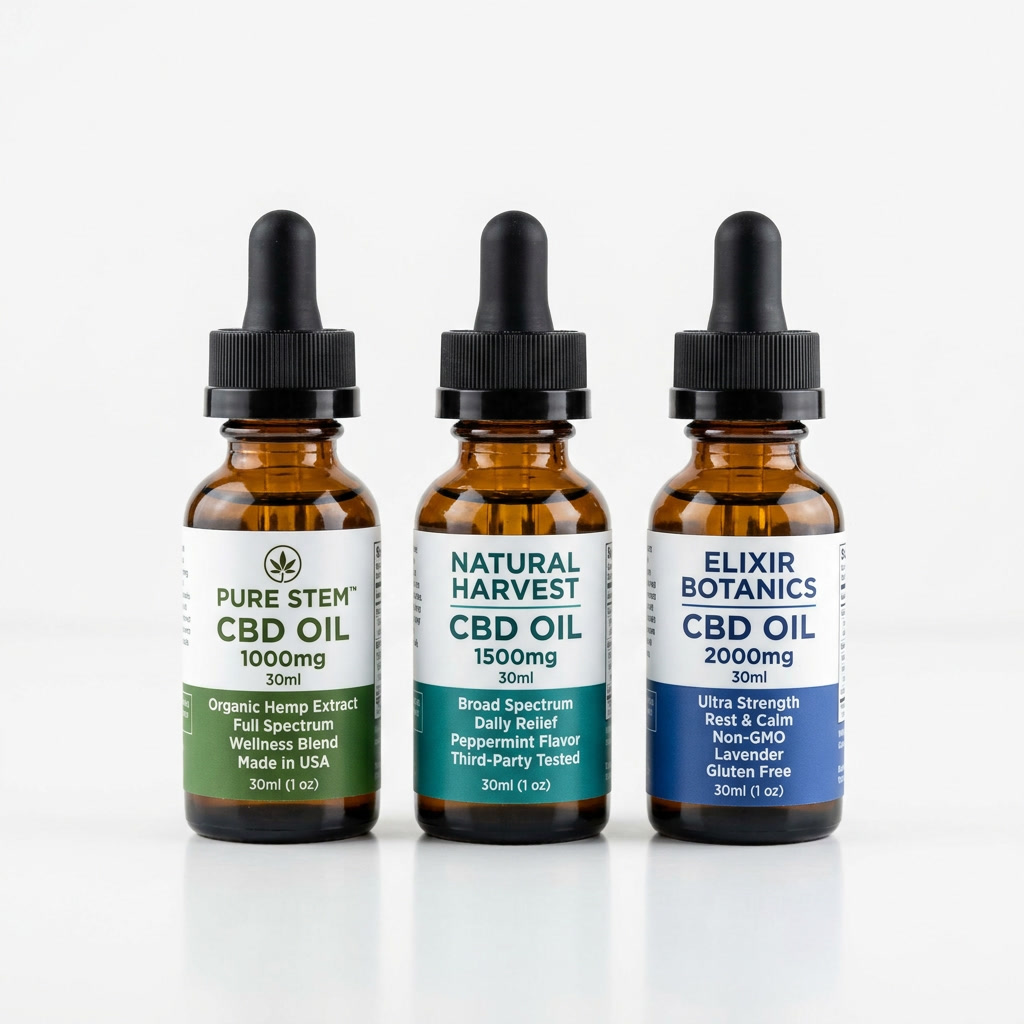
CBD and Physical Therapy: Where It Helps and Where It Gets in the Way
You are three weeks into rehab for a shoulder that will not lift, doing the same four exercises every day, and someone tells you CBD will help you recover faster. You buy a bottle. Now you are taking something nobody asked you to take, alongside a programme that depends on you turning up and doing the work.
The honest question is not whether CBD is anti-inflammatory in a dish. It is whether it changes anything about the thing rehab actually needs: consistent loading, tolerable pain, and a nervous system that stops guarding.
What Rehab Actually Needs
Physical therapy works through specific mechanisms. Tissue adapts to progressive load. Nerves desensitise with graded exposure. Muscles strengthen when they are challenged and then rested.
None of those mechanisms are about inflammation in the abstract. Inflammation is part of healing, not an enemy of it. This is the first place the CBD conversation goes wrong, because people assume lower inflammation means faster recovery, and that is not what the literature supports.
So the only useful question is narrower: does CBD help a person tolerate rehab better, or does it interfere with the process?
What the 2023 Onward Research Actually Shows
A 2026 scoping review in the Journal of Pain and Palliative Care Pharmacotherapy examined cannabis-based medicines for nociplastic pain. This is the same territory our chronic pain overview covers for back pain and migraine. Nociplastic pain is the category where the nervous system itself has become sensitised, which is common in chronic musculoskeletal problems. A scoping review maps a field rather than settling it, and that is exactly what this literature needs.
A 2026 randomised, double-blind, placebo-controlled crossover trial in Age and Ageing is more useful, because it is an actual trial with actual controls. Crossover designs are strong for individual response. They are also single studies in single populations.
A 2026 randomised trial in Cannabis and Cannabinoid Research examined a CBD-containing topical formulation for localised pain in fibromyalgia. Fibromyalgia is nociplastic pain by definition, which makes it a reasonable model for the sensitised patient stuck in rehab.
A 2026 study in the Journal of Cannabis Research looked at vaporised CBD and neuropathic pain. Neuropathic pain is a distinct mechanism from muscular pain, and it responds to different interventions, which is why lumping all pain together produces nonsense.
A 2026 review in the Journal of Clinical Medicine on cannabinoid-based interventions for low back pain is directly relevant to the largest single reason people attend physiotherapy. Our guide to CBD for osteoarthritis covers the joint side of that.
There is genuine signal here for pain tolerance. There is no trial showing CBD accelerates tissue healing or improves strength outcomes.
The Muscle Question Nobody Asks
A 2026 paper in the European Journal of Translational Myology examined cannabidiol and skeletal muscle insulin resistance, a thread we also followed in CBD and skeletal muscle. This is worth knowing for an unexpected reason: it means CBD is being studied for its effects on muscle metabolism, not only on pain.
That cuts both ways. It suggests CBD is biologically active in muscle tissue. It also means the assumption that CBD is inert with respect to training adaptation is not safe. Nobody has established whether that matters at the doses people take, and the honest answer is that we do not know.
Bone, Tendon, and the Healing Timeline
A 2026 review in Current Osteoporosis Reports covered phytocannabinoids and bone health. Bone healing is a slow, inflammation-dependent process. Anything that meaningfully dampens the inflammatory phase could, in principle, slow it. Again, that is a mechanism-level concern rather than a demonstrated human harm, but it is the reason a physiotherapist will raise an eyebrow at someone taking an anti-inflammatory cocktail through a fracture recovery.
The endocannabinoid system is genuinely involved in bone remodelling. That is real biology. It does not follow that adding plant cannabinoids improves it.
Sleep Is the Underrated Part
Most people who fail rehab fail on sleep, not on exercises. Pain disrupts sleep, poor sleep lowers pain tolerance, and the loop tightens.
If CBD improves your sleep, that is a legitimate benefit, and it may matter more to your recovery than any direct analgesic effect. The evidence there is its own subject, set out in our sleep maintenance review. The catch is that the evidence for CBD and sleep is itself modest and inconsistent. It is a reasonable thing to try and a poor thing to be certain about.
The Interaction Problem
This is the practical core, and it is the same problem that appears in every CBD article worth reading.
CBD inhibits the enzymes that clear a long list of drugs. If you are in rehab after surgery you may be on anticoagulants, and CBD and blood thinners explains why that pairing deserves its own conversation. If you are managing chronic pain you may be on gabapentinoids or opioids. If you have any cardiac history you may be on something with a narrow therapeutic window.
Adding CBD on top of those is not automatically dangerous. It is unmeasured. The enzyme question is covered in detail in our liver safety guide. Nobody is checking your levels, and the product label does not tell you what you actually swallowed.
The 2026 Minerva Anestesiologica review on anaesthesia and medical cannabis and the 2026 Cureus review on cannabis in orthopaedic surgery both exist because this interaction profile is taken seriously by the people who manage surgical patients.
What the Evidence Does Not Show
Plainly, because vagueness is where people get hurt:
- It does not show that CBD speeds tissue healing.
- It does not show that CBD improves strength or range-of-motion outcomes.
- It does not show that CBD replaces analgesia well enough to let you push through a rehab programme.
- It does not show a dose for musculoskeletal pain. Every number quoted is extrapolated from other contexts.
- It does not show that CBD is safe alongside your specific medication list. That is a question for a pharmacist.
- It does not show that a topical contains what the label says, or penetrates to the tissue you are treating.
One Thing That Cuts Against the Hype
If CBD dulls pain enough that you train through a warning sign, it has made things worse. Rehab depends on accurate feedback. Numbing a tendon that is telling you to stop is not progress.
This is the same argument used against over-the-counter painkillers before training, and it applies just as well to a product marketed as natural.
If You Are Doing Rehab
The sequence the research supports:
Tell your physiotherapist what you take, including CBD. They cannot adjust a programme around a variable they do not know about. This is the single highest-value action available to you.
Do not use CBD to mask pain so you can override the programme. If an exercise hurts beyond the agreed threshold, that is information, not an obstacle.
Keep the boring things. Loading, sleep, and turning up matter more than any supplement, and the evidence for those is not in question.
Do not stop a prescribed medicine to make room for CBD. Withdrawal from several pain and anxiety medicines is worse than the interaction you were avoiding.
If you are heading for surgery, say so. The anaesthesia literature on cannabis is unambiguous about the need to disclose.
Where CBD Might Genuinely Fit
The most defensible use in a rehab context is the one people underrate: managing the distress and sleeplessness that come with a long recovery.
If anxiety about the injury is what stops you sleeping, and poor sleep is what stops you progressing, then addressing sleep is rational. See our review of the anxiety evidence for how modest those effects are. CBD has been studied for anxiety with modest and inconsistent effects. That is a real, if limited, basis for trying it.
The key is to treat it as a sleep and distress intervention, not as a healing one. Those are different claims, and only one of them survives contact with the research.
The Load Versus Pain Trade-Off
Rehab is a dosing problem, and the dose is load.
Too little load and tissue does not adapt. Too much and you flare, lose confidence, and regress. The therapeutic window sits between those, and finding it is what a physiotherapist is actually doing in the first few sessions.
Where CBD fits into that picture depends entirely on which side of the window you are failing on. If you cannot tolerate any load because the pain is too sharp, dulling it slightly might let you start. If you can tolerate load but you have been pushing through warning signs, dulling the pain is the opposite of what you need.
That distinction is the whole argument, and it is why blanket advice about CBD for rehab is useless.
There is also a timing subtlety. Pain during an exercise is not the same as pain after it. A flare that settles within 24 hours is usually acceptable. A flare that builds across sessions is a signal. Anything that blunts your ability to tell those apart has made your rehab harder, not easier.
What the Nervous System Is Doing
Chronic musculoskeletal pain is rarely just tissue damage. After weeks or months, the nervous system itself changes. Thresholds drop, areas of sensitivity spread, and movements that were previously automatic become guarded and deliberate.
This is central sensitisation, and it is why the nociplastic literature matters here. It is also why the interventions that help are not primarily anti-inflammatory. Graded exposure, pacing, sleep, and confidence building do more for a sensitised system than any single molecule.
CBD does have a plausible mechanism in that territory. The endocannabinoid system is involved in pain modulation at the spinal and central level, not only at the site of injury. That is genuine biology, and it is why the trials keep being run.
But plausible mechanism is where most supplement claims begin and most supplement evidence ends. A mechanism tells you a thing might work. It does not tell you that it does, at what dose, for which patient.
Reading a Rehab Study Properly
Most people read the abstract of a pain study and take away a number. That reading is usually wrong for four specific reasons.
First, population. A trial in fibromyalgia does not generalise to a post-operative knee. A trial in neuropathic pain does not generalise to tendinopathy. These are different mechanisms, and the trials are designed around that.
Second, comparator. If the control group got placebo and usual care, and the CBD group got CBD and usual care, a positive result tells you CBD added something to usual care. It does not tell you CBD works on its own.
Third, duration. Most pain trials run for weeks, not months. Chronic musculoskeletal problems run for years. The evidence often does not cover the timescale you are living in.
Fourth, outcome. A statistically significant reduction in a pain score of one point on a ten-point scale is real and is also not the difference between functioning and not functioning. Both things are true at once.
None of that makes the literature worthless. It makes it narrower than the headlines, which is the useful correction.
Topicals, Which Are a Different Question
Most people in rehab who try CBD use a topical, not an oil, and that deserves separating out.
A 2026 randomised trial in Cannabis and Cannabinoid Research tested a CBD-containing topical for localised pain in fibromyalgia. A 2025 review in Biomolecules covered CBD in skin health and topical applications broadly.
Topicals have an appealing logic. You put it where it hurts, systemic exposure is low, and the interaction risk with oral medicines is smaller. That is a real advantage in a rehab context where people are often on several drugs.
The catch is penetration. Skin is a barrier, and how much CBD crosses it depends on formulation, vehicle, and the tissue underneath. A topical on a superficial muscle is not the same as a topical over a deep joint. Reviews of topical CBD consistently note that formulation determines everything and that most commercial products have not been tested for penetration at all.
There is also the honest point that rubbing something on a painful area feels good regardless of what is in it. Massage has its own evidence base. A placebo-controlled topical trial is the only way to separate the two, and those are rare.
What a Good Trial Looks Like Here
If you want to judge a claim for yourself, four questions do most of the work.
Was it randomised and controlled? If not, it describes people who improved, not a treatment that caused improvement.
Was it blinded? Pain is unusually susceptible to expectation, and unblinded pain trials reliably overstate effect.
How many people, for how long? Twelve people for four weeks is a signal. It is not a basis for changing what you do.
What was the actual outcome? A pain score is not the same as function, return to work, or the ability to carry your child. Trials that measure only the score leave the clinically important question open.
The 2026 crossover trial in Age and Ageing is worth looking at precisely because it satisfies the first three. A crossover design controls for individual variation, which is a real methodological strength in a field full of weak designs.
The Cost of Getting This Wrong
Two failure modes are worth naming, because both are common and both are caused by good intentions.
The first is substitution. Someone stops doing the exercises because the CBD is handling it. Nothing handles it. Load is the intervention, and removing the intervention removes the effect.
The second is masking. Someone uses CBD to push through a programme that their tissue is not ready for, flares, loses confidence, and concludes that rehab does not work for them. The programme was fine. The feedback loop was broken.
Both failures share a shape. The supplement was used to override a signal rather than to support a process.
What to Track Instead
If you are going to try CBD during rehab, give yourself a way to tell whether it is helping. Vague impressions are not evidence.
Track the same three things weekly. Pain during the agreed exercises, on a consistent scale. How many sessions you completed versus how many you planned. And sleep quality, because it moves pain tolerance more than most people realise.
If the pain score improves but completed sessions do not, you have probably bought comfort rather than progress. If completed sessions improve and pain holds steady, that is the outcome that matters, because it means the programme is advancing.
Stop after a defined period and compare. Four to six weeks is a reasonable window. If nothing has changed on the measures you chose, the honest conclusion is that it did not work for you, and no dose increase is going to change that.
Questions Worth Asking
Can I take CBD before a physio session?
There is no rule against it and no evidence that it improves the session. The thing to avoid is taking enough to mask pain so that you push past a threshold your therapist set. If you cannot feel the feedback you agreed to monitor, the session was less useful than it looked.
Will CBD help with the soreness after exercises?
Delayed onset muscle soreness is a normal adaptation signal, not an injury. It resolves on its own within a few days. Treating it is optional, and there is no trial showing CBD shortens it. Our muscle recovery guide covers what the evidence does say about the recovery window.
Does CBD help tendon problems?
Tendinopathy is a loading problem, not primarily an inflammatory one. The intervention with the strongest evidence is progressive loading over months. CBD has not been shown to change tendon healing in humans, and the trials that exist in this area are small and preclinical.
Is a topical better than an oil for a bad knee?
A topical has lower systemic exposure, which is an advantage if you take other medicines. Whether it reaches the tissue depends entirely on formulation, and most commercial products have not been tested for that. An oil has better-established systemic absorption and a correspondingly larger interaction profile.
What if I have been on CBD for years?
Tolerance is real, and the anaesthesia literature discusses altered requirements in regular users. If you are heading for an operation, that history is something your anaesthetist should know, not something to mention afterwards. We cover that conversation in our guide on what to tell your surgeon.
Should I stop CBD before an operation?
That is a clinical decision with a real answer, and it belongs to your surgical team rather than to an article. Some guidance suggests stopping well in advance, and the specific window depends on your procedure and your other medicines.
Bottom Line
The research on CBD for musculoskeletal pain and rehab is early, heterogeneous, and mostly about pain tolerance rather than recovery outcomes. There is genuine signal for nociplastic and neuropathic pain. There is no evidence that CBD accelerates healing, and a plausible mechanism by which it might not.
Tell your physiotherapist. Keep doing the exercises. Do not numb yourself into overtraining.
Find Your Perfect CBD Product
Take our 2-minute quiz to get personalized recommendations based on your needs.
Take the Quiz →Disclaimer: This article is for informational purposes only and does not constitute medical advice. CBD products are not FDA-approved to treat, cure, or prevent any disease. Always consult with a qualified healthcare professional before starting any new supplement, especially if you have a medical condition or take medications.