Sore After the Gym? The Real Story on Topical CBD for Muscle Recovery
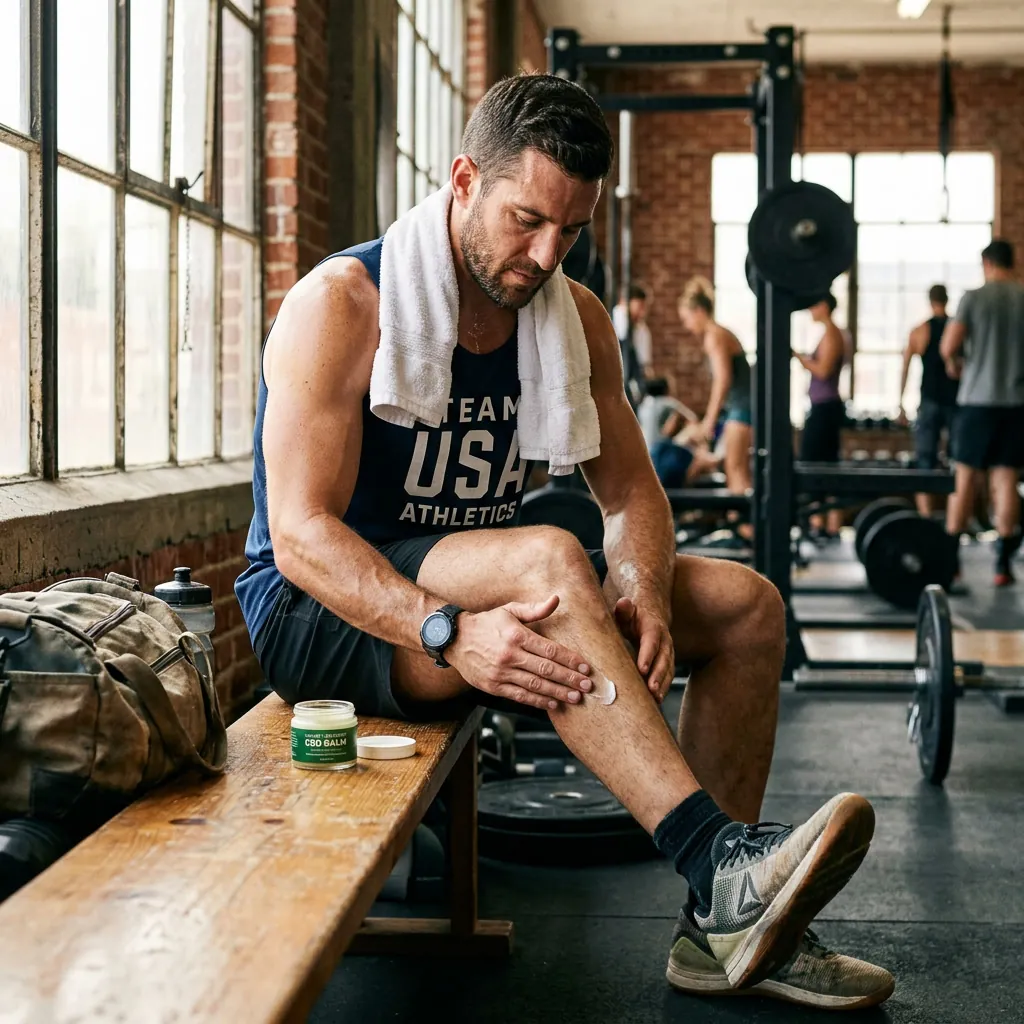
You know the feeling. You pushed through a hard leg day, felt great for a few hours, and then the next morning your thighs are so sore you groan getting out of bed. Two days later you are still waddling down the stairs like a penguin. Maybe you have seen the little jars and roll-on sticks of CBD cream in the gym bag aisle and wondered whether any of it actually helps, or whether it is just fancy moisturizer with a wellness sticker. That is a fair question, and it deserves a straight answer. Topical CBD has moved from internet chatter into real laboratories, and the early human research is genuinely interesting but far from settled. In this post we will walk through what the newest studies actually found, where the evidence is thin or comes only from animals, and how to think about CBD as one small piece of a recovery routine. No hype, no miracle promises, just the honest picture so you can decide for yourself.
Why Your Muscles Feel Like They Lost a Fight
That heavy, tender, stiff feeling that shows up a day or two after unfamiliar or intense exercise has a name, delayed onset muscle soreness, usually shortened to DOMS. It is not the same as the burn you feel during a set. It peaks anywhere from 24 to 72 hours after the workout and then fades. It usually comes from movements that involve a lot of lengthening under load, think downhill running, deep split squats, or a first-ever spin class.
The soreness is part of a repair process. Tiny mechanical stress in the muscle fibers triggers a local inflammatory response, and your body sends in immune cells to clean up and rebuild. That process is how you get stronger. The discomfort is the cost of adaptation, not a sign that you broke something. This matters for the CBD conversation because anything that claims to help recovery is really making a claim about inflammation and pain signaling, not about some magic ingredient that erases the work you did.
What Actually Happens During Recovery
It helps to separate two things people often blur together. The first is tissue repair, the biological rebuilding that happens over days and weeks. The second is how sore and how functional you feel while that repair is underway. A cream on your skin is unlikely to speed up the underlying biology in any dramatic way. What it might reasonably do is help you feel more comfortable and move a little more easily while your body does its work.
That distinction is exactly what the newest research is starting to probe. Researchers are not just asking whether people feel better. They are asking whether soreness scores drop, whether strength or range of motion changes, and whether the effect is real compared with a placebo. That is a much higher bar, and it is the right one to hold any product to.
The Newest Human Evidence on Topical CBD
Two 2026 studies in the Journal of Cannabis Research are the closest we have to direct human evidence on topical CBD and muscle recovery. Both are worth reading with clear eyes.
The first, a randomized, double-blinded pilot study published in 2026 in the Journal of Cannabis Research, looked at topical application of cannabidiol for muscle recovery after exercise-induced muscle damage. The key phrase there is pilot study. A pilot is a small early trial designed to see whether an effect is worth chasing, not to prove one. It is a starting gun, not a finish line. Still, a double-blinded design, where neither the participants nor the researchers know who got the real product, is a meaningful sign that this question is being taken seriously rather than marketed at.
The second 2026 study in the Journal of Cannabis Research examined the efficacy and safety of cannabidiol for reducing pain and functional impairment tied to exercise-induced muscle injury. Again, the focus on both pain and function is important. Feeling less sore is nice, but being able to squat, reach, or walk normally is what actually matters for people who train. When a study measures function alongside pain, it is asking a more honest question. Keep in mind that these are early findings from small trials. Encouraging, yes, but not a settled verdict you should bet your training block on.
Pairing Topical CBD With the Bigger Picture
If you are dealing with soreness, a topical is one tool among several. Many people combine a cream with other approaches, and it is worth understanding the wider conversation. If you want background on how CBD interacts with the body in general, it is worth starting with the basics before you buy anything.
For the recovery-soreness crowd, the most relevant context is inflammation. There is a growing body of discussion around CBD and inflammation, which helps explain why researchers even bother studying a cream for muscle soreness in the first place. If your discomfort is more persistent than a couple of days of DOMS, our overview of CBD for chronic pain covers when soreness stops being a normal part of training and starts being something to talk to a clinician about.
It is also worth remembering that recovery is not only about rubbing something on your legs. Sleep, protein, hydration, and not stacking hard sessions back to back all do more for recovery than any jar on its own. A topical can be a comfort tool that sits on top of a solid routine. It is not a substitute for one.
What the Muscle Biology Research Suggests
There is a more basic-science angle worth knowing about, even though it is not a soreness study. A 2026 paper in the European Journal of Translational Myology explored cannabidiol and skeletal muscle insulin resistance, with an eye on what it might mean for exercise and rehabilitation medicine.
This is not a trial where people rubbed cream on their quads and felt better. It is a translational paper, meaning it sits between the lab bench and the clinic, asking how CBD might influence how muscle handles fuel. The relevance to recovery is indirect. Healthy muscle metabolism supports the energy demands of training and repair. If CBD were someday shown to support that in humans, it could matter for rehabilitation settings where muscle function is compromised. For now, treat this as background science that frames the question, not as evidence that a topical will help you recover from a hard workout. Translational work points at possibilities. It does not deliver proof of a consumer benefit.
The Mouse Study Everyone Shares
You may have seen headlines claiming CBD boosts endurance. Those trace back to a 2025 study in Experimental and Molecular Medicine showing that cannabidiol reshapes the gut microbiome to promote endurance exercise in mice.
Read that again, in mice. This is an animal study, and the mechanism it points to is the gut microbiome, not muscle tissue and not the skin. That is a long way from a human rubbing a cream on a sore calf. Mice studies are valuable because they let researchers explore mechanisms safely and cheaply. They are also notorious for not translating cleanly to people, especially in something as complex as exercise performance, which involves motivation, sleep, nutrition, and a hundred other variables that mice and humans do not share.
So if someone tells you a topical CBD product will improve your endurance, that is a leap the evidence does not support. The mouse study is interesting science about the gut, and it belongs in the "we are still learning" bucket, not the "buy this for your 5k" bucket.
Why Athletes Need to Read the Label Carefully
Here is a point that competitive athletes should take seriously, and it has nothing to do with whether CBD works. A 2026 study in Medicine and Science in Sports and Exercise found that daily use of a broad-spectrum cannabidiol supplement produced detectable concentrations of cannabinoids in urine that are prohibited by sport.
That is the whole warning in one sentence. Even a broad-spectrum product, which people often assume is "cleaner," can leave traces. And it is not only about THC. The study is a reminder that what is banned is defined by sports authorities, and those rules do not always match what a label emphasizes. If you are subject to drug testing, whether at a college, national, or professional level, a supplement that puts a banned substance in your urine is a career problem, not a recovery problem.
If you compete, our CBD drug test guide walks through how to think about testing, and it is worth reading before you put anything new in your body, and before you rely on any product. When in doubt, the safest move is to skip it and talk to your team's medical staff. No amount of muscle comfort is worth an anti-doping violation.
How to Choose a Topical CBD Product
If you have weighed the evidence and want to try a topical, the product you pick matters more than the marketing around it. Start with our range of CBD topicals and creams to see what formats exist, from balms to roll-ons to cooling gels. Different formats suit different needs. A roll-on is handy for a specific area, a balm might feel nicer for a broader application.
Then do the boring but important part, which is checking the paperwork. A third-party lab report, called a certificate of analysis or COA, tells you what is actually in the product, including the CBD content and whether any THC is present. Our guide on how to read a COA breaks it down so you can spot a real report from a marketing graphic. If a brand will not show you a current COA, that is your answer.
Also look at total cannabinoid content and the carrier ingredients. Sore muscles do not care about a fancy label. They care about what is in the jar, and so should you.
How to Use Topical CBD Sensibly
Topical CBD is applied to the skin, so it acts locally rather than being a full-body experience the way an edible or tincture might be. That is part of its appeal for recovery, since you can target exactly where you are sore. Follow the product's instructions, and do a small patch test first if you have sensitive skin, especially with anything that contains menthol or other cooling agents.
Timing is personal. Some people like to apply a balm after a workout or before bed so they are more comfortable overnight. Others use it before a session. There is no strong evidence that one timing beats another, so start simple and see how your body responds. Keep expectations modest. A topical might take the edge off. It will not erase a hard session, and it will not make you stronger.
If you have a skin condition, an open wound, or you are pregnant or nursing, talk to a healthcare professional before using any new topical. And if soreness lasts more than a few days, gets worse, or comes with swelling or dark urine, that is a sign to seek medical care, not to reach for another layer of cream.
Common Questions People Ask
Does topical CBD actually absorb through the skin? Some does, though how much depends on the formulation and the area. This is one reason results vary so widely between people and products, and one reason researchers are still running trials.
Will it test positive on a drug test? Possibly, which is exactly why the 2026 sports study matters. If you are a tested athlete, assume any cannabinoid product carries some risk.
Is full-spectrum better than broad-spectrum? Not automatically. Broad-spectrum means THC has been largely removed, but the sports study shows traces can still appear. The right choice depends on your needs and, for athletes, on the rules you fall under.
Can I use it every day? Many people do, but there is no strong long-term human data on daily topical use for recovery specifically. Moderation and attention to how you feel are reasonable defaults.
Action Steps
Start with the basics before you spend a cent. Sleep, protein, hydration, and sensible training progression do more for recovery than any product. Build that foundation first.
If you want to try a topical, choose a brand that publishes a current third-party COA, and check the CBD content and THC level before you buy. Pick a format that fits how you train.
Set a simple test. Use it for one or two weeks during a normal training block and note whether soreness and function actually feel different. If nothing changes, you have your answer and you can stop.
If you are a tested athlete, treat every cannabinoid product as a risk until proven otherwise. Check with your team's medical staff before you use anything.
Keep the evidence in perspective. The 2026 human studies on topical CBD are small pilots. The endurance findings are from mice. The strongest practical lesson so far is a caution about testing, not a promise about performance.
Bottom Line
Topical CBD for muscle soreness is a genuinely open question, and the honest answer right now is maybe, but we do not know yet. Two small 2026 pilot trials in the Journal of Cannabis Research suggest topical CBD could help with soreness and function after exercise-induced muscle damage, which is enough to justify more research but not enough to promise results. The muscle-metabolism work is early translational science, and the endurance headline comes from mice, not people.
The most solid takeaway is a warning. A 2026 study in Medicine and Science in Sports and Exercise showed that a daily broad-spectrum CBD supplement can put banned cannabinoids in your urine, which matters enormously if you are tested. For everyone else, a quality topical with a real COA is a reasonable comfort tool to sit alongside sleep, food, and smart training. Be skeptical of hype, be honest about the limits of the evidence, and let your own experience guide you.
Find Your Perfect CBD Product
Take our 2-minute quiz to get personalized recommendations based on your needs.
Take the Quiz →Disclaimer: This article is for informational purposes only and does not constitute medical advice. CBD products are not FDA-approved to treat, cure, or prevent any disease. Always consult with a qualified healthcare professional before starting any new supplement, especially if you have a medical condition or take medications.