Waking at 3am? What CBD Can and Cannot Do for Sleep Maintenance
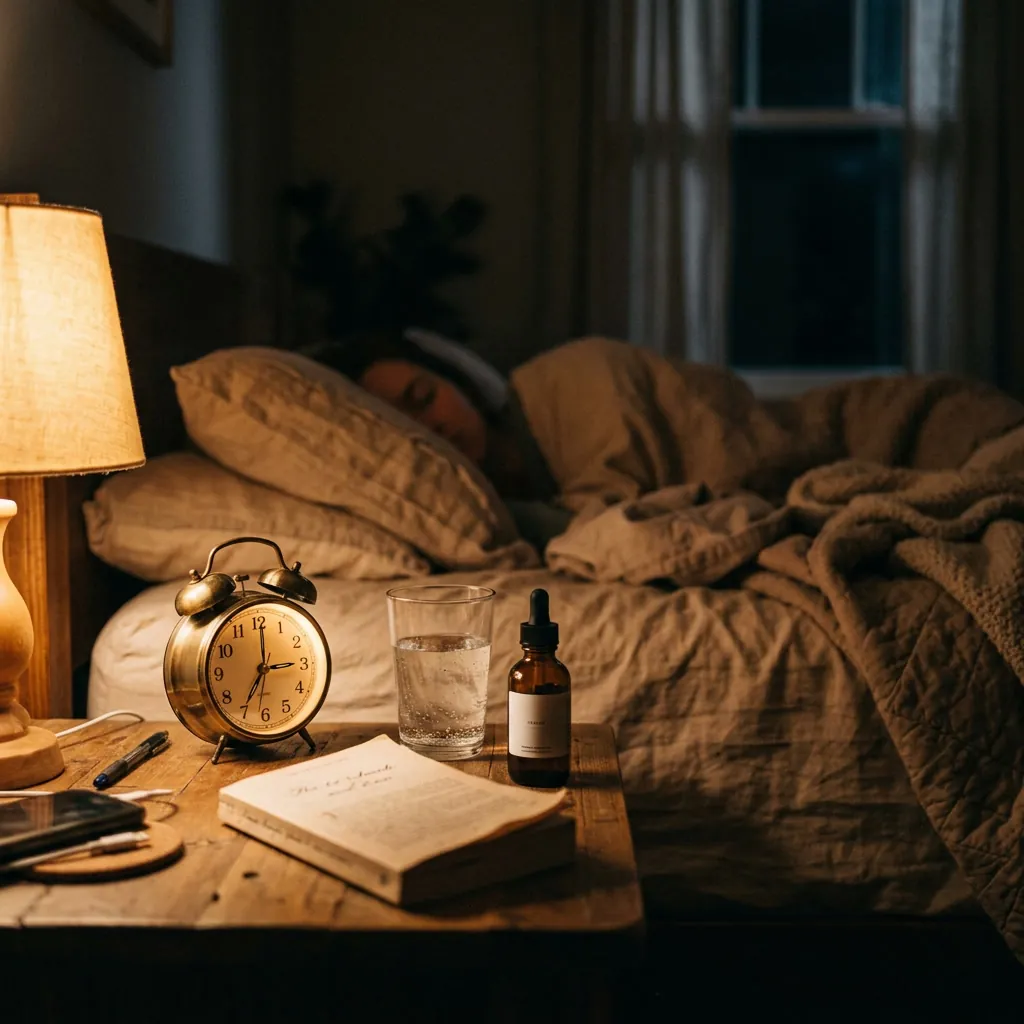
You fall asleep without much trouble. That part is fine. Then, almost on schedule, your eyes open somewhere around 2am or 3am and your brain switches on like someone flipped a breaker. You check the clock, do the math on how many hours are left, and quietly start bargaining with the ceiling. An hour passes. Maybe two. Eventually you drift off again, or you give up and start the day already behind.
If that sounds familiar, you are in a very large group. Waking in the middle of the night is one of the most common sleep complaints in adults, and it is one of the hardest to fix. It is also the reason a lot of people end up searching for something like CBD at 3am on their phone. This article is about what cannabidiol can realistically do for that specific problem, what it cannot do, and how to think about it honestly. There is a lot of marketing noise around CBD and sleep. The point here is to separate the real signal from the pitch.
Waking at 3am Is Not the Same Problem as Falling Asleep
Sleep medicine splits insomnia into pieces, and the piece you struggle with matters. The two most common pieces are sleep onset and sleep maintenance. They look similar from the outside, and they are usually lumped together in advertising, but they are not the same thing biologically.
Sleep onset is the time it takes to fall asleep. You get into bed, and the question is how long until you are out.
Sleep maintenance is everything that happens after that. It has two parts:
- Staying asleep through the night without long wake-ups
- Falling back asleep quickly when a wake-up does happen
The 3am wake-up is a sleep maintenance problem. And here is the uncomfortable part. Most of what people say about CBD and sleep is really about sleep onset or about a vague, general sense of sleeping better. Very little of it is about staying asleep.
If you have ever taken a gummy, felt nicely drowsy, drifted off easily, and then still woke up at 3am wide awake, you already know this from experience. The product did something. It just did not do the specific thing you needed.
What Sleep Maintenance Actually Is
To understand why wake-ups are stubborn, it helps to know a little about how sleep is built. Sleep is not one flat state. It moves in cycles of roughly 90 minutes, cycling through lighter sleep, deeper slow-wave sleep, and REM sleep. A healthy night contains four to six of these cycles.
Normal sleepers wake briefly between cycles. They just do not remember it. The wake-up itself is not automatically a disorder. What makes it a problem is when the brief surfacing turns into a long, alert, fully awake stretch, and when that pattern repeats enough to cut total sleep time.
Several forces drive that kind of waking:
- Stress hormones. Cortisol naturally rises in the early morning hours, and in people with anxiety or chronic stress the rise can come earlier and sharper.
- Blood sugar swings. A dip overnight can trigger adrenaline, which wakes you.
- Alcohol. It helps you fall asleep and then fragments the second half of the night as it is metabolized.
- Temperature and environment. A too-warm room, a partner moving, a light, or noise.
- Underlying conditions. Sleep apnea, reflux, chronic pain, depression, and perimenopause are all well-known drivers of nighttime waking.
- Conditioned arousal. After enough bad nights, your brain learns that 3am is when you worry, and it starts doing it on cue.
Notice how few of those are about "not being relaxed enough." That is a key point. Sleep maintenance failure is usually a systems problem, not simply a relaxation problem.
Why Clinicians Treat These Two Problems Differently
Because the causes are different, the treatments are different. This is true for prescription medicine, and it is true for anything you buy over the counter, including CBD.
For sleep onset, the classic tools are things that shorten the time to unconsciousness. Sedatives and hypnotics fall here. So does melatonin for some people, since it nudges the timing of the sleep clock.
For sleep maintenance, the goal is different. You want to reduce the number and length of wake-ups without wrecking sleep architecture, and you want to avoid a groggy hangover in the morning. That is a harder target. A drug that knocks you out faster does not necessarily keep you asleep, and some of them make middle-of-the-night waking worse.
This distinction is exactly why a well-meaning friend can swear by a product that does nothing for you. You might be comparing a sleep onset fix to a sleep maintenance problem.
The 2024 review in Current Psychiatry Reports, titled "Using Cannabis and CBD to Sleep: An Updated Review," walks through this landscape and lands on a cautious conclusion. The evidence for cannabinoids in sleep is mixed, the studies are small and inconsistent, and the field still lacks the kind of large, well-controlled trials that would let anyone give a confident answer.
> The honest summary from the research is not "CBD fixes sleep." It is closer to "some people report benefit, the studies are too mixed to promise it, and the specific sleep problem matters."
What the CBD Sleep Studies Actually Measured
This is where the marketing and the science part ways, and it is worth slowing down here.
When you read that "CBD improves sleep," look at what the study actually asked people. In most cases, the primary outcome was sleep onset latency, which is how long it takes to fall asleep, or a broad self-reported sleep quality score. Both of those can improve even when nighttime waking does not change at all. A person sleeps better overall because they fall asleep faster, and the 3am wake-up is still there.
So what does the evidence actually contain?
A randomised double-blind placebo-controlled trial published in the Journal of Sleep Research in 2023 found that medicinal cannabis improved sleep in adults with insomnia. That is a real finding from a decent design, and it is more than many CBD products can point to. But the study looked at sleep in general rather than maintenance specifically. It also used medicinal cannabis, not an isolated CBD product from a shelf, and those are not interchangeable.
A 2024 study in the Asian Journal of Psychiatry evaluated the efficacy, safety, and pharmacokinetics of a nanodispersible cannabidiol oral solution. This one is valuable because it focuses on how the body handles CBD, a topic that turns out to be far more important than most buyers realize. Bioavailability shapes everything downstream, including how long any effect might last.
The 2023 umbrella review in The BMJ, "Balancing risks and benefits of cannabis use," pooled meta-analyses of randomised controlled trials. Its takeaway on sleep is sobering. Across the pooled evidence, the effects on sleep are modest at best, and the risks, including dependency, cognitive effects, and psychiatric risk in susceptible people, are real. The authors explicitly frame cannabis and cannabinoids as a balance of benefit and harm, not a free win.
More recent work keeps filling in the pharmacology. A 2026 paper in the British Journal of Clinical Pharmacology evaluated the pharmacokinetics, efficacy, and safety of low-dose cannabidiol, which matters because the doses most people actually take are low. And a 2025 paper in the Journal of Cannabis Research examined oil-based and oil-free formulations for enhancing cannabidiol bioavailability, which is the practical question of why one product absorbs well and another barely does.
Put those together and a clear picture forms:
- Some studies show sleep benefit in insomnia, often measured as onset or general quality
- The strongest pooled evidence describes only modest effects and real risk considerations
- How a product is formulated changes how much CBD you actually absorb
- Almost none of the research isolates the 3am wake-up as its target
That gap is why this article will not tell you CBD is a proven fix for nighttime waking. It is not. It is also why the honest answer is "maybe helpful for some people as one part of a plan," not "useless."
The Placebo and Expectation Problem
You cannot talk honestly about CBD and sleep without talking about placebo, because sleep is one of the most placebo-responsive things we measure.
People who believe they slept better really do report sleeping better, and that is not a lie or a weakness. Expectation changes how your body feels, how you rate your night in the morning, and sometimes how long you take to relax into sleep. In studies that lack a proper control group, this effect inflates results dramatically.
This cuts in two directions. On one hand, it means a glowing personal testimonial is weak evidence. Someone can feel genuinely helped and still be having a placebo response, especially if they are hoping hard and sleeping on a new mattress bought the same week.
On the other hand, it means expectation is part of the picture rather than a bug. The smart move is not to sneer at placebo. It is to design your own trial so that you can tell the difference between "this product works" and "I wanted it to work."
The placebo problem also explains a common pattern. The first week feels amazing. The third week feels like nothing. That is not necessarily tolerance. It can simply be expectation fading.
CBD Is Not a Sedative, and That Matters
Here is the sentence that a lot of CBD sellers would rather you did not read closely. CBD is not a sedative.
It is not a drug that pushes you toward unconsciousness. It does not work like a prescription hypnotic, and it does not work like alcohol. It is not a strong CB1 receptor agonist in the way THC is, which is part of why it does not produce a high or a classic sedated feeling for most people.
What people actually report falls into a few categories:
- Feeling calmer and less mentally wound up
- A general sense of settling, rather than drowsiness
- Relief from discomfort or anxiety that was interfering with sleep
- No noticeable effect at all
None of those is the same as sedation, and none of them guarantees you will stop waking at 3am. If your wake-ups are driven by sleep apnea, reflux, or hormones, a calming effect is not going to touch the underlying trigger. That is not a flaw in CBD. It is a mismatch between the tool and the problem.
This is why some people say CBD "did nothing for sleep" while others say it "changed their life." They may be describing the same modest pharmacological effect plus very different underlying sleep problems.
If you want to see how one of those underlying problems is approached in depth, our article on CBD and sleep apnea covers why airway issues sit outside what any supplement can fix.
Dosing and Timing Basics
If you decide to experiment, the logistics matter more than the brand story. Here is the practical ground.
Start low. For most adults, a sensible starting point is somewhere in the 10 to 25 milligram range once daily. Big doses are not automatically better, and they are more likely to bring side effects.
Time it for a purpose. If you are testing whether CBD helps you settle at the start of the night, take it roughly 60 to 90 minutes before bed. If your real problem is the 3am wake-up, timing is a genuine open question. Some people take it before bed and hope for carryover. Others take a second smaller dose if they wake. There is no strong evidence establishing a best schedule for maintenance, so treat this as personal experimentation, not a proven protocol.
Formulation changes absorption. This is where the 2025 Journal of Cannabis Research bioavailability work and the 2024 nanodispersible solution study in the Asian Journal of Psychiatry become relevant. CBD is poorly water-soluble, so how it is prepared, oil-based versus oil-free, nano versus standard, affects how much actually reaches your bloodstream and how long levels stay up. A product that absorbs quickly may fit sleep onset better. A product that absorbs slowly and lasts longer might be more relevant for a night that stretches to 7am.
Dose is not the same as effect. Low doses can still produce effects in some people, which is the territory the 2026 paper in the British Journal of Clinical Pharmacology explores. Do not assume you need a big number.
Track before you judge. Two to three weeks of consistent use with notes is the minimum to see past the first-week honeymoon.
Check interactions. CBD interacts with a range of medications through liver enzymes, including some blood thinners and seizure drugs. If you take prescription medicine, ask a pharmacist or doctor first. This one is not optional.
Sleep Hygiene Basics That Work No Matter What
Whatever you decide about CBD, the fundamentals below move the needle on nighttime waking more reliably than any supplement. They are boring. They are also the closest thing to a real fix for 3am wake-ups.
Anchor Your Wake Time
Pick a wake time and hold it seven days a week, including weekends. A consistent wake time is the single strongest lever on your sleep system, because it sets the clock that governs when you get sleepy and when you surface between cycles.
Manage Light in the Evening
Dim the lights in the last hour before bed and cut bright screens where you can. Morning light works in your favor, so get outside or near a window soon after waking.
Watch Alcohol and Late Caffeine
Alcohol fragments the second half of the night, which is exactly the 3am window. Caffeine has a long half-life, so an afternoon coffee can still be active at bedtime and can contribute to lighter, more fragile sleep later in the night.
Cool the Room
A bedroom that is a degree or two cooler supports the natural overnight drop in core body temperature. Overheating is a common and easily missed cause of mid-night waking.
Stop Clock-Watching
If you wake, resist the urge to check the time. Calculate how many hours are left and you have handed your brain a reason to stay alert. Turn the clock away from the bed if needed.
Get Out of Bed If You Are Wired
If you are clearly awake and frustrated, get up after about 20 minutes and do something dull in low light until you feel sleepy again. Lying there fuming teaches your brain that bed is a place for stress.
Rule Out the Medical Stuff
If you snore heavily, gasp, wake with a dry mouth or headache, or wake to urinate repeatedly, talk to a doctor. Sleep apnea, reflux, prostate issues, and hormonal changes are common and they are not solved by a supplement.
How to Run a Fair Personal Trial
Because the research is mixed, your own careful experiment is worth more than any testimonial, including a glowing one. Here is a simple structure.
1. Set a baseline. Track your nights for one week with no CBD at all. Note bedtime, time to fall asleep, how many times you woke, and how you felt in the morning.
2. Hold the fundamentals steady. Keep wake time, caffeine, and alcohol constant so you are actually testing one variable.
3. Introduce one product at one dose for two weeks. Note the time you take it and the dose in milligrams.
4. Keep tracking the same four numbers every morning.
5. Compare weeks, not single nights. One bad night means nothing.
6. Change only one thing at a time. If you switch dose, product, and timing together, you learn nothing.
7. Decide honestly. If two weeks show no meaningful change, that is a real answer, not a failure.
> A product that helps you fall asleep faster but still leaves you staring at the ceiling at 3am has not solved your sleep maintenance problem. It has solved a different one.
If you do want to explore CBD products built around calm and evening routines, our sleep-focused range is at CBD for sleep. Treat it as one input among many, not a cure.
Action Steps
If you take one thing from this article, take the sequence.
- Separate your problem. Is it falling asleep, or staying asleep? Your answer changes everything that follows.
- Fix the fundamentals first. Consistent wake time, cooler room, less alcohol, no clock-watching.
- Rule out medical causes. Snoring, gasping, reflux, and frequent urination deserve a doctor, not a gummy.
- If you try CBD, start low. 10 to 25 milligrams once daily is a reasonable entry point.
- Time it deliberately. 60 to 90 minutes before bed for settling, and treat any middle-of-the-night strategy as an experiment.
- Mind the formulation. How the product absorbs shapes how long it may last.
- Track for two to three weeks. Compare weeks, not nights.
- Check drug interactions. Ask a pharmacist if you take any prescription medication.
Bottom Line
CBD is not a sleeping pill, and it is not a proven cure for waking at 3am. The evidence on cannabinoids and sleep is mixed, the strongest pooled analyses find only modest effects alongside real risk considerations, and most studies measured sleep onset or general sleep quality rather than the specific problem of nighttime waking. Some people do report that CBD helps them settle, and that is worth something, but it is a calm-and-comfort effect rather than sedation, and it will not touch sleep apnea, reflux, or hormonal waking. The honest position is this. Treat CBD as one optional, low-stakes input in a plan built on stable sleep habits and proper medical care. If it helps, keep it. If two weeks pass with no change, you have your answer, and that answer is just as valuable.
Find Your Perfect CBD Product
Take our 2-minute quiz to get personalized recommendations based on your needs.
Take the Quiz →Disclaimer: This article is for informational purposes only and does not constitute medical advice. CBD products are not FDA-approved to treat, cure, or prevent any disease. Always consult with a qualified healthcare professional before starting any new supplement, especially if you have a medical condition or take medications.