CBD and Blood Thinners: The Interaction You Should Not Guess At

You are on apixaban after a clot in your leg. Or warfarin for a mechanical heart valve. Or rivaroxaban because your cardiologist found atrial fibrillation at your last check-up. You have read enough about CBD to think it might help with the joint pain that keeps you awake. So you buy a bottle, and you do not mention it at your next appointment. It is a plant. It is sold in a shop on the high street. It does not feel like a drug.
That gap, between what a product feels like and what it does inside your body, is where the risk lives. Blood thinners are the one medication class where a small shift in drug levels can become a hospital visit. Not a headache. A bleed.
This article will not tell you a CBD and anticoagulant combination is fine, and it will not give you a dose to aim for. It will explain what is known, where the evidence is thin, and what to do with the uncertainty.
Why Blood Thinners Are a Different Kind of Risk
Most drug interactions are graded in inconvenience. A statin level creeps up, someone notices muscle aches, the prescriber switches the statin. The system absorbs the error. Anticoagulants do not work like that.
These drugs sit inside a narrow band. Below it, the blood clots and you risk a stroke. Above it, the blood stops sealing small injuries and you risk bleeding into a joint, into the gut, or into the brain.
Two things make a CBD interaction worse than a normal one.
The first is silence. You cannot feel your own clotting balance drifting. There is no buzz, no flush, no signal that something has changed. The event, when it comes, arrives without warning.
The second is direction. Most interactions push a drug level up or down and the body has room to compensate. With an anticoagulant, either direction is a problem, and the consequence is not a lab value on a screen. It is an emergency department.
A 2026 review in Frontiers in Toxicology separated phytocannabinoid interactions into pharmacokinetic effects, what the body does to the drug, and pharmacodynamic effects, what the drug does at a given concentration. For blood thinners, both axes matter. CBD can plausibly change how fast the anticoagulant is cleared, and cannabinoids have their own effects on platelets, blood vessels, and heart rhythm that add to the picture rather than replacing it.
What the Liver Does With Both
Nearly every conversation about CBD interactions comes back to the same enzymes. They are called cytochrome P450, they live mostly in the liver, and they are the reason so many supplement warnings exist.
Warfarin is cleared largely through CYP2C9. The newer direct oral anticoagulants lean on CYP3A4 and on a transport protein called P-glycoprotein, which pumps drug molecules back out of the gut wall and out of cells. These are the doors your anticoagulant uses to get in and out.
CBD is a documented inhibitor of several of these enzymes in laboratory systems. A 2026 review in the British Journal of Clinical Pharmacology laid out the framework for cannabinoid drug-drug pharmacokinetic interactions, and the mechanism is not exotic. CBD slows the machinery that clears other compounds. When the machinery runs slower, the other compound stays around longer.
That is a mechanism. It is not the same as a measured clinical effect. That distinction matters, and it is where most internet writing goes wrong in both directions.
> Enzyme inhibition in a lab dish tells you a possibility exists. It does not tell you how large the effect will be in a person taking a specific CBD product at a specific dose.
The size of the real-world effect depends on how much CBD is absorbed, how the product is formulated, how long it has been taken, and what else competes for the same enzymes. Two people with the same bottle can end up in different places. For the wider map of which medicines share these pathways, our guide to CBD and drug interactions covers the major classes, and the liver side is set out in CBD and liver safety.
A Note on THC and Delta-8
CBD products are rarely pure. Full spectrum oils carry THC. Delta-8 products, sold openly in many places, are a separate chemical with its own behaviour.
A 2025 study in Drug Metabolism and Disposition tested delta-8 THC against major hepatic cytochrome enzymes and found inhibitory effects across several of them. That is relevant here for a mundane reason. Delta-8 products are among the least reliably labelled cannabinoid products on the market, so the dose a person thinks they are taking and the dose they are actually taking may not match. Our guide to how to read a CBD lab report explains how to check a bottle before it joins your medication routine.
What the Reviews Actually Found
If you want the honest state of the science on CBD and blood thinners, read the systematic reviews, not the product pages.
A 2023 systematic review in Pharmacotherapy examined anticoagulant drug-drug interactions with cannabinoids specifically. It is the closest thing to a dedicated answer on this question. The finding was not a headline number. It was a pattern. The literature contains case reports and pharmacokinetic reasoning pointing toward clinically meaningful effects from CBD, particularly with warfarin, alongside a shortage of controlled data that would let anyone quantify the risk. The practical conclusion was that patients on anticoagulants who use cannabinoids need monitoring and clinician awareness, not reassurance.
A 2024 systematic review in Frontiers in Pharmacology looked at drug-drug interactions of delta-9 THC across the wider medication landscape. It described a similar evidence base, with the strongest signals coming from enzyme-mediated mechanisms and observed cases, and it noted that CBD is frequently co-administered with THC in real products, which makes clean attribution difficult.
Read those two together and a clear shape emerges. The mechanism is credible, the case signals are real, and the human evidence is thin. Nobody has run a large randomised trial measuring bleeding events in people taking CBD alongside an anticoagulant. That trial does not exist. Anyone who tells you the combination has been proven safe is describing an absence of evidence as if it were evidence of absence.
Warfarin: The Narrowest Margin
Warfarin deserves its own section because it is the oldest, cheapest, most monitored, and least forgiving.
It works by interfering with vitamin K recycling, so its effect swings with diet, illness, antibiotics, alcohol, and almost any new regular supplement. Patients on warfarin already live with this. A course of antibiotics can move their INR. So can a run of greens.
Now add a compound that inhibits CYP2C9, the main enzyme clearing warfarin. The 2023 Pharmacotherapy review identified warfarin as the anticoagulant with the most concerning cannabinoid interaction signal, and case reports have described INR rising after CBD products were added to a stable regimen.
The safety net for warfarin is the INR test. That is also why this interaction is more survivable than it looks on paper. If you are on warfarin and you start any new regular CBD product, the question worth asking is not whether the combination is allowed. It is whether your monitoring should tighten around the change. That is a clinical judgement about your target range, your history, and your other medicines. It is not something to work out from a blog post, and not something to test by taking both and waiting to see what happens.
DOACs: Less Data, Not Less Concern
Apixaban, rivaroxaban, edoxaban, and dabigatran are the direct oral anticoagulants. They have largely replaced warfarin for atrial fibrillation and many clot scenarios, and most people taking them never have a level checked. There is no routine INR equivalent in practice.
That convenience is exactly what makes an interaction harder to catch. With warfarin, a drifting INR shows up on a scheduled test. With a DOAC, drifting exposure shows up as a bleed, or it does not show up at all until it does.
The mechanistic concern is straightforward. These drugs depend on CYP3A4 and P-glycoprotein. CBD has documented effects on both. The 2026 British Journal of Clinical Pharmacology review treats this as a live pharmacokinetic question rather than a settled one, and the Pharmacotherapy review flagged the DOAC evidence base as much thinner than the warfarin base. Thin evidence is not low risk. It means fewer people have looked at CBD with these drugs.
Where the Human Evidence Stops
It is worth being blunt about the shape of the literature, because the shape tells you how much confidence to place in any single claim.
Here is what exists. Laboratory work on CBD and enzyme inhibition. Pharmacokinetic modelling that predicts direction and rough magnitude. Case reports, which describe one person and cannot establish that CBD caused it. Small case series, which describe patterns in a handful of patients. Reviews that assemble the above and call for more data.
Here is what does not exist. Large prospective trials with bleeding endpoints in anticoagulated patients using CBD. Long-term observational cohorts with reliable product and dose data. Any study that would let a careful writer put a number on your personal risk.
A 2023 case series in The Senior Care Pharmacist illustrates both the value and the limit of that evidence. It described older adults with polypharmacy where cannabis use coincided with potential drug interactions, a group in which anticoagulants are common and reserve is lower. Case series are how clinicians first notice a problem. They are not proof of causation, and the authors did not claim otherwise.
That gap is the honest answer to the question this article is named after. Not "it is dangerous", not "it is fine". The answer is that the CBD interaction is plausible, partly characterised, and not something to resolve by guesswork.
The Heart Rhythm Angle
There is a second thread that rarely gets connected to this.
Atrial fibrillation is one of the most common reasons people are prescribed a blood thinner for the long term. And a 2023 paper in the Israel Medical Association Journal described cannabis-related arrhythmias in patients with cancer, a group also frequently anticoagulated because malignancy raises clot risk.
That paper does not establish that cannabis caused the arrhythmias it described. CBD case series in medically complex patients rarely can. What it does is underline that cannabinoids are not cardiovascularly silent. If your anticoagulant exists because of a rhythm problem, then anything that can influence rhythm belongs in the same conversation as anything that can influence drug levels. For a familiar painkiller comparison, CBD vs ibuprofen is a better start than a bottle label.
Signs That Should Not Wait
This is not a diagnosis guide. It is a list of things that mean stop reading and get medical help.
Seek urgent care for any of the following while taking an anticoagulant, whether or not you use CBD:
- Bruising that appears without injury, or spreads well beyond the bump
- Nosebleeds that keep going past ten minutes of firm pressure
- Bleeding gums that were not there before
- Black, tarry, or bloody stool
- Red, pink, or brown urine
- Vomiting blood, or vomit that looks like coffee grounds
- A cut that keeps oozing after sustained pressure
- Unusually heavy menstrual bleeding
- Any head knock, even a minor one, especially with headache, confusion, or vomiting afterwards
That last item is the one people underestimate. On an anticoagulant, a small head injury is a reason to be assessed, not a reason to wait and see how you feel in the morning. CBD use does not change that. Neither does the fact that the knock seemed minor at the time, or that you felt fine immediately afterwards. Symptoms of a bleed can take hours to appear. If in doubt, call and ask rather than watching the clock.
Why "Just Space Them Out" Does Not Solve It
The most common piece of internet advice on CBD and blood thinners is to take the CBD a few hours away from the medication. It sounds sensible. It is only partly right.
Spacing can reduce competition at the point of absorption in the gut, which matters for some drugs. It does not undo enzyme inhibition. The enzymes CBD affects are not inhibited only while the molecule is passing through. The effect persists beyond the presence of CBD in the bloodstream, and for a twice daily anticoagulant there is no clean window.
If a clinician advises spacing for a specific reason, follow that advice. Just do not treat spacing as a general solution that lets you skip the conversation.
Why "Natural" and "Low Dose" Do Not Settle It
CBD is a real pharmacological agent. The clearest proof is that a purified form of it is a licensed prescription medicine for specific seizure disorders, and that medicine carries liver monitoring requirements in its labelling. A molecule does not get that label because it is inert.
The phrase "low dose" is also close to meaningless in a CBD market with inconsistent labelling. Low compared with what, measured by whom, checked against which batch.
Add the things people stack without thinking. Fish oil at high doses. Ginkgo. Large amounts of turmeric. Regular alcohol. Each has its own relationship with bleeding risk. The question is not only what CBD does to your anticoagulant. It is what the whole stack does to your clotting.
What to Bring to the Conversation
You do not need to arrive with a research summary. You need an accurate list.
- Every prescription medicine, including the anticoagulant, its dose, and its schedule
- Every over the counter medicine you take regularly, including painkillers
- Every supplement, including oils, capsules, teas, and topical products you use daily
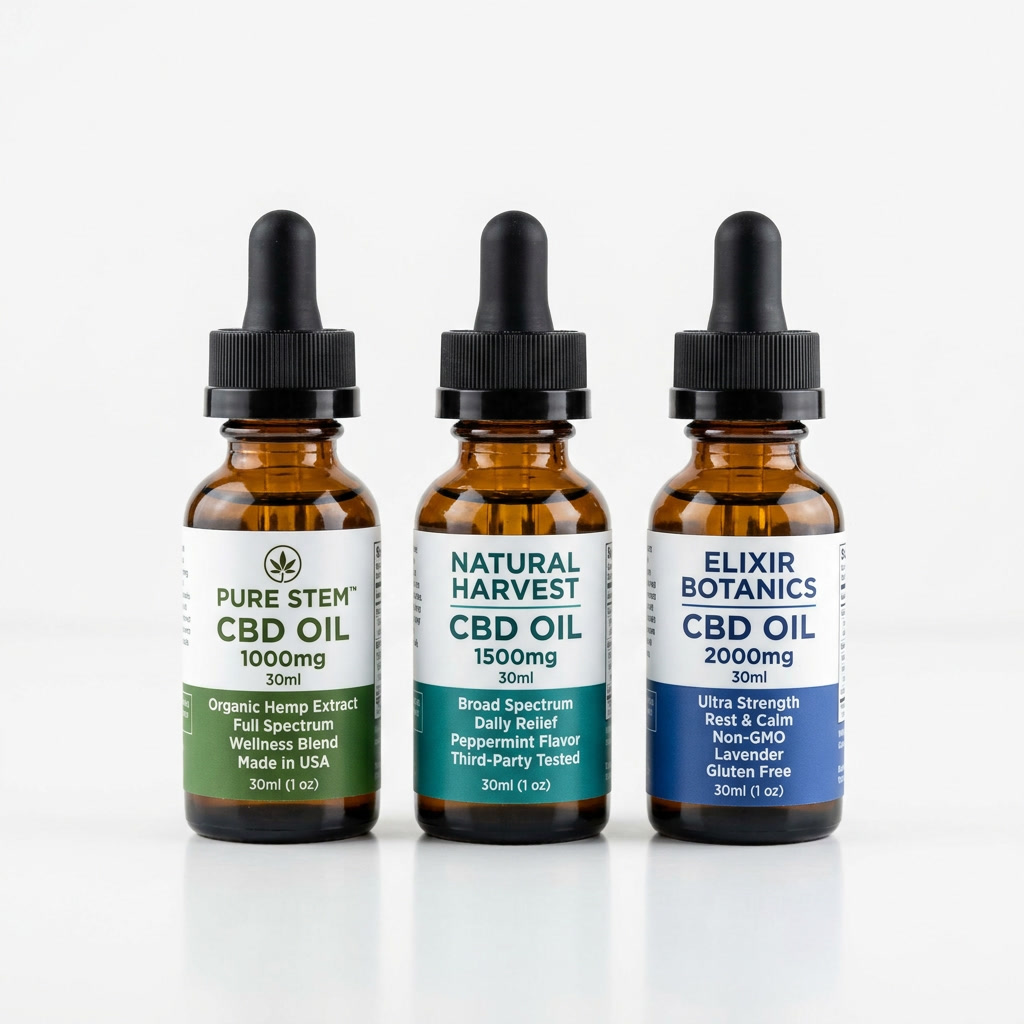
- The exact CBD product, with its stated cannabinoid content per serving and, if possible, its lab report
- How long you have used it and how often
- Anything you have noticed since starting, including easy bruising
Then ask three questions. Does this combination need monitoring, and if so what kind and how soon. Are there symptoms I should treat as urgent. Is there anything in my other medicines that changes the answer.
A pharmacist is a genuinely good first stop here. Interaction checking is core pharmacy work, pharmacists can see the full list in one place, and in many countries you can walk in without an appointment. Our guide to talking to your doctor about CBD covers how to raise it without feeling like you are confessing something.
One thing worth stating plainly. Do not stop your anticoagulant on your own to make room for a supplement. Stopping abruptly carries its own serious risk, and a larger one than most people appreciate when they are worried about an interaction.
The Bottom Line
CBD and blood thinners is the interaction where guessing costs the most. The mechanism is credible, because CBD inhibits the liver enzymes and transport proteins that anticoagulants depend on. The human evidence is thin, because what exists is laboratory work, pharmacokinetic modelling, case reports, and small series rather than large trials with bleeding outcomes. That combination means the risk cannot be sized for an individual, and it cannot be dismissed either.
So the responsible position is not a verdict. It is a conversation. If you take warfarin, apixaban, rivaroxaban, edoxaban, or dabigatran, and you are considering CBD, tell your prescriber or pharmacist before you start rather than after. Bring the product and its lab report. Ask what monitoring applies to you. Know the bleeding signs that mean urgent care. If you want the wider interaction landscape first, start with CBD and drug interactions and then have the conversation with a professional who knows your history.
Find Your Perfect CBD Product
Take our 2-minute quiz to get personalized recommendations based on your needs.
Take the Quiz →Disclaimer: This article is for informational purposes only and does not constitute medical advice. CBD products are not FDA-approved to treat, cure, or prevent any disease. Always consult with a qualified healthcare professional before starting any new supplement, especially if you have a medical condition or take medications.