What to Tell Your Surgeon If You Use CBD

The pre-op phone call goes like this. A nurse runs through medications, you say nothing relevant, and the conversation ends. Then a week later you are in a gown and someone asks whether you take any supplements. You say CBD, casually, and the room changes temperature.
That moment is where a lot of people discover that the honest answer was never the easy one. Not because CBD is dangerous, but because anesthetics and cannabinoids interact in ways that are still being mapped, and because most patients have never been asked the question properly.
Here is what the current literature says, what it does not say, and how to handle the conversation without either panicking or hiding.
Why Anesthesia and Cannabinoids Interact
Anesthesia is not one drug. It is a managed sequence of sedation, paralysis, analgesia, and cardiovascular control, each with a narrow therapeutic window. Anything that shifts how those drugs are metabolised or how the nervous system responds to them matters.
A 2025 review in Anesthesia and Analgesia revisited the molecular mechanisms of cannabinoid and general anesthetic interactions. The paper examined how cannabinoids act on the same receptor and ion channel systems that general anesthetics target. This is not a case of one drug blocking another. It is two agents pushing on overlapping machinery.
A 2026 integrated review in Minerva Anestesiologica took the wider clinical view, covering anesthesia management in patients who use medical cannabis. It described the practical problem well. Chronic cannabis exposure can change tolerance to sedatives, alter the required dose of induction agents, and complicate post-operative pain control.
A 2024 overview of cannabidiol in Anesthesia and Analgesia is worth reading in full if you want the pharmacology. The short version is that CBD inhibits several cytochrome P450 enzymes, which means it can slow the clearance of other drugs. That is a general drug interaction issue, not an anesthesia specific one, but anesthesia is the situation where a small shift has large consequences.
What the Surgical Outcome Data Shows
The clinical literature splits into two kinds of studies, and they point in different directions.
Observational work on cannabis smokers tends to find worse outcomes. A 2024 propensity score matched analysis in Hernia looked at cannabis smoking and abdominal wall reconstruction. The matched design controls for the obvious confounders, and the findings suggested an association with poorer surgical results. A 2024 study in Cureus examining the peri-operative impact of cannabis use around elective breast augmentation reported similar concerns.
But smoking is a confounder wrapped inside a confounder. Cannabis smoke contains irritants and combusted material. Some of the surgical risk may belong to the smoke rather than the cannabinoid. Studies on oral CBD products in surgical populations are much thinner.
A 2024 review in JAMA Otolaryngology, on surgery related considerations in treating people who use cannabis, framed the issue honestly. It described a field where clinicians are managing real patients with incomplete data, and where the recommendation is disclosure and individual assessment rather than a blanket rule.
A 2026 narrative review in the Journal of Clinical Anesthesia focused specifically on preoperative cannabinoid exposure and postoperative pain. The finding that matters most for patients is that regular users often report more pain after surgery, not less, and often need more opioid, not less. That surprises people who assume CBD reduces their need for painkillers.
The Tolerance Trap
There is a tidy assumption floating around that cannabis users need less anesthesia because they are already relaxed. The pharmacology says the opposite.
Regular cannabinoid exposure downregulates CB1 receptors. The nervous system adapts. When you then introduce a sedative that works through adjacent pathways, the baseline has moved. Anesthesiologists describe patients who require more propofol, more fentanyl, or more volatile agent than their body weight and age would predict.
That is a management problem, not a moral one. It is solvable. It is solved by knowing in advance.
The same logic explains the postoperative pain finding. If your endocannabinoid tone has adapted to regular exogenous cannabinoids, the withdrawal of that tone after surgery can present as heightened pain sensitivity. The patient experiences it as "the surgery hurts more than expected." The physiology is closer to rebound.
What About CBD Specifically
CBD is often treated as the safe cousin, and mostly it behaves that way. It is not intoxicating, it does not depress respiration, and it has no meaningful potential for overdose.
Two things complicate that picture in a surgical setting.
First, the CYP450 interaction. CBD inhibits enzymes that metabolise a long list of common drugs, including some anticoagulants, immunosuppressants, and anti-epileptics. If you are having surgery, you are likely on at least one of those, or you will be given one in the operating room.
Second, dose. Most people taking CBD casually are not on a pharmaceutical dose. Clinical trials have used doses in the hundreds of milligrams, often daily for weeks. A 20mg gummy is a different pharmacological event from 750mg of purified CBD. The interaction literature is mostly built on the high dose end, which means the risk at low doses is probably smaller, and also less studied.
A 2026 case report in the Journal of Medical Case Reports described CBD used as an adjunct in refractory paroxysmal sympathetic hyperactivity after severe traumatic brain injury. It is a single case, so treat it as an observation rather than evidence, but it illustrates the direction of interest. Clinicians are exploring cannabinoids in acute and critical care settings, carefully, with monitoring.
The Bleeding and Blood Pressure Questions
Two practical issues come up in pre-op clinics more than any other.
Cannabis can affect platelet function and blood pressure. A 2023 umbrella review in the BMJ, which pooled meta-analyses of randomised trials and observational studies, catalogued the risk profile of cannabis use across many outcomes. Cardiovascular effects appear in that picture, including changes in heart rate and blood pressure.
For most healthy people having minor surgery, this is a footnote. For someone having surgery with significant blood loss risk, or someone on anticoagulants, it is a conversation worth having with the anesthesiologist rather than the internet.
How Long to Stop Before Surgery
This is the question everyone asks and nobody can answer with precision.
There is no consensus guideline with a number attached, because the pharmacokinetics vary by route, dose, frequency of use, and body composition. CBD has a long half life and accumulates. THC clears faster in infrequent users and much more slowly in daily users.
What anesthesiologists actually want is disclosure plus a reasonable interval. Many will suggest stopping several days before an elective procedure, and for heavy daily users some suggest longer. The exact number is a clinical judgement, not a published standard.
The worst outcome is the one where you stop three days before, say nothing, and the anesthesiologist plans a standard dose for a patient they believe is cannabinoid naive.
The Conversation Script
If you want a version of this that actually works in a pre-op appointment, it looks like this.
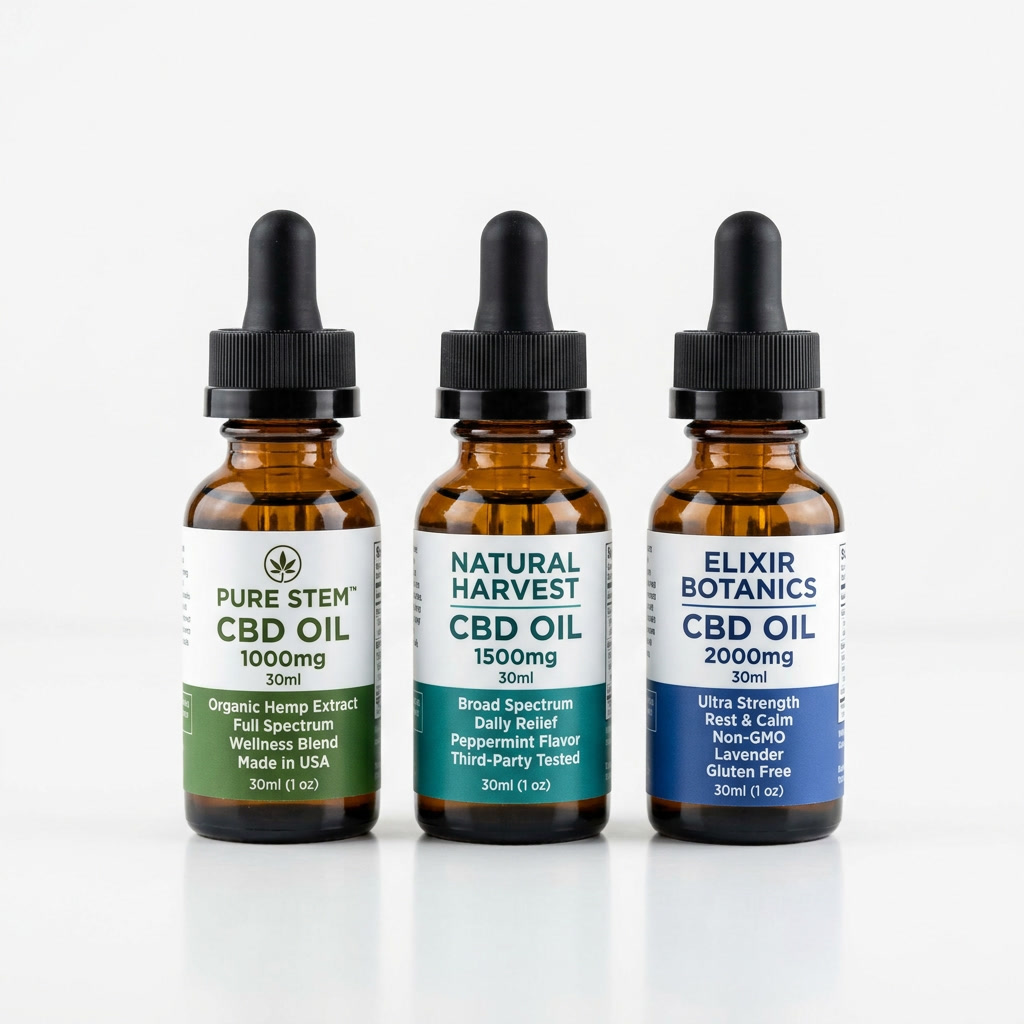
Say what you take, how much, how often, and by what route. Not "a bit of CBD" but "25mg of full spectrum oil, twice a day, for about a year." Route and duration change the pharmacology.
Say whether it contains THC. Full spectrum products do, at low levels, and cumulative exposure matters more than any single dose.
Say why you take it. If it is for sleep, that is relevant to the sedation plan. If it is for pain, that is relevant to the analgesia plan. If it is for anxiety, that is relevant to the premedication choice.
Ask whether they want you to stop or taper, and for how long. Get the answer from the person who will be in the room.
Ask about your other medications. If you take a blood thinner, an immunosuppressant, or an anti-seizure drug, the interaction question is specific and the answer should come from a pharmacist or the anesthesia team, not a forum.
What Not to Do
Do not stop all of it abruptly the night before and tell nobody. The anxiety rebound from sudden cessation is real, and preoperative anxiety is something the team can manage if they know about it.
Do not assume a supplement is invisible because it is legal. Anesthesia teams ask about supplements precisely because patients do not volunteer them.
Do not substitute internet reassurance for a clinical answer. The literature on perioperative cannabinoids is genuinely incomplete, which means the honest expert answer is "here is what we know, here is what we do in practice," not a confident number.
The Bottom Line
The evidence on cannabis and surgery is imperfect but not empty. Observational studies on smoked cannabis suggest worse surgical outcomes in some procedures. Reviews of the anesthetic interaction describe real pharmacological overlap and dose adjustments. A 2026 review specifically links preoperative cannabinoid exposure to greater postoperative pain and higher analgesic requirements in regular users.
CBD adds a drug interaction layer through CYP450 inhibition, which matters most if you take anticoagulants, immunosuppressants, or anti-epileptics.
None of this means you must stop. It means you must tell someone. The single highest value action before elective surgery is a precise, unembarrassed disclosure to the anesthesia team, including dose, route, frequency, and THC content. Everything else is a clinical judgement they can only make if they have the facts.
If you are preparing for a procedure and want to understand what is in your product first, our guide to reading a COA lab report explains how to find the measured cannabinoid content, and our breakdown of CBD drug interactions covers the CYP450 issue in more depth. The capsule range makes it easier to know exactly what dose you are taking, which is the number your anesthesiologist will ask for.
Find Your Perfect CBD Product
Take our 2-minute quiz to get personalized recommendations based on your needs.
Take the Quiz →Disclaimer: This article is for informational purposes only and does not constitute medical advice. CBD products are not FDA-approved to treat, cure, or prevent any disease. Always consult with a qualified healthcare professional before starting any new supplement, especially if you have a medical condition or take medications.