Talking to Your Doctor About CBD: What to Bring, What to Ask, and What They Can Actually Tell You
You have been using CBD for a few weeks. Your knee hurts less in the morning. You sleep a little better. Now you have a routine checkup coming, and a small worry keeps circling in your head. Should you mention it? Will your doctor think you are self-medicating? What if there is a real interaction with your blood pressure pill that nobody warned you about?
Here is the honest truth. Most people who use CBD never tell their doctor. And many doctors, when asked, do not have a confident answer ready. That gap is not a reason to stay silent. It is the reason to prepare.
This guide walks you through the conversation from both sides. We will cover why your doctor may not know much about CBD, what to bring so the discussion is grounded in facts, the exact questions worth asking, and the limits of what any clinician can honestly tell you today. No hype, no scare tactics. Just a practical plan for a better appointment.
Why Your Doctor Might Not Have a Straight Answer
Start with empathy, because it changes how you approach the visit. Your family doctor trained for years on medications with decades of clinical trial data behind them. CBD sits in a strange middle ground. It is sold as a supplement in most places, regulated loosely, and studied unevenly.
A 2025 consensus statement published in JAMA Network Open addressed this directly. Zolotov and colleagues found that clinicians lack standardized training to advise patients on cannabis and cannabinoids. In other words, the problem is not usually that your doctor disagrees with you. It is that medical education has not caught up with how many people are actually using these products.
That means you may be the most informed person in the room about your specific product. That is not a failure of the system on your part. It is simply the current reality, and you can plan around it.
> "Developing medical cannabis competencies" is an active effort, not a finished one. Many clinicians are still catching up.
So when your doctor pauses or gives a vague answer, it usually reflects a knowledge gap, not a judgment. Go in ready to supply the missing details yourself.
The Training Gap: What Clinicians Actually Learn About Cannabis
It helps to understand the shape of the gap. Medical school covers the endocannabinoid system briefly, if at all. Residency focuses on pharmaceuticals with clear dosing, clear interactions, and clear monitoring protocols. Cannabis and CBD rarely fit that model.
A 2026 review in JAMA by Hsu and colleagues examined the therapeutic use of cannabis and cannabinoids. It confirmed what many clinicians already sense. The evidence base is real but uneven, strongest in some areas and thin or mixed in others. There is no single tidy dosing chart a doctor can hand you.
Germany offers a useful window into how this plays out in practice. A 2024 study in Deutsches Arzteblatt International by Kotz and colleagues documented rising cannabis use and the clinical questions that come with it. A separate 2024 survey in Pharmacopsychiatry by Szejko and colleagues looked at medicinal use of different cannabis strains in Germany and found wide variation in what people used and why.
What does this mean for you? It means your doctor is working without a standardized script. Your job is not to lecture them. Your job is to bring clear information so the two of you can reason together.
What to Bring to the Appointment
This is the part most people skip, and it is the part that changes everything. Do not walk in and say "I take CBD." Walk in with specifics.
Bring these items, ideally on paper or in a note on your phone:
1. The exact product name, brand, and batch number
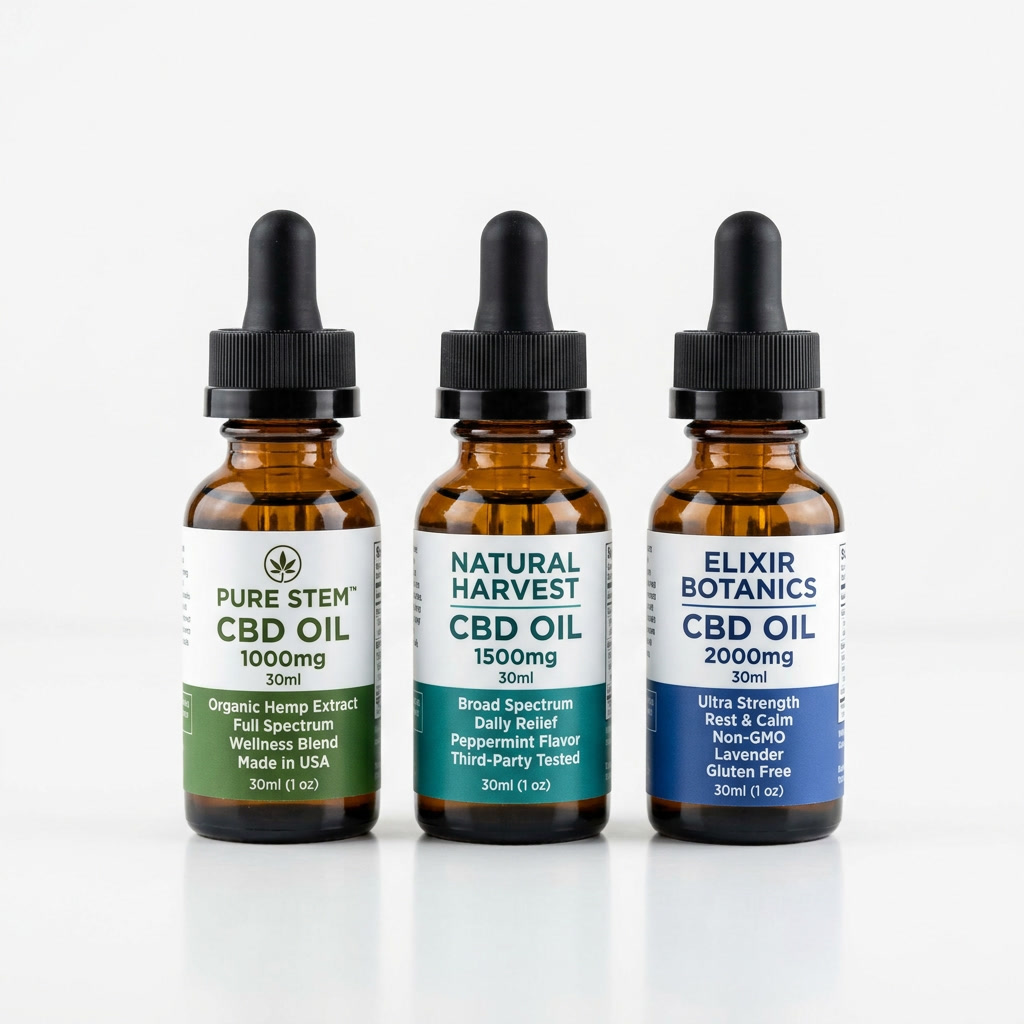
2. A photo of the label, showing CBD and THC content per dose
3. The Certificate of Analysis (COA) if the brand publishes one
4. Your dose in milligrams and how often you take it
5. How long you have been using it
6. What you are using it for, in your own words
7. A list of every medication and supplement you take, with doses
The COA matters more than most people realize. It is the lab report showing what is actually in the bottle, including THC content and any contaminants. If you are not sure how to read one, our guide on how to read a COA breaks down every section line by line.
Why bring the label and the COA together? Because product labels are not always reliable, and the COA is the closest thing to ground truth you have. If your doctor sees that a "THC-free" product actually contains a small amount of THC, that single fact can shape the whole conversation.
> Quick Take: You do not need to convince your doctor that CBD works. You need to give them accurate inputs so they can help you stay safe.
Reading Your Product Label Before You Go
Before the appointment, spend ten minutes decoding your own bottle. Look for a few key numbers.
CBD per dose
The label might say "30mg CBD" for the whole bottle, or per dropper, or per capsule. These are not the same thing. Know which one applies to what you actually swallow.
THC content
Even broad spectrum and isolate products can carry trace THC. Full spectrum products almost always do. For anyone who is drug tested at work or who is sensitive to THC, this number matters.
Serving size versus total
A 30ml bottle with 1,500mg CBD is not 1,500mg per dose. Divide it out. If a dropper holds 1ml and the bottle has 30 servings, each serving is 50mg.
Other ingredients
Look for added terpenes, carrier oils, and any flavorings. Some people react to specific carrier oils. Your doctor may want to know.
If any of this feels murky, ask the brand for the COA. A company that will not share one is telling you something important.
What to Ask About Your Current Medications
This is where a prepared conversation pays real dividends. CBD can interact with certain medications, mostly by affecting how the liver processes them. The science here is genuine and worth taking seriously.
Here are questions to work through with your doctor:
- Does CBD interact with any of my current prescriptions?
- Could it change the levels of my blood thinner or my seizure medication?
- Should we adjust any of my existing doses while I use CBD?
- Are there medications where CBD is a clear no for me?
- Does it matter if I take CBD at the same time as my other pills?
A few medication categories come up again and again. Blood thinners, some antidepressants, seizure medications, and certain immunosuppressants are the usual suspects. The concern is not that CBD is broadly dangerous. It is that specific combinations can shift drug levels in ways that need monitoring.
For a deeper look at the mechanics, our article on CBD and drug interactions walks through the liver enzyme pathway that drives most of these concerns.
Come with your medication list in hand. Your doctor can cross-check interactions far faster than you can guess at them.
Questions About Liver Monitoring and Safety
Liver health is one of the more legitimate topics to raise. High doses of CBD have been linked to liver enzyme changes in some clinical settings, particularly in certain epilepsy trials where doses were much higher than typical wellness use.
Good questions to ask:
- Do I need a liver function test before or during CBD use?
- Are there symptoms I should watch for, like fatigue or yellowing of the eyes?
- Does my current health history put me at higher risk?
- How often should we recheck if I stay on CBD long term?
This is a place where your doctor can genuinely help, even without deep CBD expertise. Liver monitoring is standard medicine. They know how to order and read those tests.
It is also worth asking about other side effects. Some people report drowsiness, digestive upset, or changes in appetite. None of these are emergencies, but they are worth tracking so you can spot patterns.
If you want a broader safety overview, our CBD safety guide covers interactions, side effects, and who should be more cautious.
> ⚠️ Important: If you take blood thinners, seizure medications, or certain antidepressants, do not start or change CBD without telling your prescriber first.
Timing, Dosing, and Daily Routine Questions
Your doctor may not have a dosing chart, but they can still help you think about timing and routine. Bring your own observations and ask for input.
Consider these:
- Is there a better time of day for me to take CBD given my other medications?
- Should I separate CBD from my prescriptions by a few hours?
- Does my dose seem reasonable for what I am trying to address?
- What would a sensible starting point look like if I wanted to adjust?
The honest answer is that CBD dosing is still highly individual. There is no universal number. A 2025 clinical practice guideline from the Canadian Network for Mood and Anxiety Treatments, led by Vigod and colleagues, reflects how carefully mental health clinicians now weigh cannabis questions for their patients. Even in a formal guideline, the takeaway is nuance rather than a fixed dose.
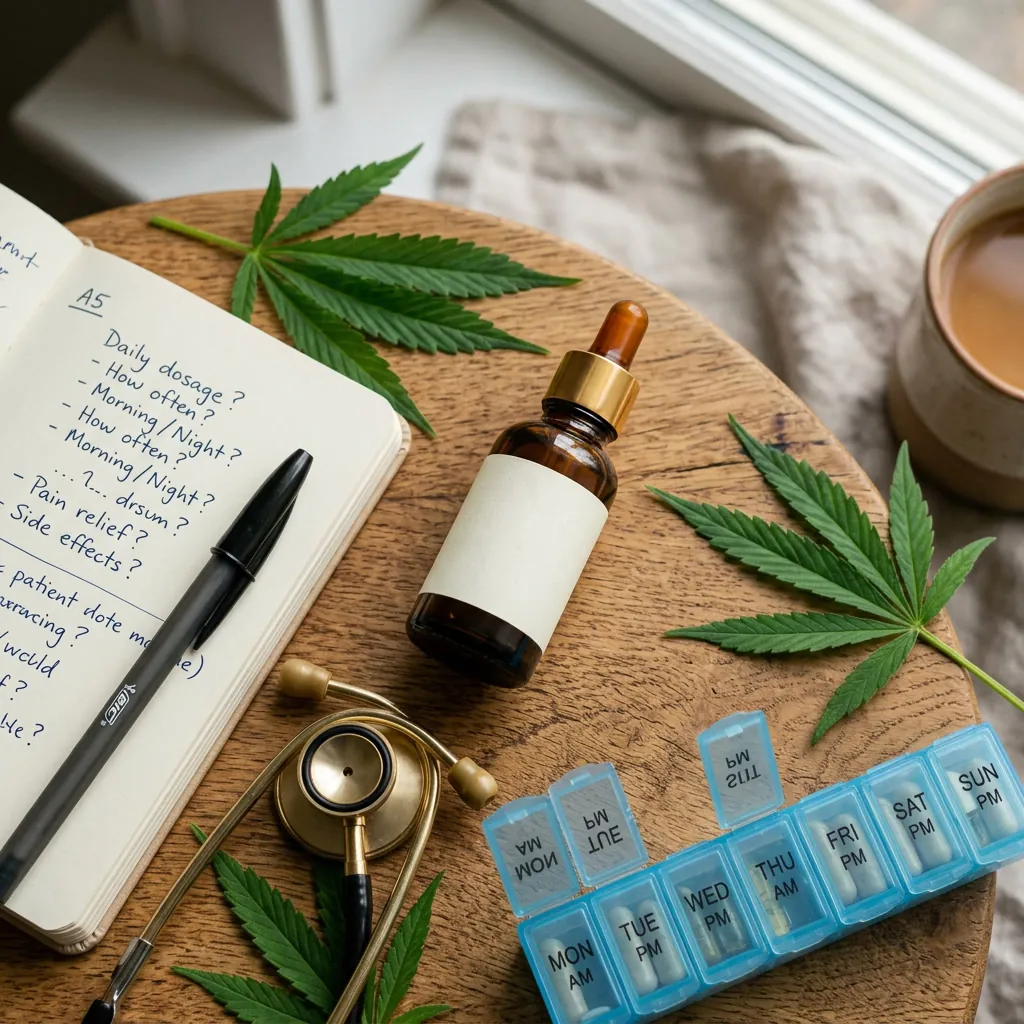
That is why tracking your own response matters so much. A simple journal with dose, timing, and how you felt can turn a vague conversation into a concrete one. Your doctor can look at your notes and offer real observations.
If anxiety is part of why you use CBD, our article on CBD and generalized anxiety covers what the evidence does and does not support. It is a good pre-read so you can speak to the topic accurately.
What Your Doctor Can Actually Tell You
This section matters because it sets honest expectations. Your doctor may not be able to tell you the perfect CBD dose. But they can do a great deal.
They can:
- Review your full medication list for interaction risks
- Order liver function tests and interpret them
- Assess whether your symptoms need a different diagnosis or treatment
- Monitor how any changes affect your overall health
- Flag red flags you might not have noticed
- Coordinate with a specialist if needed
- Document your CBD use in your chart for future reference
That last point is quietly important. If your CBD use is in your medical record, every future provider who treats you has the full picture. That protects you in emergencies and prevents dangerous guesswork.
A 2026 study in Cannabis and Cannabinoid Research by Sacca and colleagues explored how health care experiences shape marijuana use motivations and perceptions among U.S. adults. One theme is hard to miss. When people feel judged or dismissed by clinicians, they tend to stop disclosing. When they feel heard, they share more, and better care follows.
So the value of the conversation is not that your doctor will become a CBD expert. It is that they become a partner in managing your overall health, with full knowledge of what you are taking.
Why the Conversation Protects You
Let us be blunt about the risks of staying quiet. If you do not tell anyone, a few things can go wrong.
- A new prescription could interact with your CBD, and nobody would know
- Symptoms that look like side effects could be missed or misattributed
- In an emergency, providers would lack a full picture of what is in your system
- You could waste money on products that do not match your needs
- You would carry the whole thing alone, without professional backup
Disclosure is not about asking permission. It is about gathering information and protecting yourself.
There is also the reverse benefit. When you describe what you take and why, your doctor may spot something better for you, whether that is a different approach entirely or simply a safer way to use what you already have. That is the point of a good clinical relationship.
The conversation also gets easier over time. The first time you bring it up may feel awkward. The second time, your doctor already knows. By the third, it is just part of your history, like any other detail.
> Bottom line of the visit: You are not there to be approved or rejected. You are there to be informed and monitored.
Action Steps
Here is a simple plan you can run before your next appointment.
1. Gather your product details, including brand, batch, dose, and the COA
2. Write down your full medication and supplement list with doses
3. Keep a two-week log of when you take CBD and how you feel
4. Pick your top three questions from this guide and write them down
5. Ask directly about interactions, liver monitoring, and timing
6. Request that your CBD use be noted in your chart
7. Ask what symptoms would mean you should call or come back in
8. Follow up on any tests or referrals your doctor recommends
If you are still choosing a product, our CBD oils and tinctures range is a reasonable place to start, because clear labeling and published COAs make this whole conversation easier.
You do not need perfect answers. You just need to show up prepared and honest.
Bottom Line
Talking to your doctor about CBD can feel intimidating, especially when they may know less about it than you do. But the goal is not to win an argument or get a green light. The goal is to make sure everything you take is on the record, so a professional can watch for interactions, monitor your liver, and catch anything you might miss.
Bring the facts. Ask the hard questions about your medications and timing. Expect honest limits, because no clinician can promise CBD will work for you, and no good clinician will pretend otherwise. The evidence is still developing, and an honest conversation reflects that.
Your doctor is not the gatekeeper of your wellness. They are a second set of trained eyes on your whole health. Bring them into the picture, and you protect yourself, your treatment plan, and your peace of mind. That is a conversation worth having.
Find Your Perfect CBD Product
Take our 2-minute quiz to get personalized recommendations based on your needs.
Take the Quiz →Disclaimer: This article is for informational purposes only and does not constitute medical advice. CBD products are not FDA-approved to treat, cure, or prevent any disease. Always consult with a qualified healthcare professional before starting any new supplement, especially if you have a medical condition or take medications.