Transdermal CBD: What Actually Crosses Your Skin
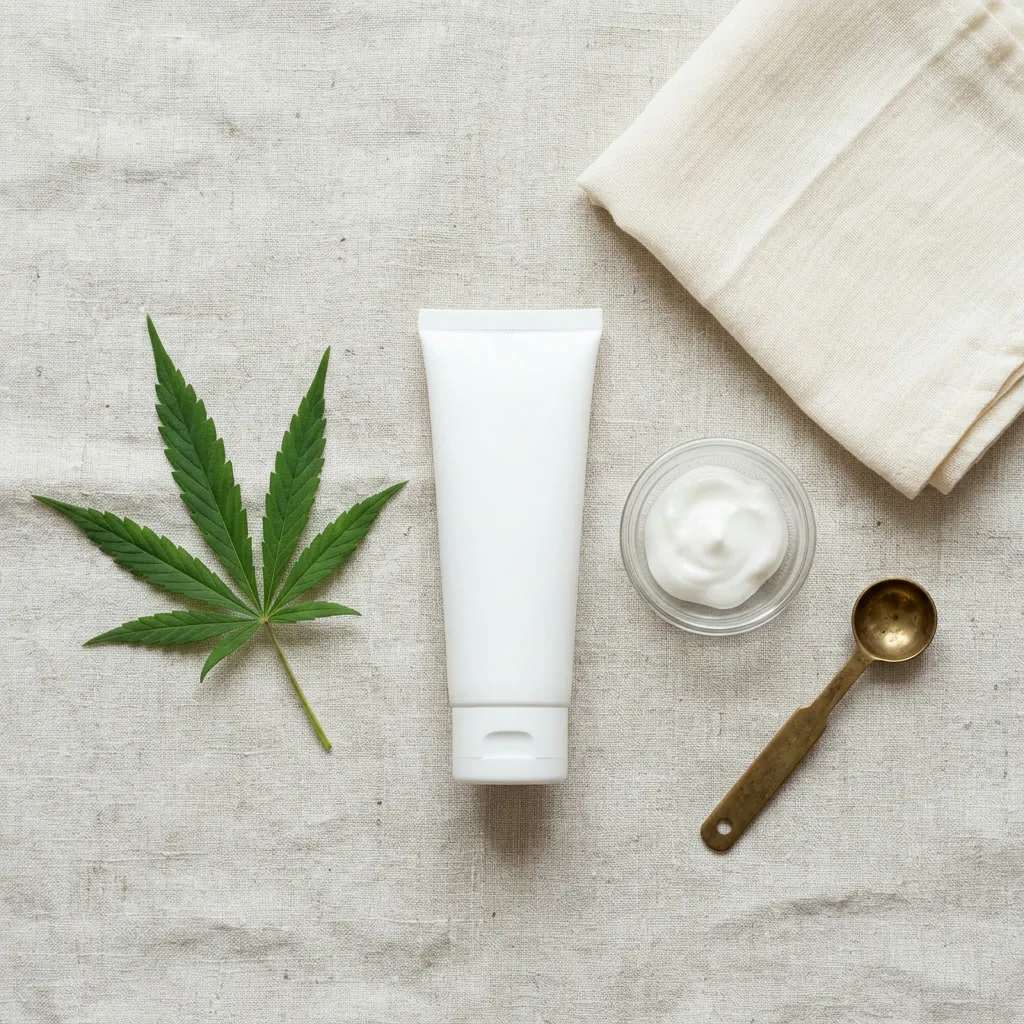
Walk into any dispensary or pharmacy shelf and you will find CBD sold in a form you can stick to your arm. Patches promise hours of steady release. Creams promise relief exactly where you rub them. The packaging usually implies the cannabinoid is going somewhere useful, and fast.
The honest answer is more conditional. Some CBD does cross the skin. How much crosses, how quickly, and whether meaningful amounts ever reach your bloodstream depends on the formulation, the amount applied, the surface area covered, and the condition of your skin barrier. Two products with the same milligram number on the label can behave nothing alike.
This guide looks at what the published research actually supports, where the evidence is genuinely thin, and how to read a product label without being fooled by it. A large share of the trials in this area are small and short, and the results are formulation dependent in ways that marketing rarely reflects. That is not a reason to dismiss the category. It is a reason to be specific about what you expect from it.
Why the Patch on Your Arm Is Not a Sure Thing
A patch looks like the most controlled way to deliver CBD. In practice, a patch is only as good as the formulation sealed inside it. The skin is an efficient barrier that evolved to keep things out. A transdermal system has to get past the stratum corneum, the outer layer of flattened, keratin-packed cells, without damaging the living layers underneath. Most cannabinoid molecules are both lipophilic and relatively large, which makes that crossing slow and inefficient on its own.
A 2024 review in Cannabis and Cannabinoid Research worked through the main permeation-enhancing strategies for cannabinoid delivery and made the central point clearly: the vehicle matters as much as the drug. Chemical penetration enhancers, vesicular carriers, and saturated solutions all change how much CBD partitions into and through skin. Remove the enhancer and the flux can drop sharply. So when a patch underperforms, the cause is often not the CBD itself but the delivery system around it.
The Skin Is a Barrier First, a Delivery Route Second
It helps to separate three different journeys that get confused constantly. The first is staying on the surface. A cream that sits in the upper layers can hydrate and soften skin, which is a real effect, but it is not systemic delivery.
The second is crossing into the viable epidermis and dermis. Here CBD can interact with local receptors and with the sensory nerve endings that sit close to the surface. This is the plausible mechanism behind much of what people report from topicals.
The third is reaching the bloodstream in a quantity that matters. That last step is where most products quietly fail, and where most marketing quietly stops being precise.
A 2023 review in Advanced Therapeutics summarised the systemic bioavailability of CBD and THC and described both as low and highly variable by conventional routes. Transdermal delivery is attractive because it could bypass first-pass liver metabolism, but bypassing the liver does not guarantee a useful blood level. It only removes one of several bottlenecks.
What the Permeation Research Actually Shows
The most useful paper for setting expectations is a 2023 systematic review in Cannabis and Cannabinoid Research that examined clinical trial evidence for transdermal and topical CBD. Its conclusion was not that the products fail. It was that the evidence base is thin, heterogeneous, and hard to pool. The review found wide variation in trial design, vehicle, amount applied, and outcomes measured. Some studies looked at pain scores. Others looked at skin condition, or at plasma levels, or at subjective reports. Comparing them is like comparing apples to a photograph of apples.
Two practical consequences follow. A positive result in one trial does not transfer automatically to a different cream or patch, because the formulation is the variable that changed. And absence of strong evidence is not evidence of absence. It means nobody has run the large, well-controlled, formulation-specific trial that would settle the question.
A 2026 overview in the Iranian Journal of Basic Medical Sciences reached a similar place from the formulation side, describing CBD as a promising but awkward molecule for pharmaceutical development. Poor water solubility, limited stability, and unreliable absorption are the recurring problems, and each one shapes what a finished product can realistically do.
Formulation Determines Almost Everything
If you remember one technical point from this article, make it this one: in topical CBD, the formulation is the product. A 2024 review in Pharmaceuticals catalogued the strategies used to improve cannabinoid bioavailability, and the list is instructive. Lipid-based systems, self-emulsifying formulations, nanosized carriers, complexation, and prodrug approaches all appear, each solving a different part of the problem. What they share is that none of them is a small tweak. Each changes where the molecule goes.
For a cream or patch, the relevant variables include the base, whether anhydrous, emulsion, gel, or adhesive matrix, the concentration of CBD in that base, the penetration enhancers such as specific fatty acids or terpenes, the pH and saturation of the drug in the vehicle, the occlusivity of the product, since trapping moisture increases hydration and hydration increases permeability, and the particle size where nano or micro systems are used.
Change any one of those and you have effectively made a different medicine. This is why a study of one 5% CBD cream tells you very little about another 5% CBD cream, even though the labels look identical.
What Human Trials Have Found So Far
The human evidence falls into a few rough groups.
There are small trials in localised pain, usually musculoskeletal or neuropathic, where a topical CBD product is compared with a placebo vehicle. Results have generally been modest and inconsistent, with some studies showing improvement in the active group and others showing little separation from vehicle. There are dermatology trials, where the outcome is skin rather than pain. A 2024 study in the Journal of the American Academy of Dermatology examined a nanoencapsulated CBD cream and reported encouraging tolerability along with measurable improvement in the skin measures it tracked. Read it as a signal, not a verdict. The population was limited and the follow-up was not long.
There are tolerability studies, which are the strongest part of the evidence base. Topical CBD has consistently looked well tolerated in adults, with the most common complaints being local irritation or dryness rather than systemic effects. And there is a 2025 trial in Biomedicines that tested a topical formulation containing 5% CBD together with the terpene myrcene. The design reflects a real shift in the field, moving from single-cannabinoid products toward combinations that may work on more than one target. Tolerability was good. The efficacy signal was promising but early, and a single trial of one formulation cannot carry the category.
The Children's Gel Study and What It Tells Us
The most interesting safety data in this space comes from a population you would not expect. A 2025 study in the Journal of Neurodevelopmental Disorders followed children treated with a transdermal CBD gel over an extended period and reported on long-term safety and tolerability.
That matters for two reasons. Paediatric use is the hardest setting to justify, so a long-term tolerability record there is meaningful evidence that repeated transdermal exposure does not produce obvious harm. The authors reported no new safety signals emerging with extended use, while noting the need for continued monitoring. It also demonstrates what a properly developed transdermal product can do. A gel designed for consistent skin flux, used under supervision with measured dosing, is a very different object from a novelty patch bought online.
It still does not tell you that your patch works. It tells you the route is viable when the product is engineered for it.
Creams and Patches Are Not the Same Product
People use the words interchangeably, and the two formats behave differently.
A cream or lotion is easy to apply over a wide area and easy to stop using. It is also easy to under-dose, since coverage is uneven and much of the product ends up on clothes or bedding. Absorption depends on how much you rub in, how thickly you apply, and whether you cover the area afterwards. Occluding a cream with a dressing can raise absorption substantially, which is rarely mentioned on a label.
A patch controls the applied dose and the contact time, and it keeps the drug in contact with hydrated skin for hours. That is a genuine advantage for consistency. The trade-off is that a patch concentrates delivery on a small area, and its performance depends entirely on the adhesive matrix and the enhancers built into it. A poorly designed patch is a sticker with CBD in it.
If you are choosing between formats, the differences across creams, balms, gels, and patches come down to coverage, contact time, and dose control.
Bioavailability: Why the Numbers Stay Small
Even a well-made transdermal product delivers a small fraction of what you apply. This shocks people, but it should not. The skin is doing its job.
Reported systemic bioavailability for CBD by any route tends to be low, and transdermal delivery is no exception. The Advanced Therapeutics review from 2023 put the general picture plainly, and the transdermal literature is consistent with it: flux through intact skin is limited and varies enormously between individuals and body sites.
Site matters more than most people realise. Skin on the forearm, the abdomen, and the back differs in thickness, hydration, and follicle density, and all three affect absorption. A patch placed on the inner arm is not the same experiment as one placed on a calloused sole.
This is also why a product can feel like it does something without producing a measurable blood level, and why a product can produce a blood level without feeling like much. Local tissue effects and systemic exposure are separate questions. If you want the background on how the routes compare, our overview of CBD bioavailability and delivery methods covers the pharmacokinetics in more detail.
Nanoencapsulation and the Hype Around It
Nanosizing is the most heavily marketed delivery claim in the category, and it is also one of the more plausible. Encapsulating CBD in lipid or polymer nanoparticles can improve solubility, protect the molecule from degradation, and increase the amount that partitions into skin. The 2024 Journal of the American Academy of Dermatology study of a nanoencapsulated cream is a reasonable example of the concept being tested in humans rather than in a dish. What nanosizing does not do is turn a topical into an oral dose. It improves delivery on the margin. It does not repeal the barrier.
The word also covers technologies with very different behaviour. A liposomal preparation, a solid lipid nanoparticle, and a nanoemulsion are not interchangeable, and size distribution matters as much as the label claim.
What Topicals Can Realistically Do
Setting expectations honestly is the most useful thing here. Reasonable expectations from a well-formulated topical CBD product:
- Temporary relief of discomfort in a localised area, with effects that vary widely between people
- Local skin benefits, particularly where the formulation itself is moisturising and soothing
- Good tolerability for most adults, with irritation as the main risk
Unreasonable expectations:
- A systemic effect equivalent to swallowing a measured oral dose
- Predictable, dose-proportional blood levels from an unstandardised cream
- Relief of deep or widespread pain from a product applied to one small patch of skin
The gap between those lists is where most disappointment lives. For a closer look at formats people actually reach for, see our roundup of best CBD topicals for pain.
How to Judge a Product Before You Buy
A label is not a laboratory result, but it can tell you whether the maker is serious. Look for a batch-specific certificate of analysis from an accredited lab, showing cannabinoid content that matches the batch number on the package. If you are unsure how to read one, our walkthrough on how to read a CBD lab report explains it.
Look for the full ingredient list, including the base and any penetration enhancers. A product that will not tell you what the vehicle is made of is asking you to trust the least verifiable part of the formulation. Look for total CBD per unit rather than a percentage alone. A percentage tells you concentration in the base, not how much you are applying. Treat patch claims about sustained release with the same scrutiny. Sustained release requires a designed matrix. It is not a property that appears because the word is printed on the pouch.
Who Should Be Cautious
Topical CBD is generally well tolerated, but caution is warranted in specific situations. If you take prescription medication, particularly anticoagulants, thyroid medication, or epilepsy drugs, talk to your prescriber before using CBD regularly. Even small systemic exposure adds to the total. Our summary of CBD and drug interactions covers the main mechanisms.
If you have a skin condition affecting the barrier, such as eczema or psoriasis, absorption through damaged skin will differ from absorption through intact skin. That cuts both ways, and it is a reason to test a small area first. If you are pregnant, breastfeeding, or considering CBD for a child, treat the decision as a medical one. The paediatric gel study is reassuring about tolerability under supervision. It is not a licence to self-prescribe.
And if a product claims to replace a prescribed treatment, that is a reason to walk away.
What Honest Research Would Look Like Next
The field needs three things. Standardised formulations that can be compared across trials, rather than every study inventing its own vehicle. Pharmacokinetic work reporting actual plasma levels alongside clinical outcomes, so local effects can be told apart from systemic ones. And larger samples with longer follow-up, since most trials run for weeks rather than months in a condition where placebo response is high.
Until then, the honest summary is that transdermal CBD works sometimes, for some people, with some products, and that the differences are mostly explained by formulation rather than by the cannabinoid. That is a less exciting sentence than the marketing copy. It is also the one the literature supports.
The Bottom Line
CBD can cross the skin, but only in modest amounts, and only when the formulation is built to make it happen. The permeation research is clear that the vehicle does most of the work, and the clinical evidence is clear that most trials are too small and too heterogeneous to settle the question. Topical products are best thought of as local treatments with a good safety profile, not as an alternative route to a systemic dose. Patches offer consistency and creams offer coverage, and neither overcomes the barrier. If you want to use them, buy from makers who publish batch-level lab results, apply to intact skin, test a small area first, and check with your prescriber if you take regular medication. Browse the CBD creams and topicals range if you want to compare formats side by side, and keep your expectations calibrated to what the evidence actually shows.
Find Your Perfect CBD Product
Take our 2-minute quiz to get personalized recommendations based on your needs.
Take the Quiz →Disclaimer: This article is for informational purposes only and does not constitute medical advice. CBD products are not FDA-approved to treat, cure, or prevent any disease. Always consult with a qualified healthcare professional before starting any new supplement, especially if you have a medical condition or take medications.