Can CBD Help Wounds Heal Faster? What 2026 Research Says About Skin Repair
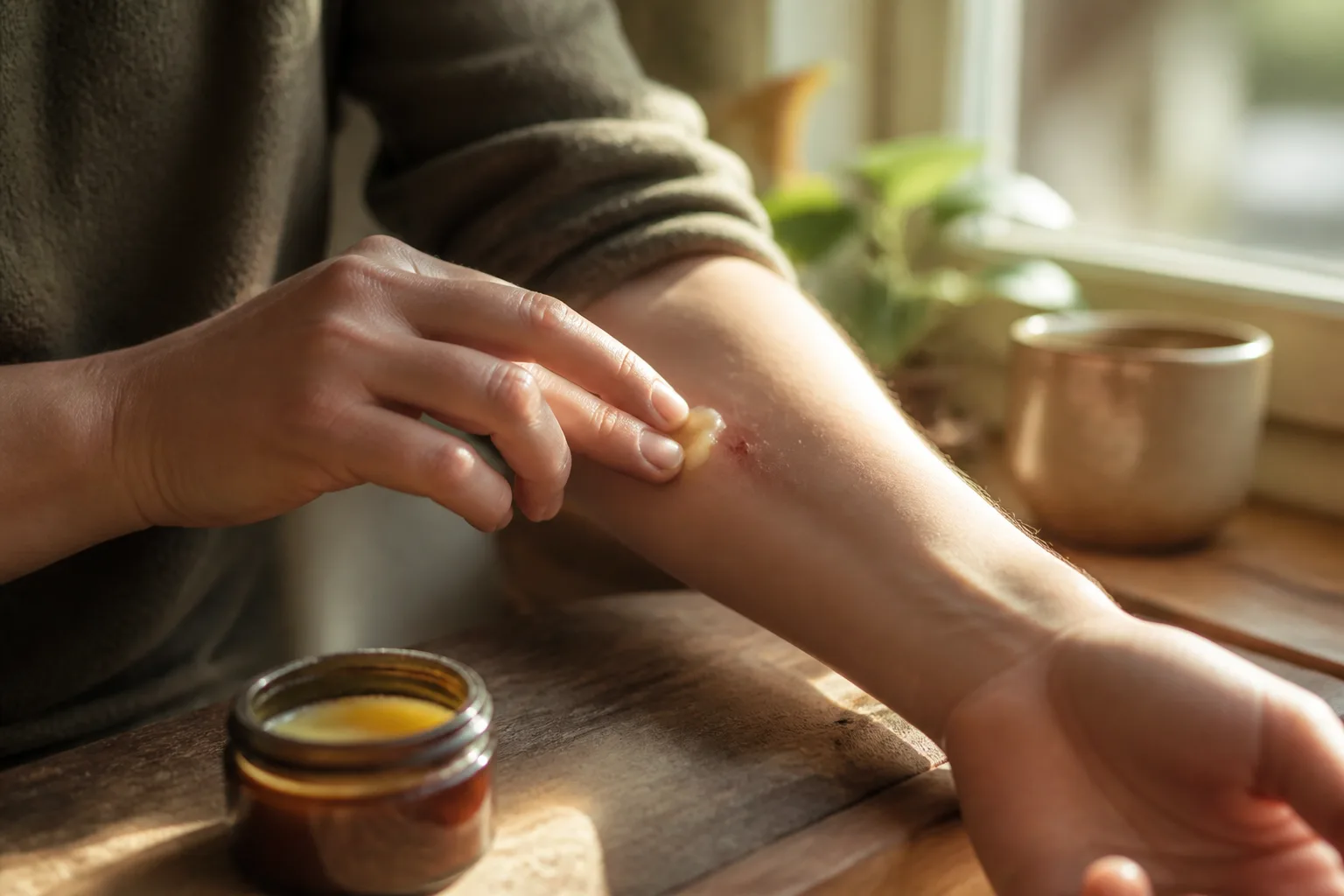
You catch the edge of a kitchen drawer on your forearm, and within seconds a thin line of red appears. You clean it, cover it, and try not to think about it. But a week later the scab is still there, the skin around it is angry and pink, and you catch yourself wondering whether it will leave a mark. For anyone who has nursed a slow-healing cut, a stubborn scrape, or a surgical incision, the wait for skin to repair itself can feel endless. And for the millions living with chronic wounds, diabetic ulcers, or acne scars, that wait is more than an inconvenience, it is a daily health concern.
That is where CBD has started to attract serious scientific attention. Long known for its role in pain and anxiety, the non-psychoactive compound from hemp is now being studied for something more surprising: its ability to support the skin's own repair process. Researchers are investigating whether CBD's anti-inflammatory and antimicrobial properties can help wounds close faster, calm irritated tissue, and even improve how scars form.
This guide breaks down what the latest 2023-2026 research actually says about CBD and wound healing, how it works at the cellular level, and how you can use it safely as part of a skin-repair routine.
Why Wound Healing Is a 2026 Research Focus
Wound healing has quietly become one of the most active areas of CBD research. The reason is simple: chronic and slow-healing wounds are a massive, under-served problem. Diabetic foot ulcers, pressure sores, and surgical wounds that fail to close cost health systems billions and cause enormous suffering. When standard dressings and antibiotics fall short, researchers look for new tools.
CBD fits that search because it appears to act on several of the exact processes that go wrong in a stalled wound. A 2024 systematic review in Pharmaceutics examined the emerging evidence on cannabinoids in wound care, pulling together 18 studies that included seven human trials and eleven animal studies. The authors noted that several formulations, including CBD, led to complete wound closure in animal and human cases, with healing rates reported between 66% and 86% over roughly three to twelve weeks.
The takeaway is not that CBD is a miracle cure. It is that the scientific community now considers wound healing a legitimate, testable application, not a wellness fad.
How CBD Interacts With Your Skin
To understand why CBD might help a wound, you first need to know that your skin has its own built-in signaling system. It is called the endocannabinoid system, and it is packed with receptors, including CB1 and CB2, along with TRPV channels and other targets that CBD can influence.
A 2025 review in Biomolecules described CBD as a multifunctional agent in dermatology, noting its anti-inflammatory, antioxidant, antibacterial, and moisturizing effects, all mediated through these skin receptors. A separate 2025 review in the Journal of Cosmetic Dermatology made a similar point: CBD has multiple molecular targets, many of which are expressed directly in the skin.
In plain terms, CBD is not just sitting on the surface. It is interacting with the same receptors your skin uses to regulate inflammation, cell growth, and repair. That is the biological foundation for everything else in this article.
The Anti-Inflammatory Effect: Calming the Wound
Inflammation is a double-edged sword in healing. A little of it is essential, it signals immune cells to clean the wound and start repair. But when inflammation drags on, it becomes the enemy. Prolonged inflammation keeps the wound stuck in a destructive phase, prevents new tissue from forming, and is a hallmark of chronic wounds.
CBD's anti-inflammatory action is one of its best-documented properties, and it is the same mechanism behind CBD for inflammation more broadly. In a 2024 study in Archives of Dermatological Research, researchers exposed skin cells to CBD and found it significantly reduced pro-inflammatory cytokines, including CXCL8, IL-1α, and IL-1β. These are the signaling molecules that drive redness, swelling, and tissue damage.
The practical implication is that CBD may help keep inflammation in the "helpful" range rather than letting it spiral into the "harmful" range, giving the skin a better environment in which to rebuild.
The Antimicrobial Angle: Fighting Infection at the Wound
A wound that becomes infected heals slowly, if at all. Bacteria like Staphylococcus aureus and E. coli can colonize a break in the skin and turn a minor injury into a serious problem. This is where CBD's antimicrobial properties come into play.
A 2026 study in the International Journal of Molecular Sciences tested a combination of CBD and the anti-inflammatory drug diclofenac against several bacteria, including S. epidermidis and S. aureus. The combination showed a clear synergistic effect, meaning the two compounds worked better together than either did alone, and it accelerated bacterial killing in a time-dependent manner.
Other research has built CBD directly into wound dressings. A 2026 study in Phytomedicine described a pH-responsive hydrogel dressing co-loaded with CBD and the antibiotic mupirocin, designed specifically for infected wound healing. And a 2025 study in Pharmaceutics developed a sprayable gel combining CBD, hyaluronic acid, and colloidal silver that retained potent antimicrobial activity against S. aureus and Candida.
The pattern across these studies is consistent: CBD appears to have genuine antimicrobial activity, and researchers are actively engineering it into dressings and gels to help prevent infection while a wound heals.
Supporting Cell Migration and New Tissue Growth
Healing a wound is not just about stopping inflammation and infection. The skin also has to physically rebuild, and that requires cells to move into the wound and multiply. Two cell types do most of this work: keratinocytes, which form the outer layer, and fibroblasts, which produce collagen and other structural proteins.
A 2024 study in Gels loaded CBD into lipid nanoparticles and embedded them in a hydrogel scaffold. In laboratory tests, the CBD nanoparticles significantly promoted fibroblast migration in gap-closure wound models, essentially helping the cells "walk" across the wound to close it. The same study found the formulation reduced reactive oxygen species, the damaging free radicals that accumulate in injured tissue.
A 2025 study in Pharmaceuticals reached a similar conclusion at the cellular level. At low concentrations, CBD was not toxic to skin cells and actually enhanced the growth of both keratinocytes and fibroblasts over time, while also showing antioxidant and wound-healing bioactivity.
The message is that CBD is not just calming the wound down, it is actively supporting the cells that rebuild the skin.
What About Scars?
For many people, the real concern is not the wound itself but the scar it leaves behind. Scar tissue forms when the skin produces collagen in a disorganized, hurried way during healing. The question researchers are asking is whether CBD can influence that process.
The 2024 acne study in Archives of Dermatological Research is relevant here — and it is part of a broader body of research on CBD for skin health. Beyond reducing inflammation, the researchers found that CBD stimulated the synthesis of elastin, collagen 1, and collagen 3, the building blocks of healthy, resilient skin. Encouraging organized collagen production is exactly what you want for a scar that fades rather than one that stays raised and discolored.
That said, the evidence on scars is still early. A 2024 literature review in the American Journal of Clinical Dermatology noted that CBD shows wound-healing and anti-aging properties in laboratory and animal studies, but it also stressed that only a few clinical studies have been conducted in humans. So while the collagen findings are promising, it is honest to say that scar outcomes in people are not yet proven.
The Delivery Problem: Why Formulation Matters
Here is the catch with CBD and skin: CBD is a notoriously difficult molecule to deliver. It is poorly soluble in water, unstable, and does not easily penetrate the skin's outer barrier. A plain CBD oil rubbed on a wound may not get where it needs to go.
This is why so much of the recent research focuses on formulation. A 2025 GRADE-based systematic review in the European Journal of Pharmaceutics and Biopharmaceutics analyzed 16 papers and 18 patents on nanoformulated CBD for skin disorders. It found that nanoformulations, including lipid nanoparticles, nanomicelles, and emulsions, improved skin delivery, enabled sustained release, and reduced adverse effects. The review rated the evidence for wound healing as intermediate certainty, while skin penetration and controlled release were rated high certainty.
What this means for you: the vehicle matters as much as the CBD itself. A well-formulated topical that delivers CBD into the skin is far more likely to help than a poorly absorbed one.
What the Research Does Not Yet Prove
It is important to be clear-eyed about the limits of the evidence. Most of the wound-healing research on CBD has been done in animals or in laboratory cell cultures, not in large human trials. The 2024 systematic review in Pharmaceutics included only seven human studies, and those ranged from case reports to small randomized trials with a total of 92 participants.
The 2024 review in the American Journal of Clinical Dermatology made the same point directly: only a few clinical studies have been conducted on CBD in the skin, and there is a critical need for more human research and better delivery systems.
So the honest summary is this: the mechanism is biologically plausible, the animal and lab data are encouraging, but the human evidence is still thin. Treat CBD as a supportive addition to good wound care, not a replacement for it.
How to Use CBD for Skin Repair
If you want to try CBD as part of a skin-repair routine, here is a practical, evidence-informed approach:
- Choose a topical formulated for skin, such as a CBD cream, balm, or gel, rather than an oil meant for oral use. Topicals are designed to deliver CBD into the skin.
- Look for products that mention enhanced delivery, such as liposomal, nano, or encapsulated CBD, since research shows these penetrate better.
- Apply to clean, dry skin around the wound, not into an open wound unless the product is specifically labeled for that use.
- Start with a small amount and patch-test on intact skin first to check for any reaction.
- Use consistently for several weeks, since skin repair is a slow process measured in weeks, not days.
- Keep the wound clean and covered, and follow your doctor's advice for anything serious, deep, or infected.
For everyday skin support, you can browse CBD topicals and creams designed for the skin, or pair a topical with a daily CBD oil for broader wellness support. If redness and sensitivity are your main concern, our guide to CBD for rosacea covers the specifics.
When to See a Doctor
CBD is not a substitute for medical care, and some wounds need professional attention. See a doctor if a wound is deep, won't stop bleeding, shows signs of infection such as spreading redness, warmth, or pus, or is on your face, hands, or a joint. People with diabetes, circulation problems, or weakened immune systems should be especially careful, since their wounds heal differently and carry higher risk.
If you take blood thinners, seizure medication, or other prescription drugs, talk to your doctor before using CBD, since it can interact with how your body processes certain medications.
The Bottom Line
The research on CBD and wound healing is genuinely promising, and it is moving fast. Studies published between 2023 and 2026 show that CBD can calm inflammation, fight bacteria, support the migration of skin-repair cells, and even encourage the organized collagen production that leads to better scars. Researchers are now engineering CBD into hydrogels, dressings, and nanoformulations specifically to help wounds heal.
But the honest caveat is that most of this evidence comes from laboratories and animal models, not large human trials. CBD is best understood as a supportive tool for skin repair, one that works alongside good wound care, not instead of it. If you are dealing with a slow-healing wound or want to support your skin's recovery, a well-formulated CBD topical is a reasonable addition to your routine, with a growing body of science behind it.
Find Your Perfect CBD Product
Take our 2-minute quiz to get personalized recommendations based on your needs.
Take the Quiz →Disclaimer: This article is for informational purposes only and does not constitute medical advice. CBD products are not FDA-approved to treat, cure, or prevent any disease. Always consult with a qualified healthcare professional before starting any new supplement, especially if you have a medical condition or take medications.