CBD vs Caffeine: Which Is Better for Daily Energy & Focus?

It's 2:47 PM. Your morning coffee has worn off, the afternoon slump has hit, and you're reaching for a second cup — knowing full well it'll leave you jittery, wired, and anxious by 4 PM. You're not alone. Millions of people run on caffeine every day, trading calm focus for a temporary buzz that always seems to end in a crash.
But what if the answer to sustained, steady energy wasn't another stimulant? What if it was a molecule that calms the nervous system instead of revving it up?
That's the promise of CBD. Unlike caffeine — which blocks the brain's sleepiness signal — CBD is being studied for its ability to reduce anxiety, quiet mental fatigue, and support steady cognitive performance without the roller-coaster highs and lows. If attention and focus are your main concern, our deep dive on CBD for ADHD covers the evidence.
Here's the truth: caffeine and CBD affect energy completely differently. One is a stimulant that gives you a spike. The other is an adaptogen-like compound that may help you feel more alert by removing the mental fog and anxiety that drain your focus.
In this guide, we'll break down exactly how each works, what the 2023-2026 research says, and — most importantly — which one deserves a spot in your daily routine.
How Caffeine Gives You Energy (And Why It Crashes)
Caffeine works by blocking a neurotransmitter called adenosine. Adenosine builds up in your brain throughout the day, binding to receptors and signaling, "time to sleep." When caffeine steps in and blocks those receptors, you don't feel tired — even if you biologically are.
The problem? Caffeine doesn't create energy. It borrows it from tomorrow. When the caffeine wears off, the accumulated adenosine comes flooding back, hitting you all at once. That's the "caffeine crash."
A 2026 systematic meta-analysis in the Journal of the International Society of Sports Nutrition revisited the evidence on caffeine for performance, concluding that its cognitive and physical benefits are small and context-dependent — most reliable for brief, moderate exposure, not for sustained all-day focus. The review noted that "processing speed shows greater sensitivity than accuracy," meaning caffeine may make you faster at typing but not necessarily smarter at solving problems.
And the jitters? Caffeine spikes the stress hormones cortisol and adrenaline. For people already running on high-anxiety, that "wired but tired" feeling can actually hurt focus rather than help it.
How CBD Affects Energy, Alertness, and Focus
CBD doesn't block your sleepiness the way caffeine does. Instead, it works through the endocannabinoid system to bring your brain and body back toward a balanced, baseline state — often called homeostasis.
When anxiety is quieted, fatigue can feel less crushing, and focus comes more naturally. That's the core idea behind the growing body of research on CBD for cognitive wellbeing.
A 2026 review in CNS & Neurological Disorders - Drug Targets examined CBD's potential in "Digital Era Fatigue" — the cognitive weariness, affective instability, and poor sleep caused by chronic screen exposure. The authors found that CBD modulates pathways involved in anxiety, sleep, and cognitive resilience — serotonin (5-HT1A) receptors, dopamine signaling, and reduced neuroinflammation — concluding that CBD has "potential as a neuroadaptive candidate to treat... fatigue by restoring neural homeostasis." In plain terms: CBD can help quiet the mental noise that makes sustained focus so exhausting.
This is why CBD is increasingly studied not as a stimulant, but as a calm-focus compound — the kind that lets you concentrate without the wired edge. It pairs naturally with productivity routines. For a deeper dive, read our guide on CBD for focus and productivity.
The CBD + Caffeine Combo: What Research Says
Because caffeine gives you the spark and CBD the steady calm, many people combine them — either as a "CBD coffee" or by taking a CBD oil alongside their morning espresso. What does the science say?
A 2024 preliminary study in Experimental and Clinical Psychopharmacology directly tested simultaneous caffeine and CBD in 54 young adults who regularly used caffeine. Participants got 200mg of caffeine plus either placebo or 25-240mg of CBD. The results were striking: no negative effects emerged from combining them, and CBD did not blunt caffeine's subjective effects. The authors framed it as preliminary safety evidence that the two can be used together without harmful interactions.
A related 2025 study in Neuropsychopharmacology confirmed that adding CBD to a stimulant routine generally doesn't alter subjective stimulant effects or performance — though in the context of full-spectrum THC it did raise THC blood levels, so if you're using a full-spectrum product with THC, dose with care.
The practical takeaway: CBD + caffeine is generally safe and well-tolerated at the studied doses. But a warning: if caffeine already makes you anxious, adding CBD may help smooth the edges, but it won't erase the caffeine spike itself.
CBD vs Caffeine: The Comparison
Here's a side-by-side look at how the two stack up for daily energy and focus:
The headline: caffeine wins at the immediate jolt; CBD wins at the steady marathon.
Crash vs Steady Energy: The Tradeoff
If you've ever felt that 2 PM wall or a late-afternoon anxiety spike, you've experienced caffeine's downside. Every stimulant high has a counterbalancing low. Adenosine doesn't disappear — it waits.
CBD takes the opposite approach. It doesn't accelerate your system; it steadies it. A 2026 review of oral CBD supplementation (published in Journal of Cannabis Research) confirmed the compound's consistent good safety and tolerability profile in adults across studies — relevant because a calm, comfortable nervous system is what allows sustained energy without the rebound.
If your problem is sustained focus over a full workday — not just a morning rush — CBD's steady-approach may serve you better. This is exactly the niche we explore in our chronic fatigue deep-dive.
Does CBD Actually Make You More Alert?
One of the most common myths about CBD is that it always makes you sleepy and groggy. The reality is far more nuanced — and it comes down to dose.
At low to moderate doses, CBD tends to be alerting for most people. Not because it stimulates your nervous system like caffeine, but because it removes two of the biggest focus-killers: anxiety and mental fatigue. When your stress response isn't constantly firing, your brain has more capacity for sustained attention. Think of it less like flooring the accelerator and more like clearing fog off a windshield.
At high doses, however, CBD can tip into relaxation — and even drowsiness. That's exactly what you want at night, and exactly what you don't want before a 9 AM meeting. This dose-dependence is why finding your minimum effective dose is so important for daytime energy and focus.
Support for CBD's role in anxiety — and by extension, attention — continues to build. A 2026 study in Journal of Child Neurology evaluated pharmaceutical-grade CBD for anxiety and comorbid symptoms and reported meaningful improvements in anxiety over the study period. When anxiety is the root cause draining your attention, addressing it is often what unlocks genuine, lasting focus — the kind that caffeine's jolt can't sustain.
How to Combine CBD and Caffeine Safely
If you want the best of both worlds — caffeine's kick plus CBD's calm — the research increasingly supports pairing them, as long as you follow a few smart rules:
1. Keep caffeine low. Stay under 400mg daily, and skip caffeine after 2 PM so it doesn't undermine your sleep.
2. Start CBD low. A 10-25mg dose alongside your coffee is a reasonable starting point for most people.
3. Watch the ratio. A 2025 Neuropsychopharmacology study found CBD raised active metabolite levels in some full-spectrum combinations — so if your CBD product contains THC, be conservative and start even lower.
4. Time it well. Take sublingual CBD oil with your coffee for a smooth onset, or 30 minutes before you actually need to focus.
5. Listen to your body. If you feel drowsy, lower the CBD dose. If you feel jittery, lower the caffeine.
Combining a stimulant with a calming compound is one of the closest things modern wellness has to a "steady energy" hack — and the 2024 safety data we covered earlier supports it.
CBD vs Caffeine in Real Scenarios
Let's map these two compounds onto real days.
Scenario 1: The deadline-driven commuter. You slept okay, you have a 9 AM deadline, and you need a fast wake-up. Caffeine is your friend here — science supports that quick kick for short bursts. Just keep it to one focused dose rather than cascading into a three-cup day.
Scenario 2: The anxious overthinker. You wake up, and by 9 AM your mind is already spiraling through every possible failure. Caffeine makes this worse — it amplifies the adrenaline. Here, a morning CBD oil or tincture helps you get grounded, and then focused. The steady calm beats the wired spike.
Scenario 3: The all-day deep worker. You have five uninterrupted hours of code, writing, or analysis. Caffeine gets you started but crashes by lunch. A moderate CBD dose — possibly paired with a small caffeine dose — helps sustain attention through the marathon without the midday wall.
Scenario 4: The afternoon-crasher. Your caffeine crash hits at 2 PM and you reach for a third cup. Instead of adding more stimulant — and more rebound — a CBD top-up can help steady your nervous system and carry you through the slump.
The real answer is rarely a pure "either/or." For most people, it's a matter of strategic timing of both.
Side Effects and Who Should Avoid Each
Neither substance is risk-free, and knowing the side effects is key to picking the right one for you.
Caffeine side effects:
- Jitters, nervousness, and anxiety, especially above 400mg/day
- Insomnia when consumed late in the day
- Digestion and heartburn
- Tolerance, meaning you need more over time for the same jolt
- Withdrawal headaches and fatigue when you stop
CBD side effects (milder, but real):
- Drowsiness at higher doses (some people feel relaxed, not alert)
- Dry mouth, light-headedness
- Possible drug interactions — check with a doctor if you take blood thinners, seizure meds, or antidepressants
- Rarely, digestive upset
A *2025 study in Neuropsychopharmacology** noted that CBD, when co-administered with stimulants, increased active metabolite blood levels in some combos — so "more" is not always better. Start low, go slow, and pay attention to how you* respond.
Dosing: How to Use Each for Energy & Focus
For caffeine, keep it under 400mg daily (about 3-4 cups of coffee) and avoid it after 2 PM so it doesn't wreck your sleep.
For CBD energy and focus, dosing is more individual. Here's a sensible framework:
- Beginners: 10-25mg once daily (sublingual oil for fastest onset)
- Moderate users: 25-50mg daily
- Steady focus: Split doses — a small morning dose and a mid-day top-up
- Pairing with caffeine: 25-50mg CBD alongside your morning espresso, adjusted down if you feel sleepy
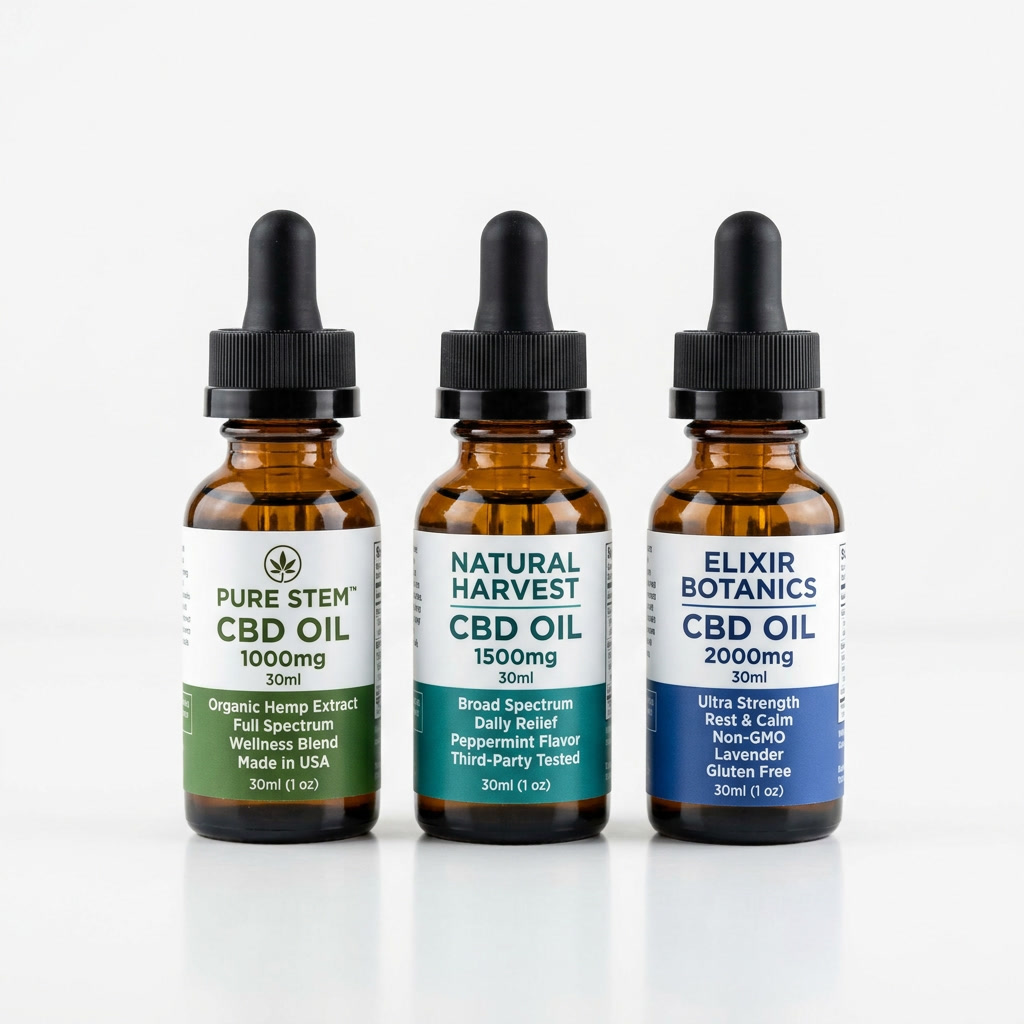
We carry high-quality CBD oils and tinctures and CBD gummies and edibles if you want a convenient option — and our CBD for focus lineup is built specifically for people chasing calm, steady concentration.
Who Should Choose CBD (And Who Should Keep Caffeine)
Choose CBD for steady all-day focus if: caffeine makes you anxious, you crash hard, you want something that supports sleep too, or you struggle with racing thoughts that block focus. It's a strong fit for writers, programmers, and anyone in sustained deep work.
Keep caffeine if: you need a fast morning kick, you don't get jittery, or you're using it strategically before a short, high-intensity burst. For endurance athletes, caffeine remains a well-supported ergogenic aid — we cover that angle in our CBD for endurance sports guide.
Many people find the real sweet spot is a combination — a small caffeine dose for the kick, plus CBD for the stability. That's the topic the research keeps coming back to.
Related Reading
Bottom Line
Caffeine and CBD both help you feel alert, but they reach that state through opposite routes. Caffeine jolts your nervous system awake and pays for it later with a crash. CBD calms the mental noise that makes focus so exhausting, delivering a steadier, more sustainable sense of energy. The latest 2023-2026 research suggests the two can be combined safely — with CBD potentially smoothing caffeine's rough edges — but they're not interchangeable. Caffeine is a fast morning hammer; CBD is an all-day steady-state tool. If jitters and 2 PM crashes rule your day, a calm-focus CBD product may be the upgrade your productivity has been waiting for.
Find Your Perfect CBD Product
Take our 2-minute quiz to get personalized recommendations based on your needs.
Take the Quiz →Disclaimer: This article is for informational purposes only and does not constitute medical advice. CBD products are not FDA-approved to treat, cure, or prevent any disease. Always consult with a qualified healthcare professional before starting any new supplement, especially if you have a medical condition or take medications.