CBD and Chronic Fatigue: What the 2023+ Research Actually Shows
The Exhaustion That Rest Can't Fix
You slept eight hours. You woke up and felt like you'd run a marathon in your sleep. By mid-morning, the fog is back, your limbs feel heavy, and the thought of a simple errand feels like climbing a mountain. Coffee doesn't touch it. A nap doesn't reset it. And when you mention it to friends, the response is usually the same: "You're probably just tired. Take a break."
But you know it's different. This isn't ordinary tiredness. It's the bone-deep, unshakeable exhaustion of chronic fatigue — the kind that persists for months, that rest doesn't fix, and that quietly reshapes your entire life. If you've been wondering whether CBD could help, you're not alone. Millions of people with persistent fatigue, and the overlapping condition known as ME/CFS (myalgic encephalomyelitis/chronic fatigue syndrome), are asking the same question.
Here's the honest answer: the research is early, thin, and far from conclusive. But there's enough real, recent science to give you a clear picture of what CBD can and can't do for chronic fatigue — and how to approach it safely. Let's dig into what the 2023 and later studies actually show.
Why Chronic Fatigue Is So Hard to Study
Before we talk about CBD, it helps to understand why chronic fatigue is such a difficult target for research. Chronic fatigue syndrome is a complex, multi-system condition. It isn't one disease with one cause. It involves the immune system, the nervous system, energy metabolism, sleep regulation, and often chronic pain.
A 2026 review in Inflammopharmacology laid out the tangled web behind fibromyalgia — a closely related condition defined by chronic pain plus fatigue — describing neurochemical changes, central sensitization, neuroinflammation, oxidative stress, mitochondrial dysfunction, and gut microbiota disturbances as contributing factors. The same complexity applies to chronic fatigue.
This matters for one big reason: a single compound like CBD is unlikely to be a magic bullet for a condition with so many moving parts. The research reflects that. Most of what we know about cannabinoids and fatigue comes from studies of fibromyalgia and chronic pain, not from direct trials in ME/CFS patients. That's a crucial distinction to keep in mind.
The Honest Truth: There Are No Direct ME/CFS + CBD Trials
Let me be direct with you. As of 2026, there is no large, high-quality randomized controlled trial testing CBD specifically in people diagnosed with ME/CFS. The evidence base for chronic fatigue syndrome and cannabinoids is essentially a research gap.
What we do have is a growing body of recent research on conditions that share a lot of ground with chronic fatigue — especially fibromyalgia, which is characterized by both chronic pain and persistent fatigue. These studies give us useful signals, but they are not the same as proof for ME/CFS. I'll be clear about that distinction throughout this article, because you deserve accuracy over hype.
What the Fibromyalgia Research Shows
Fibromyalgia is the closest well-studied cousin to chronic fatigue. It's defined by widespread pain, fatigue, sleep disturbance, and cognitive fog — a symptom profile that overlaps heavily with ME/CFS. So when researchers study cannabis and CBD in fibromyalgia, the results are the most relevant evidence we have for chronic fatigue.
A 2023 systematic review in Biomedicines examined four randomized controlled trials and five observational studies covering 564 patients with fibromyalgia. The authors concluded there was low-quality evidence supporting short-term pain reduction with cannabinoid therapeutics, while noting that medical cannabis appeared to be a safe alternative. Importantly, they flagged that only one of the RCTs showed no difference from placebo — a reminder that results are mixed.
> "Overall, this analysis shows low-quality evidence supporting short-term pain reduction in people with fibromyalgia treated with cannabinoid therapeutics."
That's the honest baseline: promising but weak evidence, with real limitations.
A 2026 Placebo-Controlled Trial: Encouraging but Small
The most rigorous recent data comes from a 2026 randomized, double-blind, placebo-controlled pilot trial in Pain Research & Management. Researchers tested a 1:1 THC:CBD cannabis oil in 24 adults with fibromyalgia, with a four-week dose titration followed by twelve weeks of stable dosing.
The results were genuinely encouraging, with important caveats:
- 91.7% of participants completed the trial (22 of 24)
- 40% of the cannabis group achieved a clinically meaningful improvement in fibromyalgia impact, versus 10% with placebo
- 70% of the cannabis group reported at least a 30% reduction in pain, versus 20% with placebo
- Adverse events were mostly mild, with no serious events reported
The authors found medium-to-large effects favoring cannabis for pain reduction, improved sleep quality, and reduced overall fibromyalgia impact. But they were careful to warn that the small sample size means the findings should be interpreted cautiously. This is a pilot trial, not a definitive answer.
The Real-World Evidence: What Patients Report
Beyond controlled trials, real-world data from large patient registries adds another layer. A 2026 case series from the UK Medical Cannabis Registry, published in Clinical Rheumatology, analyzed outcomes in 497 patients with fibromyalgia treated with cannabis-based medicinal products, tracking them from baseline out to 18 months.
The scale of this registry data is notable — nearly 500 patients is a substantial real-world sample. It reflects how many people with chronic pain and fatigue conditions are already turning to cannabis products in clinical practice, and it gives researchers a window into long-term outcomes that short trials can't provide.
Similarly, a 2026 real-world evidence study in Clinical Therapeutics examined different cannabinoid compositions in people with fibromyalgia, rheumatoid arthritis, and knee osteoarthritis. Across 168 participants who completed the study, the researchers found significant improvements across nearly all measured symptoms — with the notable exception of cognitive function, which did not improve. This is a useful reminder that cannabinoids may help some symptoms while leaving others untouched.
What About CBD Alone, Without THC?
Most of the trials above used products containing both THC and CBD. If you're looking for a non-intoxicating option — which is what most people want for daytime fatigue — the evidence for CBD alone is thinner.
A 2026 pilot study in Cannabis and Cannabinoid Research tested a CBD-containing topical formulation in 30 women with fibromyalgia over 12 weeks. The results were mixed in a way that's actually quite informative:
- Localized pain improved significantly, with 60% of participants achieving a clinically meaningful reduction
- Functional capacity improved, with 50% exceeding the minimal clinically important difference
- No adverse events were reported
But here's the honest catch: the researchers reported that generalized pain, fatigue, anxiety, and depression did not show significant improvement. In other words, the CBD topical helped localized pain but did not move the needle on fatigue itself. That's a sobering and important finding for anyone hoping CBD will directly erase exhaustion.
The Fatigue Signal in Chronic Pain Studies
There is one more thread worth following. Several recent studies of CBD in chronic pain conditions have measured fatigue as a secondary outcome — and the results are cautiously positive.
A 2025 study in the Journal of Obstetrics and Gynaecology Canada surveyed 1,382 women with chronic pelvic pain and fibromyalgia. Among the 477 current CBD users, 80.9% reported pain improvement. Crucially, those who reported pain improvement were significantly more likely to also report improved sleep, anxiety, depression, and fatigue. The most common side effect was drowsiness, reported by 29% of users.
This points to an important pattern: CBD's effect on fatigue may be indirect. When CBD improves pain and sleep, fatigue often improves along with it. But that's not the same as CBD directly boosting energy. For many people, the fatigue relief is a downstream benefit of better sleep and less pain — not a direct stimulant effect.
Why Sleep Matters for Chronic Fatigue
This brings us to one of the most practical angles. Chronic fatigue and poor sleep feed each other in a vicious cycle. You're exhausted, but you sleep poorly, which makes you more exhausted. Anything that improves sleep quality can break part of that cycle.
A 2023 retrospective review in the Journal of Clinical Medicine looked at 157 Australian adults prescribed medicinal cannabis for non-cancer conditions. The results were striking:
- 53.5% of patients perceived the treatment as beneficial
- Significant improvements were seen in fatigue, sleep, mood, and quality of life
- Sleep was the symptom with the greatest perceived benefit, at 80%
- Pain followed at 51.5%, and muscle spasm at 50%
The most common side effect was somnolence (drowsiness), reported by 21% of patients. That's a double-edged sword: for someone with insomnia, drowsiness can be helpful at night, but it's a problem if it lingers into the day.
The Digital Fatigue Angle: A New Frontier
There's a newer and somewhat unexpected line of research worth mentioning. A 2026 review in CNS & Neurological Disorders Drug Targets examined CBD for what researchers call "digital era fatigue" — the cognitive weariness, sleep disturbance, and stress caused by chronic screen and social media use.
The review described how CBD may regulate endocannabinoid tone, serotonin and dopamine receptors, and neuroinflammatory pathways, producing anxiolytic, neuroprotective, and sleep-regulatory effects. This is largely preclinical and theoretical at this stage, but it hints at the mechanisms by which CBD might influence the kind of persistent mental exhaustion many people experience.
I'd treat this as interesting background rather than proof. The mechanisms are plausible, but they haven't been confirmed in large human trials for fatigue specifically.
The Mechanisms: How CBD Might Help
So how could CBD plausibly influence chronic fatigue? The research points to several pathways, though none are fully confirmed:
- Sleep regulation: CBD's calming effects may improve sleep quality, which is foundational for energy
- Pain reduction: By easing chronic pain, CBD may reduce the energy drain of constant discomfort
- Anxiety reduction: Lowering anxiety can reduce the mental exhaustion that comes with a constantly stressed nervous system
- Anti-inflammatory effects: CBD interacts with pathways that may dampen neuroinflammation, which is implicated in chronic fatigue
- Endocannabinoid tone: CBD may help regulate the body's own endocannabinoid system, which influences mood, sleep, and pain
The key takeaway: CBD's most likely benefit for fatigue is indirect. It's a support tool that may improve the conditions — sleep, pain, anxiety — that make fatigue worse, rather than a direct energy booster.
What the Research Does NOT Show
It's just as important to be clear about what the evidence does not support. Based on the 2023+ research:
- There is no proof that CBD cures or reverses chronic fatigue syndrome
- There is no direct trial of CBD in ME/CFS patients specifically
- CBD is not a stimulant — it won't give you a caffeine-like energy boost
- The evidence is low-quality and mixed, with several studies showing no benefit over placebo
- Some studies show no improvement in fatigue itself, even when pain improves
- Drowsiness is a common side effect, which could worsen daytime fatigue for some people
If you're hoping CBD will be a quick fix for exhaustion, the research says that's unlikely. If you're hoping it might help you sleep better, hurt less, and feel calmer — which could indirectly help your energy — the evidence is more encouraging, though still early.
How to Approach CBD for Chronic Fatigue, If You Try It
If you decide to explore CBD for chronic fatigue, here's a sensible, evidence-informed approach:
- Start low and go slow. Begin with a modest dose and give it time to build up in your system
- Track everything. Keep a simple journal of dose, timing, sleep quality, pain, and energy levels for at least two to three weeks
- Prioritize sleep support. Given the research, CBD's most reliable benefit may be improving sleep — so consider taking it in the evening
- Watch for drowsiness. If CBD makes you sleepy during the day, adjust timing or dose
- Be patient and honest. If you see no change after a few weeks, that's useful information too
- Talk to your doctor. Especially if you take other medications, since CBD can interact with certain drugs
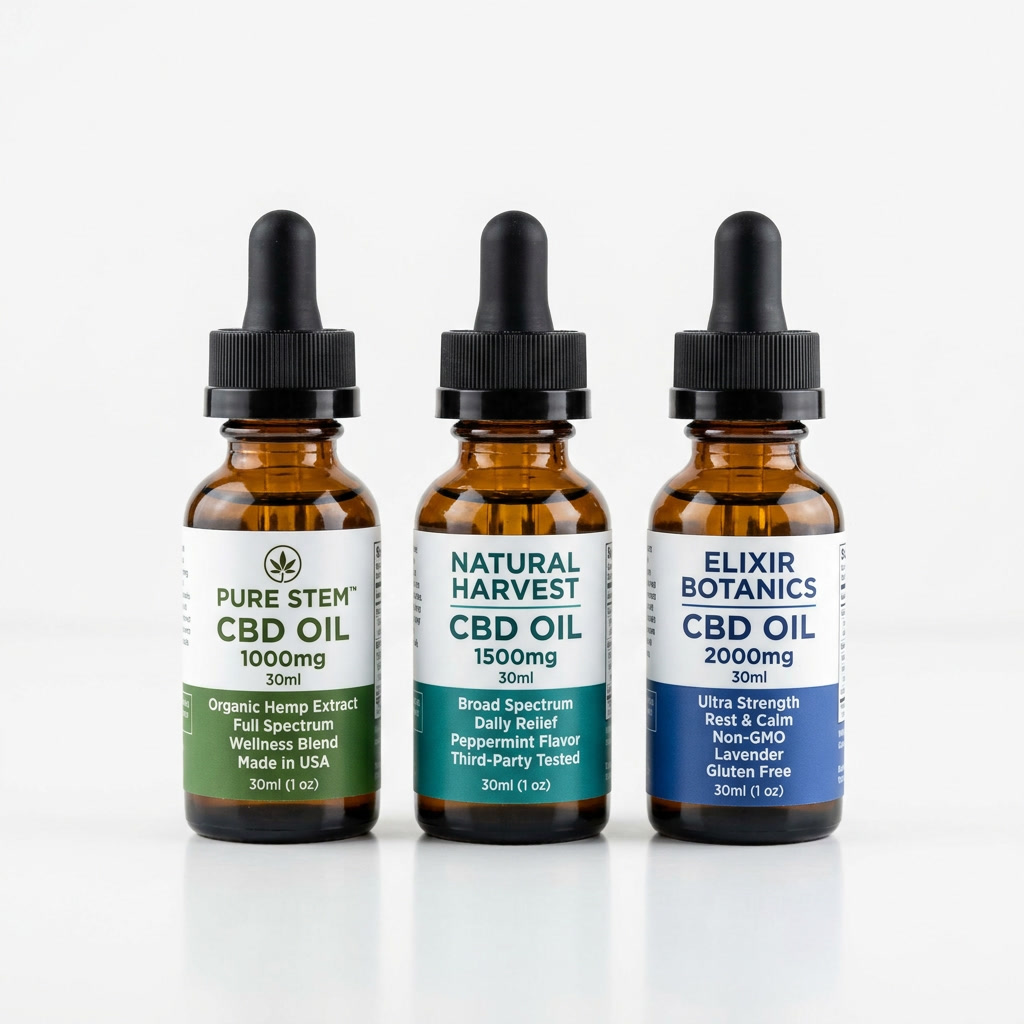
For a non-intoxicating option, a full-spectrum or broad-spectrum CBD oil is a reasonable place to start. You can browse our CBD oils to see what fits your routine. If you prefer a more convenient format, our CBD gummies offer a consistent, pre-measured dose, and CBD capsules are a good choice for those who want a no-fuss daily option.
The Bottom Line
Here's the honest bottom line on CBD and chronic fatigue. The direct evidence for CBD in ME/CFS is essentially nonexistent — no large trial has tested it in that specific population. What we have instead is a growing body of 2023 and later research on closely related conditions, especially fibromyalgia, showing that cannabinoids can help with pain and sleep, and that fatigue often improves as a secondary benefit.
The most encouraging recent data — a 2026 placebo-controlled pilot trial — showed meaningful improvements in pain, sleep, and overall impact, but it was small and needs replication. Meanwhile, a 2026 topical CBD study found no improvement in fatigue itself, a reminder that CBD is not a direct energy fix.
If you're living with chronic fatigue, CBD is worth considering as part of a broader approach — one that includes sleep hygiene, pacing, stress management, and medical guidance. It's not a cure, and it's not a stimulant. But for some people, the combination of better sleep, less pain, and lower anxiety can take the edge off the exhaustion. Approach it with realistic expectations, track your results, and let your own experience — guided by your doctor — be the final judge.
Find Your Perfect CBD Product
Take our 2-minute quiz to get personalized recommendations based on your needs.
Take the Quiz →Disclaimer: This article is for informational purposes only and does not constitute medical advice. CBD products are not FDA-approved to treat, cure, or prevent any disease. Always consult with a qualified healthcare professional before starting any new supplement, especially if you have a medical condition or take medications.