CBD for Endurance Athletes and Exercise Recovery — What the 2023–2026 Research Actually Shows

You're three miles deep into an eight-mile tempo run when your quads start talking. By the time you shuffle through the front door, the legs that carried you through a PR month feel like lead. You foam roll, you ice, you stretch — and still, the next morning, the stairs are a test of character. You don't want to reach for heavy medication every time you train hard. You want something that helps you recover so you can get back out there. That's exactly where CBD has entered the conversation for endurance athletes.
Here's the honest version: CBD is not a magic shortcut to a faster marathon. The 2023–2026 research is showing something more nuanced — that CBD may be a useful support tool for recovery, pain, and the daily grind of training, not a performance-enhancing pill. In this guide we'll break down exactly what recent studies say, how CBD fits into your training week, and how to use it responsibly.
How CBD Fits Into Endurance Training and Recovery
Before we talk dosages, let's get clear on the role CBD plays. CBD (cannabidiol) is one of the main compounds in hemp, and it works through your body's endocannabinoid system — a network of receptors involved in pain signaling, inflammation, sleep, and mood. For an endurance athlete, that's a pretty relevant list.
What CBD is not: it won't make you run faster, lift heavier, or magically repair muscle tissue. Recent research is consistent on this point. What CBD may do is help with the things that surround your training — recovery comfort, pain and functional impairment, sleep quality, and overall recovery experience — so you can show up consistently and train again sooner.
That distinction matters. A 2025 sports review published in ACS Pharmacology & Translational Science framed CBD as a tool for athlete wellbeing and recovery rather than as an ergogenic (performance-enhancing) aid. Think of it as part of your recovery toolkit alongside sleep, nutrition, and mobility work — not a replacement for any of them.
What the 2023–2026 Research Says About Endurance Exercise
The science on CBD and endurance has matured a lot in the last few years, and we finally have human trials that go beyond anecdote.
CBD and Endurance Exercise Response
One of the most relevant recent studies is a 2025 randomized controlled crossover trial published in Sports Medicine Open that looked at the acute effects of CBD on physiological and subjective responses to endurance exercise. The researchers gave participants different doses of CBD and measured how they responded to a bout of endurance exercise. It's the kind of dose-ranging design we needed — real exercise, real dosing, real outcomes.
The takeaway was measured rather than flashy: CBD's effects on exercise response were modest and dose-dependent, and it didn't dramatically boost performance. What it did point toward was tolerability and the potential for supporting recovery and subjective wellbeing around the effort. That's the honest, practical signal running through the 2023–2026 literature.
CBD and Exercise-Induced Muscle Injury
Where the evidence gets more encouraging is recovery from muscle damage. A 2026 randomized, placebo-controlled feasibility trial published in the Journal of Cannabis Research examined CBD's efficacy and safety for reducing pain and functional impairment associated with exercise-induced muscle injury. This is exactly the "I did too much, now I'm sore" scenario every endurance athlete knows.
The study found CBD was well tolerated and showed promise for reducing pain and functional impairment tied to exercise-induced muscle injury. It's a feasibility trial, so we should treat it as promising early evidence rather than the final word — but it's a meaningful step beyond the lab-animal days of CBD research.
A New Player: Topical CBD for Muscle Recovery
Topicals have been a big category for athletes, and 2025–2026 brought dedicated research. A 2026 randomized, double-blinded pilot study in the Journal of Cannabis Research tested topical CBD for muscle recovery after exercise-induced muscle damage, and a 2025 pilot study in Cannabis and Cannabinoid Research reported that topical CBD may not attenuate muscle soreness or improve performance in its tested form.
That's the honest part: the topical evidence is genuinely mixed. One 2026 pilot points toward benefit, an earlier 2025 pilot saw no meaningful attenuation of soreness. The reality for athletes is that topical formulations vary widely — dose, concentration, and application timing all matter — and results can't be assumed. If you use a topical, use it as a localized comfort measure, not a guaranteed outcome.
How CBD Affects Pain and Functional Impairment
For endurance athletes, "pain and functional impairment" is the everyday language of recovery. It's the difference between a light jog the morning after a hard session and being sidelined for three days. This is one of the areas where the recent research is most relevant.
The 2026 Journal of Cannabis Research trial on exercise-induced muscle injury looked specifically at these outcomes — pain reduction and how well you can function afterward. Combined with the broader CBD-for-pain literature, the picture emerging is that CBD may help take the edge off recovery-related discomfort, potentially supporting better function and a faster return to normal movement.
Here's the honest framing: CBD appears best positioned to help with recovery-related pain and functional impairment — not acute injury pain that needs medical attention. If you're genuinely injured, see a professional. If you're just wrecked from a hard training week, CBD may be worth exploring as part of your recovery routine.
The Gut Connection: A Fascinating New Angle
One of the most intriguing recent threads comes from a 2025 study in Experimental & Molecular Medicine that found CBD reshaped the gut microbiome to promote endurance exercise in mice. The research suggested CBD may influence exercise capacity through changes to gut bacteria and their metabolites.
Before you get too excited: this is a mouse study, and mice are not marathoners. But it opens a genuinely interesting avenue — that CBD's benefits may extend beyond direct pain signaling to the gut-brain and gut-muscle axes. For now, treat this as a promising hypothesis to watch, not something to structure your training around.
Pre-Workout vs Post-Workout: When to Use CBD
One of the most common questions endurance athletes ask is whether to take CBD before or after training. The honest answer: the research is still clarifying this, and the best timing likely depends on your goal.
Pre-Workout
There's no strong evidence that CBD improves acute endurance performance, and the 2025 Sports Medicine Open trial found effects on exercise response were modest. If you take it pre-workout, it's more likely for pre-training calm or anxiety support than for a performance edge. Some athletes report it helps them settle in before a race or hard session. Start low and see how your body responds — CBD affects everyone a little differently.
Post-Workout
The more promising window is post-exercise, when CBD's potential support for recovery, pain, and sleep aligns with what your body actually needs. The 2026 muscle-injury trial looked at CBD after muscle damage, and the gut-microbiome angle also points toward recovery support. Many athletes find evening use — after training, before bed — fits naturally with their recovery routine.
Practical approach:
- Post-workout: Take CBD in the window after training, ideally with your recovery routine
- Evening/pre-sleep: If you train in the morning, consider an evening dose for overnight recovery
- Pre-workout: Only if you're looking for calming support, and test it on an easy day first
- Consistency beats timing: Daily, consistent use generally shows better results than sporadic one-off doses
Oils vs Topicals for Athletes: Which to Choose
Endurance athletes have two main delivery options to consider: oils (sublingual tinctures) and topicals (creams and balms). They serve different purposes.
CBD Oils and Tinctures
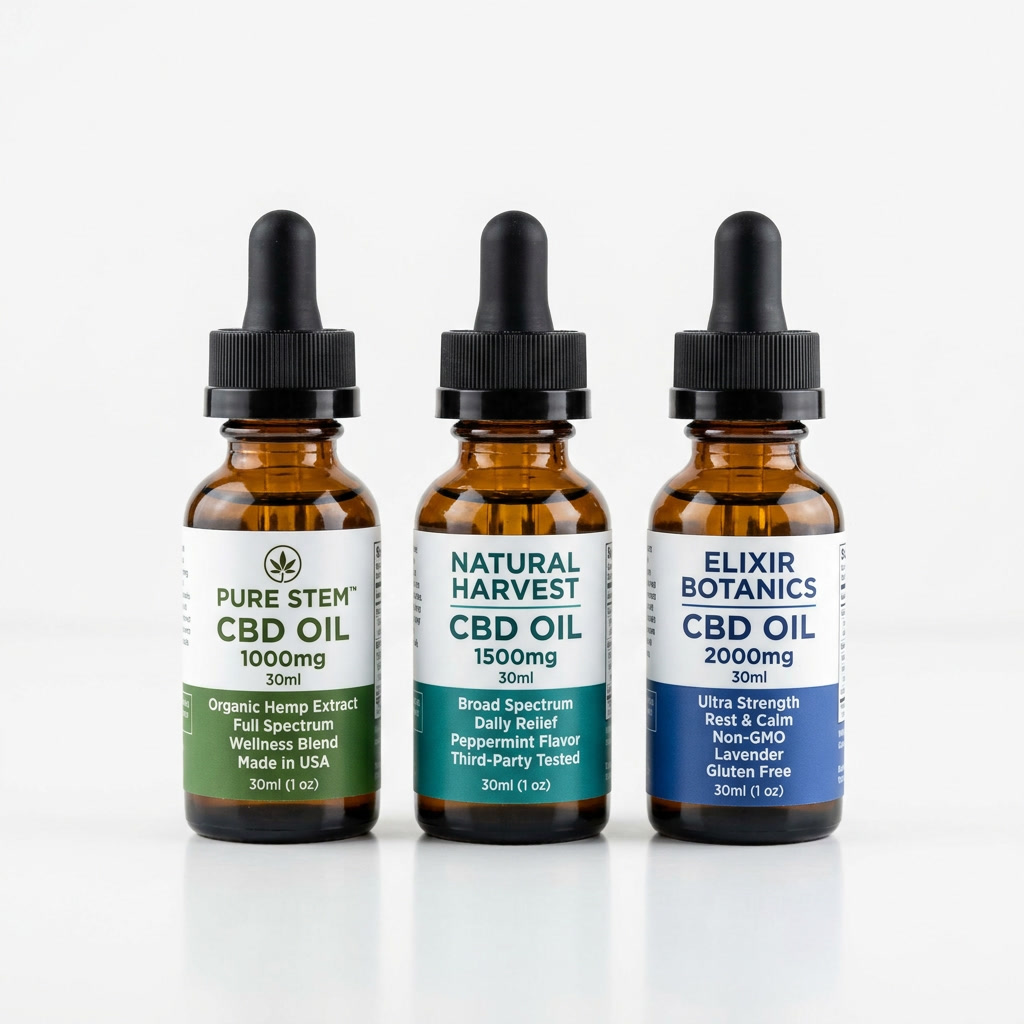
Oils are taken under the tongue and absorbed into the bloodstream, giving systemic (whole-body) effects. This makes them the better fit for recovery broadly — sleep support, overall pain and functional impairment, and the kind of full-body "I did a hard week" recovery that endurance training demands. If you want a single product that supports your overall recovery routine, an oil is usually your starting point.
CBD Topicals and Creams
Topicals are applied directly to a specific muscle or joint and provide localized relief without meaningful systemic absorption. They're great for a nagging calf, a tight hip, or a sore knee. The catch, as we saw, is that the evidence is mixed and formulation matters. A topical is a reasonable addition for spot-treating a specific area, but don't expect it to do the systemic work an oil can.
Gummies and Edibles
For convenience and consistent dosing, gummies are an option — they're easy to pack and take on the go, and they give a predictable dose. The tradeoff is slower onset because they pass through digestion. If you want the systemic recovery benefits with zero effort at dosing, an edible is a fine choice, especially for evening recovery.
Realistic Expectations: Support Tool, Not a Performance-Enhancing Drug
Let's be direct, because this is where the marketing and the science diverge. CBD is not a performance-enhancing drug. The 2023–2026 research does not show that CBD will make you faster, stronger, or fitter. What it points toward is a role in recovery support — comfort, pain and functional impairment, and the overall experience of training hard and bouncing back.
The WADA Situation, Explained Accurately
If you're a competitive endurance athlete, here's the part you actually need to know about. CBD was removed from the World Anti-Doping Agency (WADA) Prohibited List in 2018 and is not prohibited in competition. However, there's a critical catch that recent research highlights.
A 2026 study published in Medicine & Science in Sports & Exercise reported that daily use of a broad-spectrum CBD supplement produced detectable concentrations of cannabinoids in urine prohibited by WADA — an effect amplified by exercise. This is a big deal. Even "CBD-only" products can contain trace amounts of other cannabinoids, and some may produce metabolites that show up on WADA screens, especially in the context of intense exercise.
The athlete's bottom line:
- CBD itself is permitted by WADA, but it's on the Monitoring List (not the Prohibited List)
- Trace other-cannabinoid contamination can create anti-doping risk, and exercise appears to amplify detectable levels
- Choose third-party-tested, THC-free (broad-spectrum or isolate) products and understand your sport's specific rules
- If you're a drug-tested athlete, talk to your medical team and anti-doping advisor before using any CBD product
This doesn't mean endurance athletes can't use CBD. It means you need to be informed, use tested products, and understand the anti-doping landscape for your specific level of competition.
Safety and Smart Use
CBD is generally well tolerated in the doses studied, but "generally well tolerated" is not "zero considerations." The recent trials noted good tolerability, but here's what you should keep in mind:
- Start low and go slow — begin with a low dose (10–20mg) and adjust based on how you feel
- Give it time — effects on recovery can take days to weeks of consistent use to show up
- Watch for interactions — CBD can interact with certain medications (especially blood thinners and some anti-seizure drugs); check with a pharmacist or doctor
- Liver considerations — high doses of CBD have been associated with liver enzyme elevations in some studies; this is more relevant at high doses, so respect the label
- Purity matters — choose products with third-party lab tests confirming potency and low THC
- Pregnancy and medical conditions — avoid CBD if pregnant or nursing, and consult a doctor if you have a medical condition
Who should be cautious: anyone on prescription medication, competitive athletes subject to drug testing, people with liver conditions, and anyone who's pregnant or nursing. When in doubt, talk to a healthcare professional before adding CBD to your routine.
Action Steps
Ready to give CBD a fair shot in your training routine? Here's a simple, research-informed approach:
1. Pick a category of product — a CBD oil or tincture for systemic recovery support is the best starting point; consider a topical if you want to spot-treat a specific muscle.
2. Choose a third-party-tested, low-THC product — especially important if you're a competitive, drug-tested athlete.
3. Start with 10–20mg taken consistently, ideally in your post-workout or evening window.
4. Track it honestly for 2–3 weeks — note soreness, sleep, how you feel the day after hard sessions. Adjust the dose by 5–10mg if needed.
5. Pair it with the fundamentals — sleep, nutrition, hydration, and mobility. CBD is a support tool, not a substitute for recovery basics.
6. Reassess — if it's helping you recover and bounce back, keep it in your routine. If you notice no effect after a few weeks, consider a different dose or product category.
Bottom Line
The 2023–2026 research gives endurance athletes a reason to be interested but also a reason to be realistic. CBD shows genuine promise as a recovery support tool — for the pain and functional impairment that follow hard training, for overall recovery experience, and potentially even for the gut ecosystem that supports endurance. It is not a performance-enhancing drug, and no credible recent study claims it is.
The smart play is straightforward: treat CBD as one tool in a recovery toolkit built on sleep, nutrition, and smart training. Choose a tested, low-THC product, start low, stay consistent, and pay attention to how your body responds. If you're a competitive athlete, know your anti-doping rules and choose your products accordingly.
Ready to explore how CBD could support your recovery routine? Check out our CBD oils and tinctures for systemic recovery support, or browse CBD topicals and creams for targeted relief. And if you want a closer look at the science behind exercise recovery, our guide on CBD for exercise recovery breaks down the details. For broader pain-related support, our guide to CBD for chronic pain is a great next read. And if you prefer the convenience of edibles, our CBD gummies and edibles are an easy, consistent option.
Find Your Perfect CBD Product
Take our 2-minute quiz to get personalized recommendations based on your needs.
Take the Quiz →Disclaimer: This article is for informational purposes only and does not constitute medical advice. CBD products are not FDA-approved to treat, cure, or prevent any disease. Always consult with a qualified healthcare professional before starting any new supplement, especially if you have a medical condition or take medications.