Should You Take CBD With Food? Empty Stomach vs With Meals
You squeeze a dropper of CBD oil under your tongue, hold it there, swallow — and thirty minutes later, nothing. No calm, no shift, no discernible change at all. It's one of the most common experiences in the CBD world, and it usually ends one of two ways: either you double the dose and hope for better, or you write CBD off as expensive placebo. But before either of those, there's a simpler question worth asking: what did you eat? If the answer is "nothing since dinner last night," your empty stomach may be quietly working against you — because CBD is one of the most fat-hungry compounds you can swallow, and without fat in the meal, most of a dose may never actually make it into your bloodstream. The timing of your dose relative to food may matter as much as the dose itself. This guide walks through what the latest pharmacokinetic research actually says about taking CBD with food versus on an empty stomach, how to time your dose around your goals, and how to get more out of every milligram you take.
Why CBD Is So Sensitive to Food in the First Place
CBD is what pharmacologists call a highly lipophilic compound — it dissolves readily in fat, and poorly in water. That single property drives almost everything about how your body absorbs it.
When you swallow CBD, it has to dissolve into the fat-rich environment of your small intestine before it can cross into your bloodstream. In a fasted state, there's simply less fat around to dissolve it into. Bile flow is lower, digestive secretions are reduced, and whatever CBD you swallowed tends to clump or pass through without ever fully dissolving.
A 2026 review in Molecules examining CBD in dietary supplements described the core challenge bluntly: CBD's oral bioavailability is low and highly variable, shaped heavily by factors like lipophilicity, water solubility, and extensive first-pass metabolism in the gut and liver. In other words, even under ideal conditions, a modest fraction of an oral dose survives the journey. Change the conditions — like removing the food — and that fraction shrinks further.
> CBD is a lipophilic molecule with poor and variable oral bioavailability, and its absorption is highly affected by the presence of food.
There's an already-known history here worth acknowledging: the widely-cited finding that a high-fat breakfast can multiply CBD exposure several-fold was established years ago in early clinical pharmacokinetics work — a 2016 food-effect study is the classic reference. What's new is that 2023-plus research has moved this from the realm of licensed drug formulations toward real-world consumer products, showing the same food sensitivity applies to hemp extracts you'd buy off a shelf.
What the Latest Food-Effect Studies Actually Found
The most direct answer to the empty-stomach question comes from a 2025 randomized crossover trial published in Scientific Reports. Researchers at Wageningen University gave healthy men and women a single 70 mg oral dose of a CBD-rich hemp extract, once with a standardized high-fat meal and once fasted, then measured blood levels of CBD and its chief metabolite, 7-hydroxy-CBD.
The results were striking:
- Peak blood concentration (Cmax): roughly 17-fold higher when CBD was taken with the high-fat meal
- Total exposure (AUC): roughly 10-fold higher under fed conditions
- Shape of the curve: the fed condition showed a distinctive double-peak pattern, meaning absorption continued in a second wave hours later — likely from lymphatic transport and enterohepatic recirculation — producing a longer plateau of sustained blood levels
That second point deserves emphasis. Taking CBD with fatty food didn't just make blood levels bigger; it made them last longer, with elevated concentrations persisting for many hours. For anyone using CBD for sleep or all-evening relaxation, that extended exposure profile is arguably as valuable as the higher peak.
A 2024 systematic review and meta-regression in Cannabis and Cannabinoid Research put these findings in wider context. Analyzing the full body of CBD pharmacokinetics literature, the Mount Sinai team confirmed what individual trials keep showing: oral CBD absorption is low, variable between people, and consistently improved by food intake — which is why clinical dosing recommendations increasingly assume dosing with meals rather than in a fasted state.
And a 2025 review in the European Journal of Pharmaceutical Sciences reinforced the mechanism: the meal-induced jump in bioavailability comes from enhanced solubilization in bile-rich micelles and meal-stimulated intestinal lymphatic uptake — the very pathways that sit mostly idle on an empty stomach.
Fasted vs Fed: Matching Timing to Your Goal
If food boosts absorption so dramatically, does that mean you should never take CBD on an empty stomach? Not necessarily. It depends on what you want.
When a fasted dose can make sense
Here's the counterintuitive part: because a fasted dose produces lower blood levels, some people deliberately use it when they want a lighter, subtler effect. The downsides are real, though — on an empty stomach, absorption is not just lower but far more unpredictable. You might absorb a little; you might absorb almost nothing. For purposes where consistency matters most — steady daytime support, taking CBD alongside your morning routine — dosing with even a modest breakfast is usually the safer bet.
When a fed dose is clearly better
For anything where you want CBD to actually show up in meaningful amounts, take it with fat:
- Sleep support: an evening dose taken with dinner taps directly into that sustained double-peak absorption, keeping levels elevated deep into the night. This pairs naturally with the sleep-focused resources. One of the first decisions is choosing among the best CBD for sleep, since format and timing work together.
- General wellness and full-body support: higher, steadier exposure gets more of the dose working for you.
- .Window-of-relief scenarios: when you need predictable effects later in the day, fed dosing removes the guesswork.
If you plan to use CBD around workouts, focus blocks, or coffee, it's also worth understanding the trade-offs in our CBD vs caffeine for energy comparison before settling on a timing routine.
The practical middle ground
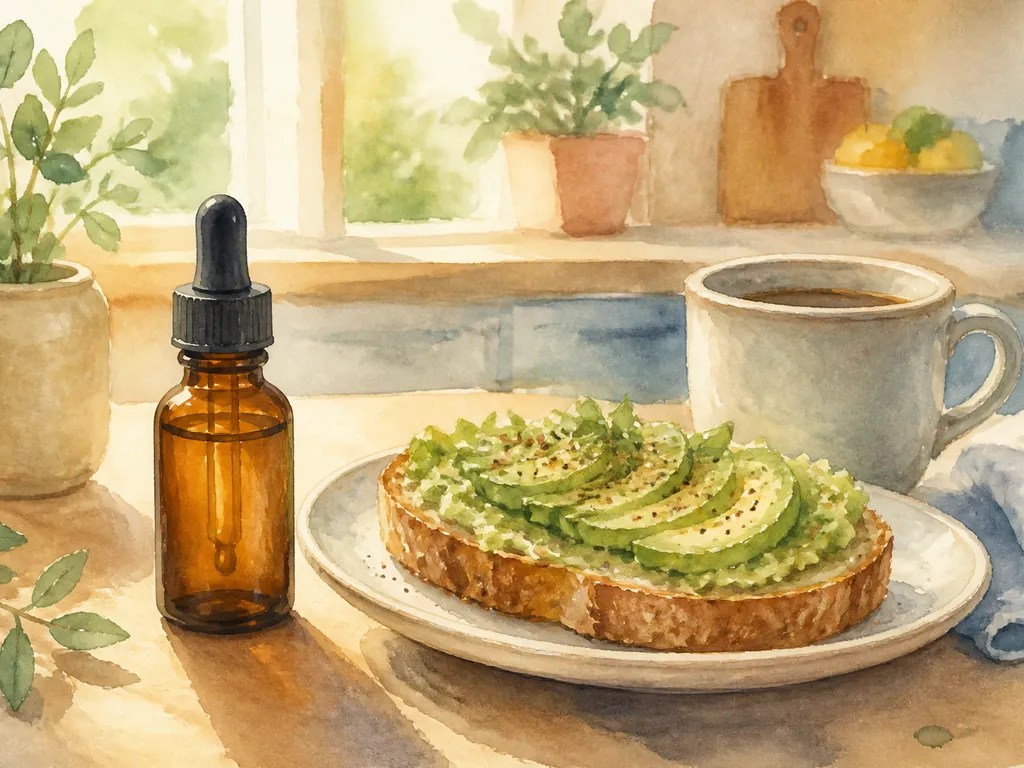
You don't need a full fry-up. What matters is that the meal contains fat — which is precisely why many experienced users anchor one daily CBD dose to breakfast. If you're still dialing in how much CBD to take at all, start with the fundamentals in our guide to CBD dosage by weight, then layer timing on top.
Product Format Changes Everything: Oil vs Capsules vs Gummies
How you take CBD interacts with food effects differently depending on the delivery format.
Oils and tinctures
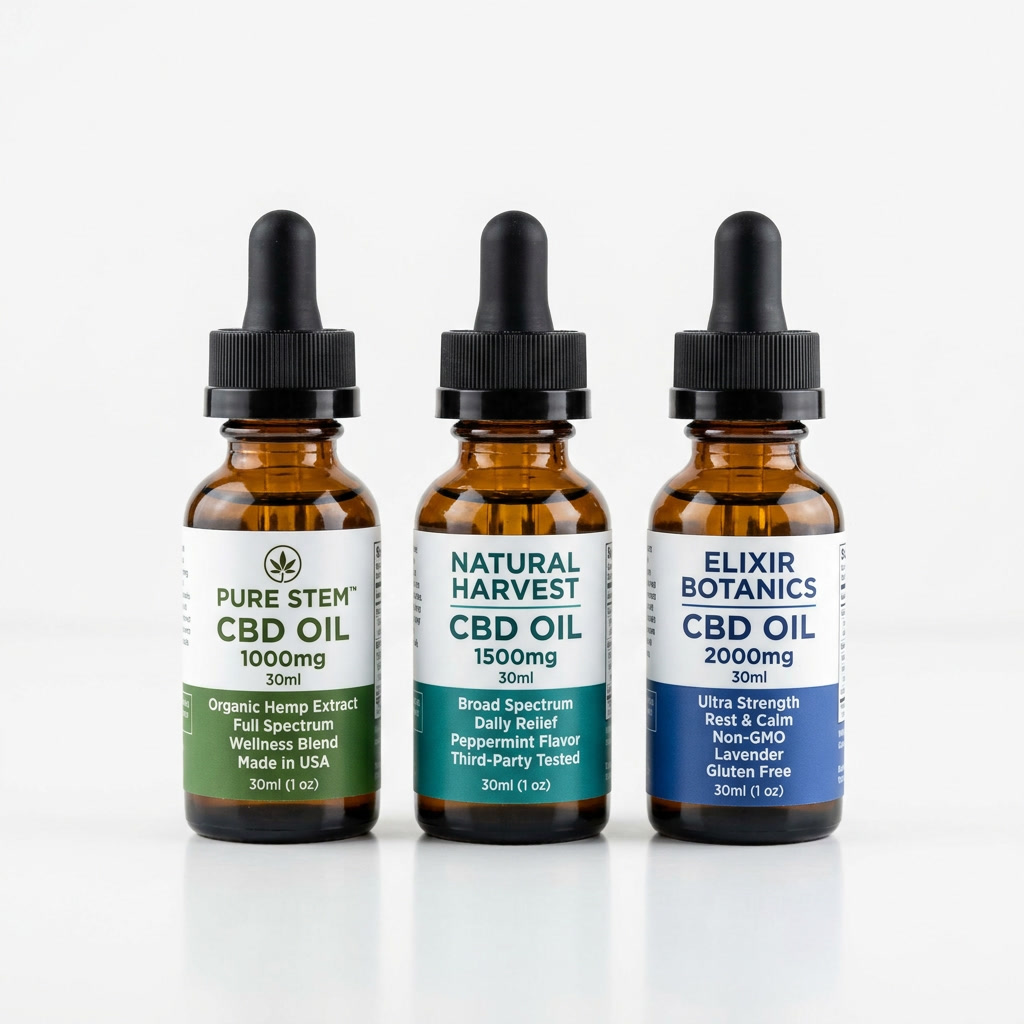
Sublingual oils are the fastest route available outside vaping. Held under the tongue for 60–90 seconds, a portion of the CBD absorbs directly through the oral mucosa and skips first-pass metabolism entirely. But whatever you swallow afterward — and you always swallow some — is subject to the full force of the food effect. A 2025 review in Molecules covering routes of administration notes that oral absorption remains low and variable across common formats, which is precisely why the sublingual hold matters: it's the part of your dose that food can't ruin. Oils designed for exactly this hold-then-swallow routine are available at CBD oils and tinctures.
Capsules and softgels
Capsules are the format most exposed to the food effect, because everything they contain must navigate the digestive tract. Every capsule dose depends on gut contents to dissolve, solubilize, and absorb — which makes them the format where taking CBD with a meal stops being optional. The upside: when paired with a fatty meal, capsules benefit enormously, and their slower, steadier release suits overnight and long-horizon use. You'll find capsule formats designed for this get the most from formats like CBD capsules and softgels.
Gummies and edibles
Gummies behave like capsules in most respects — digestion-bound, slower onset of roughly 30–90 minutes, and strongly influenced by co-ingested food. One nuance worth knowing: a 2025 study in Biomolecules testing self-emulsifying CBD delivery systems found that built-in oil excipients could meaningfully improve absorption even across fasted and fed conditions — an early signal that some edibles may eventually be formulated to dampen the food dependency. For now, though, standard gummies follow the same rule as everything else: take them with something fatty; you can browse formats like CBD gummies and edibles.
There's also a category where the food question shifts entirely: beverages. CBD drinks are typically consumed on their own, on an empty-ish stomach, at relatively low doses — a use case covered separately in our guide to CBD beverages.
MCT Oil and Carrier Oils: Built-In Food?
Most quality tinctures suspend CBD in a carrier oil — usually MCT (medium-chain triglyceride) coconut oil, sometimes hemp seed or olive oil. Does that carrier count as "food"?
Partially. Carrier oils genuinely improve CBD's immediate solubility — that's their job — and MCT in particular is small enough to be absorbed rapidly, attracting CBD into the absorption pathway. Think of the carrier as a head start, not a full meal. A teaspoon of MCT oil in a dropper is a fraction of the dietary fat involved in a standardized high-fat breakfast, which in the Scientific Reports study was a genuinely fat-rich meal. A 2026 review in Molecules on dietary CBD routes likewise frames carrier oils as an improvement within an oral formulation, not a substitute for co-ingested food.
Practical translation: a tincture held sublingually gets a real boost from its MCT carrier, but the swallowed portion still benefits from dropping into a meal. The MCT head start plus a fatty breakfast is a genuinely strong combination.
How to Time Your Dose Around Meals
Timing rules are simpler than the science behind them:
1. For maximum absorption: take CBD within about 15–30 minutes of starting a meal containing fat — breakfast, lunch, or dinner, whichever fits your routine.
2. For sleep: anchor an evening dose to dinner. The sustained fed-state absorption curve -- with its extended double-peak exposure -- is well suited to overnight needs. If you're still deciding which product format suits sleep best, start with our sleep product guide.
3. For all-day consistency: same meal, same time, every day. Fed-state absorption is not only higher but more reliable, and routine is what turns that into consistent results.
4. Don't chase the fasted dose for "quicker onset." True, an empty stomach may let a sublingual's early effects appear marginally sooner — but what you gain in speed you lose many times over in total absorption and predictability. If you need help structuring overall daily amounts, our weight-based dosing guide covers the fundamentals.
Common Mistakes That Waste Your CBD
- Taking oil on an entirely empty stomach, then closing the bottle. The single most common waste pattern. Even a small breakfast with some fat changes the outcome dramatically.
- Assuming the carrier oil replaces food. MCT helps; it doesn't match a full fatty meal. Treat it as a partial boost, not immunity from the food effect.
- Swallowing sublingual oil immediately. If you're swallowing straight away, you've converted a sublingual product into an oral one — and forfeited the food-independent absorption advantage. Hold for 60–90 seconds.
- Doubling the dose after a "failed" empty-stomach dose. If absorption was poor, doubling dose on the same empty stomach doubles the waste. Fix the meal, not the milligrams.
- Chasing fast absorption at the cost of everything else. Gummies and capsules are slower by design; taking them an hour before a meal and judging them "ineffective" at 30 minutes is a timing error, not a product failure.
- Storing CBD somewhere hot or bright so that even a perfectly-timed dose starts weakened. If your oil has been on a sunny windowsill, timing isn't your biggest problem — check our CBD storage and shelf-life guide before blaming your stomach.
Frequently Asked Questions
How long after eating should I wait to take CBD?
You don't wait — you take it with the meal, ideally within 15–30 minutes of the first bite so the CBD is present while bile flow and fat absorption pathways are at their peak. Taking it an hour after a light snack captures much less of the food effect.
Does holding CBD oil under my tongue make food irrelevant?
No. Holding oil sublingually for 60–90 seconds allows some CBD to bypass digestion entirely, but the portion you inevitably swallow still benefits enormously from a fatty meal. The two strategies stack rather than substitute for each other.
Is a fasted morning dose ever the right choice?
Only if you intentionally want a lighter, subtler effect and accept less predictable absorption. For consistent daytime or sleep-related support, a dose taken with a fatty meal is almost always the better choice.
Action Steps
1. Anchor your main CBD dose to the meal that already contains the most fat in your day — for most people, that's dinner, or breakfast if you eat eggs, yogurt, or nut butter.
2. Take the dose within 15–30 minutes of starting the meal.
3. If using a tincture, hold it under your tongue for 60–90 seconds before swallowing.
4. Keep the same meal-timing every day for two full weeks, and note effects in a simple log — dose, meal, timing, result.
5. Only adjust dose after timing is consistent; otherwise you're changing two variables at once and learning nothing.
6. If you take prescription medications, raise timing changes with your doctor first, since meals can also change how other medicines absorb.
Bottom Line
Taking CBD with a fatty meal isn't a minor optimization — the best current evidence shows it can multiply total absorption roughly tenfold compared to a fasted state, while extending how long CBD stays active in your system. That makes fed dosing the clear default for sleep, evening relaxation, and general wellness, while the empty-stomach option remains a deliberately lighter (and much less predictable) choice. Match the format to the meal: hold tinctures sublingually, take capsules and gummies with food always, and let your carrier oil be a head start rather than a substitute. Pair your high-fat meal routine with quality products from our CBD oils and tinctures collection — then give it two consistent weeks before you decide whether CBD "doesn't work" for you. There's a good chance it was never about the dose at all, just the fork beside it.
Related reading: Timing matters for morning-after dosing too — see our guide to CBD and hangovers.
Find Your Perfect CBD Product
Take our 2-minute quiz to get personalized recommendations based on your needs.
Take the Quiz →Disclaimer: This article is for informational purposes only and does not constitute medical advice. CBD products are not FDA-approved to treat, cure, or prevent any disease. Always consult with a qualified healthcare professional before starting any new supplement, especially if you have a medical condition or take medications.