CBD for Focus and Productivity: Can Cannabidiol Sharpen Your Mind?

Intro
It's 2:30 PM on a Tuesday. You've got a deadline looming, your to-do list has more unchecked boxes than checked ones, and your cursor has been blinking at you accusingly for the last ten minutes while your brain cycles through everything except the task in front of you. Sound familiar? For most of us, the answer is another coffee, a third energy drink, or a nervous scroll through social media that somehow makes it worse. The afternoon brain fog hits, the racing thoughts pile up, and concentration feels like trying to hold water in your hands. That's exactly why more and more people are asking whether CBD—the non-intoxicating compound from hemp that's taken the wellness world by storm—could be part of the answer. The honest short version: CBD doesn't work like a stimulant, and it's not a magic "focus pill." But there's a growing body of research suggesting it may help indirectly, by calming the anxiety and mental noise that quietly sabotage your concentration in the first place. Let's look at what the science actually says, what it doesn't, and how to try it responsibly if you're curious.
Why People Turn to CBD for Focus
The premise sounds compelling: if anxiety and stress are what's stealing your attention, and CBD is known to reduce anxiety, then maybe CBD can indirectly sharpen your focus by removing the mental static. That's the core logic—and it's actually where most of the legitimate research points.
But it's worth being honest about what CBD isn't: it's not Adderall, not a nootropic, and not a stimulant. It doesn't directly "boost" attention the way caffeine does. What it may do is calm the underlying stress response that fragments your thinking.
- People reach for CBD when stress, racing thoughts, or anxious rumination is the real blocker to getting work done.
- The mechanism is indirect—less anxiety, better calm, and in turn, more room for sustained attention.
- The scientific evidence for CBD improving focus in otherwise healthy people is limited and preliminary. Nobody should expect a clean, caffeine-like jolt.
That honest framing matters, because a lot of the CBD market overpromises. If you go in expecting a miracle, you'll be disappointed. If you go in understanding CBD as a potential calm-down lever, you're more likely to have a realistic experience.
How CBD Works With the Endocannabinoid System
To understand why CBD might touch focus at all, you need to know about the endocannabinoid system (ECS)—a widespread signaling network in your body involved in regulating mood, sleep, appetite, pain, and stress. It's like your body's built-in homeostat that helps keep things in balance, and stress is one of its biggest jobs.
CBD interacts with this system in a complex, mostly indirect way. Unlike THC (the intoxicating part of cannabis), CBD doesn't strongly bind the classic cannabinoid receptors that produce a "high." Instead, it's thought to work through multiple pathways—influencing how the body breaks down its own endocannabinoids and interacting with other receptors involved in anxiety and stress.
The practical takeaway: CBD's effects on the brain appear to be calming and balancing rather than stimulating. That's precisely why any focus benefit is likely to come from the stress side of the equation rather than a direct attention boost.
The Anxiety Connection
Here's where the research gets more interesting. If stress and anxiety are fragmenting your concentration, then reducing them is a plausible path to better focus—and this is where CBD has its strongest, most-replicated evidence.
In a large 2019 case series published in The Permanente Journal, researchers reviewed 72 adults using CBD for anxiety or sleep problems. They found anxiety scores decreased within the first month in roughly 79% of patients, and CBD was well tolerated in all but three.
Even earlier, a double-blind, randomized 2011 study in Neuropsychopharmacology tested a single 600 mg dose of CBD in people with social anxiety during a simulated public-speaking test. CBD significantly reduced anxiety, cognitive impairment, and discomfort compared to placebo.
> "Pretreatment with CBD significantly reduced anxiety, cognitive impairment and discomfort in [the simulated public speaking test]." — Bergamaschi et al., 2011
For anyone weighing CBD against more traditional approaches, our deep-dive on CBD versus anxiety medications walks through the practical trade-offs.
Here's the important nuance: cognitive impairment in that study refers to anxiety-related mental clouding, not a direct improvement in processing speed. In other words, CBD appeared to lift the fog caused by anxiety—not to make thinking faster or sharper in a vacuum. That's a meaningful distinction, and it's exactly the honest framing this topic deserves.
Low Dose vs High Dose
One of the more surprising things about CBD is that it can behave differently depending on the dose—and in some cases almost paradoxically.
- Low to moderate doses are often described as more alerting and energizing in practice, which is why many people use them during the day.
- High doses are more commonly associated with sedation and drowsiness, which is why higher doses are often used for sleep.
This isn't a hard, precisely mapped rule—individual responses vary a lot—and the direct clinical data in humans is thin. Some preclinical work in rodents has looked at CBD and wakefulness, but translating those findings to human concentration is a stretch.
The practical implication for focus: if you want to stay sharp during the workday, you generally want to start low and stay on the lower end. Doses meant for sleep or severe anxiety could leave you feeling sleepy, which is the opposite of what you want at your desk.
CBD vs Caffeine and Stimulants
If you're comparing CBD to your morning coffee, you're comparing two very different tools.
Caffeine is a stimulant. It works by blocking adenosine receptors, which keeps you feeling awake and alert—fast, reliable, and predictable. But it comes with a familiar downside: jitters, an afternoon crash, racing thoughts, and sometimes worse anxiety, which can undermine the very focus it was supposed to help.
CBD is the opposite. It's not a stimulant, it won't jolt you awake, and it's not going to give you an immediate burst of energy. Its potential value is in the opposite direction—smoothing out the anxiety and tension that can make your focus fragile.
- Caffeine: fast-acting alertness, but can add jitter and anxiety.
- CBD: gradual calming, potentially removing anxious noise, but no direct energy boost.
- Some people use them together, keeping caffeine for alertness and CBD to blunt the jitters—but there's little solid research on that specific combo, so it's purely experimental.
The bottom line: if your problem is tiredness, CBD is probably not your tool. If your problem is anxiety and racing thoughts making it impossible to concentrate, CBD may be worth a look.
The ADHD Question
This is the area where people get most excited—and where the science is thinnest, so let's be direct about it.
CBD is not a treatment for ADHD. It has not been approved or proven for that purpose, and there's no strong clinical evidence that CBD improves the core attention deficits of ADHD. What exists is mostly anecdotal reports, case series, and exploratory reviews. For a full, evidence-based breakdown of what the 2023–2026 research does and doesn't show, see our guide on CBD for ADHD.
A 2023 scoping review in the Journal of Psychiatric Research examined cannabis use in people with ADHD and concluded that the evidence base is limited and that any reported benefits are mostly subjective and preliminary.
A 2025 review in the Journal of Molecular Neuroscience went so far as to call cannabinoids and ADHD "a new frontier in neuropharmacology"—which is a polite scientific way of saying there's a lot of open questions and not many answers yet.
If you have ADHD and are considering CBD, the responsible move is to talk to your doctor first, especially if you take prescription stimulants, because drug interactions are a real concern. Don't swap prescribed treatment for an unproven supplement without medical guidance.
What the Research Actually Says
Let's set realistic expectations, because the science does not support miracle claims.
- What's reasonably supported: CBD can reduce anxiety, including in controlled settings (the 2011 social-anxiety trial) and in a large clinical case series (2019).
- What's plausible but not proven: that this anxiety reduction translates into meaningfully better focus and productivity in healthy people.
- What's not supported: any direct, stimulant-like "focus boost," any treatment claim for ADHD, or any guarantee that CBD will help you specifically.
In plain terms: CBD's strongest, most honest case for focus is as a supporting player—helping to quiet the anxious noise so your natural concentration has room to work. It's not the main act.
Dosing and Timing
If you want to try CBD for focus, the guiding principles are start low, go slow, and time it for when you actually need calm.
- Start low. Begin with a modest dose (often in the 10–25 mg range for oils) and see how you feel over a few days. Everyone responds differently.
- Morning or early-afternoon use is generally better for focus than evening, to avoid any sedating effects from higher doses or from your body reacting to a new substance.
- Give it time to build. CBD's calming effects can be gradual; don't judge it on a single dose.
- Keep a simple log—dose, time, and how your concentration felt. That's the only way to know if it's doing anything for you.
- Talk to a professional if you're on other medications, pregnant, or managing a diagnosed condition.
For a deeper walkthrough, our CBD dosage guide covers how to find your starting point, and our CBD basics explainer breaks down what CBD is and how it differs from other cannabinoids.
Choosing Quality Products
The CBD market is crowded, and product quality varies enormously. If you're trying CBD for focus, a few things matter more than others.
- Look for third-party lab testing (COAs). An independent Certificate of Analysis confirms the product actually contains what the label claims—and, just as importantly, doesn't contain contaminants.
- Check the spectrum. Full-spectrum products contain a range of hemp compounds including trace THC; broad-spectrum contains most of them without THC; isolates are pure CBD. If you want to avoid THC entirely (for drug tests or personal reasons), choose broad-spectrum or isolate.
- Prefer clear labeling. You should always be able to see the CBD dose per serving on the label.
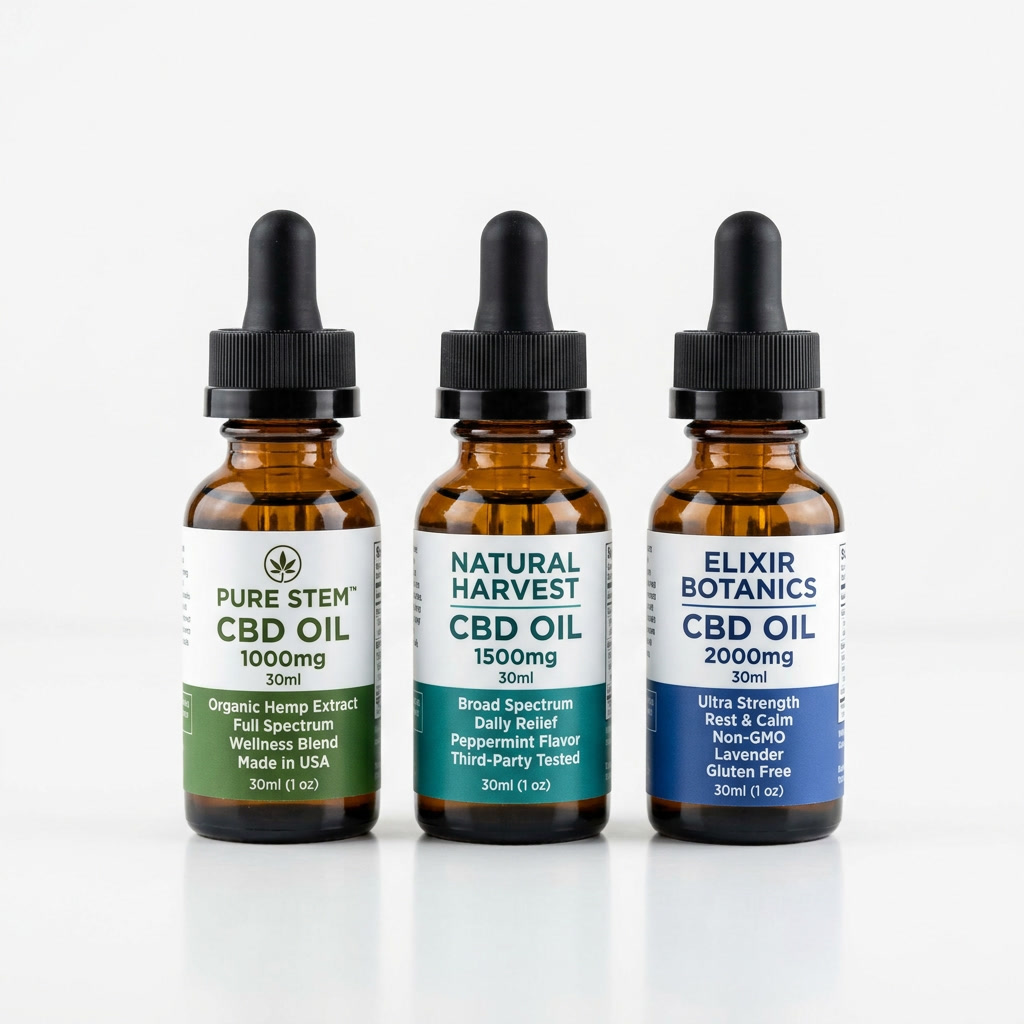
- Start with oils or tinctures for precise dosing—it's easier to adjust than with gummies or capsules.
Our focus category highlights products vetted for exactly this kind of daytime, concentration-focused use, and you can browse our broader range of CBD oils and tinctures if you're looking for a flexible, precise format to start with.
Products to Consider
When you're shopping for a focus-oriented CBD product, here's what to keep in mind:
- A low-to-moderate strength oil you can dose precisely, ideally taken in the morning or early afternoon.
- A broad-spectrum or isolate option if you need to avoid THC.
- A product with a published, recent Certificate of Analysis you can actually see.
- A reputable brand with clear sourcing and manufacturing information.
Start with the smallest reasonable dose, use it consistently for a week or two, and track how it actually affects your concentration and stress levels. What works for someone else may not work for you.
Action Steps
If you've read this far and want to give CBD a fair shot for focus, here's a sensible game plan:
1. Pin down your real blocker. Is it anxiety and racing thoughts, or is it tiredness? CBD is only likely to help the former.
2. Pick a quality, third-party-tested product that fits your THC preference.
3. Start low (often 10–25 mg) and take it in the morning or early afternoon.
4. Track your experience for 1–2 weeks with a simple log.
5. Adjust slowly, and remember that more isn't automatically better—higher doses tend toward sedation.
6. Involve your doctor if you're on medication or managing a diagnosed condition like ADHD.
Bottom Line
The honest answer to "can CBD sharpen your mind?" is: probably not directly—but it may help remove what's dulling it. The most credible evidence links CBD to reduced anxiety, which is itself one of the biggest silent killers of focus and productivity. The studies that show CBD calming anxious minds are real, but the leap from "less anxiety" to "better focus in healthy people" is not yet well-proven. So treat CBD for what it is: a potential calm-down lever and a supporting player, not a miracle nootropic. If anxiety and racing thoughts are what's standing between you and your work, a low-dose, quality-tested CBD product taken in the morning is a reasonable thing to explore—responsibly, realistically, and ideally with a professional's input if you have any health concerns.
Find Your Perfect CBD Product
Take our 2-minute quiz to get personalized recommendations based on your needs.
Take the Quiz →Disclaimer: This article is for informational purposes only and does not constitute medical advice. CBD products are not FDA-approved to treat, cure, or prevent any disease. Always consult with a qualified healthcare professional before starting any new supplement, especially if you have a medical condition or take medications.