Is Your CBD Actually Clean? Purity, Contaminants, and What Lab Reports Hide
Intro
You bought it because the label said "lab tested." Maybe the bottle even had a little QR code, a glossy certificate, and a promise about farm-to-bottle purity. But here's the uncomfortable truth: the phrase "lab tested" means almost nothing on its own. It doesn't say what was tested, how it was tested, whether the lab was independent, or whether the batch you're holding is the same batch that passed.
CBD and hemp products in the United States exist in a regulatory gray zone. Unlike pharmaceuticals, most non-intoxicating hemp products aren't subject to mandatory contaminant testing at the federal level. In some states they're barely checked at all. That gap is exactly where heavy metals, pesticide residues, residual solvents, mold, and mycotoxins slip into products people swallow, drop under their tongue, or inhale every single day.
The good news is that contamination is detectable and, in most cases, avoidable. The better news is that you don't need a chemistry degree to protect yourself. You need to know what can hide in a bottle, how it got there, what a real test covers, and how to spot the documents that are little more than decoration.
This is the practical, unsentimental guide to CBD purity. No fearmongering, no magical thinking, just what the recent science actually shows and how to shop like someone who has read it.
What Can Actually Be in Your CBD Product
A "pure" CBD product isn't just one molecule in a carrier oil. It's a long chain of agricultural and industrial steps, and every step is a chance for contamination. Regulators and analytical chemists generally group the risks into four major hazard categories: heavy metals, pesticides, mycotoxins, and residual solvents. Microbial contamination and processing byproducts are close behind.
Heavy metals
Cannabis is a bioaccumulator. It pulls metals out of soil and stores them in its tissues, which is one reason hemp is used for phytoremediation of polluted land. The four metals that dominate monitoring are arsenic, cadmium, lead, and mercury, usually called potentially toxic elements.
A greenhouse study published in the International Journal of Phytoremediation in 2026 found that hemp grown on soil heavily contaminated with cadmium, lead, and zinc still produced flowers with cadmium and lead at roughly 0.45 mg/kg and 1.1 mg/kg respectively, below most commercial limits for herbal products. That's reassuring for clean soil. It is not reassurance for soil that was never tested, because those numbers still represent real accumulation from dirty ground.
Lead and cadmium are linked to kidney damage, neurotoxicity, and cancer. In products that are vaporized, metal exposure is compounded, because the heating element itself can shed metals into the aerosol. A 2025 review in Chemical Research in Toxicology on cannabinoid vaping products flagged heavy metals among the contaminants of concern, alongside reactive byproducts formed when CBD is heated.
Pesticides
Pesticide residues are the most widely documented contamination problem in cannabis. A 2026 commentary in Clinical Therapeutics pointed out something important: many state pesticide "action levels" for cannabis aren't based on human health risk at all. They're derived from analytical detection limits and from assumptions borrowed from non-cannabis crops. Medical cannabis patients, who may use more product and have complex conditions, can face a higher exposure burden than recreational users.
Residual solvents
Extraction is where residual solvents enter the picture. Supercritical CO2 extraction is clean, but it's expensive. Cheaper hydrocarbon solvents like butane, propane, or ethanol leave traces if they aren't properly purged. The result can be measurable butane, hexane, or ethanol residue in concentrates and vape carts. Chronic inhalation exposure to these solvents is a known respiratory and neurological concern, and it's one reason a properly purged extract carries a solvent panel result.
Microbials and mycotoxins
Mold, yeast, and bacteria thrive in humid grows, poorly dried flower, and sloppy storage. The more serious worry is mycotoxins, the toxic chemical byproducts of mold. Aflatoxins and ochratoxin A are the regulated targets, but the list is growing.
A 2026 study in Toxins on Alternaria mycotoxins in the hemp food chain found these toxins in hemp seeds and, after cold pressing, more than 85% of them concentrated in the hemp cake, with contamination also showing up in flour and bakery products. A 2026 review in Cannabis and Cannabinoid Research that mapped contaminant detection across jurisdictions confirmed that microbial and mycotoxin screening is now standard in the states that regulate cannabis, but absent in many unregulated hemp channels.
Phthalates, PAHs, and other surprises
Testing keeps finding things nobody was looking for. An effect-directed screening of 13 CBD oils published in Talanta in 2026 used a battery of 13 biological and toxicological assays and then identified the culprits by high-resolution mass spectrometry. Among the hazardous compounds confirmed were the estrogenic plasticizers dibutyl phthalate and diisobutyl phthalate, and zearalenone, an estrogenic and mutagenic mycotoxin. A long-term European study in Analytical and Bioanalytical Chemistry detected polycyclic aromatic hydrocarbons (PAHs) in every single one of 186 CBD oils it analyzed. Contamination isn't just a farming problem. It's a packaging, processing, and handling problem too.
How Contamination Actually Happens
Contamination is rarely a single villain. It's a chain of small shortcuts, and any weak link poisons the whole batch.
It starts in the soil. Hemp grown on land with legacy industrial pollution, or on fields where heavy-metal-laden fertilizer or irrigation water was used, absorbs what's there. There's no washing it out afterward.
It continues in the grow. Pesticides banned for food crops get used because they're cheap and effective, and because enforcement in cannabis is inconsistent. Improper drying and curing invite mold, and mold brings mycotoxins.
It shows up again in extraction. Undersized purge cycles, reused solvent, and untested starting material all leave residue in the finished oil.
And it can happen even after extraction, in packaging and storage. Phthalates leach from certain plastics. PAHs can form during heating and processing. Light and heat degrade cannabinoids into other compounds over time.
> The pattern is consistent: contamination is a process problem, not an accident. Products made fast and cheap accumulate more of it.
What Third-Party Testing Actually Covers
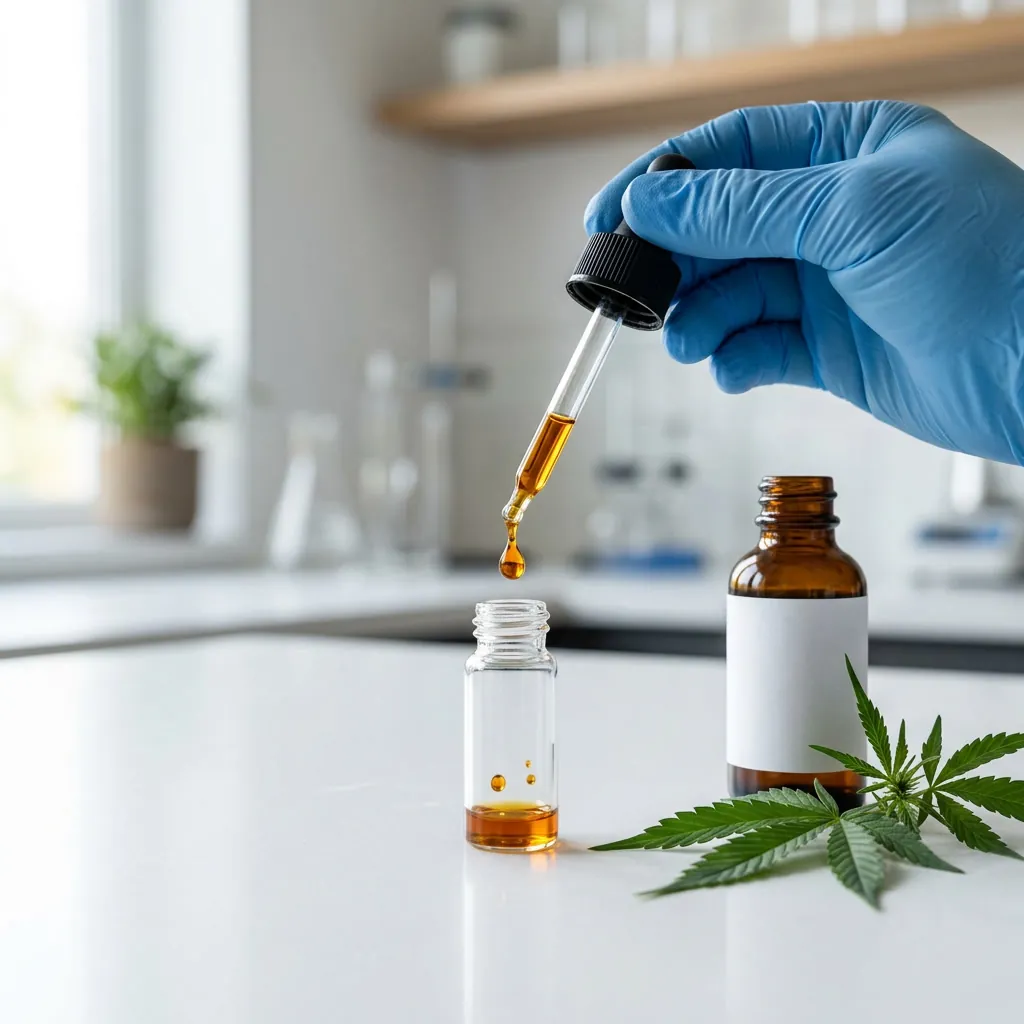
A genuine third-party certificate of analysis usually reports on several panels. The important ones for purity are:
- Potency — how much CBD, THC, and other cannabinoids are actually present
- Heavy metals — arsenic, cadmium, lead, mercury, and often more
- Pesticides — a multi-residue screen, frequently dozens of compounds
- Residual solvents — butane, hexane, ethanol and other extraction chemicals
- Microbials — total aerobic count, yeast and mold, and specific pathogens
- Mycotoxins — aflatoxins and ochratoxin A
- Foreign matter and sometimes moisture and water activity, which predict mold risk
The word that matters most is third-party. An in-house test is a marketing document, not a safety document. And "third-party" only counts if the laboratory is genuinely independent and preferably accredited, something like ISO/IEC 17025 for testing labs.
The Cannabis and Cannabinoid Research review makes the variability point starkly: states set different allowable limits, test different analyte lists, and require different validation standards. Two products can both say "passed" and mean two entirely different things.
How to Read a Certificate of Analysis
A COA is only as useful as your ability to interrogate it. Here's how to read one properly.
Match the batch, not the brand
The single most important check is that the COA names the specific batch or lot number printed on your product, and that the test date is recent and predates your purchase. A beautiful certificate for a different lot is worthless. If the numbers don't match, you have no evidence about what's in your bottle.
Read the actual numbers, not the checkmark
Anyone can write "PASS." Look for the measured value, the unit, and the limit of detection (LOD) and limit of quantification (LOQ). A result of "not detected" at a sensitive detection limit is meaningful. "Not detected" from a method too insensitive to catch anything is theatre. A 2026 method-validation study in the Journal of AOAC International on toxic elements in hemp found that even a disciplined laboratory method missed mercury recovery targets because of matrix effects and volatility, which is a reminder that testing methods have real limits.
Know what "pass" is comparing against
Passing depends on which limit the lab applied. A product can pass a lax state limit and fail a stricter one, or pass an inhalation limit and fail a food limit. Ask which standard the result is measured against, and whether it's appropriate for your route of use.
The Labeling Problem: Purity Isn't Just Contaminants
Purity also means the bottle contains what it claims, at the strength it claims. And on that front, the recent literature is brutal.
A 2026 study in Cannabis and Cannabinoid Research tested 18 commercial CBD tinctures sold online in the United States. 12 of the 18 were inaccurately labeled, deviating by more than 10% from the stated CBD amount. The researchers found no meaningful link between price and accuracy, and they flagged a significant difference in labeling accuracy between broad- and full-spectrum products.
A long-term European study in Analytical and Bioanalytical Chemistry analyzed 186 CBD and related cannabinoid oils collected over a decade. 49% did not contain the declared amount of CBD. Worse, several samples contained unlisted psychotropic THC isomers, including Δ8-THC, Δ10-THC, and even hexahydrocannabinol in a product sold as "full-spectrum oil." Applying the EFSA acute reference dose of 1 microgram per kilogram of body weight, the researchers calculated that 39% of the products would exceed it when consumed as directed. All samples contained PAHs, and 54% exceeded EU maximum limits for oil-based food supplements.
The pattern shows up in other product types too. A 2025 study in Cannabis and Cannabinoid Research tested 56 CBD gummy products by LC-MS/MS and found that 70% contained CBD at a concentration differing by more than 10% from the label, with meaningful variation even between gummies in the same bottle. A 2026 HPTLC study in the Journal of Cannabis Research testing oils and e-liquids in Costa Rica documented both over- and under-labeling plus the tentative presence of THC, mirroring international trends.
And the research on contamination itself is not theoretical. A 2025 paper in Chemico-Biological Interactions examined two commercial CBD powders, found them only about 51% CBD, detected contamination with lead, chromium, boron, silicon, and other metals, and then showed the samples reduced the viability of human neuronal cells in a dose-dependent manner.
What the Recent Research Actually Shows About Contamination
The most striking single dataset comes from Canada, where regulated and illegal cannabis can be directly compared. A 2026 study in the Journal of Cannabis Research tested 50 legal and 50 illegal cannabis products with accredited methods across metals, pesticides, mycotoxins, and microbials.
The results:
- 94% of illegal samples contained pesticides, averaging 3.4 compounds each across 24 unique actives
- Illegal samples had higher arsenic, cadmium, lead, and mercury than legal ones
- 73% of illegal samples exceeded yeast and mold limits, versus 55% exceeding aerobic plate count thresholds
- Mycotoxins were undetected in legal products but present in 12% of illegal ones
- 20% of legal products exceeded European Pharmacopoeia microbial limits, showing that "regulated" is not the same as "clean"
- Arsenic, barium, chromium, copper, molybdenum, nickel, and vanadium exceeded USP inhalation limits in one or both categories
The lesson cuts both ways. Regulation meaningfully reduces contamination, but it does not eliminate it, and products intended for inhalation face stricter metal limits for good reason.
At the population level, mycotoxin failures are rare but real. A 2026 study in Clinical Therapeutics analyzed compliance data covering 328,682 flower samples and 114,579 concentrate samples from 11 states. Overall failure rates were tiny, around 0.016% for flower and 0.017% for concentrates, but detection rates ran higher, with ochratoxin A the most frequently found mycotoxin. In other words, the system is working well enough to keep failures low, which is exactly the argument for buying from tested channels.
Why Cheap Products Cut Corners
There's no mystery here. Every safety step costs money.
Third-party testing runs per batch and per panel. Proper solvent purging takes time and equipment. Clean starting material and clean soil cost more than whatever's available. Real compliance paperwork and independent lab relationships add overhead. When a product is priced far below the market, something in that chain got skipped.
The research also warns against assuming price guarantees quality. The tincture study found no significant correlation between cost and labeling accuracy. Price is a signal about the producer's incentives, not proof of safety. You still have to check the documents.
Full-Spectrum, Broad-Spectrum, and Purity
Purity and spectrum are often confused, so let's separate them.
- Full-spectrum contains the full range of plant compounds, including trace THC
- Broad-spectrum retains other cannabinoids and terpenes but removes THC
- Isolate is purified CBD alone
Spectrum describes what's intentionally in the product. Purity describes what should not be in it. A full-spectrum oil can be impeccably clean, and an isolate can be contaminated. The one practical overlap is THC: if you're avoiding THC, a certificate showing "ND" (not detected) at a sensitive limit matters more than the marketing label. The European study found unlisted THC isomers in products that shouldn't have had them, which is exactly why the THC panel results, not the spectrum claim, are what you trust.
A Practical Buying Checklist
Use this every time you buy. It takes two minutes and eliminates most of the risk.
1. Find the batch or lot number on the package
2. Download the certificate of analysis and confirm the lot matches
3. Check the test date and confirm it's recent
4. Confirm the lab is independent and, ideally, accredited
5. Look for actual numbers on heavy metals, pesticides, solvents, microbials, and mycotoxins, not just checkmarks
6. Verify the CBD potency matches the label within a reasonable margin
7. For inhalation products, confirm heavy-metal results against an inhalation standard
8. If there's no COA, or it doesn't match your batch, don't buy
If you want a deeper walkthrough of the documents themselves, our guide to reading a CBD lab report covers every field line by line. If you're still choosing a first product, the CBD buyer's guide breaks down what separates quality from noise, and our CBD safety overview covers the regulatory and drug-interaction context around everything discussed here.
Bottom Line
Contamination in CBD is real, measurable, and mostly preventable. Heavy metals come from soil, pesticides from the grow, solvents from extraction, and mycotoxins from mold and poor storage. Testing catches all of it when it's done properly and per batch, and it catches none of it when it's a marketing checkbox.
The science is clear on two things. First, regulated and tested products are meaningfully cleaner than untested ones, and the difference is dramatic. Second, "tested" is a claim you have to verify, because nearly half of the products in some recent studies didn't even contain the CBD they promised, and some carried THC isomers and PAHs nobody disclosed.
Your defense is simple and unglamorous: demand a batch-matched certificate of analysis from an independent lab, read the actual numbers, and walk away when the paperwork doesn't hold up. Clean CBD isn't a premium feature. It's the baseline, and it's the one thing you should never compromise on. If you'd rather skip the guesswork, start with products that publish full-panel results by batch and shop quality-forward categories like CBD oils and tinctures and CBD gummies and edibles, where transparent testing is easier to verify.
For more on choosing between formulations, see full spectrum vs broad spectrum vs isolate.
Find Your Perfect CBD Product
Take our 2-minute quiz to get personalized recommendations based on your needs.
Take the Quiz →Disclaimer: This article is for informational purposes only and does not constitute medical advice. CBD products are not FDA-approved to treat, cure, or prevent any disease. Always consult with a qualified healthcare professional before starting any new supplement, especially if you have a medical condition or take medications.