CBD Buyer's Guide 2026: How to Choose a Quality Product
You've finally decided to try CBD. Maybe your friend swears by her nightly oil, or you've been reading about it for months, or you just want something to help you wind down after a long day. So you open a search tab, and suddenly there are hundreds of brands, dozens of formats, and prices ranging from $15 to $150 for what looks like the same bottle. Before you compare prices, it helps to know what you are actually paying for — our cost-per-milligram breakdown walks through the arithmetic. Every label promises something different. Every website claims its product is "the purest on the market." It's overwhelming, and honestly, it's a little suspicious.
Here's the uncomfortable truth: the CBD market is largely unregulated, and independent testing keeps finding that many products don't contain what their labels claim. That doesn't mean you should give up. It means you need to shop smarter. This guide walks you through exactly how to read a label, understand the different types of CBD, verify third-party lab tests, spot red flags, and pick the right format for your needs. By the end, you'll be able to tell a quality product from a marketing trap in about five minutes.
Why Label Accuracy Matters More Than Ever
Before we get into the how-to, it's worth understanding why this matters. CBD products are sold as dietary supplements and cosmetics, not as regulated medicines, which means there's no federal requirement for consistent quality control. The result is a market where mislabeling is common rather than rare.
A 2024 analysis in Frontiers in Pharmacology tested 202 commercially available CBD products across tinctures, gummies, vapes, and topicals. The researchers found that 74% of products deviated from their labeled CBD potency by at least 10%, and 26% didn't even match the product type claimed on the packaging. The same study detected heavy metals in 44 of the 202 products and residual solvents in 181 of them.
This isn't a one-off finding. A 2025 study in Cannabis and Cannabinoid Research analyzed 56 CBD gummy products and found that 70% contained a CBD dose that differed by more than 10% from what the label stated, while 39% contained detectable levels of Δ9-THC. Another 2025 study of 18 US tinctures found that 12 of them were inaccurately labeled.
The takeaway isn't that all CBD is bad. It's that you can't trust a label at face value, and you need tools to verify what you're actually buying.
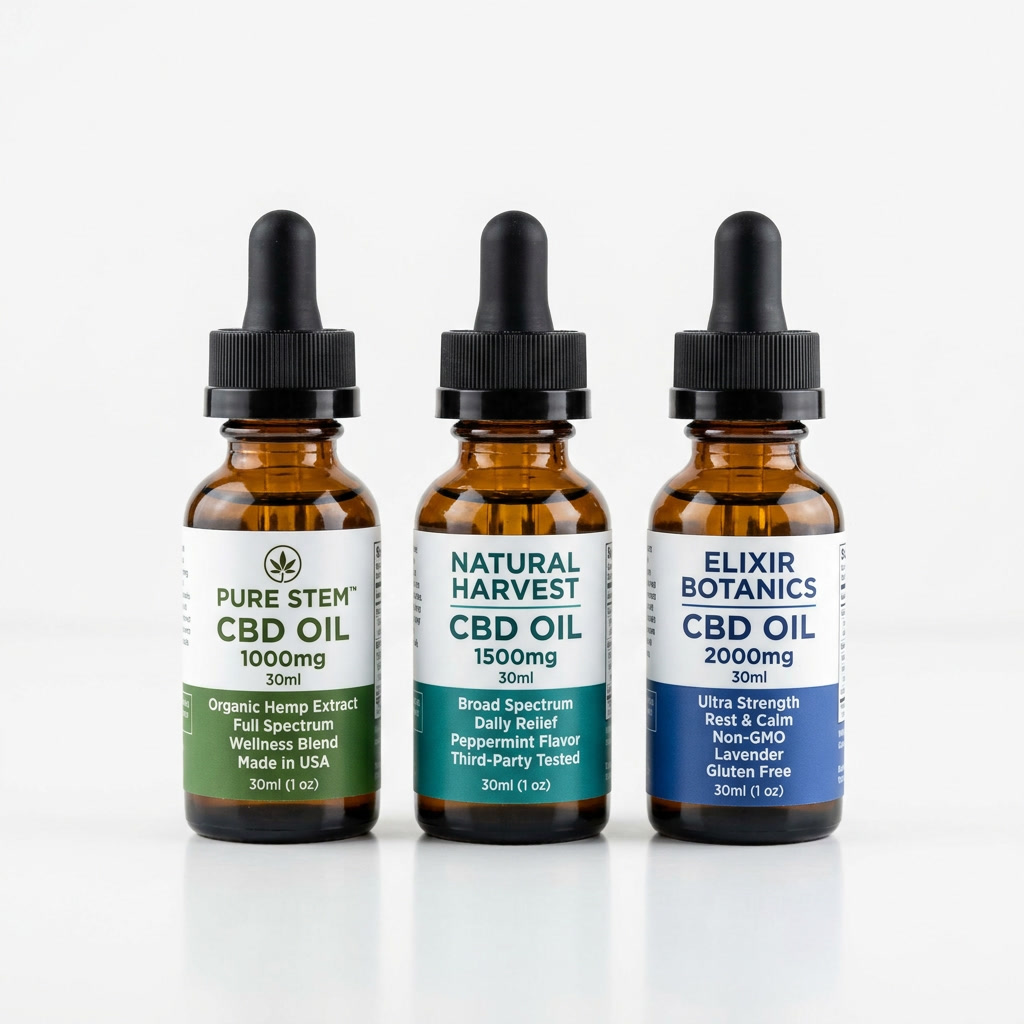
How to Read a CBD Product Label
A good label tells you exactly what's in the bottle. A bad label hides the important details behind vague language. Here's what to look for.
CBD Content and Total Milligrams
The most important number is the total CBD content, usually listed in milligrams (mg). This tells you how much CBD is in the entire container. But that number alone isn't enough. You also need to know the serving size and how many servings are in the bottle.
For example, a 1,000 mg bottle might contain 30 servings of about 33 mg each, or it might contain 10 servings of 100 mg each. The total doesn't tell you your dose. Look for the per-serving amount, and do the math: divide the total mg by the number of servings to confirm the numbers add up. If a label lists a total but no serving size, that's a red flag.
Serving Size and Dosing
Serving size is how much you take at once, usually measured in drops (for oils), gummies, or capsules. A quality product will state this clearly. If you're new to CBD, a common starting point is around 10 to 20 mg per day, though individual needs vary widely. A 2023 study of long-term self-dosing CBD users in Medical Cannabis and Cannabinoids found a mean daily dose of about 53 mg, with a range of 8 to 390 mg per day, which shows just how much dosing varies from person to person.
For more detail on finding your own dose, our CBD dosage guide walks through the process step by step.
Batch Numbers and Expiry Dates
A quality product includes a batch or lot number and an expiration date. The batch number is important because it lets you match the product to its specific lab test. If a label has no batch number, you can't verify that the test results actually apply to the bottle you're holding.
Full-Spectrum vs Broad-Spectrum vs Isolate
CBD products come in three main types, and the difference matters for both effects and label accuracy.
Full-Spectrum CBD
Full-spectrum products contain CBD plus the other naturally occurring compounds found in the hemp plant, including trace amounts of other cannabinoids, terpenes, and flavonoids. The idea is that these compounds work together, an effect often called the "entourage effect." Because full-spectrum products contain other cannabinoids, they may also contain small amounts of THC, though legally hemp-derived products must stay below 0.3% THC on a dry weight basis.
Broad-Spectrum CBD
Broad-spectrum products also contain multiple hemp compounds, but the THC is removed during processing. This makes them a good option if you want the potential benefits of multiple cannabinoids while avoiding THC entirely. If you're concerned about drug testing, this distinction matters, and our CBD safety guide covers the topic in more depth.
CBD Isolate
Isolate is the purest form, containing CBD and little else. It's a good choice if you want to avoid all other cannabinoids, but it lacks the additional compounds found in full- and broad-spectrum products.
Here's the catch: these categories are only as reliable as the label. The 2024 Frontiers in Pharmacology study found that 26% of products didn't match the product type claimed on their packaging. A product labeled "broad-spectrum" might actually contain THC, or an "isolate" might contain other cannabinoids. That's why third-party testing is so important.
How to Verify Third-Party Lab Tests (COAs)
A Certificate of Analysis, or COA, is a lab report that shows what's actually in a product. This is the single most important tool for verifying quality, but only if you know how to read it.
What a Good COA Should Show
A legitimate COA comes from an independent, third-party lab, not the manufacturer. It should be dated recently, match the batch number on your product, and test for three things: cannabinoid potency, contaminants like heavy metals and pesticides, and residual solvents. Look for the actual measured CBD content and compare it to the label. If the numbers don't line up, the product is mislabeled.
Red Flags in a COA
Be wary of a COA that's years old, has no batch number, or only tests for potency without checking for contaminants. Also be suspicious if the COA is a screenshot with no lab letterhead or if the lab itself can't be identified. A 2025 study in Cannabis and Cannabinoid Research found that products claiming to be third-party tested were no more likely to be accurately labeled than those without such claims, so a "tested" sticker alone isn't proof. You have to actually look at the report.
How to Find the COA
Quality brands make their COAs easy to find, either on the product page, through a QR code on the label, or by request. If a company won't share a COA or makes you hunt for it, treat that as a major red flag.
Red Flags: How to Spot a Low-Quality Product
Some warning signs are easy to spot once you know what to look for.
Vague or Missing Labeling
If a product doesn't list total CBD content, serving size, or the type of CBD it contains, walk away. A quality product is transparent about what's inside.
No Certificate of Analysis
As we covered, a COA is non-negotiable. If a brand can't or won't provide one, you can't verify anything about the product.
Unrealistic Health Claims
CBD is not a cure for anything, and any product that claims to treat, cure, or prevent a disease is making claims that aren't backed by evidence. A 2025 study of 97 hemp-derived products found that 40% made therapeutic claims like "pain relief" and 86% used "health halo" marketing language, while most didn't even include a disclaimer that their claims hadn't been evaluated by the FDA. If a product promises dramatic results, that's marketing, not science.
Suspiciously Cheap Prices
Quality CBD costs money. Extraction, third-party testing, and quality control all add to the price. If a product is dramatically cheaper than comparable options, ask yourself what corners were cut. That said, price alone isn't a guarantee of quality — some independent analyses have found little relationship between cost and label accuracy. The point is that a rock-bottom price is a warning sign, not a reason to buy.
Contamination Concerns
Independent testing has repeatedly found contaminants in commercial CBD. The 2024 Frontiers in Pharmacology study detected heavy metals in 44 of 202 products and residual solvents in 181. Other independent analyses have similarly flagged heavy metal contamination in commercial CBD samples. A thorough COA that tests for these contaminants is your best defense.
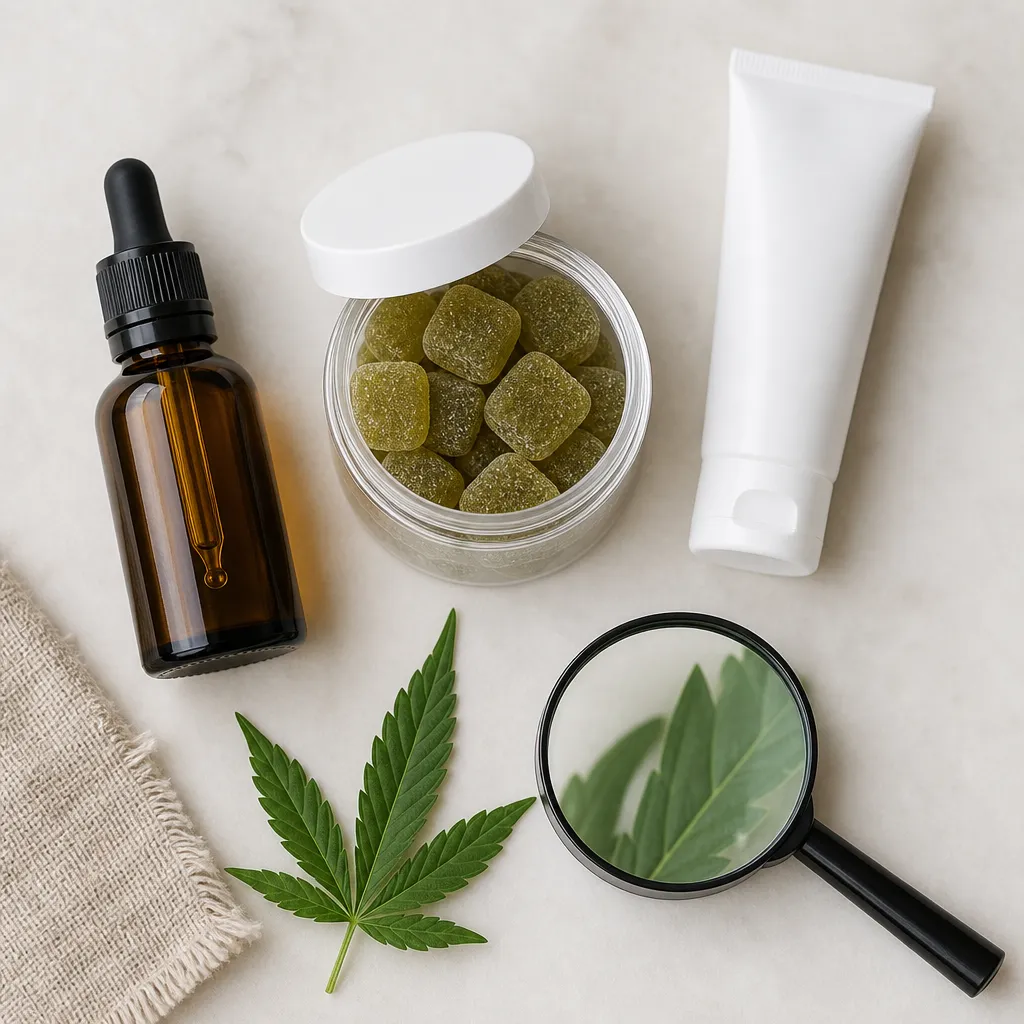
How to Choose the Right Format
CBD comes in several formats, and the right one depends on your goals and preferences. Here's a quick breakdown.
CBD Oils and Tinctures
Oils are the most popular and versatile format. You place drops under your tongue and hold them there for about 60 seconds before swallowing. This allows for relatively fast absorption and easy dose adjustment, since you control the number of drops. Oils are a great starting point for most people. Browse our CBD oils to see what's available.
CBD Gummies
Gummies are convenient, pre-dosed, and taste good, which makes them popular for beginners. The trade-off is that they take longer to feel effects, since they have to pass through your digestive system, and you can't easily adjust your dose. The 2025 gummy study we mentioned earlier is a reminder to verify the actual CBD content, since gummies were among the most commonly mislabeled products. Check out our CBD gummies for options.
CBD Topicals
Topicals are applied directly to the skin and are designed for localized use, like a sore muscle or joint. They don't enter the bloodstream the way oils and edibles do, so they're not a substitute for systemic use. If you're looking for targeted relief, our CBD topicals are worth a look.
CBD Capsules
Capsules are pre-dosed and easy to take, making them a good choice for people who want a consistent daily routine without the taste of oil. Like gummies, they take longer to feel effects because they're digested. They're also easy to travel with. See our CBD capsules for more.
Vapes
Vaping delivers CBD quickly, but it comes with additional concerns. The lungs are a sensitive delivery route, and the 2024 Frontiers in Pharmacology study found residual solvents in many products, which is especially concerning for anything you inhale. If you're new to CBD, oils, gummies, or capsules are generally safer starting points.
How to Avoid Marketing Traps
The CBD industry is full of clever marketing, and it's easy to get swept up. Here's how to stay grounded.
Ignore the Hype Words
Words like "premium," "pharmaceutical-grade," and "the purest on the market" sound impressive but mean nothing without lab results to back them up. Focus on verifiable facts: the COA, the batch number, and the actual measured CBD content.
Be Wary of Health Halo Claims
Terms like "paraben-free," "dye-free," and "all-natural" are designed to make a product feel safe and healthy, but they say nothing about the quality of the CBD itself. The 2025 study found that 86% of products used this kind of health halo language. Don't let it distract you from the numbers that matter.
Check the Source of the Hemp
Quality brands are transparent about where their hemp is grown and how it's extracted. Look for information about the farm, the extraction method, and any certifications. If a brand is vague about its sourcing, that's a red flag.
Trust Your Own Research
The best defense against marketing is doing your own verification. Check the COA, read the label carefully, and compare the measured content to the claimed content. If a product checks out, great. If it doesn't, move on. There are plenty of quality options out there.
Your Action Steps
Here's a simple checklist to use the next time you're shopping for CBD.
1. Start with the label: confirm the total mg, serving size, and type of CBD are all clearly listed.
2. Find the COA and check that it's recent, matches the batch number, and tests for potency and contaminants.
3. Compare the measured CBD content on the COA to the label claim, and look for a deviation of more than 10%.
4. Look for a batch number and expiration date on the bottle.
5. Choose a format that fits your needs: oils for flexibility, gummies or capsules for convenience, topicals for localized use.
6. Start with a low dose, around 10 to 20 mg, and adjust slowly based on how you respond.
7. Be skeptical of cheap prices, vague labels, and dramatic health claims.
The Bottom Line
Choosing a quality CBD product in 2026 comes down to one skill: verification. The market is full of mislabeled and contaminated products, and independent testing has shown that a large share of what's sold doesn't match its label. But that doesn't mean quality products don't exist. They do, and they share the same traits: clear labeling, a recent and complete Certificate of Analysis, a matching batch number, and honest marketing. Learn to read a label and verify a COA, and you'll be able to separate the genuine products from the marketing traps in minutes. Start with a low dose, choose a format that fits your life, and let the lab results, not the hype, guide your decision.
Testing is only half the story; our new guide to CBD purity and contaminants covers what lab reports can hide.
Find Your Perfect CBD Product
Take our 2-minute quiz to get personalized recommendations based on your needs.
Take the Quiz →Disclaimer: This article is for informational purposes only and does not constitute medical advice. CBD products are not FDA-approved to treat, cure, or prevent any disease. Always consult with a qualified healthcare professional before starting any new supplement, especially if you have a medical condition or take medications.