Nobody Tests Cannabis for PFAS, and the Plant Is Very Good at Collecting It
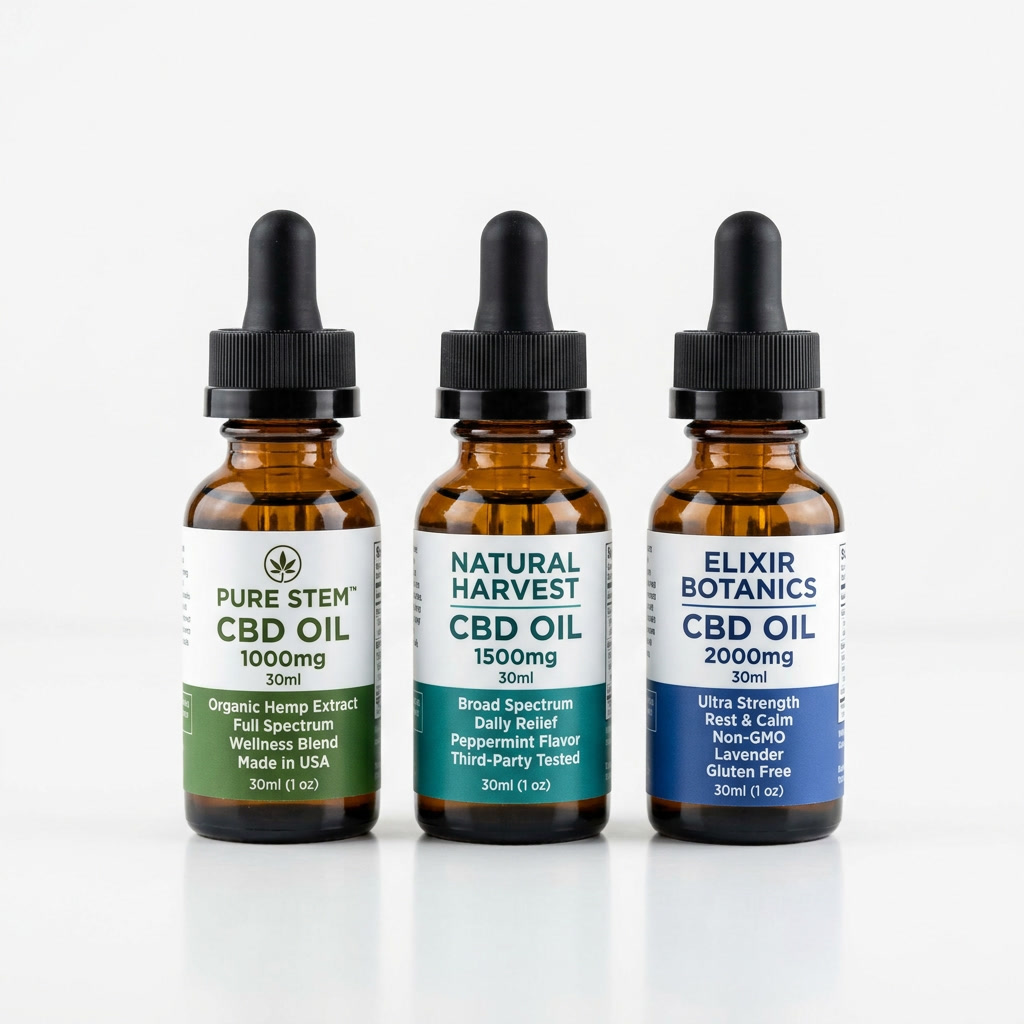
A jar of CBD gummies is not supposed to be a delivery mechanism for industrial waste. Yet PFAS, the fluorine chemicals behind non-stick pans and water-repellent fabric, has turned up in soil, in rain, in groundwater and in ordinary crops. Cannabis is a bioaccumulator by biology, not by accident. It pulls what is in the soil and holds it.
Here is the part that should make you pause. A certificate of analysis for a cannabis product usually confirms cannabinoids, residual solvents, pesticides and heavy metals. It is worth reading. But PFAS is not on that list, because there is no routine PFAS test for cannabis products in the United States. Not because a lab found none. Because nobody is looking.
So can a cannabis product be contaminated with PFAS? Nobody knows the real-world rate, and the research that exists points to yes being plausible. Below is what the recent literature says, what it does not say, and what a consumer can realistically ask a seller for.
What PFAS Are and Why They Are Different From Every Other Contaminant
PFAS is a large family of per- and polyfluoroalkyl substances. PFOA and PFOS are the two most studied. The defining property is a carbon-fluorine bond, one of the strongest in organic chemistry, which is why these compounds never break down. They persist in soil, travel in water, and move up food chains.
There is no natural decay. Lead does not decompose either, but lead does not bind to lipids the way PFAS does. PFAS molecules are amphiphilic, meaning one end grabs fat and water while the other grabs protein. That gives them a tendency to accumulate in fatty tissue and stick to surfaces, and the plant is not a neutral pipe. Any persistent lipophilic chemical in the root zone has a route into the flower.
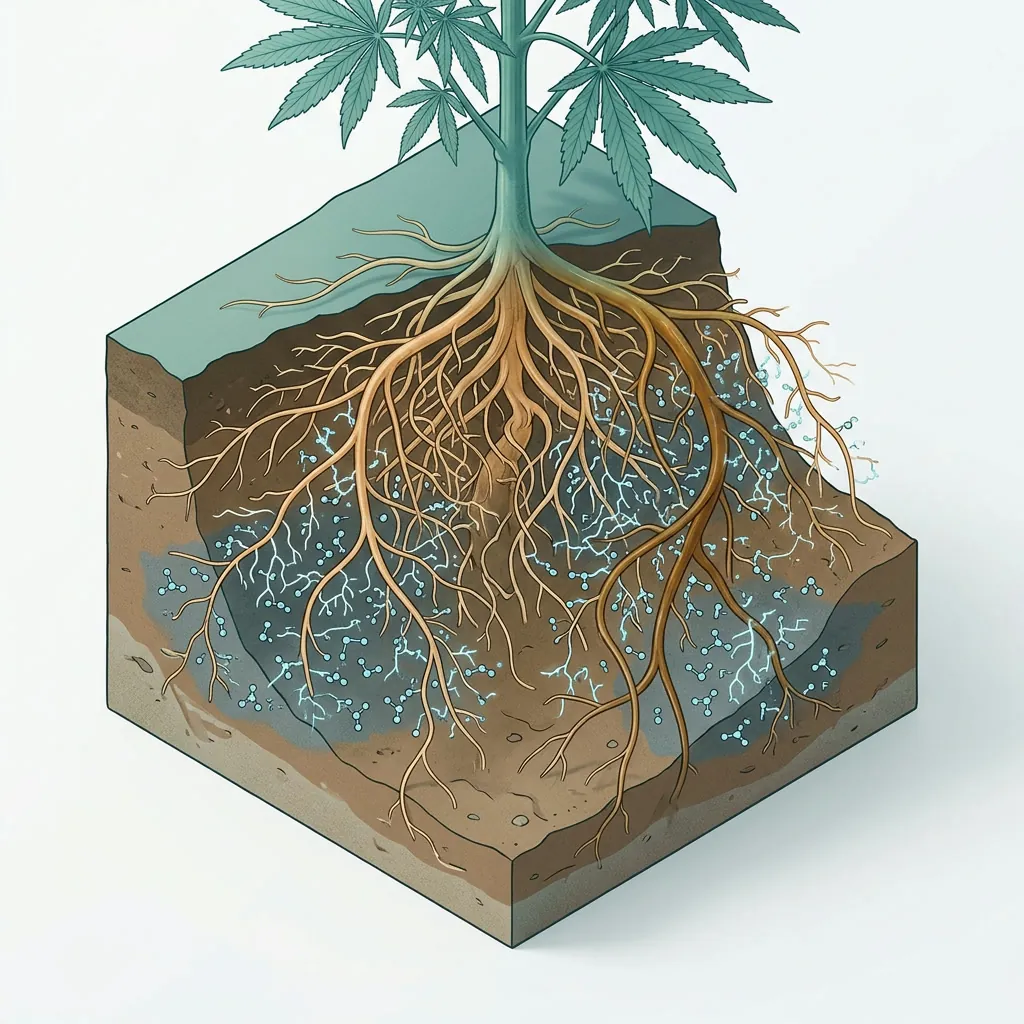
PFAS is also mobile in water, so runoff and groundwater movement mean the same farm can have different contamination in different seasons. Hemp is one of the more effective plants at pulling PFAS out of soil, which is why research uses it as a cleanup crop. That same biology is the reason a hemp field in a PFAS-affected area can hand you a plant with a measurable load. The trait is the risk.
Why Cannabis Behaves Differently From Most Crops in a Contaminated Field
Cannabis is often described as a bioaccumulator, meaning the concentration of a compound in the plant can exceed the concentration in the soil it grew in. Cannabis sativa in particular can take up and concentrate heavy metals and other persistent compounds.
That distinction matters. If a plant only accumulates what passes through it, the flower concentration tracks the soil concentration and you can predict it from a soil test. If the plant concentrates, the flower concentration can be several times higher than the soil reading suggests, and the relationship between the two is not well characterised for PFAS. Cannabis flowers are also waxy, and PFAS has an affinity for exactly that surface. There is no published calibration table telling you how much PFAS in soil produces how much PFAS in a gram of flower, and that absence is the biggest gap here.
What the Recent Hemp Studies Actually Found
The literature on PFAS and Cannabis sativa is real, and what it shows is narrower than the headlines suggest.
A 2026 paper in Frontiers in Plant Science, a controlled pot experiment comparing pot-grown hemp, sunflower and maize under soil amendment with humic acids, reported morpho-physiological, photosynthetic and tissue accumulation responses to PFAS exposure. Plants grew in containers under controlled conditions, and it did measure accumulation in tissue. What it did not do is test a commercial cannabis product, and it set no safety threshold for humans.
A 2026 paper in the Journal of Hazardous Materials, published in January of that year, looked at PFOA and PFOS accumulation and reported genotoxic damage plus proteomic alterations in Cannabis sativa shoots. This is plant tissue laboratory work, not a human exposure study. Genotoxic damage in a plant shoot is a real finding about the compound's biology. It is not a finding about what happens to a person who eats a gummy.
A 2025 paper in Chemosphere evaluated hemp for phytoremediation and focused on pollen bioaccumulation and the risk to bees. That is a cleanup study carrying an ecological risk assessment for pollinators, a different question from consumer safety. It still adds a data point, because the authors measured PFAS in hemp pollen, not in the flower a buyer gets.
A 2024 paper in Environmental Science and Advances was a comprehensive field trial on PFAS remediation, covering hemp phytoextraction and PFAS degradation in harvested plants. The answer that matters to a consumer is embedded in it, because a plant used to pull contaminants out of soil has taken up a meaningful load of contaminants.
A 2023 review article in Environmental Pollution examined phytoextraction of PFAS and how supplements influence the performance of short-rotation crops. This is a synthesis of the field rather than a single experiment, and synthesis work is where you find the honest summary of what is known.
Put those five together and the pattern is clear. Cannabis sativa shows accumulation and cellular damage under exposure, in controlled and field settings. That is a solid foundation for a hazard question. It is not an answer to the exposure question, because none of these studies put PFAS into a person.
The Bone and Cell Studies: A Plausible Mechanism Without a Human Answer
Two of the studies take a step further into human biology, and both do it in a laboratory dish.
A 2026 paper in Cell Death and Disease, published in early January, examined the toxic effects of PFOA on osteoblast function and extracellular matrix deposition in two-dimensional and three-dimensional culture models. A 2026 paper in General and Comparative Endocrinology, published in April, looked at PFOA effects on osteoblast differentiation and the roles of oxidative stress and endocannabinoid receptors.
Read those two together and you get something interesting for this audience. The second study specifically implicates the endocannabinoid receptor system in how PFOA interferes with bone cell differentiation. That is a mechanistic bridge between a fluorinated chemical and the receptor system CBD acts on. It is fascinating, and it is genuinely unproven in people.
State it carefully. These are in vitro cell culture studies using isolated bone cells. They do not show that a person eating a CBD product develops bone problems, they do not measure real-world PFAS doses from cannabis, and they do not tell us whether dish concentrations are reachable in a body.
Does Anyone Actually Test Cannabis Products for PFAS?
No. Not routinely, and not by law for most products.
In the United States, cannabis products sold through licensed channels are subject to state-level requirements for contaminant testing. Heavy metals, residual solvents, pesticides and microbial contaminants are all standard panels. California, for example, requires testing for a defined list of contaminants, and PFAS is not on it. Testing happens against the analyte list, so a chemical not on the list does not get measured, no matter how concerned anyone is.
The same gap exists in the wellness supply chain that produces hemp-derived CBD products sold outside the cannabis regulatory framework. Those products usually ship with a certificate of analysis, and that certificate comes from a lab testing for the compounds the brand paid for. Cannabinoids, typically. Sometimes residual solvents and heavy metals if the brand spent money on them. PFAS testing costs money and nobody has ever asked for it.
For readers who want to see what a thorough contaminant panel looks like, the Cannetics guide to cbd purity and contaminant testing covers what reputable testing includes and where the gaps are.
Why a Certificate of Analysis Will Not Answer the PFAS Question
A COA is one of the best consumer protections that exists and people often treat it as a guarantee it never was.
A certificate of analysis is a record of what a lab measured. It is not a record of what was in the product. A COA that lists nine analytes is a positive statement about those nine analytes and silence about every one of the thousands of others. A brand that tests for lead, cadmium and arsenic has done good work and still says nothing about PFOA, PFOS, or any of the many other PFAS compounds that exist.
This is not a criticism of lab work. It is a scope limit, and the same limit applies to hemp grown beside a highway, where the residue panel comes back clean because nobody asked about particulate matter.
The guide to reading a CBD certificate of analysis goes through how to interpret the panels you are looking at. For PFAS purposes the short version is that you need to see a PFAS panel on the document. If it does not have one, the document says nothing about PFAS, in either direction.
The Remediation Story Has a Catch That Buyers Should Understand
Hemp is a strong accumulator, which makes it attractive for cleaning up PFAS-contaminated soil, and the literature is developing protocols for that work. The catch is that the contaminated material does not disappear. In phytoextraction, the contaminant moves from the soil into the plant biomass. If that biomass is composted, burned or left in the field, the PFAS does not vanish, it just changes location, and in some pathways it becomes more mobile. That is why the 2024 Environmental Science and Advances trial covered PFAS in harvested plants.
For a consumer the relevance is indirect but real. A farm actively managing PFAS in its soil knows about PFAS, and that is worth asking about.
What the Evidence Does Not Show, and Why That Matters
Honest limits are the point of this post, so here they are plainly.
No study in the current literature measures PFAS in retail cannabis products sold to consumers. Not a survey of products on shelves, not a survey of dispensary stock. The contamination question is real and unanswered in the retail channel.
No study establishes a safe level of PFAS exposure through cannabis consumption. There is no PFAS threshold in cannabis, and no dose-response curve built from cannabis data. PFAS limits in other contexts, such as drinking water, were not derived from cannabis.
No human study shows harm from PFAS in cannabis. The cell culture work describes mechanisms. The plant work describes accumulation. Neither is a human health outcome.
No study has measured how much PFAS is in a typical jar of CBD gummies or bottle of CBD oil. The concentration in any product is unknown until someone tests it.
The bioavailability question is completely open. Even if a product contained PFAS at a measurable level, absorption from an edible product in a human would need separate work.
None of this means cannabis products are contaminated. It means the question has not been asked often enough to have an answer.
What a Consumer Can Actually Ask For
You cannot force the industry to test for PFAS. You can make a request a well-run brand will answer. These are the questions worth asking.
Ask whether the COA includes a PFAS panel. If the answer is no, ask whether they can run one on a batch. A reputable lab can measure PFOA, PFOS and a broader PFAS suite. The question is money, but asking reveals how a brand prioritizes.
Ask where the hemp was grown. Contamination is a property of a place, not a molecule. A farm that has tested its soil and water can say so. A brand that cannot name the growing region has a traceability problem.
Ask whether the product is single-source. Traceability gets easier when the raw material comes from one place rather than being blended from several.
Ask whether the extraction and manufacturing steps are covered. A product made with a clean input and dirty processing equipment is still dirty. Gummies and beverages add ingredients and steps beyond the plant itself, which is why a gummy deserves more questions than an oil.
Treat any claim of complete safety as a marketing line. Nobody can certify complete safety for a botanical product. Testing is a snapshot of analytes on a date.
Where This Fits With the Rest of Your CBD Knowledge
PFAS is one narrow slice of a larger conversation about what is in a CBD product and what a consumer can verify. For the wider picture, the Cannetics guide to CBD purity and contaminants covers pesticides, residual solvents, heavy metals and mycotoxins.
If you are trying to get the most out of whatever you already use, the CBD dosage guide covers how to track a dose that suits you, and the CBD safety guide covers interactions and side effects.
Action Steps
If PFAS is a concern you have not previously had, here is a short, practical list.
1. Read the COA you already have. Look for the analyte list. If PFAS is not on it, you know nothing about that product.
2. Ask one direct question to a brand or retailer: does your contaminant testing include a PFAS panel, and if not, would you run one for a customer.
3. Ask where the hemp was grown, and whether the farm tests soil or water. Traceability is the cheapest proxy for risk.
4. Prefer short, simple supply chains. Single-source, minimal ingredient lists, and a broad contaminant panel rather than a cannabinoid-only certificate.
5. Do not switch to a different product for PFAS reasons alone. No product on the market has been shown to be PFAS-free, so a swap solves nothing.
6. Do not attempt to remove PFAS at home. Boiling, baking and freezing have not been shown to reduce PFAS in cannabis, and heat can concentrate the compounds.
Bottom Line
Can a cannabis product be contaminated with PFAS? The research literature published between 2023 and 2026 makes accumulation in Cannabis sativa plausible and measurable in plant tissue, with documented effects on plant physiology, pollen and cell integrity, and a plausible mechanism in human bone cells that remains untested in people. Nobody has surveyed retail cannabis products for PFAS, no safe exposure threshold exists for cannabis, and routine testing of cannabis and CBD products does not include PFAS on any standard panel.
So the honest position is narrow. Contamination is plausible, unmeasured, and largely untested. The most useful thing a consumer can do is ask the questions that would produce an answer, and read the certificates that already exist with an accurate understanding of what they cover. No cannabis product has been shown to be unsafe on PFAS grounds, and none has been shown to be free of it either.
Find Your Perfect CBD Product
Take our 2-minute quiz to get personalized recommendations based on your needs.
Take the Quiz →Disclaimer: This article is for informational purposes only and does not constitute medical advice. CBD products are not FDA-approved to treat, cure, or prevent any disease. Always consult with a qualified healthcare professional before starting any new supplement, especially if you have a medical condition or take medications.