CBD for Parkinson's Disease: What the Research Actually Says About Cannabinoids and Neuroprotection
# CBD for Parkinson's Disease: What the Research Actually Says About Cannabinoids and Neuroprotection
The tremor starts subtly — a slight shake in one finger, a hesitation before a gesture. Then it grows. The stiffness creeps in. The steps get shorter. The face becomes still. For the more than 8.5 million people worldwide living with Parkinson's disease, this progression is all too familiar.
Parkinson's is the second most common neurodegenerative disease after CBD and Alzheimer's, affecting an estimated 1.1 million people in the United States alone. Nearly 90,000 Americans are diagnosed each year — a number that has increased 50% from previous estimates. Men are 1.5 times more likely to develop it than women, and while most are diagnosed after age 60, about 4% are diagnosed before 50.
The standard treatment — levodopa — has been the gold standard for decades. It works by replacing dopamine in the brain. But it doesn't stop the disease from progressing. Over time, the dose needs increase, side effects mount, and the wearing-off periods between doses get shorter. Up to 50% of patients develop dyskinesias (involuntary movements) within five years of starting levodopa therapy.
If you or someone you love has Parkinson's, you've probably wondered: is there something else? Something that could protect the brain, ease the non-motor symptoms, or slow the decline?
You've probably seen the claims about CBD. But what does the actual research say?
Not the marketing. Not the testimonials. The peer-reviewed, published science.
This article examines every relevant study we could find — including new 2026 research — to give you an honest, evidence-based picture of what CBD can and can't do for Parkinson's disease.
Understanding Parkinson's: More Than Just Tremors
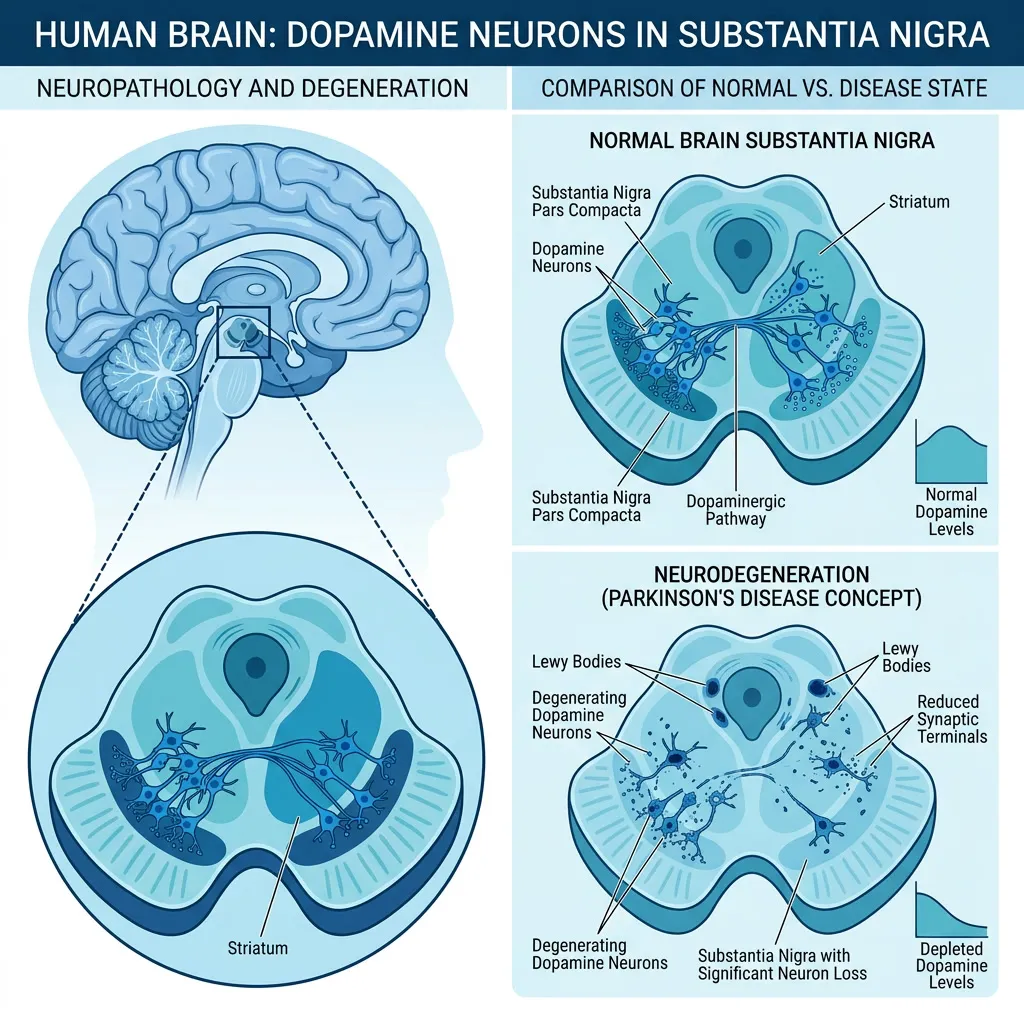
Most people think of Parkinson's as a movement disorder: tremors, rigidity, slowness of movement (bradykinesia), and balance problems. These are the motor symptoms, and they're caused by the progressive death of dopamine-producing neurons in the substantia nigra — a region deep in the brain.
But Parkinson's is far more than tremors. The non-motor symptoms can be just as debilitating, and they often appear years before the motor symptoms:
- Sleep disturbances (affecting up to 90% of patients)
- Depression and anxiety (40-50% of patients)
- Cognitive impairment and dementia (in later stages)
- Psychosis and hallucinations (up to 60% of advanced patients)
- Pain (affecting 40-85% of patients)
- Urinary dysfunction
- Constipation (very common, often precedes diagnosis by years)
- Loss of smell (one of the earliest signs)
Here's the critical point: current treatments primarily address motor symptoms. The non-motor symptoms — which often have the biggest impact on quality of life — are undertreated. This gap is exactly where CBD research is generating the most interest.
The Endocannabinoid System and Parkinson's: A Scientific Connection
Your brain has its own endocannabinoid system (ECS) — a network of receptors, signaling molecules, and enzymes that regulates numerous physiological processes. The two main receptors, CB1 and CB2, are found throughout the brain, including in regions directly involved in Parkinson's:
- The basal ganglia (where dopamine neurons live and die)
- The substantia nigra (ground zero for Parkinson's neurodegeneration)
- The amygdala and prefrontal cortex (involved in anxiety, depression, and cognition)
The ECS plays a role in:
- Modulating dopamine release — endocannabinoids regulate how dopamine neurons fire and communicate
- Neuroprotection — the ECS helps defend neurons against excitotoxicity (overstimulation that damages neurons)
- Reducing neuroinflammation — brain inflammation is increasingly recognized as a driver of Parkinson's progression
- Regulating motor control — the basal ganglia circuits that control movement are heavily influenced by CB1 receptor activity
Research has shown that Parkinson's patients have altered ECS function: changes in CB1 receptor density and endocannabinoid levels have been observed in Parkinson's brains. This isn't coincidental — it suggests the ECS is involved in the disease process, which means targeting it with compounds like CBD could have therapeutic potential.
What the Research Actually Shows
CBD and Neuroprotection: The Laboratory Evidence
The most exciting research — and the most preliminary — involves CBD's potential to protect dopamine neurons from degeneration.
A 2026 study by Demirel et al., published in the Journal of Biochemistry and Molecular Toxicology, found that CBD protects against neurotoxicity in Parkinson's disease models by suppressing the NLRP3 inflammasome — a key driver of the neuroinflammation that kills dopamine neurons. This is significant because neuroinflammation is increasingly recognized as a central mechanism in Parkinson's progression, not just a byproduct of it.
Also in 2026, a comprehensive review by Białoń et al. in the journal Pharmaceuticals examined CBD's role across neurological disorders and confirmed that CBD's therapeutic properties have been established in numerous preclinical studies, with particular promise for neuroprotective applications.
A 2026 review by Purushothaman and Krishnan in Cannabis and Cannabinoid Research specifically examined hemp phytochemicals for neurological disorders including Parkinson's, noting that the complex pathophysiology and limited therapeutic options create significant opportunities for cannabinoid-based interventions.
CBD for Non-Motor Symptoms: The Best Clinical Evidence
While the neuroprotection research is lab-based, there's growing clinical evidence for CBD helping with the non-motor symptoms that current treatments fail to address.
A 2026 exploratory prospective study by Anis et al., published in Cannabis and Cannabinoid Research, investigated self-titrated medical cannabis for non-motor symptoms in Parkinson's disease. The study specifically targeted pain, sleep disturbance, and urinary dysfunction — the symptoms that most impact daily quality of life and are least helped by standard Parkinson's medications.
CBD for Parkinson's-Related Psychosis
Psychosis affects up to 60% of advanced Parkinson's patients, and it's one of the hardest symptoms to treat. Standard antipsychotics block dopamine receptors — which can worsen Parkinson's motor symptoms, creating a cruel Catch-22.
A 2026 study by Cilia et al. in the Journal of Psychopharmacology investigated highly-purified plant-derived cannabidiol for psychosis relevant to neurodegenerative disorders. The researchers noted that psychosis in conditions like Parkinson's is often treated with dopamine D2 receptor antagonists, which can aggravate Parkinson's symptoms — making CBD a potentially safer alternative. This is preclinical (animal model) research, but it addresses one of the most urgent unmet needs in Parkinson's care.
Healthcare Provider Attitudes
A 2026 survey study by Barré et al. in Current Therapeutic Research examined healthcare providers' acceptability of cannabis and CBD for managing Parkinson's disease in France. The fact that this research is happening at all reflects a significant shift in medical attitudes — and the finding that some people with PD are already self-administering cannabis products highlights the gap between patient needs and available treatments.
What CBD Can and Can't Do for Parkinson's
Let's be completely honest about what the evidence does and doesn't support.
What CBD Might Help With (Based on Current Evidence):
- Non-motor symptoms — particularly pain, sleep disturbance, and urinary dysfunction (Anis et al., 2026)
- Psychosis — as a potential alternative to dopamine-blocking antipsychotics (Cilia et al., 2026 — preclinical)
- Neuroinflammation — CBD suppresses NLRP3 inflammasome, a key driver of Parkinson's neurodegeneration (Demirel et al., 2026 — in vitro)
- Anxiety and depression — CBD's anxiolytic and antidepressant effects are well-documented in other conditions
- Sleep quality — consistent with CBD research in other populations
What CBD Probably Can't Do:
- Restore lost dopamine neurons — once neurons die, they don't come back. CBD's neuroprotective potential is about slowing future loss, not reversing past damage
- Replace levodopa or other Parkinson's medications — there is no evidence to support CBD as a substitute for prescribed treatment
- Stop the disease entirely — while neuroprotection is promising in the lab, we have no human clinical trials showing CBD slows Parkinson's progression in living patients
- Improve motor symptoms directly — the evidence for CBD helping tremor, rigidity, or bradykinesia is largely anecdotal
Drug Interactions: A Critical Concern
CBD is metabolized by and can inhibit several cytochrome P450 enzymes — particularly CYP3A4, CYP2C19, CYP2C9, and CYP2D6. These are the same enzymes that process many Parkinson's medications.
Potential Interactions with Parkinson's Drugs:
Levodopa/Carbidopa: Both are metabolized through hepatic pathways. While specific interaction studies between CBD and levodopa are limited, the theoretical risk of altered drug levels means monitoring is essential. Watch for changes in symptom control or increased side effects.
Dopamine Agonists (pramipexole, ropinirole, rotigotine): These are metabolized by CYP enzymes that CBD can inhibit. Increased drug levels could lead to excessive effects — including hallucinations, impulse control problems, and orthostatic hypotension.
MAO-B Inhibitors (selegiline, rasagiline): Both affect neurotransmitter metabolism. CBD's enzyme inhibition could alter their levels, potentially increasing side effects.
Anticholinergics (trihexyphenidyl, benztropine): CBD may add to cognitive side effects like confusion and memory problems — already concerns in Parkinson's patients.
General Safety Concerns for Parkinson's Patients:
- Fall risk: CBD can cause drowsiness and dizziness, increasing fall risk in patients who already have balance issues
- Orthostatic hypotension: CBD may lower blood pressure, compounding a common Parkinson's symptom
- Cognitive effects: Sedation could worsen existing cognitive impairment
- Constipation: CBD may exacerbate this already-common Parkinson's symptom
The bottom line on interactions: Specific pharmacokinetic studies between CBD and Parkinson's medications are limited or not available. This means patients must work with their neurologist, start with very low doses, and monitor symptoms carefully.
How to Approach CBD If You Have Parkinson's
If you're considering CBD as part of your Parkinson's management, here's what the evidence suggests:
Talk to Your Neurologist First
This isn't boilerplate advice — it's critical. Parkinson's medication regimens are complex, carefully titrated, and highly individual. Adding CBD without supervision could destabilize a treatment plan that took months or years to optimize.
Start Extremely Low
Parkinson's patients may be more sensitive to CBD's sedative effects. Start with 5-10 mg/day — lower than typical dosing for other conditions — and increase very gradually over weeks. Monitor for changes in motor symptoms, blood pressure, and cognitive function.
Target Specific Symptoms
Rather than taking CBD generally, consider what specific symptom you're trying to address:
- For sleep: 10-25 mg, 30-60 minutes before bed
- For daytime anxiety: 5-15 mg as needed
- For pain: 15-50 mg orally, or topical CBD applied directly to painful joints
- For psychosis: Only under psychiatric supervision — this is not a self-management situation
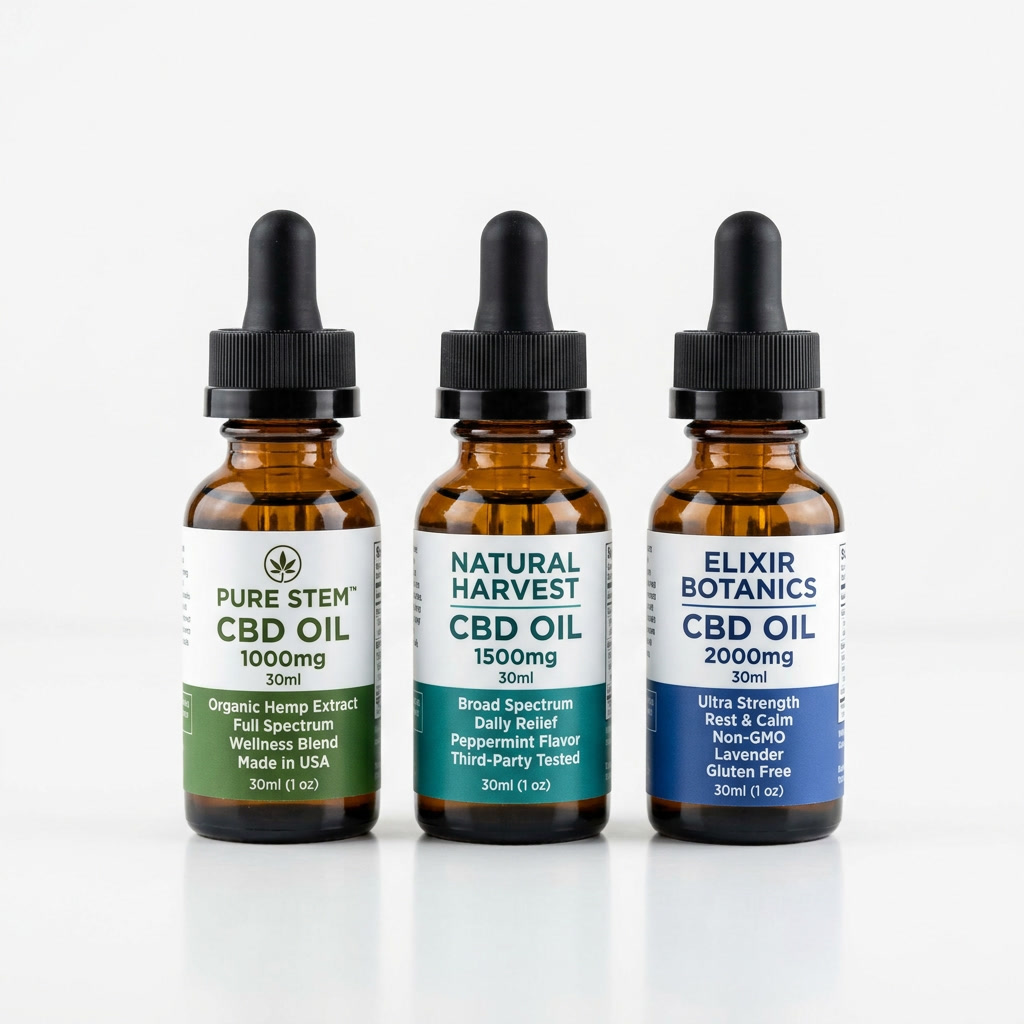
Choose Products Carefully
1. Third-party lab testing — non-negotiable. The certificate of analysis (COA) should confirm CBD content and show no contaminants
2. Broad-spectrum or isolate — if you're subject to drug testing or sensitive to THC, avoid full-spectrum products. THC can worsen anxiety, cognition, and balance in some Parkinson's patients
3. Consistent dosing — oils or capsules allow more precise dosing than gummies, which matters when interacting with Parkinson's medications
4. Reputable brand — look for companies that publish their COAs and have been in business for several years
The Bottom Line
The research on CBD for Parkinson's disease is genuinely promising but genuinely early. The strongest evidence supports CBD's potential for:
- Non-motor symptom management (pain, sleep, urinary dysfunction)
- Neuroprotection — but only in laboratory models
- Psychosis treatment — as a potential alternative to dopamine-blocking antipsychotics, but still preclinical
The weakest area is what most people hope for most: direct improvement of motor symptoms and disease modification. For those, we need large-scale human clinical trials — which are beginning but haven't yet reported results.
If you decide to try CBD, go in with realistic expectations. Track your symptoms carefully. Work with your neurologist. And remember that CBD is a potential tool to add to your management plan — not a replacement for the treatments that are already keeping you functioning.
Parkinson's is a complex disease, and there is no single answer. But every tool that can improve quality of life — even modestly — is worth exploring, as long as it's done safely and honestly.
If you're exploring CBD for Parkinson's disease, our [CBD Product Finder Quiz](/quiz) can help you find products suited to your needs. Always work with your neurologist when managing Parkinson's symptoms.
Find Your Perfect CBD Product
Take our 2-minute quiz to get personalized recommendations based on your needs.
Take the Quiz →Disclaimer: This article is for informational purposes only and does not constitute medical advice. CBD products are not FDA-approved to treat, cure, or prevent any disease. Always consult with a qualified healthcare professional before starting any new supplement, especially if you have a medical condition or take medications.