CBD and Alzheimer's: What the 2026 Research Really Shows

The Question No One Wants to Ask
You're sitting with a parent who no longer recognizes you. They're restless, agitated, sometimes lashing out at the very people trying to help them. The doctor has mentioned antipsychotics, but you've read the warnings about those in older adults. Then a friend mentions CBD. Maybe you've seen the headlines about a trial that calmed dementia patients. Maybe you've also seen the hype claiming CBD "cures" Alzheimer's. Both feel overwhelming, and neither is quite the truth.
Here's the honest picture from the latest research: there is real, growing evidence that cannabis compounds can help with one of the hardest parts of dementia — the agitation and behavioral symptoms that exhaust families and caregivers. There is far less evidence that CBD can slow or stop the disease itself. That distinction matters, and it's the difference between a responsible conversation and a dangerous one.
This guide walks through the freshest 2026 studies, separates what's proven from what's still preclinical, and gives you a practical, honest framework for talking to a doctor about CBD for a loved one with dementia.
The Headline Trial: A THC and CBD Combination for Agitation
The most talked-about development came in July 2026, when researchers presented results from a Phase 2 clinical trial at the Alzheimer's Association International Conference (AAIC). The trial, led by investigators at the Medical University of South Carolina, tested a combination of THC and CBD in people with late-stage dementia who were eligible for hospice care.
According to the presentation, the combination significantly reduced agitation in roughly 90% of the patients treated. That's a striking number, and it's why the study made headlines.
But it's important to read that result carefully. This was a conference presentation, not yet a peer-reviewed publication, and the details — dosing, the specific THC-to-CBD ratio, how agitation was measured, and how the results hold up in a larger trial — still need to be confirmed. What it does is add to a growing body of evidence that the right combination of cannabinoids may offer meaningful relief for one of dementia's most distressing symptoms.
What the Peer-Reviewed Evidence Actually Shows
Behind the headlines, a wave of 2026 systematic reviews and meta-analyses has been quietly building the case. These are the studies that pool many trials together, and they're the most reliable kind of evidence we have.
A 2026 systematic review with meta-analysis in the journal CNS Drugs looked at ten randomized controlled trials covering 328 people with dementia. The findings were nuanced: cannabinoids did not significantly reduce overall neuropsychiatric symptoms, but they did reduce agitation, with a moderate effect size. The authors noted the results came with high variability between studies, meaning the evidence is promising but not yet uniform.
A second 2026 meta-analysis in the American Journal of Geriatric Psychiatry, using Bayesian and sequential trial analyses, reached a similar conclusion — cannabinoids show real potential for agitation in Alzheimer's, while the overall picture remains mixed. An accompanying editorial in the same journal framed it honestly: this is an area where the signal is real but the data is still maturing.
The takeaway across these reviews is consistent: agitation is where the human evidence is strongest. That's not a small thing — agitation is often the symptom that breaks families and drives people into care facilities.
Why Agitation, Specifically?
Agitation in dementia isn't just "being upset." It includes pacing, restlessness, verbal or physical aggression, and resistance to care. It's one of the most common reasons people with dementia are moved into long-term care, and it's notoriously hard to treat.
Standard treatments often rely on antipsychotics, but these carry serious risks in older adults, including a higher risk of falls, cardiovascular events, and even mortality. That's why researchers are so interested in cannabinoids as a potential alternative — they may offer behavioral calming with a different safety profile.
A 2024 overview in the journal Pharmacopsychiatry reviewed how cannabinoids act on the CB1 and CB2 receptors that help regulate sleep, appetite, memory, and pain, and discussed their potential for the behavioral and psychological symptoms of dementia. The interest is real, and it's driven by a genuine unmet need.
The Honest Limit: Slowing the Disease Itself
Here's where the hype runs ahead of the science. When it comes to actually slowing, stopping, or reversing Alzheimer's — the disease process itself — the evidence is still largely preclinical. That means it comes from animal models and lab experiments, not from human trials.
A 2025 systematic review and meta-analysis in the International Journal of Molecular Sciences examined CBD's effects on Alzheimer's-related neuroinflammation. The meta-analysis found that in preclinical models, CBD reduced markers of brain inflammationRead more about CBD for other neurodegenerative conditions like Parkinson’s). That's encouraging, but the authors were clear that the evidence is dominated by animal and in vitro studies, and that translating this to humans is a major open question.
Similarly, a 2025 review in Alzheimer's Research & Therapy described CBD as a "multifaceted therapeutic agent" that may mitigate aspects of Alzheimer's pathology and support cognitive function — but again, the supporting work is largely in experimental models, not in people living with the disease.
A 2026 mini-review in Frontiers in Behavioral Neuroscience summarized the animal-human evidence and the clinical pharmacology challenges. It noted that in transgenic animal models, CBD and THC reduced beta-amyloid accumulation, attenuated tau phosphorylation, and regulated neuroinflammatory responses, often alongside improvements in learning and memory. But it also flagged the significant hurdles in moving from those models to real patients.
The honest bottom line: the biology is promising, but no one can responsibly claim CBD slows Alzheimer's in humans yet. Anyone who tells you otherwise is overstating the evidence.
How CBD Calms Brain Inflammation (The Mechanism)
To understand why researchers are hopeful, it helps to know what's happening in the Alzheimer's brain. A hallmark of the disease is chronic neuroinflammation — the brain's immune cells, called microglia and astrocytes, become persistently activated and release inflammatory signals that damage neurons over time.
CBD appears to interact with this process. A 2026 study in the European Journal of Neuroscience found that CBD limited early amyloid-beta-induced activation of glial cells and helped preserve synaptic integrity in mouse hippocampal neuron-glia cultures. In plain terms, CBD seemed to calm the brain's overactive immune response and protect the connections between neurons — at least in the lab.
This is the mechanism that excites researchers: if CBD can dampen neuroinflammation, it might, in theory, slow the cascade of damage. But "in theory" and "in the lab" are a long way from "in a person with Alzheimer's." The mechanism is real; the clinical payoff is not yet proven.
The Dose Question: THC and CBD Are Not the Same
One of the most important things to understand is that CBD and THC are different compounds with different effects, and the ratio between them matters enormously.
CBD is non-psychoactive — it doesn't get you high — and is the compound most people are comfortable with. THC is psychoactive and is the part that produces the "high." In dementia care, THC is often the component linked to calming and appetite stimulation, while CBD is linked to anti-inflammatory and anxiety-reducing effects.
A 2023 study in Clinica Terapeutica examined an oral THC:CBD cannabis extract in 30 people with Alzheimer's, focusing on agitation and weight loss. The researchers reported improvements in these symptoms, and the study is often cited as real-world support for the combination approach. But it was a small, retrospective, observational study — not a randomized controlled trial — so its findings should be read as suggestive rather than definitive.
The practical takeaway: the "right" product for dementia-related agitation may be very different from the CBD oil you'd buy for general wellness. A high-CBD, low-THC product is not the same as a balanced THC:CBD product, and the latter is not something to experiment with casually — especially in an older adult.
What This Means for Caregivers
If you're caring for someone with dementia, here's what the research does and doesn't support.
It supports having a real conversation with a doctor about whether a cannabinoid product might help with agitation, especially if antipsychotics are being considered or have caused problems. The 2026 reviews suggest agitation is where the evidence is most promising.
It does not support treating CBD as a disease-modifying treatment. No credible 2026 study shows CBD slows Alzheimer's in humans. Anyone selling you a product on that claim is overstating the evidence.
It also doesn't support self-medicating a vulnerable older adult without medical supervision. Older adults metabolize drugs differently, often take multiple medications, and are more sensitive to side effects. THC in particular can cause confusion, falls, or interactions with other drugs.
Safety Considerations for Older Adults
CBD is generally well-tolerated, but it's not risk-free, and the stakes are higher in an elderly person with dementia.
CBD can interact with medications, including blood thinners, antidepressants, and seizure medications, because it affects liver enzymes that process many drugs. It can cause drowsiness, dry mouth, low blood pressure, and changes in appetite. In a frail older adult, drowsiness and low blood pressure can increase fall risk — a serious concern.
THC adds another layer. In older adults, THC can worsen confusion, which is the opposite of what you want in someone with dementia. That's why any trial using THC is carefully dosed and monitored, and why you should never improvise.
The responsible approach is always to involve the person's doctor or a geriatric specialist, disclose every medication they're taking, and start with the lowest possible dose under supervision.
Action Steps: How to Approach This Responsibly
If you're considering CBD for a loved one with dementia, work through these steps with their care team:
1. Talk to the doctor first. Ask specifically about agitation and behavioral symptoms, and mention any antipsychotics being considered. Bring up the 2026 research on cannabinoids for agitation.
2. List every medication and supplement the person takes. CBD can interact with many of them, so the doctor needs the full picture.
3. If the doctor agrees, start with a low dose of a high-quality product and keep a daily log of symptoms, dose, timing, and any side effects.
4. Choose products with third-party lab testing and clear labeling. Look for the actual CBD (and THC, if relevant) content per dose, not vague marketing.
5. Watch closely for side effects, especially drowsiness, confusion, or changes in balance. If anything worsens, stop and call the doctor.
6. Reassess after two to three weeks. If there's no meaningful improvement in agitation, the product may not be helping, and it's time to revisit the plan.
Choosing a Product, Honestly
If a doctor supports trying CBD, product quality matters. The market is unevenly regulated, and independent testing has repeatedly found that some products don't contain what their labels claim.
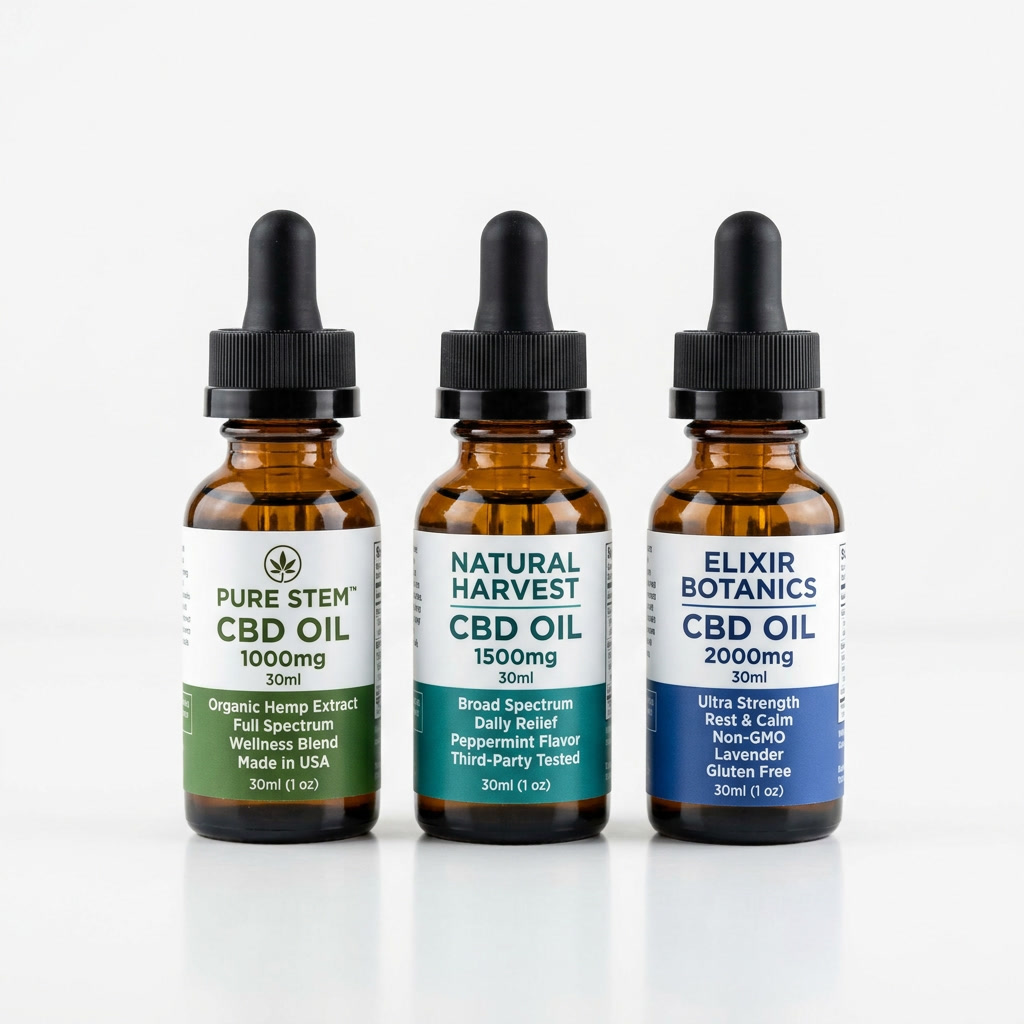
For a dementia-related conversation, the most relevant categories are oils and tinctures, which allow precise, adjustable dosing, and capsules, which offer consistent doses. Gummies are convenient but harder to dose precisely and often contain added sugar. Topicals won't help with agitation, since they don't reach the brain in meaningful amounts.
You can browse our reviewed CBD oils and tinctures, our CBD capsules, and our CBD gummies to see products that publish third-party lab results. For general wellness support in a household with pets, our CBD for pets range is separate and not relevant to dementia care.
The Bottom Line
The 2026 research on CBD and Alzheimer's is genuinely exciting, but it's exciting for a specific reason: agitation. A Phase 2 trial presented at AAIC 2026 reported that a THC and CBD combination reduced agitation in roughly 90% of late-stage dementia patients, and multiple 2026 meta-analyses support the idea that cannabinoids can help with this difficult symptom. That's a real, human, evidence-backed benefit.
What the research does not show is that CBD slows or stops Alzheimer's itself. That evidence remains preclinical — promising in the lab, unproven in people. The responsible takeaway is to treat CBD as a potential tool for symptom relief under medical supervision, not as a cure. If you're caring for someone with dementia, have the honest conversation with their doctor, start low, watch closely, and let the evidence — not the hype — guide you.
Find Your Perfect CBD Product
Take our 2-minute quiz to get personalized recommendations based on your needs.
Take the Quiz →Disclaimer: This article is for informational purposes only and does not constitute medical advice. CBD products are not FDA-approved to treat, cure, or prevent any disease. Always consult with a qualified healthcare professional before starting any new supplement, especially if you have a medical condition or take medications.