Can CBD Support Opioid Use Disorder Recovery? What the 2023–2026 Science Actually Shows
Two weeks into detox, you're pacing the kitchen at 2 a.m., your skin crawling, your mind replaying the same loop: one hit would stop this. The nausea won't quit, the anxiety is crushing, and the pharmacy medication your doctor prescribed helps — but it doesn't erase every craving. You've heard CBD is supposed to help people who've been where you are. Maybe it calms nerves nerve pain. Maybe it dulls the withdrawal. But is any of that real, or just hype?
You're not alone in wondering. In a 2024 survey of 550 people receiving treatment for opioid use disorder (OUD) at a New York addiction center, roughly one in four reported using CBD — and of those users, about 42% said they used it specifically to ease opioid withdrawal symptoms, while 17% said they used it to help control their addiction. That's a lot of people quietly experimenting with a product they hope will make recovery easier.
The honest answer, based on the most recent science: *CBD shows genuine promise as a complementary tool during opioid recovery, but the evidence base is early, mixed, and nowhere near strong enough to replace medication-assisted treatment (MAT).* This guide walks you through what the 2023–2026 research actually says — the human studies, the animal data, the honest limitations — so you can have an informed conversation with your doctor rather than guessing on your own.
---
What Is CBD, and How Might It Matter for Addiction?
Cannabidiol, or CBD, is one of the many compounds found in the cannabis plant. Unlike THC, it doesn't get you high, and it doesn't produce the euphoric rush that makes drugs rewarding. That distinction matters enormously in addiction research, because a tool that calms craving and withdrawal without being rewarding in its own right is, at least in principle, attractive for recovery.
The biology is still being mapped out, but scientists are particularly interested in the overlap between the brain's opioid system and its endocannabinoid system. These systems talk to each other. Early research suggested CBD might dampen the brain's reactivity to drug-related cues — the sights, smells, and memories that trigger craving — which is why it's being studied as a potential adjunct to medication-assisted treatment.
But "potentially interesting" is not the same as "proven." Here's what the recent evidence actually shows.
---
What the Human Studies Show: Craving and Cue-Reactivity
The strongest human evidence for CBD in opioid recovery comes from a small but carefully designed 2023 pilot trial. Researchers gave ten people with OUD who were already stable on buprenorphine or methadone a single 600 mg dose of CBD or a placebo, then measured their brain and behavioral responses to drug-related cues. The results were striking for such a small study: CBD significantly reduced cue-induced craving (0.2 vs. 1.3, p = 0.040) and reduced attentional bias toward drug-related cues — the tendency to be drawn to reminders of opioids. (Suzuki J, Frontiers in Psychiatry, 2023)
The researchers described this as promising but explicitly called for larger trials. A 2025 systematic review pulled together the human and animal research available at the time and reached a broadly similar conclusion: across the clinical studies it found, CBD reduced craving and helped alleviate abstinence-induced anxiety, and it had a well-tolerated profile during opioid use and withdrawal. (Shafie M, Addiction Biology, 2025)
> "The collective evidence from clinical and preclinical studies indicates that CBD holds promise as an adjunctive therapy for OUD with a well-tolerated profile during opioid use and withdrawal."
That quote, from the 2025 systematic review, captures both the potential and the limit: adjunctive means it's intended to add to, not replace, your treatment.
---
A Critical Note on the Best Evidence So Far
It would be irresponsible not to flag the strongest counterpoint in the recent literature. A 2026 systematic review and meta-analysis in The Lancet Psychiatry looked at 54 randomized trials of cannabinoids for a range of mental disorders and substance use disorders and found no significant effect of cannabinoids on outcomes for opioid use disorder specifically. The same analysis did find some evidence for cannabis use disorder (CBD combined with THC reduced cannabis withdrawal symptoms and weekly grams used) and for insomnia, but for OUD the evidence simply wasn't there yet. (Wilson J, The Lancet Psychiatry, 2026)
The publication of this review underscores an uncomfortable truth: the field is genuinely divided. Positive pilot results and reviews exist alongside high-profile meta-analyses that found nothing conclusive for OUD. What does this mean for you? It means the scientific case for CBD in opioid recovery is promising but not settled — and anyone who tells you it's a proven cure is overstating it.
---
What Animal Studies Tell Us About Withdrawal
The human trials are small, so researchers have leaned on animal models to ask a more basic question: does CBD actually calm the physical signs of opioid withdrawal?
A 2024 study looked at CBD in mice going through oxycodone withdrawal — both the sudden (naloxone-precipitated) kind and the spontaneous kind that happens when the drug simply stops. The results were encouraging in one specific way: CBD dose-dependently reduced the gastrointestinal symptoms of withdrawal (diarrhea, fecal output, weight loss) in both male and female mice. It had little effect on some other signs, but the consistency of the gut effects was notable. (Scicluna RL, Cannabis and Cannabinoid Research, 2024)
Other animal work is more mixed. A 2025 study in rhesus monkeys tested THC, CBD, and THC:CBD mixtures against the signs of morphine withdrawal. THC alone reduced some withdrawal signs — but CBD, either alone or combined with THC, did not produce a significant effect in that model. The authors were blunt: CBD didn't outperform the standard non-opioid medication lofexidine. (Carey LM, The Journal of Pharmacology and Experimental Therapeutics, 2025)
The takeaway across the animal literature is nuance: some symptoms, in some models, respond; others don't. Gastrointestinal distress appears to be the area where CBD's effects show up most consistently in rodents, but that is a long way from a blanket promise that CBD will erase human withdrawal.
---
Craving, Anxiety, and the Brain: Related Evidence Worth Knowing
A particularly elegant 2025 study comes from a neighboring field and helps explain why CBD might affect craving. In the double-blind, randomized ICONIC trial, researchers gave people with alcohol use disorder a single 800 mg dose of CBD and measured their brain activity while they looked at alcohol-related cues and faced stress. CBD reduced cue-induced activation in the nucleus accumbens — a brain region central to reward and craving — and reduced reported craving during the cue-and-stress session. Higher CBD blood levels tracked with greater reductions in craving. (Zimmermann S, Molecular Psychiatry, 2025)
This is alcohol, not opioids. But the underlying mechanism — CBD calming the brain's reward circuitry in response to drug cues — is the same logic being tested in opioid research, and it helps explain the small positive signal in the opioid pilot. The nucleus accumbens does not care much whether the cue is a pint or a pill; it's the same reward machinery.
---
How Common Is CBD Use Among People in Recovery?
A helpful 2024 study gives us a real-world snapshot. Among the 550 people in OUD treatment who answered the survey, 23% reported a history of CBD use. Their reasons were broad: anxiety (about 63% of users), pain (50%), sleep (49%), and depression (48%). But notably, over a third of CBD users said they were using it to manage opioid withdrawal symptoms, and about 1 in 6 to help control addiction. (Kudrich C, Harm Reduction Journal, 2024)
This tells us two things. First, many people in recovery already see CBD as a tool they want to reach for. Second, they're often doing so without formal guidance — which is exactly why having an informed, doctor-backed conversation about it matters.
---
A Balanced View: What Reviews Keep Concluding
When independent researchers review the whole landscape, they land in a very similar place again and again. A 2023 rapid review in the Canadian Journal of Psychiatry concluded that low-quality evidence suggests CBD may reduce drug cravings and other addiction-related symptoms, and that CBD has potential as an adjunct harm-reduction strategy. But it was explicit: CBD monotherapy is probably not an adequate harm-reduction strategy on its own, and more research reflecting real-world dosing is needed. (Lo LA, Canadian Journal of Psychiatry, 2023)
A 2023 scoping review of randomized trials reached the same flavor: positive results for cannabis use disorder, but "contradictory results" for opioid use disorder, and a strong call for larger, longer, well-designed trials. (Fernandes JAB, Cannabis and Cannabinoid Research, 2023)
Across reviews, a few threads are consistent:
- CBD is generally well tolerated and doesn't appear to cause a "high" or carry the same abuse potential as THC.
- The evidence for reducing opioid craving is promising but based mostly on small studies.
- Evidence for easing physical withdrawal is mixed, with GI symptoms showing the most consistent response.
- The field badly needs larger, longer randomized controlled trials with realistic dosing.
- CBD should be treated as an addition to — not a replacement for — medication-assisted treatment.
---
What This Means for Someone In Recovery (If You're Considering CBD)
If you're in recovery and thinking about CBD, here's what the evidence and the medical community would want you to hold on to:
- Never stop your prescribed medication without talking to your doctor. Methadone and buprenorphine are the best-evidence tools we have for reducing opioid overdose risk and supporting recovery. CBD is a supporting actor, not the lead.
- Bring CBD up with your provider. Tell your doctor or treatment team what you're taking or considering. They can flag interactions, dosing, and whether it fits your situation — and they should know anyway so your care plan reflects reality.
- Be clear-eyed about expectations. The science is promising for craving and anxiety, mixed for physical withdrawal, and unsettled overall. A realistic outlook prevents disappointment and risky self-medication.
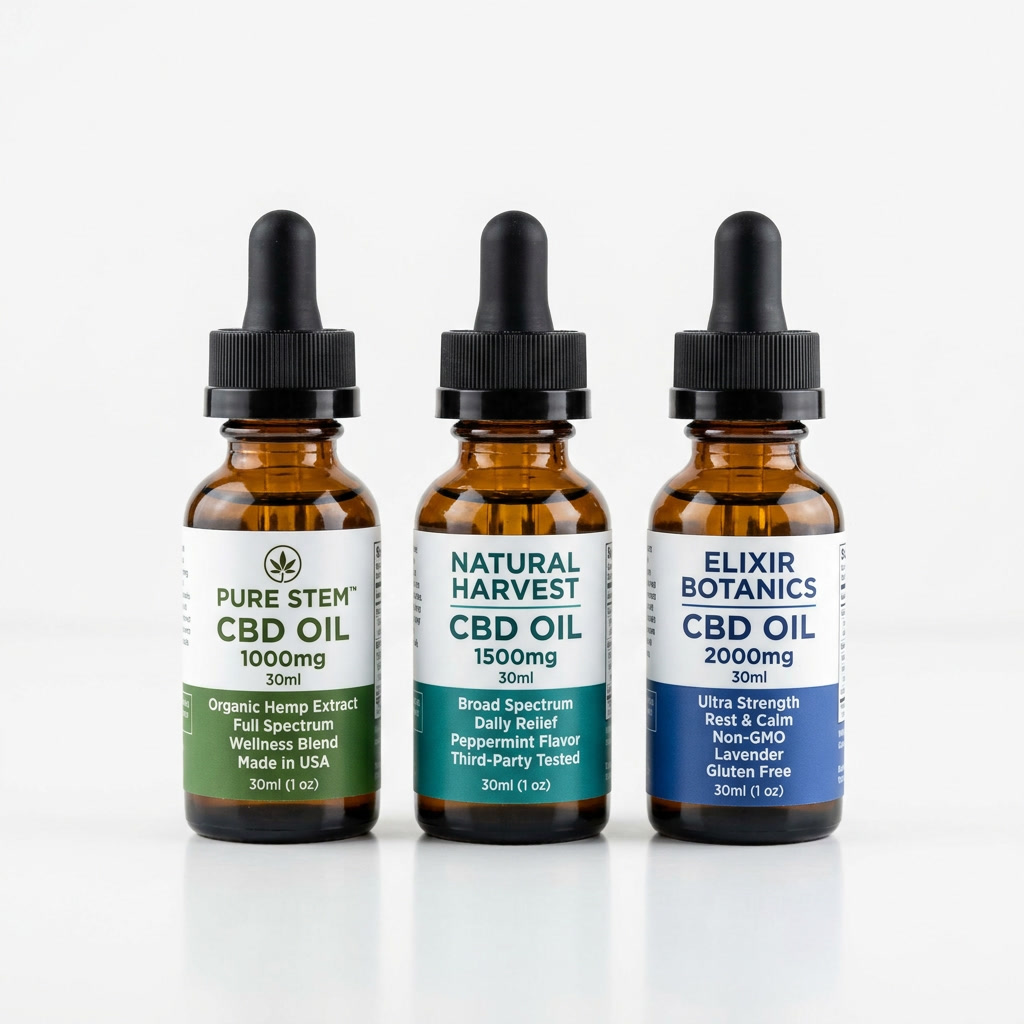
- Quality matters if you do use it. The CBD market is unevenly regulated. If you proceed, choose products with third-party lab testing and clear dosing (look for reputable suppliers — you can explore our curated CBD oils and other categories to see what a quality product looks like).
- Watch for side effects. CBD is generally well tolerated, but it can cause drowsiness, changes in appetite, and diarrhea, and it interacts with some liver-processed medications — a genuinely compelling reason to involve your doctor.
---
The Bottom Line
CBD's role in opioid use disorder recovery is one of the most genuinely interesting questions in addiction medicine right now — but it is not a solved problem. As of 2026, the honest scientific position is that CBD shows promise as a complementary, adjunctive tool, especially for craving and anxiety, but its effects on withdrawal are mixed and the highest-quality human evidence for OUD remains thin. The world's leading reviewers consistently say the same thing: don't treat CBD as a replacement for medication-assisted treatment, and don't stop prescribed treatment on your own.
If you're in recovery, the most powerful thing you can do is bring the questions to your doctor — armed with real information, not hype. CBD may one day earn a solid role in the toolkit. Right now, its role is best understood as a support, used thoughtfully, under supervision. The strong ones know that recovery is a team effort, and the team should always include the people with the training to guide you safely.
---
Find Your Perfect CBD Product
Take our 2-minute quiz to get personalized recommendations based on your needs.
Take the Quiz →Disclaimer: This article is for informational purposes only and does not constitute medical advice. CBD products are not FDA-approved to treat, cure, or prevent any disease. Always consult with a qualified healthcare professional before starting any new supplement, especially if you have a medical condition or take medications.