CBD vs Kratom: Two Very Different Plants, One Dangerous Assumption

Walk into almost any well stocked smoke shop and you will find them within arm's reach. A bottle of CBD oil on one shelf, a bag of kratom powder on the next. Both are sold as plant based, both are marketed for pain and mood, and both are described in soft language about calm and balance.
That shelf placement has convinced a lot of people that CBD and kratom belong to the same family of products, and that mixing them is about as risky as mixing two herbal teas. They are different plants with different chemistry, different legal standing, different risk profiles, and almost no human evidence behind combining them.
Why People Keep Lumping CBD and Kratom Together
The confusion is not irrational. Both are plant extracts sold outside the pharmacy counter. Both promise relief without a prescription. Both have loud online communities swapping dosage advice. Both are frequently described as natural alternatives to pharmaceutical painkillers, which is exactly the framing that makes them sound interchangeable.
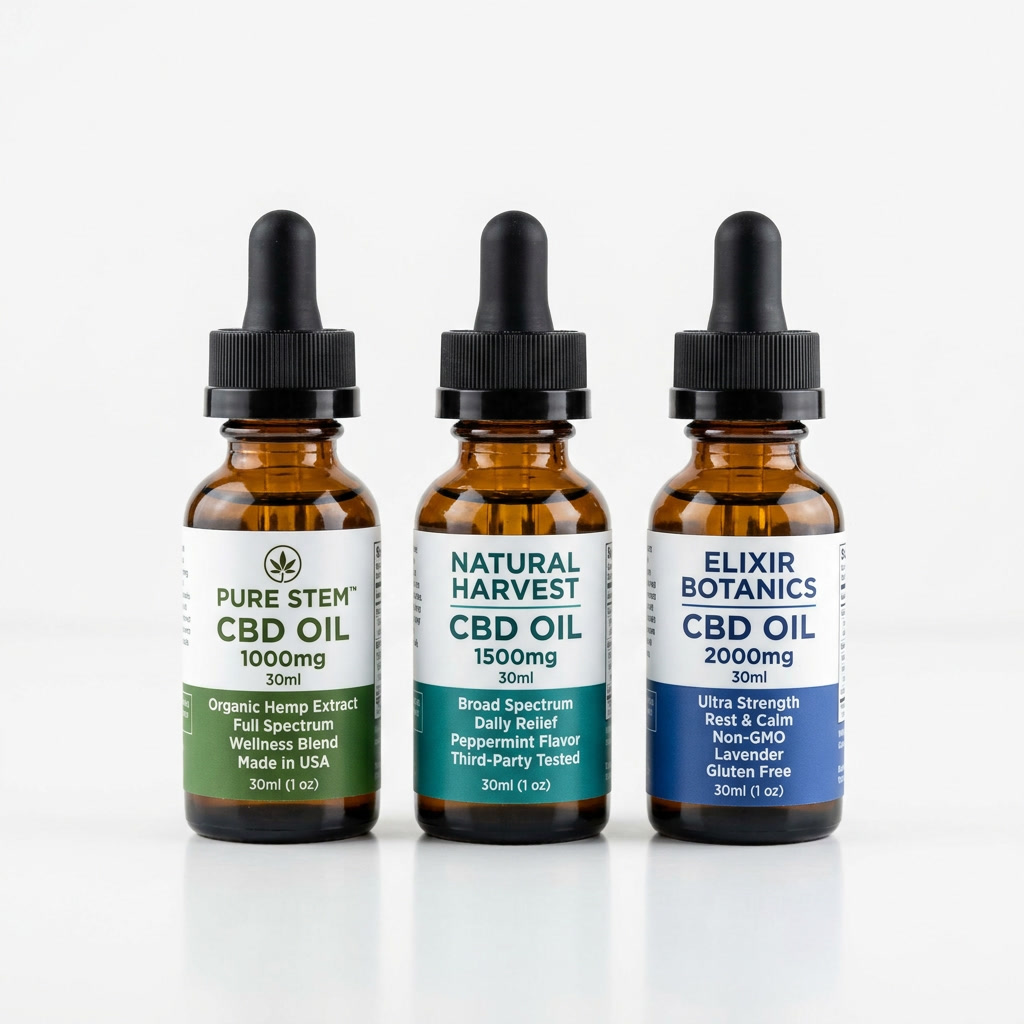
Then there is the packaging. CBD tinctures and kratom extracts share the same visual language of amber bottles, muted earth tones, and claims about calm focus. A shopper has almost no visual cue that one product acts on opioid receptors and the other does not. The word natural does hidden work here. It implies gentle, and gentle implies compatible. Neither implication survives contact with the pharmacology.
What CBD Actually Is
CBD, short for cannabidiol, is one of many cannabinoids found in cannabis and hemp plants. It does not produce the intoxication associated with THC, which is why it became the acceptable face of the plant for mainstream retail.
CBD works indirectly. Rather than binding strongly to the body's cannabinoid receptors the way THC does, it appears to influence how the endocannabinoid system signals, and it also affects enzyme pathways involved in how other drugs are broken down. That enzyme activity is why CBD is not a passive bystander. A 2024 review of botanical induced toxicity and botanical drug interactions in Regulatory Toxicology and Pharmacology treats these enzyme level effects as a real clinical concern, which is why any honest discussion of CBD has to include drug interactions.
The research base for CBD is real but uneven. There is far more human data for CBD than for kratom, including an approved prescription CBD product for specific seizure disorders. For everyday complaints like chronic pain, anxiety and sleep, the picture is much softer, with many findings coming from animal models. When someone says CBD works for pain, the honest answer is that it might, for some people, at some doses. For more on how CBD moves through the body and interacts with medications, see our guide to CBD and drug interactions.
What Kratom Actually Is
Kratom is not hemp. It is the dried leaf of Mitragyna speciosa, a tree native to Southeast Asia, chewed for generations there for energy, endurance and pain relief.
The active compounds are alkaloids, chiefly mitragynine and 7 hydroxymitragynine. A 2024 update on the clinical pharmacology of kratom in Expert Review of Clinical Pharmacology describes a plant whose effects are dose dependent and genuinely opioidergic. At lower doses users report stimulation and alertness. At higher doses the profile shifts toward sedation and pain relief. That review treats abuse potential and dependence as central clinical features, not rare edge cases.
That is the most important difference between them. Kratom contains compounds that act at the mu opioid receptor. CBD does not. Calling both natural pain relief blurs a line that pharmacology draws clearly.
Kratom also arrives with a supply chain problem. Leaf material is often sold as bulk powder with no standardisation and no verified alkaloid content. Clinicians treating kratom users have learned to treat the label as unreliable.
Legal Status: Two Completely Different Situations
CBD and kratom sit in different regulatory universes, and that difference is a useful reality check.
CBD derived from hemp exists in a patchwork of rules that vary by country and, in the United States, by state. It is widely available, heavily regulated in some jurisdictions and lightly regulated in others, and its status as a food additive or supplement ingredient is still contested in places. The trend has been toward more testing and scrutiny of therapeutic claims.
Kratom is a different story. It is not an approved medicine anywhere. Several countries have banned it outright, a number of US states and cities have restricted sales, and regulators have issued public warnings.
Standing in a shop holding both, you are not holding two versions of the same decision. One is a cannabis derived compound under evolving consumer regulation. The other is an unapproved botanical with opioid activity and a documented dependence signal.
How Each One Works, in Plain Terms
The mechanism gap explains almost every other difference.
CBD interacts with the endocannabinoid system indirectly, influencing signalling without directly activating the receptor that produces a high. It also affects certain liver enzymes, which changes how quickly other compounds clear. That is why CBD can raise the effective exposure of medications a person already takes, and why the interaction question is a headline rather than a footnote.
Kratom's mitragynine and 7 hydroxymitragynine engage opioid receptors. The 2024 review describes partial agonist activity at the mu receptor, producing the mixed stimulant and sedative profile users report. That receptor activity is what produces tolerance, dependence and withdrawal.
A 2023 study in Pharmacological Reports examined CBD and mitragynine together and found differential interactive effects. The combination did not behave like a simple sum of two independent substances, which is exactly the kind of finding that should make anyone cautious about self dosing a stack.
The Evidence Gap Around CBD Is Real
It is worth being blunt about what CBD research can support. Overclaiming is how people end up disappointed. CBD has decent human data for a narrow set of indications, mostly specific epilepsy syndromes, where a prescription formulation has been tested in controlled trials. Outside that lane, the evidence thins quickly.
For chronic pain, reviews describe possible modest benefit with meaningful uncertainty. For anxiety, small trials suggest a signal, though sample sizes are tiny and duration is short. For sleep, the literature is thinner still, with much of the support coming from secondary outcomes in studies designed for something else.
Many mechanistic claims about CBD come from rodent work. That is not worthless, since animal studies are how hypotheses get built. But a rat study tells you what to test in humans, not what to expect in your own body.
On dependence specifically, CBD does not appear to produce the classic withdrawal syndrome associated with opioid receptor agonists. That is a genuine advantage and it should be stated plainly. It is also a reason not to treat the two as equivalent. Our article on CBD tolerance goes further into what tolerance means for CBD.
The Evidence Base for Kratom Is Narrow and Complicated
Kratom research is active, but it is not the kind of research that supports casual consumer use.
The 2024 clinical pharmacology update is largely a document about risk. It maps the pharmacokinetics of mitragynine, notes wide variability between products, and spends substantial space on abuse liability and dependence. That is a literature that is worried, not encouraging.
There is genuine interest in kratom alkaloids as potential therapeutics. A 2024 paper in ACS Chemical Neuroscience explored them as a possible avenue for alcohol use disorder treatment. That is legitimate science, and it is early stage work on a controlled pharmaceutical pathway, not evidence that a bag of powder from a gas station is a treatment. Researchers work with a defined molecule, a measured dose, known purity and a monitored patient. None of those conditions exist in a retail purchase.
The Combination Question: Almost No Human Data
This is where the shelf placement does the most damage.
People combine them for an obvious reason. CBD is marketed as a gentle balancer. Kratom is marketed as pain relief. Stacking them sounds like stacking benefits. In reality, the combination is one of the least studied pairings in the category.
A 2024 study in Pharmaceutics looked at the pharmacokinetic interaction of kratom and cannabidiol in male rats and found that each compound affected the other's handling in the body. Co administration changed blood levels compared with giving either one alone. That is a drug interaction at the level of absorption and clearance. The 2023 Pharmacological Reports work adds a second layer, because the interactive effects were differential, moving in ways that would be hard to predict from the individual profiles.
Both studies were done in animals. Neither establishes what happens in a human taking a CBD tincture in the morning and a kratom capsule at night. Millions of people are potentially running a combination experiment that has never been run in a clinic.
> The absence of human data is not evidence of safety. It is evidence of absence of evidence, and in pharmacology those are very different positions.
Liver Safety Deserves Its Own Section
Liver injury is the risk that connects these substances most directly, and the one most often waved away.
The 2024 review in Regulatory Toxicology and Pharmacology addresses liver injury and botanical drug interactions as linked problems. Some plant constituents, and some combinations of them, are associated with hepatocellular damage, and risk rises when products are unstandardised, contaminant laden, or taken alongside other hepatically metabolised compounds.
For kratom, liver injury is a documented concern, appearing alongside the dependence signal rather than as an isolated curiosity. For CBD, the picture is more favourable at typical doses but not empty. High dose CBD has been associated with liver enzyme elevations in clinical settings, which is one reason the prescription formulation carries monitoring guidance.
Combining them asks one liver to process two complex botanical loads whose interaction has been studied mainly in rats. Our look at CBD and liver safety covers what monitoring data shows for CBD alone.
Risk Profile, Side by Side
It helps to lay the differences out plainly.
CBD
- Does not produce intoxication
- No classic opioid type withdrawal syndrome described
- Generally well tolerated in trials, with gastrointestinal upset and drowsiness among the more common complaints
- Can interact with other medications through liver enzyme pathways
- Has been associated with liver enzyme elevations at higher doses
- Evidence for everyday pain, anxiety and sleep is modest and inconsistent
Kratom
- Acts on opioid receptors and produces dose dependent stimulation or sedation
- Carries documented dependence and withdrawal risk
- Associated with liver injury in case reports and reviews
- Product content and purity are frequently unreliable
- Not an approved medicine anywhere
- Subject to bans and restrictions in many countries
The two columns barely resemble each other. One describes a compound with a favourable safety profile and a modest evidence base. The other describes an unapproved opioidergic botanical with a dependence signal.
Why Natural Is the Wrong Safety Test
The most common error here is treating natural as a synonym for safe, then treating two natural products as automatically compatible.
Nature produces some of the most potent receptor active compounds known. The origin of a molecule says nothing about its dose response curve, its interaction profile, or its dependence liability. What matters is what the molecule does at the receptor, how the body clears it, and what else is in the product. People also assume that if two products are sold in the same shop, some regulator has already checked whether they can be taken together. No such check exists for supplement combinations in most jurisdictions. That judgment falls on the person swallowing the capsules.
A More Careful Way to Think About Pain and Mood
None of this means choosing between suffering and doing nothing. It means the decision deserves better inputs than shelf placement.
Start with a real diagnosis. Pain and low mood have many causes, and some are treatable in ways no botanical will match. A conversation with a clinician is the step that tells you whether a supplement is the right category of answer.
Pick one thing at a time. If you want to try CBD, try CBD alone, at a stable dose, for a defined period, and log dose, timing, effects and side effects. Adding kratom into that experiment destroys your ability to learn anything from it. If you already use kratom and are considering CBD, that is a conversation for a clinician who knows both, not a decision to make from forum posts.
Be honest about sourcing. For CBD, that means third party testing and clear labelling, which is why we point people toward CBD oils and tinctures that publish certificates of analysis rather than vague purity claims. For kratom, the sourcing problem is not solvable at consumer level, because there is no regulated standard to check against.
Know what dependence looks like. Needing more for the same effect, feeling unwell when you stop, and organising your day around the next dose are signals that deserve attention. They are well described for kratom and are not part of the CBD picture in the same way.
Where CBD Fits If You Are Dealing With Pain
If you arrived here looking for help with pain or mood and were considering both products, the useful conclusion is not that CBD is a miracle. It is that CBD sits in a category where human trials exist, where the safety profile is comparatively well characterised, and where the main clinical worry is interactions rather than dependence.
That is a modest claim, and modest claims are what the evidence supports. CBD may help some people with some kinds of discomfort. It will not help everyone, and it will not replace appropriate medical care. Its most underrated property is not potency. It is predictability, provided you know what else you are taking. Topical CBD products act locally with much lower systemic exposure than an oral tincture. If your goal is a targeted approach, CBD topicals and creams are worth understanding before anything you swallow.
The Bottom Line
CBD and kratom are not cousins. They are a non intoxicating cannabinoid with a modest but real human evidence base and a favourable dependence profile, and an unapproved opioidergic botanical with documented dependence, liver injury concerns and unreliable product quality. The only thing they reliably share is a shelf and a marketing vocabulary.
The combination is worse than either question on its own. The pharmacokinetic interaction has been demonstrated in rats, the effects have been shown to be non additive in animals, and there is essentially no human data to tell us what that means for a person taking both. Dosing yourself into an unstudied drug interaction is not a wellness strategy.
If you want to explore CBD for pain or mood, do it deliberately. Choose a tested product, start low, keep a log, and check it against everything else you take. If kratom is already in your routine, treat that as a clinical conversation rather than a supplement choice. Nothing here is a reason to combine them.
Find Your Perfect CBD Product
Take our 2-minute quiz to get personalized recommendations based on your needs.
Take the Quiz →Disclaimer: This article is for informational purposes only and does not constitute medical advice. CBD products are not FDA-approved to treat, cure, or prevent any disease. Always consult with a qualified healthcare professional before starting any new supplement, especially if you have a medical condition or take medications.