CBD and Long COVID: What the 2023+ Research Actually Shows
The Lingering Fog
It's been eight months since the infection cleared, and yet the morning still starts the same way. You wake up after nine hours of sleep feeling like you barely rested. The brain fog settles in by mid-morning, making simple emails feel like puzzles. By afternoon, the fatigue hits like a wall, and the joint pain you never had before flares up without warning. You've seen the doctor, run the tests, and everything comes back normal. But you don't feel normal. You feel like a version of yourself running on half battery.
If this sounds familiar, you're not alone. Millions of people live with long COVID, formally known as post-COVID condition, where symptoms like fatigue, brain fog, sleep disruption, inflammation, and pain persist for weeks or months after the initial infection. And as conventional treatments fall short, many are turning to a familiar question: could CBD help?
It's a fair question. Cannabinoids interact with the endocannabinoid system, which helps regulate pain, sleep, mood, and inflammation. But here's the honest part: the research on CBD for long COVID is still early and thin. This article walks through what the 2023 and later studies actually show, what remains unknown, and how to think about CBD as part of a long COVID recovery plan.
Why Long COVID Symptoms Overlap With What CBD Targets
Before diving into the studies, it helps to understand why researchers are even looking at CBD for long COVID in the first place. The overlap is striking. Long COVID's most common symptoms are fatigue, brain fog, sleep disruption, chronic pain, and low-grade inflammation. These are the exact domains where the endocannabinoid system plays a role.
The endocannabinoid system is a signaling network found throughout the body, including the brain, immune cells, and nervous system. It helps maintain balance, or homeostasis, across many processes. CBD, short for cannabidiol, is one of the many compounds that interact with this system, though not in the same way as THC. Unlike THC, CBD is not psychoactive, meaning it won't get you high.
A 2023 scoping review in the Journal of Clinical Medicine laid out the theoretical case clearly. The authors noted that early in infection, cannabinoids have been shown to help prevent viral entry, mitigate oxidative stress, and ease the cytokine storm. After infection, they wrote, cannabinoids have shown promise for symptoms associated with long COVID, including depression, anxiety, post-traumatic stress, insomnia, pain, and decreased appetite.
But the same review was careful to flag a major gap. Most research has focused on the acute phase of COVID-19, not the long-term phase. The authors explicitly called for more studies on the early and post-infectious phases. That gap is exactly where the evidence gets thin.
The Most Direct Evidence: A CBD Feasibility Trial
The closest thing to a direct answer comes from a 2024 feasibility trial published in the British Journal of Clinical Pharmacology. Researchers in the UK tested a full-spectrum, CBD-dominant cannabis-based medicinal product in people formally diagnosed with long COVID.
The design was a single-arm, open-label trial, meaning there was no placebo group. Twelve participants, eleven of them female, took up to three milliliters of a 5% CBD oil daily for 21 weeks, followed by about three weeks off the drug. They tracked symptoms through a smartphone app and used wearables to measure heart rate, activity, sleep, and oxygen saturation.
The results were encouraging on safety and tolerability. All twelve participants stuck with the protocol for the full duration, there were no serious adverse events, and completion rates for the research assessments exceeded 90%. The study drug was described as safe and well-tolerated.
But the authors were honest about the limits. Because there was no control group, the trial could not prove the CBD actually improved symptoms. They concluded that future work with larger samples and a control group is required to test efficacy. In other words, this trial showed that studying CBD for long COVID is feasible and safe, not that CBD cures long COVID.
A Randomized Trial With a Complication
A second study, published in Cannabis and Cannabinoid Research in 2024, went further by using a randomized, placebo-controlled, crossover design. It tested a CBD-rich, whole-flower, terpene-rich preparation in people with post-acute COVID-19 syndrome.
Thirty-one participants were randomized. One group received the active product for 28 days, while the other received a placebo, then both crossed over to the active product. Twenty-four participants completed the study, with eight withdrawals, none related to the product. The researchers reported that symptom scores improved across both groups at day 28, and the improvements were maintained through the open-label period. There were no safety events.
Here's where it gets complicated, and it's important to be transparent. When the researchers reanalyzed the placebo, they found it unexpectedly contained a medical concentration of terpenes, even though it had no CBD. That meant the study no longer had a true placebo, which muddied the results. The authors acknowledged this directly, noting that the improved scores raised questions about the placebo.
So what can we take from this study? It suggests a CBD-rich, terpene-rich product was safe and associated with symptom improvement in people with post-COVID syndrome. But the placebo contamination means we can't confidently attribute those improvements to CBD alone. It's a promising signal, not proof.
What the Reviews Say About Inflammation and Brain Fog
Two recent reviews help explain the biological rationale behind CBD and long COVID, particularly for the neurological symptoms.
The first, published in the International Journal of Molecular Sciences in 2024, focused on neuroinflammation in post-COVID condition. The authors argued that neuroinflammation drives the most common manifestations of the condition, including headaches, fatigue, insomnia, depression, and anxiety. They noted that because the inflammatory component involves cytokines and free radicals, treating that inflammation could reduce current symptoms and provide neuroprotection against long-term neurodegenerative risk. The review explored cannabis as a potential tool in that effort.
The second review, published in the International Journal of Molecular Sciences in 2025, examined beta-caryophyllene, a natural compound found in cannabis and other plants that selectively activates the CB2 receptor. The authors highlighted its anti-inflammatory and antioxidant properties and its potential for managing depression and anxiety, including in the context of long COVID. Because CB2-selective compounds have limited or absent psychotropic activity, they're seen as a potentially safer avenue than THC-based products.
These reviews are mechanistic and theoretical. They explain why CBD might help with brain fog and fatigue, but they don't provide clinical proof in long COVID patients. They're building blocks, not conclusions.
The Endocannabinoid Connection: A 2025 Finding
A 2025 study in the American Journal of the Medical Sciences added an intriguing piece to the puzzle. Researchers found elevated blood levels of anandamide, an endogenous cannabinoid, in patients with acute COVID-19 pneumonia and respiratory failure. Anandamide is a natural CB1 receptor agonist, and the study noted that CB1 receptor overactivation can exacerbate inflammation and tissue disrepair.
This matters for long COVID because it points to a disrupted endocannabinoid system in severe COVID. If that system is out of balance during and after infection, then compounds that help restore balance, like CBD, become a more plausible target. But this is a mechanistic observation in acute, severe disease, not a clinical trial in long COVID patients. It informs the hypothesis rather than confirming the treatment.
The Honest Bottom Line on the Evidence
Let's be direct about where the science stands. As of the 2023 to 2026 research, there is no large, placebo-controlled trial proving that CBD treats long COVID. What exists is a small feasibility trial showing CBD is safe and well-tolerated in long COVID patients, a randomized trial with a placebo complication showing symptom improvement, and a body of mechanistic reviews explaining why CBD could plausibly help with inflammation, pain, sleep, and mood.
That's a real foundation, but it's not a cure. Anyone who tells you CBD definitively resolves long COVID is overstating the evidence. The honest framing is that CBD shows early promise, has a favorable safety profile in the studies conducted so far, and may be worth exploring as part of a broader symptom-management plan, ideally with medical guidance.
What CBD Might Help With, Based on the Research
If you're considering CBD for long COVID, it helps to match the symptom to the evidence. Here's a realistic breakdown based on the 2023 and later studies:
- Fatigue and brain fog: The neuroinflammation reviews suggest a plausible mechanism, but no clinical trial has proven CBD resolves these symptoms. Treat this as speculative but reasonable to explore.
- Sleep disruption: The scoping review listed insomnia among symptoms where cannabinoids showed promise. The feasibility trial tracked sleep via wearables, though it didn't report a clear sleep benefit.
- Pain: The scoping review included pain among the promising targets, and broader medical cannabis research supports CBD for chronic pain, though long COVID-specific data is limited.
- Anxiety and mood: Both the scoping review and the beta-caryophyllene review point to anxiety and depression as areas of interest. A 2024 case series in Medical Cannabis and Cannabinoids also reported on long-term CBD use for anxiety, though not specifically in long COVID.
- Inflammation: The mechanistic reviews are the strongest here, linking CBD's anti-inflammatory properties to the cytokine-driven inflammation seen in long COVID.
The pattern is consistent: CBD is most plausible for the inflammatory and nervous-system symptoms, and least proven for the specific, defining symptoms of long COVID like fatigue and brain fog.
How CBD Compares to Other Long COVID Approaches
CBD isn't the only option people explore for long COVID. Many long COVID clinics focus on pacing, graded exercise, sleep hygiene, and cognitive rehabilitation. Some patients use over-the-counter anti-inflammatories, while others pursue supplements, dietary changes, or prescription medications for specific symptoms.
Where does CBD fit? It's a complementary tool rather than a replacement. Its appeal is that it targets multiple symptom domains at once, which matches the multi-symptom nature of long COVID. Its limitation is the same as its strength: because it affects so many systems, it's harder to isolate what it's actually doing, and the evidence base is thinner than for more targeted treatments.
For people who haven't found relief from conventional approaches, CBD is a reasonable thing to discuss with a doctor. For people already on medications, especially blood thinners, antidepressants, or seizure medications, that conversation is essential, because CBD can interact with how the liver processes certain drugs.
Choosing a CBD Product for Long COVID
If you and your doctor decide to explore CBD, product choice matters. The studies used specific formulations, and not all CBD products are created equal. Here's what to look for:
- Full-spectrum or broad-spectrum: The feasibility trial used a full-spectrum CBD-dominant oil, and the randomized trial used a whole-flower, terpene-rich preparation. Full-spectrum products contain additional cannabinoids and terpenes that may contribute to effects.
- Third-party testing: Look for products with certificates of analysis from independent labs, confirming the CBD content and checking for contaminants.
- Clear dosing: The feasibility trial used up to 150 mg of CBD per day. Start low and increase gradually, tracking your response.
- Reputable source: Choose products from companies that are transparent about sourcing and testing.
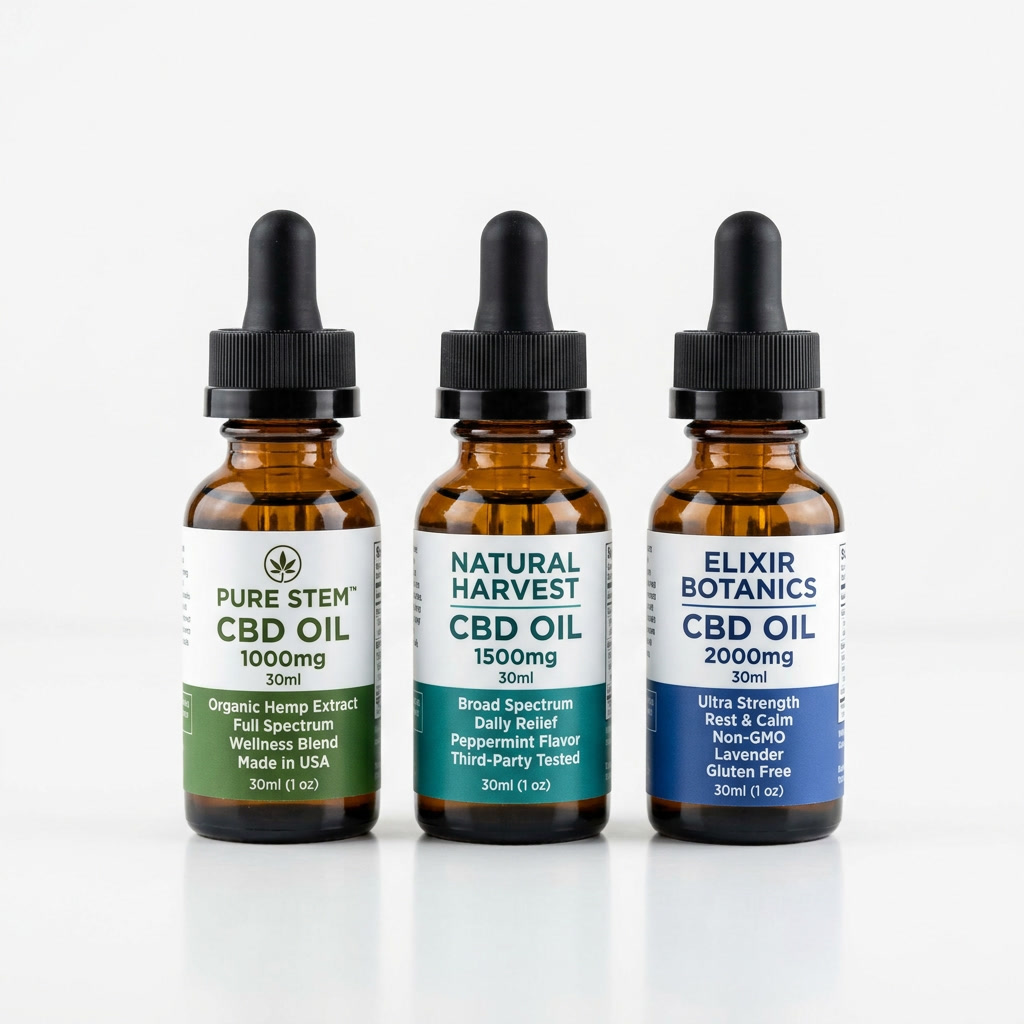
For a starting point, a high-quality CBD oil is the most flexible option because it allows precise dose adjustments. You can explore CBD oils, and if you prefer a more convenient format, gummies or capsules offer consistent dosing in a pre-measured form.
A Realistic Dosing Approach
There's no established CBD dose for long COVID, because the research hasn't gotten there yet. But the studies and general CBD guidance offer a reasonable framework:
- Start low: Begin with 10 to 20 mg of CBD once or twice daily.
- Track your response: Keep a simple journal of symptoms, dose, timing, and any side effects for two to three weeks.
- Adjust gradually: If you tolerate it well and see no benefit, increase by 5 to 10 mg every few days.
- Find your minimum effective dose: The goal is the lowest dose that helps, not the highest you can tolerate.
- Be patient: CBD effects can build gradually, and consistency matters more than occasional use.
The feasibility trial's 150 mg daily dose is on the higher end and was well-tolerated, but that doesn't mean you should start there. Most guidance recommends starting low and going slow.
Safety and Side Effects
The studies conducted so far reported no serious adverse events, which is reassuring. But CBD isn't risk-free, and it's worth knowing the common side effects and cautions.
Common side effects can include dry mouth, drowsiness, diarrhea, and changes in appetite. These are usually mild and dose-related. More importantly, CBD can interact with medications because it affects the cytochrome P450 enzyme system in the liver, which processes many drugs. This is especially relevant for blood thinners, certain antidepressants, and seizure medications.
The bottom line on safety: CBD appears well-tolerated in the small long COVID studies to date, but you should always discuss it with a healthcare provider, especially if you take other medications or have underlying health conditions.
What's Missing From the Research
It's worth being clear about what the current research cannot tell us. The biggest gaps are:
- No large, placebo-controlled trials in long COVID patients
- No long-term safety data specific to long COVID
- No established optimal dose for long COVID symptoms
- Limited diversity in study populations, with the feasibility trial enrolling mostly women
- No head-to-head comparisons with other long COVID treatments
These gaps are why the honest answer to "does CBD help long COVID" is "maybe, and we don't know yet." The research is moving in the right direction, but it's early.
What to Watch For Next
The research trajectory is positive. The feasibility trial explicitly called for larger studies with control groups, and the scoping review identified the post-infectious phase as an under-researched area worth investigating. As more trials launch, we should get clearer answers on whether CBD genuinely helps with fatigue, brain fog, and the other defining symptoms of long COVID.
In the meantime, the most useful thing you can do is stay informed, work with a knowledgeable healthcare provider, and treat CBD as one tool in a broader recovery plan rather than a magic bullet.
Bottom Line
The 2023 and later research on CBD and long COVID is genuinely promising but genuinely early. A small feasibility trial found CBD safe and well-tolerated in long COVID patients, a randomized trial with a placebo complication showed symptom improvement, and mechanistic reviews explain why CBD could plausibly help with the inflammation, pain, sleep, and mood issues that define the condition. But there is no large, placebo-controlled trial proving CBD treats long COVID, and anyone who claims otherwise is overstating the evidence. If you're living with long COVID and considering CBD, the responsible path is to discuss it with your doctor, start with a high-quality product at a low dose, and track your symptoms honestly. CBD may be a helpful part of your recovery, but it's not a substitute for medical care, and the science is still catching up to the hope.
Find Your Perfect CBD Product
Take our 2-minute quiz to get personalized recommendations based on your needs.
Take the Quiz →Disclaimer: This article is for informational purposes only and does not constitute medical advice. CBD products are not FDA-approved to treat, cure, or prevent any disease. Always consult with a qualified healthcare professional before starting any new supplement, especially if you have a medical condition or take medications.