CBD and the Immune System: What the Research Really Says
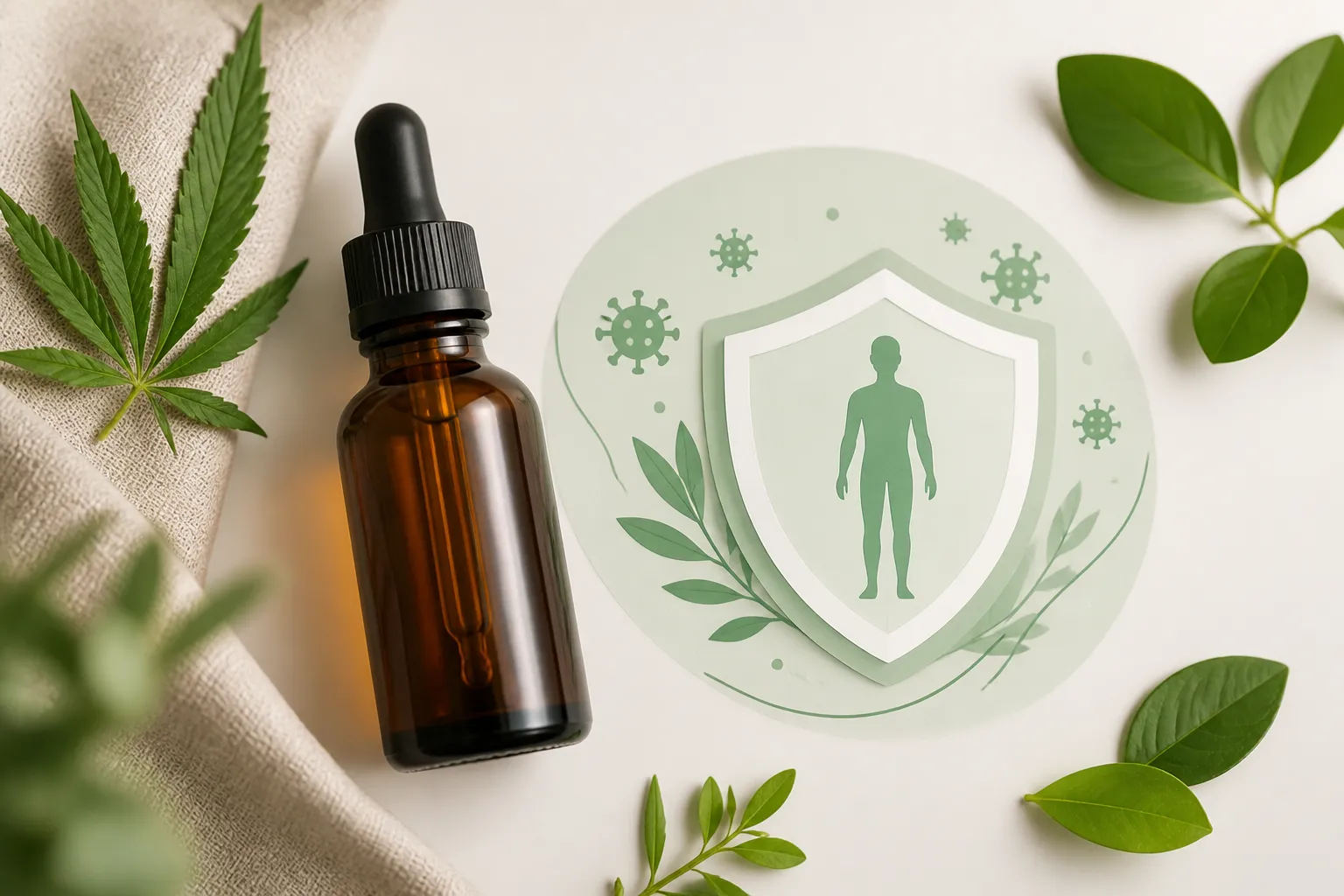
You know the feeling. It's late January, the office is a low-grade symphony of coughs and sniffles, and you're mentally counting down the days until you catch whatever's going around. Your immune system is doing its silent, round-the-clock job, but in the background, the wellness world keeps promising the same shortcut: a daily dose of CBD to "balance" or "boost" your immunity. It sounds appealing, and there's a genuine scientific story behind it, because the same endocannabinoid system that helps CBD interact with your body is woven through your immune cells. But the honest answer is more complicated than the marketing. CBD does appear to influence inflammation and immune signaling, yet the most reliable evidence comes from lab dishes and animals, not large human trials. This guide separates what we actually know about CBD and immunity from what's still hopeful theory, so you can make an informed, realistic decision.
What the Immune System Does, and Where CBD Fits
Your immune system is a layered defense network made up of two broad arms. The innate immune system is the fast, first-line response: white blood cells like macrophages and neutrophils detect invaders, trigger inflammation, and contain threats within minutes to hours. The adaptive immune system is slower but precise, producing T cells and B cells that remember specific pathogens so a repeat exposure is handled quickly. Inflammation, despite its bad reputation, is a normal and essential part of this process, it's the signal that immune cells need to respond.
CBD enters the picture through the endocannabinoid system (ECS), a signaling network of receptors and molecules that helps regulate many bodily functions, including immunity. If you're new to how this all connects, our guide to the endocannabinoid system is a useful starting point. Of particular interest is the CB2 receptor, which is found in high concentrations on immune cells and in the spleen. When immune cells are activated, CB2 expression often changes, and researchers believe this receptor helps the ECS dial immune responses up or down.
Here is where things get important to get right:
- CB2 receptors sit on immune cells and are part of how the body modulates immune activity.
- The ECS is widely described as a balancing system, not a one-way amplifier.
- CBD does not bind tightly to CB2 the way THC does; its immune effects appear to involve many other pathways.
- Most current knowledge about CBD and immune cells comes from laboratory and animal research.
The key nuance to carry through this article is that the ECS modulates, rather than simply boosts, immune responses. So the real scientific question is not whether CBD "boosts" immunity, but whether it can meaningfully influence immune tone and inflammation in humans.
How CBD Interacts With Immune Cells: The Mechanics
CBD doesn't act like a blunt switch. Instead, it appears to modulate immune activity through a range of receptors and signaling proteins, many of them outside the classic cannabinoid receptors. Beyond CB2, CBD can influence TRPV1 and TRPV2 channels, serotonin receptors, and the PPAR family of receptors, all of which play roles in inflammation and cell behavior.
At the level of individual immune cells, research points to several consistent effects. A comprehensive 2025 review in the Saudi Pharmaceutical Journal, which surveyed preclinical and clinical studies, described CBD as modulating immune responses by regulating T-cell activity, supporting macrophage function, suppressing pro-inflammatory cytokines, and shaping signaling pathways involved in immune balance.
> "CBD modulates immune responses, including the regulation of T cell activity, induction of macrophage apoptosis, suppression of pro-inflammatory cytokines, and modulation of signaling pathways involved in inflammation and immune homeostasis." (Saudi Pharmaceutical Journal, 2025)
It's worth noting the authors also flagged real limitations, including variability in immune responses and limited long-term safety data.
Importantly, CBD's effects often appear context-dependent rather than broadly suppressive. A 2026 study in Frontiers in Immunology examined CBD in human macrophages under metabolic stress, a state where immune cells become inflamed. The researchers found that CBD selectively dampened the inflammatory response without broadly suppressing immune function. That distinction, modulation rather than blanket suppression, is exactly the kind of nuance that matters for anyone considering CBD.
CBD's Anti-Inflammatory Mechanisms
Much of the CBD-and-immunity story actually centers on inflammation, which is a core immune process. The most consistent finding across recent studies is that CBD can reduce the production of pro-inflammatory signaling molecules called cytokines.
In the 2026 Frontiers in Immunology macrophage study, CBD selectively reduced inflammatory mediators in a dose-dependent way, meaning the strongest reductions appeared at higher concentrations. The effect was described as context-dependent, tamping down excess inflammation triggered by metabolic stress while leaving the cells otherwise viable.
Other recent work reinforces the theme:
- A 2026 study in Phytomedicine, using a rat model of rheumatoid arthritis, found that CBD (at 5 and 10 mg/kg) reduced joint inflammation and bone destruction, and in lab experiments it suppressed the inflammatory behavior of arthritis-related cells.
- A 2026 paper in the Journal of Neuroimmune Pharmacology reported that both THC and CBD diminished inflammation induced by activated immune cells in the brain, suggesting relevance to neuroinflammation.
- Multiple 2023-to-2026 reviews consistently describe CBD as reducing pro-inflammatory cytokines across experimental models.
The recurring limitation is that these are largely laboratory and animal findings. They help explain why CBD may have anti-inflammatory properties, but they don't prove that an oral CBD oil will produce meaningful immune changes in a healthy human, a point the human trials in this article underline.
CBD as an Immunomodulator, Not an Immune Booster
Here is the most important distinction to understand: CBD is generally studied as an immunomodulator, which means it can nudge immune responses in different directions, often by calming excessive activity. It is not a proven "immune booster" in the way vitamin C or zinc marketing might suggest.
Think of the immune system like a thermostat, not a car accelerator. The goal of an immunomodulator is to keep the temperature in a healthy range rather than to crank it to maximum. When inflammation is excessive, as in autoimmune conditions, the goal is usually to tone it down. When a pathogen arrives, the body needs a robust response. The same compound can't simultaneously be a reliable amplifier and a reliable dampener, and this is precisely why "CBD boosts your immune system" is an oversimplification.
A 2026 literature review in La Revue de Medecine Interne, focused on cannabinoids in autoimmune disease, laid this out clearly. It noted that cannabinoids can inhibit the proliferation of CD4+ T cells and B cells and shift immune responses toward an anti-inflammatory profile, while also emphasizing that clinical studies in autoimmune diseases remain scarce.
> "Clinical studies evaluating their effects in autoimmune diseases remain scarce. The available, heterogeneous data underscore the need for further basic and clinical research." (La Revue de Medecine Interne, 2026) So the honest framing is that CBD may modulate immune activity, with most evidence pointing toward dampening excessive inflammation, not boosting immunity against infections.
What Research Says About CBD and Autoimmune Conditions
Autoimmune diseases are the area where CBD's anti-inflammatory profile gets the most attention, because these conditions involve the immune system attacking the body's own tissues. Recent reviews have examined potential roles in conditions like type 1 diabetes, CBD for multiple sclerosis, and rheumatoid arthritis.
The evidence, however, is mostly preclinical or observational rather than from large clinical trials:
- A 2025 mini-review in World Journal of Diabetes examined CBD for type 1 diabetes and found only a small number of qualifying studies, almost all in animal models, showing promising but far-from-conclusive anti-inflammatory effects.
- A 2026 meta-analysis in Pharmacological Research focused on a cannabis-derived spray (nabiximols) for multiple sclerosis, finding benefits mainly for symptom control such as pain and spasticity, rather than for disease-modifying immune effects.
- The 2026 French review emphasized that while experimental data look promising, clinical data on cannabinoids in autoimmune disease remain scarce and heterogeneous.
The responsible conclusion is that CBD is being researched as a possible adjunct in autoimmunity, not as a proven treatment. No current evidence supports CBD as a substitute for prescribed autoimmune medications, and anyone considering it should do so only under medical supervision.
CBD and Infection or Illness: What We Do and Don't Know
When it comes to fighting infections, the evidence is even thinner. A handful of lab studies have explored whether CBD or other cannabinoids affect viral replication, and some theoretical work has even examined CBD against coronaviruses, but none of this translates into practical guidance.
What the data show:
- Most infection-related studies are in isolated cells, not in sick humans.
- Some lab research has looked at whether cannabinoids influence viral entry or immune responses, but results are preliminary and model-dependent.
- No large clinical trial has demonstrated that CBD prevents or treats colds, flu, or other infections.
- A 2024 randomized trial in healthy adults found no differences between CBD and placebo in the incidence of colds or flus over three months.
The 2024 trial, published in the Journal of the International Society of Sports Nutrition, is actually quite telling. Over 12 weeks, 54 healthy adults took CBD or placebo, and researchers found no meaningful changes in immune or inflammatory biomarkers, and no difference in how often people got sick. This is an honest, if underwhelming, result for anyone hoping CBD would act as a daily shield.
The Honest Limits: Why Human Evidence Is Still Thin
It would be easy to get swept up in the promising lab results, but it's important to look at the whole picture. The gap between the exciting preclinical data and what actually shows up in people is wide, and that gap is the single most important thing to understand about CBD and immunity.
Consider what the human studies actually show:
- A 2024 double-blind trial found no changes in immune or inflammatory biomarkers in healthy adults taking CBD for 12 weeks.
- A 2024 crossover study in athletes found no clear effects of CBD on inflammatory markers after intensive training.
- Reviews consistently note that most mechanistic knowledge comes from cells and animals.
- Doses used in research vary widely, making results hard to compare.
This doesn't mean CBD has no immune effects; the mechanistic evidence is real and biologically plausible. But it does mean that a healthy person hoping for a measurable immune boost is likely to be disappointed. The realistic position is that CBD shows promise as an anti-inflammatory modulator in specific, often disease-related contexts, while evidence for general immune enhancement in healthy people is essentially absent.
Practical Considerations and Safety
If you're considering CBD, whether for general wellness or in connection with an inflammatory condition, a few practical points matter more than the marketing hype.
Safety first:
- CBD is generally well tolerated at moderate doses, but it can interact with certain medications because of how it's processed in the liver.
- Always tell your doctor about CBD if you take prescription drugs, especially blood thinners, antiseizure medications, or immunosuppressants.
- Quality and dosing vary widely between products, so look for third-party lab reports (COAs) to confirm potency and purity.
- The long-term safety data on daily CBD use are still limited.
On the wellness side, a realistic approach treats CBD as one small piece of a larger picture. Sleep, stress management, exercise, and diet have far stronger, better-established effects on immune function than any supplement. If you do choose CBD, starting with a low dose and tracking how you feel is more useful than chasing an unproven immune benefit. For guidance on sensible amounts, our CBD dosage guide and CBD safety guide are good starting points.
Bottom Line
Here's the honest summary. CBD interacts with the immune system through the endocannabinoid system, particularly via CB2 receptors, and a growing body of 2023-and-later research shows it can reduce pro-inflammatory cytokine activity in laboratory and animal models. That makes it an interesting area of study for conditions involving excessive inflammation, such as autoimmune diseases. But CBD is best understood as an immunomodulator, not an immune booster. Human trials so far show no meaningful change in immune biomarkers in healthy people, and no evidence that CBD prevents illness. If you're interested in CBD for its anti-inflammatory potential, talk to your doctor, choose a verified product, and keep expectations realistic. Browse our range of lab-tested CBD oils and capsules if you want to explore further, but treat immunity as something you support with sleep, food, and movement, not a single supplement.
Frequently Asked Questions
Does CBD boost your immune system?
No reliable evidence shows that CBD boosts immunity against infections. It's better described as an immunomodulator that may tone down excessive inflammation, and most human trials have found no change in immune biomarkers.
Can CBD help with autoimmune conditions?
Some animal and laboratory research suggests CBD may reduce inflammation relevant to autoimmune diseases like type 1 diabetes and multiple sclerosis. But clinical evidence in humans is scarce, and CBD is not a proven or approved treatment for any autoimmune disease.
Is CBD safe to take every day for immune support?
CBD is generally well tolerated, but it can interact with certain medications and long-term safety data are limited. Always discuss daily use with your doctor, especially if you take prescription drugs.
Should I take CBD to avoid getting sick?
There is no evidence that CBD prevents colds or flu. A 2024 trial found no difference in illness rates between CBD and placebo groups. Sleep, diet, and stress management have much stronger evidence for supporting immunity.
Find Your Perfect CBD Product
Take our 2-minute quiz to get personalized recommendations based on your needs.
Take the Quiz →Disclaimer: This article is for informational purposes only and does not constitute medical advice. CBD products are not FDA-approved to treat, cure, or prevent any disease. Always consult with a qualified healthcare professional before starting any new supplement, especially if you have a medical condition or take medications.