CBD and Fibrosis: What the Scarring Research Actually Shows

Fibrosis rarely arrives as a single diagnosis with a single cause. It shows up as a stiff lung on a scan, a heart that has remodelled after years of pressure, a liver that has quietly laid down scar tissue, or a bowel wall that has thickened after repeated flares. Different clinics, different specialists, and different words on the report. Underneath it all, the biology is remarkably similar.
That similarity is why the CBD literature keeps circling back to fibrosis from so many directions. Researchers studying the heart, the lung, the liver, and the gut are all asking some version of one question. Does CBD change the way tissue responds to chronic injury, and does it change how much collagen gets deposited as a result?
The answer so far comes almost entirely from animals and cells. That is the single most important thing to hold onto while reading the rest of this article. What follows is a tour of the actual published work, grouped by organ, with a plain statement of what each study can and cannot tell you.
Fibrosis Is One Process Wearing Many Masks
Pathologists describe fibrosis as excessive extracellular matrix deposition, which is a formal way of saying that working tissue gets replaced by something closer to scar. The triggers differ enormously. In the lung it might be crystalline silica dust. In the liver it might be sustained metabolic stress or alcohol. In the heart it might be chronic pressure overload or the aftermath of a lost blood supply. In the gut it might be years of inflammatory flares in ulcerative colitis.
What stays constant is the sequence. Injury first. Then inflammation, then activation of collagen-producing cells, then deposition, then the slow stiffening that follows. Because that sequence repeats across organs, a finding in one tissue is a hypothesis about the others. It is never a guarantee.
This matters for how you read any headline about CBD and scarring. A result in a heart model does not automatically describe a lung, and a result in a mouse does not automatically describe a person. The pattern is real. The translation is the hard part.
What Fibrosis Actually Is
Fibrosis is not a disease in its own right. It is the body's repair response running too long or too hard. When tissue is injured repeatedly, the repair machinery stops winding down between injuries. The result is a build-up of collagen and other matrix proteins that were supposed to be temporary scaffolding.
The main cell responsible is the myofibroblast, a specialised form of fibroblast that produces collagen at high rates and can contract. In a clean wound, myofibroblasts appear, do their work, and then disappear. In fibrosis they persist. That persistence is the difference between a scar that heals and a scar that keeps growing, and it is the step most CBD research in this area aims at.
Clinically, this is why fibrosis is described by stage rather than by presence. A small amount of scar tissue in the liver or lung may cause no symptoms at all. Advanced fibrosis changes how the organ works, and that is when the diagnosis usually surfaces.
Why Collagen Is the Common Thread
Collagen is not inherently harmful. It is the protein that gives skin its strength and tendons their tensile power. The problem in fibrosis is quantity and organisation. Too much collagen, laid down in the wrong pattern, with excessive cross-linking between fibres, produces tissue that is stiff rather than strong.
Stiffness feeds the process. Mechanically stiff tissue sends signals back into the cells living inside it, and those signals encourage more collagen production. It is a loop, and loops are hard to break. This is one reason researchers look at fibrosis as a process rather than a series of separate organ diseases. If you could interrupt the loop, you might interrupt it in more than one place.
That is exactly the logic behind studying CBD across several organs. It is also the logic that makes the field vulnerable to overstatement, because a mechanism that looks shared in a dish can behave very differently in a living body.
The Heart: Right Ventricular Remodelling
The right ventricle is the chamber that pumps blood to the lungs. When lung disease or pulmonary hypertension raises the pressure it has to push against, the chamber remodels. Its walls thicken, collagen accumulates, and eventually it fails.
A 2023 study in Biochimica et Biophysica Acta Molecular Basis of Disease examined CBD in that setting. The work described CBD alleviating right ventricular fibrosis by inhibiting the transformation of fibroblasts into the collagen-producing, contractile cell type that drives scar formation. In plain terms, CBD appeared to interfere with the step where a quiet fibroblast becomes a scar-building machine.
This is a mechanistically clean result and a genuinely interesting one, because that transformation step is a target across nearly every fibrotic disease. It is also animal and cell work. Nothing in it establishes a dose for a person, a duration of treatment, or an outcome a patient would notice.
Heart Failure and the Mitochondrial Argument
A second cardiac paper, published in 2025 in JACC Basic to Translational Science, approached the question from a different angle. This study reported that CBD prevented dysfunction and adverse remodelling in a model of heart failure, and it tied the effect to preservation of mitochondria.
Mitochondria are the energy plants of the cell, and failing heart muscle is famously energy-starved. If a treatment protects mitochondrial function, it can protect contractile performance indirectly, and that protection can reduce the secondary remodelling that follows. It is a plausible chain, and the paper lays it out carefully.
Read the verb, though. The study describes prevention of dysfunction and remodelling, in an experimental model, with treatment built into the design. Preventing a process from starting is a different claim from reversing a process that is already established. Headlines routinely blur those two things. For the broader picture on cannabinoids and the cardiovascular system, including blood pressure, our CBD and heart health guide covers what human data exists.
Cardiomyocytes, miR-143, and the Limits of a Single Pathway
A 2024 paper in the European Journal of Pharmacology looked at heart muscle regeneration rather than scar. The authors reported that CBD repressed a microRNA called miR-143, and that this repression promoted cardiomyocyte proliferation.
That is a striking finding, because adult heart muscle cells divide very little. Any handle on that process attracts attention. The study is also a reminder of how specific these mechanisms are. A single microRNA can sit at the centre of a network, and nudging it in a dish or an animal is not the same as safely nudging it in a human heart over years.
The relevance to fibrosis is indirect but real. Tissue that regenerates has less need to scar. Whether that CBD effect holds outside an experimental model is exactly the open question, and no human trial has answered it.
The Lung: Silica and the Stiff Chest
Silicosis is one of the clearest examples of fibrosis with an identifiable cause. Inhaled crystalline silica particles lodge deep in the lung, and the immune system responds in a way that ends in progressive scarring. There is no treatment that removes the scar.
A 2024 study in International Immunopharmacology reported that CBD suppressed silica-induced pulmonary inflammation and fibrosis in an experimental model. Both halves of that sentence matter. The anti-inflammatory effect and the anti-fibrotic effect were observed together, which fits the broader idea that inflammation drives the collagen deposition that follows.
Lung fibrosis is also where the gap between a mouse and a patient is widest. Human lungs are large, mechanically complex, and exposed for decades. A model compresses that into weeks. The CBD result is a signal worth following, not a clinical answer.
The Liver: Stress Injury and the Wound That Will Not Close
The liver has an unusual capacity to regenerate, and an unusual tendency to scar when injury is repeated. Chronic stress of almost any kind, metabolic, toxic, or inflammatory, can push it toward fibrosis, and advanced fibrosis is the road to cirrhosis.
A 2025 paper in Frontiers in Pharmacology described a protective role for CBD in stress-induced liver injury. The finding sits in the same family as the cardiac and pulmonary work, with inflammation and oxidative stress as the intermediate steps. It is also worth reading alongside the human safety record, because the liver is the organ where CBD has a documented signal at high prescription doses. Our CBD and liver safety article walks through that evidence in detail, and the two pieces belong together.
The honest summary is that a protective signal in an injury model does not cancel a dose-dependent safety signal in humans. Both are true, and both should shape how the topic is discussed.
The Gut: Intestinal Fibrosis in Ulcerative Colitis
Inflammatory bowel disease produces a form of fibrosis that patients feel directly. Repeated inflammation thickens the bowel wall, and in some cases that leads to strictures, narrowed segments that can obstruct.
A 2025 study in the Journal of Inflammation Research reported that CBD alleviated intestinal fibrosis in mice with ulcerative colitis. This is one of the more direct matches between CBD and the process, since the study looked at fibrosis as an outcome rather than only at inflammation scores. It was still a mouse study, with all the caveats that implies about dose, timing, and human relevance.
For context on where cannabinoid research sits in IBD generally, our CBD and IBD overview covers the symptom data and the gaps. The fibrosis finding is a mechanism story layered on top of that clinical picture, not a replacement for it.
The Microbiome Route
A second gut paper, published in 2024 in Frontiers in Pharmacology, took a different approach entirely. It used fecal metabolomics and microbiota analysis to describe mechanisms of CBD in colitis.
The logic is that gut bacteria and their metabolites shape the inflammatory environment of the intestinal wall. If CBD shifts that environment, it might indirectly shift the repair response too. This is an attractive idea and a genuinely active area of research, and it also adds a layer of uncertainty, because the microbiome is variable between individuals and difficult to control.
Note what this study is and is not. It is a mechanistic description of inflammation and microbial change in a colitis model. It does not measure fibrosis directly, so it says little about whether CBD changes collagen in the gut wall. Treat it as supporting context for the intestinal work, not as a second independent demonstration of an anti-fibrotic effect.
Macrophages: The Cell That Builds and Clears the Scar
Macrophages are the immune cells that arrive early to an injury and stay late. They can push fibrosis forward by releasing signals that activate fibroblasts, and they can pull it back by clearing debris and matrix. Which way they lean depends on the signals around them.
A 2023 study in Ecotoxicology and Environmental Safety examined CBD in relation to macrophage extracellular trap formation. Extracellular traps are structures macrophages can release, and they matter both for defence and for tissue damage. The paper adds detail to the picture of CBD as a modulator of innate immune behaviour rather than a simple anti-inflammatory.
That framing is the most defensible one in the whole field. CBD appears to change how immune cells behave in injury, and collagen deposition is downstream of immune behaviour. Everything beyond that is inference, and inference is where marketing tends to outrun data.
What the Animal Work Has in Common
Look across these papers and a pattern emerges that has nothing to do with any single organ.
The CBD doses used in animal studies are typically far above what a person takes from a retail product, and they are usually measured and controlled in a way that consumer use never is. Treatment often begins before or at the moment of injury, which is a design that favours prevention over reversal. The endpoints are usually histological, meaning someone counted collagen or scored stained tissue, and the sample sizes are small.
None of that makes the work invalid. It makes it early. Animal models are how you find out whether a mechanism is worth pursuing. They are not how you find out whether a patient will benefit.
Where the Human Evidence Stops
There is no human trial showing that CBD reverses established fibrosis in any organ. Not the heart, not the lung, not the liver, not the gut. That sentence deserves to be stated without hedging, because it is the line that separates a research programme from a product claim.
There are practical reasons for the gap. Fibrosis progresses slowly, so a trial needs years. Measuring it properly requires imaging or biopsy, both of which carry cost and risk. And the patient populations most affected are often medically complex, which makes recruitment and safety monitoring harder.
So the honest position on CBD is not that the animal data are wrong. It is that they are unfinished. A mouse with silica-induced lung injury is a model of a process, and a person with silicosis is a person with a disease, a history, and a body that has been responding to injury for decades.
How Fibrosis Is Diagnosed and Staged
This part is not controversial and it is not optional. Fibrosis is diagnosed and staged by a clinician, using tools that no supplement can substitute for.
In the liver, that usually means blood panels combined with elastography, an imaging technique that measures stiffness, and in some cases a biopsy. In the lung, it means pulmonary function tests and high-resolution imaging. In the heart, it means echocardiography and cardiac MRI. In the gut, it means imaging and often endoscopy.
Staging matters because the clinical meaning changes with it. Early fibrosis may be monitored. Advanced fibrosis changes management, screening schedules, and in some cases the treatment options available. A person who suspects they have fibrosis needs a diagnosis from a clinician, not a CBD bottle.
Why Stopping Progression Is the Real Clinical Goal
Even the approved antifibrotic drugs for lung disease do not remove existing scar. Their measured benefit is a slower rate of decline. That is the realistic target for this entire class of disease, and it reframes what any adjunct treatment could reasonably offer.
If slowing progression is the goal, then the meaningful questions about CBD change. Does it reduce the rate of collagen accumulation over time. Does it reduce inflammatory drive in a sustained way. Does it do either of those at a dose a person can actually take safely for years.
Those are answerable questions. They have not been answered. Until they are, the correct posture is interest without expectation. Our overview of CBD and inflammation covers the pathway-level reasoning that makes the fibrosis work plausible in the first place.
Reading CBD Claims About Scarring
A few phrases should stop you cold when you see them attached to a CBD product.
Reverses fibrosis. Dissolves scar tissue. Regenerates damaged organs. Each of these is a claim no human trial supports. When a seller cites a mouse study as though it were patient data, that is not enthusiasm, it is a category error, and it usually signals that the rest of the label deserves scrutiny too.
The more useful question is narrower and duller. What exactly was measured, in what species, at what dose, and for how long. A study that measured collagen staining in a mouse lung after four weeks of high-dose treatment is a real contribution. It is not a promise about your chest scan.
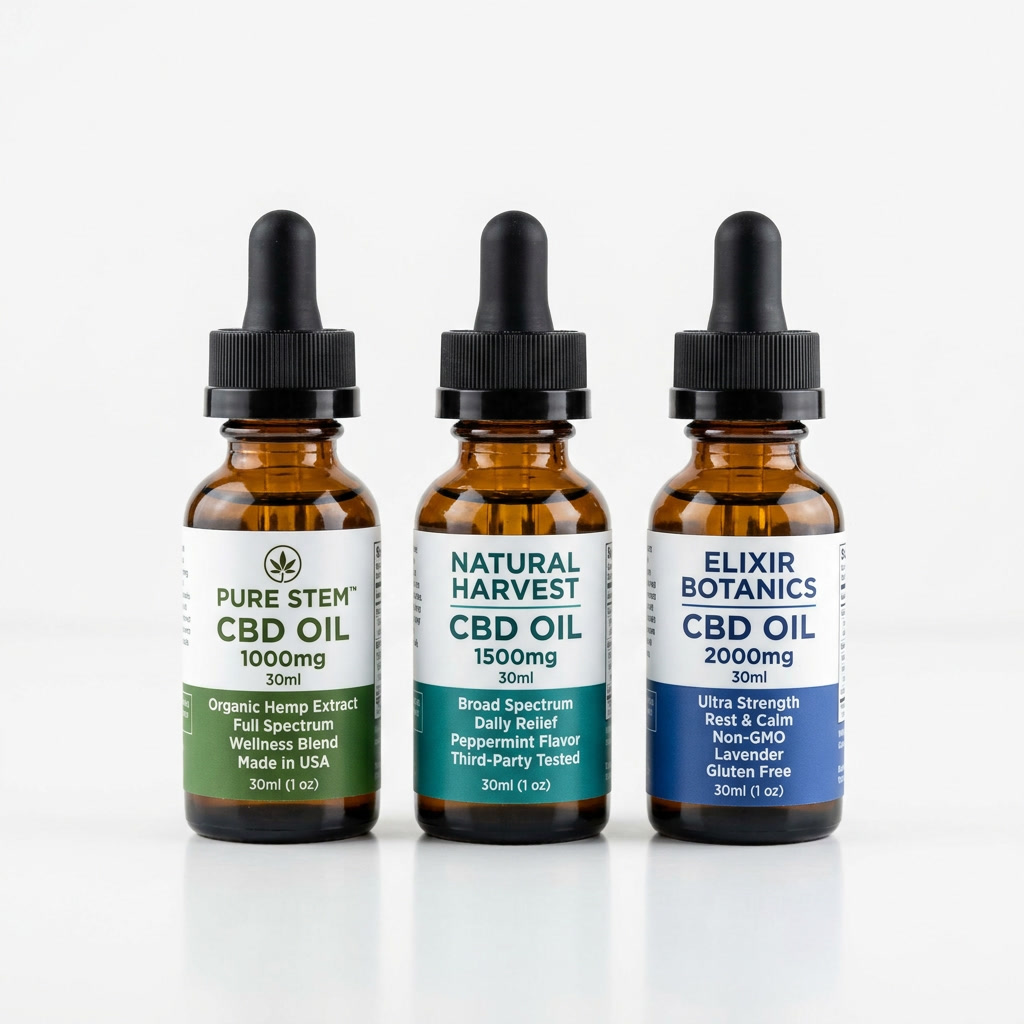
If you are choosing a product at all, the same rules that apply elsewhere apply here. Third-party testing, a clear certificate of analysis, and a stated cannabinoid content per serving. Our CBD oils and tinctures range lists products with that information, and reading a label properly is more informative than reading a marketing page.
The Honest Position
Fibrosis is one biological process that appears in many organs, and the CBD literature has probed it in the heart, the lung, the liver, and the gut. The consistent thread across those papers is inflammation-driven collagen deposition, and the consistent finding is that CBD interferes with some part of that chain in experimental models. Fibroblast transformation, mitochondrial preservation, immune cell behaviour, and microbial signalling all show up as plausible points of contact.
What does not exist is human evidence that CBD reverses established fibrosis. Not a single trial. The animal work is a reason to keep researching, and it is a reason to be careful about what you believe in the meantime.
The practical conclusion is unglamorous. If you have a diagnosed fibrotic condition, your clinician manages it, and any conversation about CBD belongs inside that relationship rather than instead of it. If you are simply reading about the science, the correct takeaway is that this is a promising early field with a real mechanistic story and no clinical proof yet. That is worth knowing, and it is enough.
Find Your Perfect CBD Product
Take our 2-minute quiz to get personalized recommendations based on your needs.
Take the Quiz →Disclaimer: This article is for informational purposes only and does not constitute medical advice. CBD products are not FDA-approved to treat, cure, or prevent any disease. Always consult with a qualified healthcare professional before starting any new supplement, especially if you have a medical condition or take medications.