CBD and IBD: What 2026 Research Says About Crohn's, Ulcerative Colitis, and Gut Inflammation

Picture this: it's 3 a.m., and you're on the bathroom floor again, doubled over with cramping that feels like your insides are being wrung out. For millions living with inflammatory bowel disease (IBD), this isn't a bad dream — it's Tuesday. Crohn's disease and ulcerative colitis affect more than 3 million Americans, and despite decades of research, many still cycle through medications that only partly control their flares.
So when cannabis and CBD started trending in IBD communities, patients took notice. A 2025 survey in Academic Medicine found that IBD patients genuinely believe cannabis and CBD oil relieve their symptoms. But belief isn't evidence. We'll walk through what the 2023–2026 research actually says about CBD for IBD — the promising clinical findings, the honest limitations, and the safety details you need before trying it. No hype, no fear-mongering. Just the evidence, clearly explained.
What IBD Actually Is: Two Diseases, One Shared Problem
Inflammatory bowel disease is an umbrella term for two chronic digestive conditions that share a core feature: persistent, damaging inflammation in the digestive tract.
Crohn's disease can strike anywhere from the mouth to the anus, often affecting multiple layers of the bowel wall. It commonly targets the end of the small intestine and the beginning of the colon. Because the inflammation runs deep, Crohn's can lead to fistulas and narrowing of the intestine over time.
Ulcerative colitis is more contained. It affects only the large intestine (colon) and rectum, and the inflammation stays on the innermost lining. That's why its hallmark is bloody diarrhea and urgency.
Both conditions follow a pattern of remission and relapse, a pattern we also explore in our guide to CBD and gut health. Between flares, people can feel completely normal. When a flare hits, symptoms can be debilitating:
- Abdominal pain and cramping
- Chronic diarrhea (sometimes with blood)
- Unintended weight loss and fatigue
- Urgent, frequent bowel movements
It's not just physical. Living with unpredictable flares takes a heavy emotional toll — anxiety and interrupted sleep. That's why many patients are hungry for something that helps.
Why Gut Health and Cannabinoids Are a Natural Match
Here's where things get scientifically interesting. Your body doesn't just tolerate cannabis-like compounds — it produces its own version of them, and your gut is packed with the machinery to use them.
The endocannabinoid system (ECS) is a network of receptors, enzymes, and signaling molecules that helps keep your body in balance. Two receptors matter most: CB1, found heavily in the nervous system and gut, and CB2, found on immune cells. Both are dense in the digestive tract.
A 2023 review in Clinical Gastroenterology and Hepatology laid out the stakes clearly: the ECS plays a central role in regulating gut motility, intestinal permeability, secretion, and the immune responses that drive IBD. In plain terms, this system helps control how fast food moves through you, how well your gut barrier holds, and how aggressively your immune system reacts to potential threats.
This is a two-way street. In IBD, the ECS can become disrupted — receptor expression changes and enzyme activity shifts. Researchers believe this imbalance may contribute to both the inflammation and pain that characterize the disease. CBD doesn't bind tightly to CB1 or CB2 like THC does. Instead, it works through a broader network, including the TRPV1 receptor (linked to pain and temperature) and the PPARγ receptor (linked to inflammation control). That broad action is part of why scientists think it might help calm an inflamed gut.
The 2025 Clinical Study That Got Everyone's Attention
The most direct evidence for CBD in IBD comes from a *2025 study published in the Journal of Clinical Medicine***. Researchers tested an orally administered CBD/CBG hemp extract in a mouse model of ulcerative colitis and measured both inflammation and pain behavior.
The results were encouraging. The extract significantly reduced the severity of ulcerative colitis and also reduced pain-related behaviors in the treated mice. CBG — the other major cannabinoid in hemp — appears to have joined CBD as an active player here, which matters because most commercial products don't include meaningful levels of CBG.
Before we get too excited, context is crucial. This was a preclinical animal study, not a human trial. Mice are useful models, but they don't tell us the exact dose, timing, or product a human with UC should use. What it does is justify the next step: properly designed human trials.
What Patients Themselves Report
Animal models are one thing, but what do actual people with IBD say? Patient survey data — while less rigorous than clinical trials — reveals the real-world experience driving demand.
A *2024 study in Medicina (Kaunas)*** surveyed adult women with IBD about their perceived effectiveness of CBD. The findings echoed what gastroenterologists hear daily: many report meaningful relief, especially of pain and overall discomfort, and say CBD improves their quality of life.
The numbers align across different studies. The *2025 Academic Medicine survey* found that IBD patients widely believe cannabis and CBD oil relieve their symptoms. This isn't a fringe view — it's the mainstream patient experience.
The strongest real-world evidence comes from the UK Medical Cannabis Registry, analyzed in a *2024 update in Expert Review of Gastroenterology & Hepatology*. This registry tracks patients using cannabis-based medicines under medical supervision and reported improvements in disease-specific outcomes and quality of life** for IBD patients over time, with a low rate of mostly mild adverse events.
The pattern across these studies is consistent:
- Pain relief is the most frequently reported benefit
- Many patients report fewer or milder flares
- Quality of life scores tend to improve
- Side effects are usually mild
The Honest Part: Subjective vs. Objective Results
Here's where we need to pump the brakes on the enthusiasm. There's a real and consistent gap in the IBD-CBD research between how patients feel and what objective measures show.
Many patient-reported outcomes improve. Pain scores drop, quality-of-life questionnaires look better, and people say they feel less inflamed. But when researchers measure actual objective disease activity — colonoscopy scores, blood markers of inflammation like CRP and calprotectin, or tissue healing — the improvements are often modest or even negligible in some trials.
This matters for two reasons. First, CBD may be genuinely useful for symptom management, especially the pain that degrades daily life. Second, it's not proven to heal the underlying inflammation the way biologic medications are.
Some researchers have floated a subtler explanation: cannabis and CBD may alter how people perceive pain and gut sensations, even when physical inflammation hasn't changed. In other words, part of the benefit could be neurological — changing the brain's interpretation of signals from an inflamed gut — rather than purely anti-inflammatory.
The honest takeaway: CBD shows real promise for symptom relief, but calling it a cure would overstate the evidence. Anyone using it should track how they feel and keep working with their gastroenterologist to monitor objective markers of disease.
How CBD Might Be Working: The Proposed Mechanisms
Scientists have proposed several biological pathways through which CBD could help an inflamed gut. A *2024 review in Cells*** mapped out the therapeutic potential in detail, and the mechanisms cluster into three main areas:
Anti-inflammatory signaling. CBD appears to dampen the production of pro-inflammatory molecules called cytokines, partly through the PPARγ receptor and by reducing the activity of enzymes like COX-2 that drive inflammation. In the gut, this could mean a calmer immune response at the tissue level.
Gut barrier protection. A healthy gut lining acts as a selective gate — letting nutrients in while keeping bacteria out. In IBD, that barrier becomes leaky. Some research suggests CBD helps reinforce the tight junctions between intestinal cells, potentially reducing the "leakiness" that feeds inflammation.
Microbiome modulation. Your gut is home to trillions of bacteria that shape immune function. Preliminary evidence hints that cannabinoids may influence the balance of gut microbes. This is early-stage research, but the microbiome connection is one of the most exciting frontiers in IBD treatment.
It's likely a combination of these effects — not one magic switch — that produces the symptom relief patients report. But it's worth repeating: much of this mechanistic work comes from lab and animal studies. Human data is thinner, and the field still needs more high-quality trials.
Realistic Expectations: What CBD Can and Can't Do
Given everything above, it's time to set realistic expectations. Here's the balanced picture:
What CBD may help with:
- Gut-related pain and cramping
- Nausea and reduced appetite
- Sleep disruption from nighttime symptoms
- Overall quality of life and daily comfort
What CBD is not proven to do:
- Cure or reverse IBD
- Replace prescribed medications
- Guarantee remission in the way biologics can
- Heal inflammation to a measurable degree (based on current evidence)
The most defensible framing: CBD is a complementary symptom-management tool, not a substitute for conventional treatment. The patients who report the best results tend to use it alongside their prescribed care, under the guidance of a healthcare team — not instead of it.
If you're considering CBD, the smartest approach is to bring it up with your gastroenterologist, many of whom are increasingly open to discussing it given the patient data. They can help you weigh potential interactions and watch for changes in your objective markers.
Dosing: Where to Start and How to Adjust
There's no one-size-fits-all dose for CBD in IBD, partly because human trials are still limited. But the existing research and clinical guidance point to a sensible starting strategy:
- Start low: Begin with 10–20 mg of CBD once daily
- Track for 2–3 weeks: CBD effects build gradually; give it time
- Increase slowly: Add 5–10 mg at a time if needed
- Find your minimum effective dose: The goal is the lowest dose that helps, not the highest
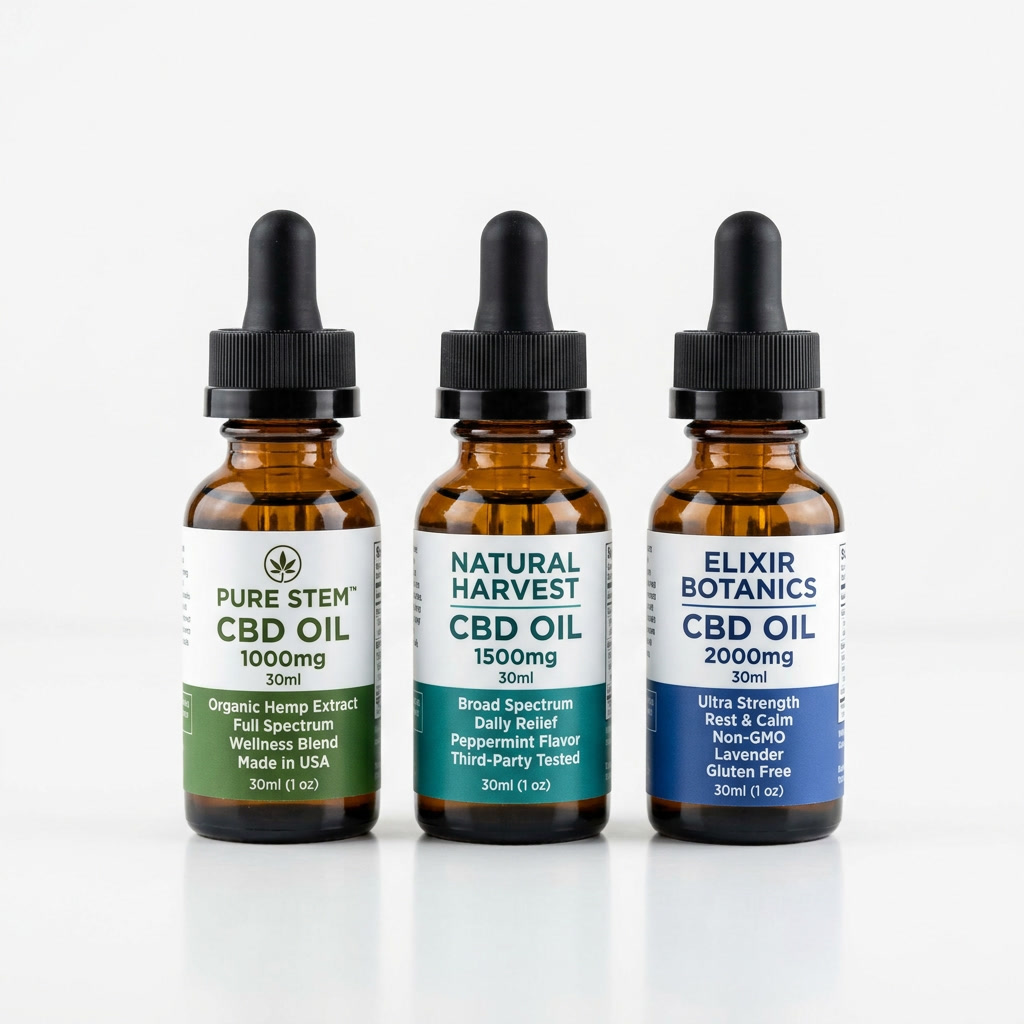
Delivery format matters for gut symptoms. Oils and tinctures are absorbed under the tongue for relatively fast effects and allow precise dose titration, making our CBD oils and tinctures the most flexible option for starting low. CBD gummies offer consistent, pre-measured doses in a pleasant form — good for daily routines. And CBD capsules are convenient, discreet, and easy to take consistently, which matters for a condition that needs daily management.
Everyone metabolizes CBD differently, so your ideal dose depends on your body weight, metabolism, symptom severity, and the product's potency. Keeping a simple journal — dose, timing, symptom level, and any side effects — is the most reliable way to find what works for you.
Safety: Drug Interactions and the Liver Question
CBD has a strong overall safety profile, but it's not risk-free — and the risks are higher than most people realize. Two deserve special attention.
Drug interactions. CBD inhibits a family of liver enzymes called cytochrome P450, especially CYP3A4. These enzymes break down many common medications — including certain IBD treatments, blood thinners, antidepressants, and seizure drugs. If CBD slows that breakdown, drug levels can rise, potentially increasing side effects or toxicity. This is a genuine concern, not a theoretical one. If you take any prescription medication, run it past your pharmacist or doctor before adding CBD.
Liver effects. High doses of CBD have been linked to elevations in liver enzymes, indicating stress on the liver. The most concerning data comes from Epidiolex, the FDA-approved CBD drug used for seizure disorders, where patients take substantially higher doses than typical over-the-counter products. Still, the principle applies: more isn't better. Sticking to moderate doses and avoiding stacking multiple CBD products reduces this risk.
Other potential side effects to know:
- Drowsiness or fatigue, especially at higher doses
- Dry mouth
- Diarrhea or changes in appetite (which can complicate IBD)
- Interactions with alcohol
If you're pregnant, planning to become pregnant, or breastfeeding, the current evidence is too thin to recommend CBD — most experts advise avoiding it. And because CBD products aren't tightly regulated, third-party lab testing is non-negotiable to confirm what's actually in the bottle.
Choosing a Product: Quality Matters More Than You Think
The CBD market is crowded, and not every product is what it claims to be. When you're dealing with a chronic condition, product quality directly affects both safety and effectiveness. Here's what to look for:
- Third-party lab results: Every batch should have a certificate of analysis from an independent lab
- Clear potency labeling: The label should state exactly how much CBD is in each dose
- Full-spectrum vs. isolate: Full-spectrum products contain other hemp compounds (including trace CBG) that may add benefit — relevant given the promising CBD/CBG research
- No heavy contaminants: Screened for pesticides, heavy metals, and solvents
- Reputable sourcing: U.S.-grown hemp from transparent brands
For gut-related use, oils give you the most control over dosing, gummies make consistency easy, and capsules are the most discreet daily option. Start with one product at a time so you can accurately judge what's working.
> Quick Take: The most defensible framing is that CBD is a complementary symptom-management tool, not a substitute for conventional treatment — and the patients who report the best results tend to use it alongside their prescribed care, not instead of it.
A Practical Action Plan
If you're ready to explore CBD for IBD, here's a step-by-step path:
1. Talk to your gastroenterologist and pharmacist about CBD, especially your current medications
2. Choose one high-quality product (oil, gummies, or capsules) with third-party lab results
3. Start at 10–20 mg daily and keep a symptom journal
4. Stay on your prescribed treatment — CBD is complementary, not a replacement
5. Adjust slowly over 2–3 weeks, increasing by 5–10 mg only if needed
6. Track both symptoms and objective markers — keep your regular labs and scopes
7. Reassess at 4–6 weeks — if you see no benefit, reconsider or stop
8. Never combine multiple high-dose products without medical supervision
The patients who get the most from CBD tend to treat it as part of a broader, well-managed care plan — not as a magic fix.
The Bottom Line
The 2023–2026 research on CBD and IBD tells a genuinely promising, but carefully qualified, story. Patient surveys, the UK Medical Cannabis Registry, and a 2025 clinical study all point to real symptom relief — especially for pain and quality of life — and CBD carries a favorable safety profile at moderate doses. But the evidence is strongest for symptom management, not for healing the underlying inflammation. A 2024 review in Cells and a 2023 piece in Clinical Gastroenterology and Hepatology confirm the biological plausibility, while honest analysis of patient surveys shows a gap between subjective relief and objective disease markers.
The path forward is a sensible one: work with your healthcare team, start with a verified product at a low dose, keep tracking your real-world results, and treat CBD as a complement to — never a replacement for — your prescribed IBD care. For many people, that combination is exactly what makes the difference between managing a condition and being managed by it.
Find Your Perfect CBD Product
Take our 2-minute quiz to get personalized recommendations based on your needs.
Take the Quiz →Disclaimer: This article is for informational purposes only and does not constitute medical advice. CBD products are not FDA-approved to treat, cure, or prevent any disease. Always consult with a qualified healthcare professional before starting any new supplement, especially if you have a medical condition or take medications.