CBD for Heart Health and Blood Pressure: What the 2026 Research Actually Says

You've seen the headlines. CBD lowers blood pressure. CBD calms your heart. CBD is the natural answer to stress-related hypertension. And if you have high blood pressure, a racing heart, or a family history of heart disease, those claims are hard to ignore.
But here's the uncomfortable truth: the science on CBD and cardiovascular health is more complicated than the marketing. Some of it is genuinely promising. Some of it is overstated. And some of it — especially the interaction between CBD and common heart medications — is genuinely dangerous if you don't know what you're doing.
This guide cuts through the noise. We'll look at what recent clinical research actually shows about CBD and blood pressure, how it interacts with the cardiovascular system, the role of stress and anxiety reduction, and — most importantly — the safety caveats you need to know before you even think about adding CBD to your routine. We're an independent review site, so we're not here to sell you on CBD. We're here to help you make an informed decision.
How CBD Interacts With the Cardiovascular System
To understand what CBD might do for your heart, it helps to understand how it works in the body. CBD doesn't bind strongly to the CB1 and CB2 receptors the way THC does. Instead, it influences a wide network of systems — including the endocannabinoid system, serotonin receptors, and a family of receptors involved in blood vessel function.
One of the most relevant effects for heart health is vasodilation — the widening of blood vessels. When blood vessels relax and widen, blood flows more easily, which can reduce the pressure against the vessel walls. This is one of the mechanisms researchers point to when they talk about CBD's potential to influence blood pressure.
CBD also appears to have anti-inflammatory properties, which matters because chronic inflammation is a driver of cardiovascular disease. And it has well-documented anxiolytic (anxiety-reducing) effects, which is relevant because stress and anxiety are themselves risk factors for high blood pressure and heart problems.
The key point: CBD's cardiovascular effects are indirect and multi-layered. It's not a targeted blood pressure drug. It's a compound that may influence several systems that, in turn, affect the heart.
What Clinical Research Shows About Blood Pressure
The most important recent evidence comes from a 2026 systematic review published in the Journal of Cannabis Research. Researchers at University College London analyzed randomized controlled trials (RCTs) examining the effects of oral CBD on blood pressure in adults.
The review included four RCTs with a total of 120 participants, with CBD doses ranging from 225 to 600 mg per day and study durations from two hours to five weeks. Here's what they found:
- All four studies reported statistically significant reductions in systolic blood pressure compared to placebo
- The strongest effects appeared under stressful conditions and during sleep
- Two studies also reported lower diastolic blood pressure
- Greater reductions were associated with higher doses, with the strongest effects at 600 mg/day
- No serious cardiovascular events were reported
> "Oral CBD may reduce blood pressure amongst healthy and hypertensive individuals, particularly under stressful conditions and during sleep."
That's genuinely encouraging. But the researchers were careful to note significant limitations: small sample sizes, short durations, and wide variability in dosing and CBD formulations. They concluded that larger, longer-term trials are needed before CBD's role in blood pressure management can be established.
The honest takeaway: the evidence is promising but preliminary. It's not strong enough to suggest CBD as a treatment for hypertension on its own.
The Role of Stress and Anxiety Reduction
Here's where the picture gets more interesting. Much of CBD's apparent effect on blood pressure may actually come from its ability to reduce stress and anxiety — not from a direct effect on the heart. If you want the full breakdown of how CBD interacts with the stress response, our CBD for stress guide and our deep dive on CBD and cortisol cover the research in detail.
This matters because stress is a well-established contributor to high blood pressure. When you're stressed, your body releases cortisol and adrenaline, your heart rate climbs, and your blood vessels constrict. Over time, chronic stress can keep blood pressure elevated and strain the cardiovascular system.
Recent research supports the idea that CBD can dampen the stress response. A 2024 study in the Journal of Psychopharmacology examined how CBD affected amygdala-based neural responses to an acute stressor, and a 2026 exploratory study in Medical Cannabis and Cannabinoids looked at steroid hormone changes — including cortisol — after short-term CBD exposure in healthy subjects. Both point toward CBD's potential to modulate the body's stress reaction, though the human evidence is still early.
A 2024 protocol published in BMJ Open is designed to test CBD's effects on psychosocial stress, situational anxiety, and nausea in a virtual reality environment — a sign that researchers are actively pursuing this line of inquiry.
The practical implication: if CBD helps you feel calmer and less reactive to stress, that could translate into a steadier heart rate and lower blood pressure in stressful situations. But that's a behavioral effect, not a direct cardiovascular one.
What About Heart Rate?
The evidence on CBD and heart rate is mixed — and that's worth being honest about. Some studies have reported that CBD can slightly increase heart rate in certain contexts, while others have found no significant effect.
A 2026 randomized crossover trial in the Journal of Psychopharmacology tested low doses of CBD (20, 50, 100, and 200 mg) in 70 healthy volunteers. The researchers measured blood pressure, heart rate, and respiratory rate alongside subjective drug effects. Their findings:
- The 200 mg dose produced a slight but perceptible pleasant effect
- No other dose showed a significant effect on the primary outcome
- All adverse events were mild or moderate in severity
- No meaningful changes in heart rate or blood pressure were reported at these low doses
This is reassuring for people using typical low-dose CBD products. But it also underscores that CBD isn't a reliable tool for directly controlling heart rate — and that higher doses may behave differently.
CBD and Inflammation: A Closer Look
Inflammation is a central player in cardiovascular disease. It contributes to the buildup of plaque in arteries, and chronic inflammation is linked to higher risk of heart attacks and strokes. CBD's anti-inflammatory properties are one reason researchers are interested in it for heart health — you can read more in our CBD for inflammation guide.
The most striking recent evidence comes from a 2026 Phase II clinical trial published in the Journal of the American Heart Association. The trial tested a pharmaceutically manufactured CBD formulation in 27 patients with recurrent pericarditis — an inflammatory condition affecting the sac around the heart.
The results were notable:
- Patient-reported pain scores dropped from a baseline of 5.8 to 2.1 on an 11-point scale at week 8
- Among the 10 patients with elevated C-reactive protein (a marker of inflammation), 8 (80%) normalized by week 8
- 71% of patients remained free of pericarditis recurrence during the extension period
> "In symptomatic patients with recurrent pericarditis, pharmaceutically manufactured cannabidiol appears safe and associated with reductions in pericarditis pain and systemic inflammation."
This is a small, open-label trial, and it used a pharmaceutical-grade product — not a typical over-the-counter CBD oil. But it's a meaningful signal that CBD's anti-inflammatory effects may have real cardiovascular relevance.
The Critical Safety Caveat: CBD and Heart Medications
This is the section that matters most, and it's the one most CBD articles gloss over. CBD can interact with blood pressure and heart medications in ways that are potentially dangerous.
Here's why: CBD is metabolized by a group of liver enzymes called the cytochrome P450 system, particularly the CYP3A4 and CYP2C19 enzymes. Many common medications — including several blood pressure drugs, blood thinners, and heart rhythm medications — are also processed by these same enzymes.
When CBD competes for these enzymes, it can cause medications to build up to higher levels in your bloodstream than intended. That can amplify the effects of your medication — and in the case of blood pressure drugs, that could mean blood pressure dropping too low, or the medication becoming more potent than your doctor intended.
Recent research confirms these interactions are real. A 2026 clinical study in Clinical Pharmacology & Therapeutics evaluated drug interactions between CBD and citalopram and morphine in healthy adults. A 2026 study in Clinical and Translational Science examined genotype-specific safety and pharmacokinetics of CBD in healthy volunteers. Both underscore that CBD is not a metabolically inert compound.
The bottom line on safety: if you take any medication for blood pressure, heart rhythm, blood thinning, or cholesterol, you should talk to your doctor before using CBD. This is not optional. It's a genuine safety issue.
Who Should Avoid CBD
Beyond medication interactions, there are groups of people who should be especially cautious — or avoid CBD entirely.
- People on blood thinners (like warfarin): CBD can increase the risk of bleeding by raising blood thinner levels
- People on [blood pressure medications](/blog/blog-cbd-kidney-health-2026-08-17): CBD may amplify their effects, potentially causing blood pressure to drop too low
- People with heart rhythm disorders: the effects of CBD on heart rate are unpredictable, and some research on cannabis more broadly has raised concerns
- People with liver conditions: CBD is processed by the liver, and high doses have been associated with liver enzyme elevations
- Pregnant or breastfeeding women: the evidence on safety is insufficient
- People about to undergo surgery: CBD can interact with anesthesia and other surgical medications
A 2026 review in the American Journal of Medicine examined marijuana use and acute myocardial infarction, highlighting mechanistic insights and clinical implications. While that review focuses on cannabis broadly (including THC), it's a reminder that the cardiovascular effects of cannabis compounds are complex and not uniformly benign.
If you fall into any of these categories, the safest move is to have an honest conversation with your healthcare provider before trying CBD.
Choosing a Quality CBD Product
If you and your doctor decide CBD is worth trying, product quality matters enormously. The CBD market is largely unregulated, and product quality varies widely. Here's what to look for:
- Third-party lab testing: every batch should have a certificate of analysis from an independent lab
- Clear labeling: the amount of CBD per serving should be explicit and accurate
- Full-spectrum, broad-spectrum, or isolate: know the difference and choose based on your needs
- No misleading health claims: reputable brands don't promise to cure or treat disease
- Transparent sourcing: where the hemp is grown and how it's extracted should be clear
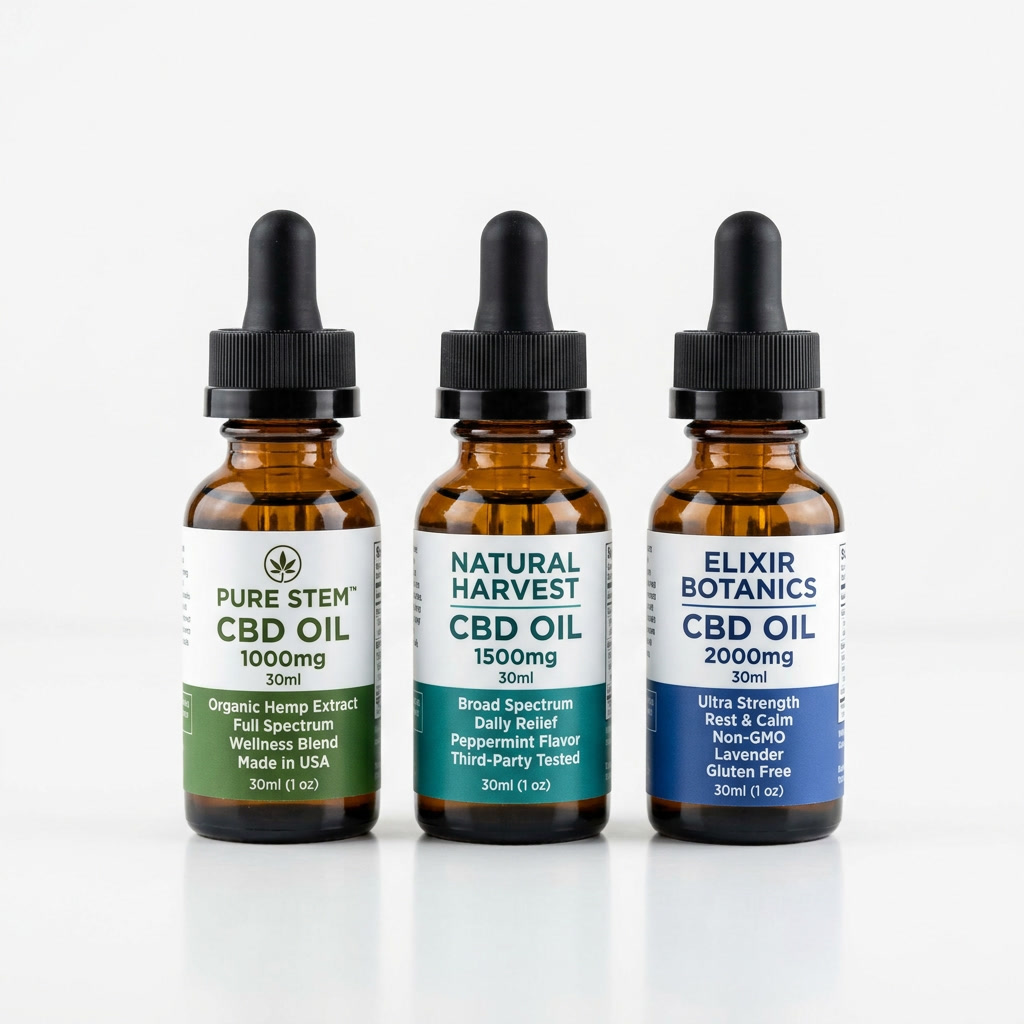
For a starting point, you can browse our curated selection of CBD oils and tinctures, all of which we've reviewed for quality and labeling accuracy.
How to Approach CBD Responsibly
If you're considering CBD for stress-related heart concerns, here's a responsible approach:
1. Talk to your doctor first — especially if you take any medication or have a heart condition
2. Start low and go slow — begin with a modest dose and see how your body responds (our CBD dosage guide walks through this step by step)
3. Track your response — note your dose, timing, and how you feel over 2-3 weeks
4. Don't stop your medications — CBD is not a replacement for prescribed treatment
5. Choose a tested product — verify third-party lab results before buying
6. Be patient and realistic — CBD is not a quick fix for hypertension
The Bottom Line
So what's the honest verdict on CBD for heart health and blood pressure?
The research is genuinely promising but far from conclusive. A 2026 systematic review found that oral CBD was associated with reductions in systolic blood pressure, particularly under stress and during sleep. A 2026 Phase II trial showed CBD's anti-inflammatory potential in a heart-related condition. And the stress-reducing effects of CBD are supported by a growing body of research.
But none of this means CBD is a treatment for hypertension or heart disease. The studies are small, short-term, and often use doses far higher than what's in typical consumer products. And the safety caveats are real: CBD can interact with blood pressure and heart medications in potentially dangerous ways.
The responsible takeaway: CBD may be a reasonable complementary option for some people — particularly for managing stress and anxiety that contribute to cardiovascular strain. But it's not a substitute for medical care, and it's not something to start without talking to your doctor. If you do decide to try it, choose a quality-tested product, start low, and keep your expectations realistic. Your heart deserves better than hype.
Find Your Perfect CBD Product
Take our 2-minute quiz to get personalized recommendations based on your needs.
Take the Quiz →Disclaimer: This article is for informational purposes only and does not constitute medical advice. CBD products are not FDA-approved to treat, cure, or prevent any disease. Always consult with a qualified healthcare professional before starting any new supplement, especially if you have a medical condition or take medications.