Is Your CBD Worth the Money? The Cost-Per-Milligram Test That Cuts Through the Marketing
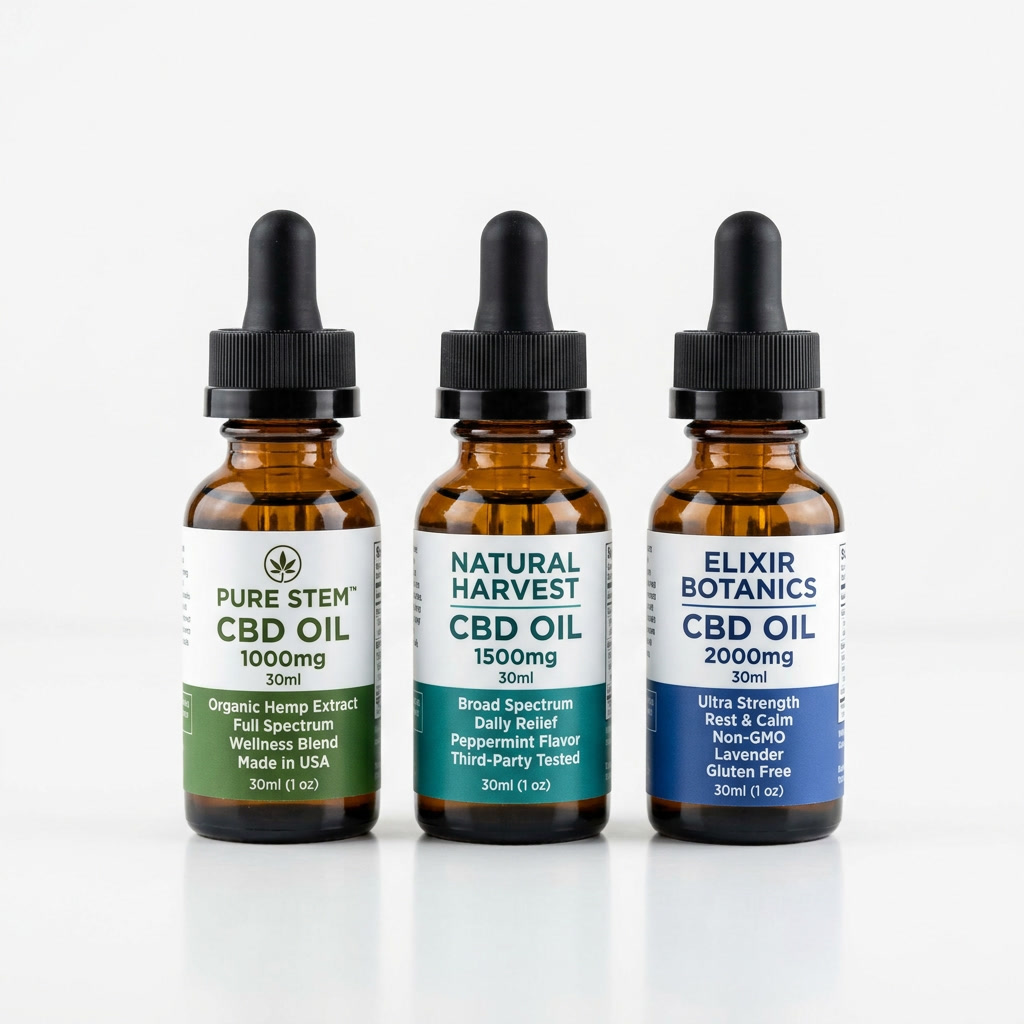
You are standing in front of two bottles. Both cost roughly the same. Both say "CBD oil" on the front in a calming green font. One promises 500mg. The other says 1,500mg. You grab the one that looks prettier, or the one with the nicer dropper, or the one your friend swears by — and you walk out with no idea whether you just got three times the value of the bottle sitting next to it, or a watered-down version of the same thing with better packaging.
This is the quiet problem at the center of the CBD market. Almost every buying decision gets made on price per bottle, flavor, brand trust, or the size of the number on the front — and almost none of it gets made on the only number that actually tells you what you are getting: how much CBD you receive per unit of money you spend.
The frustrating part is that this number is not hidden. It is sitting right there on the label, waiting for five seconds of arithmetic. Once you know how to run that arithmetic, the entire market reorganizes itself. Expensive brands stop looking expensive. Cheap brands stop looking cheap. And a lot of the products you have been loyal to either earn their place or quietly lose it.
This guide walks through how to work out real cost-per-milligram, why dose changes the math completely, why delivery format matters to value, which hidden costs never make it onto the sticker price, and the simple decision framework that stops you from wasting money on weak products.
Why Two Bottles at the Same Price Can Be Worlds Apart
Start with the obvious but rarely stated fact: CBD products are not sold by a standard unit. Coffee is priced per bag or per cup. Petrol is priced per litre. CBD is priced per bottle, which tells you almost nothing, because bottles differ wildly in concentration, total cannabinoid content, serving size, and how many drops or gummies you need to hit a given dose.
A "30mL bottle of CBD oil" could contain a few hundred milligrams or several thousand. A "10mg gummy" and a "50mg gummy" might sit in identical-looking packages at identical prices. This is not an accident of manufacturing. It is the single biggest lever a brand controls when deciding how to price something, and it is the single biggest blind spot a buyer has.
The result is that shopping by bottle price is like buying petrol by counting the number of pumps rather than the litres or the octane. You are comparing containers, not contents. Until you translate a bottle into cost per milligram of CBD, you are guessing.
The One Number That Levels the Playing Field: Cost Per Milligram
Here is the whole idea in one line: find the total milligrams of CBD in the bottle, divide the price by that number, and you get cost per milligram. That number lets you compare a $30 tincture against a $70 tincture against a $6 packet of gummies as if they were the same thing — because now they are.
The steps are simple enough to do in your head at the shelf:
1. Find the total CBD in the package, in milligrams. Not the concentration, not the percentage — the total. If the label says "1,000mg CBD per bottle," that is your number. If it says "33mg per mL" for a 30mL bottle, multiply: 33 × 30 = 990mg total.
2. Note the price you actually pay, not the crossed-out "was" price.
3. Divide price by total milligrams. That is your cost per milligram.
So a 1,000mg bottle at $40 works out to 4 cents per milligram. A 500mg bottle at $28 works out to 5.6 cents per milligram. The cheaper bottle is, in reality, the more expensive one per milligram. This comparison alone eliminates most of the confusion in the aisle.
> Quick Take: Price per bottle compares containers. Cost per milligram compares contents. Only one of those tells you what you are buying.
A word of caution: this math is only as good as the label. We will get to why labels lie, and what to do about it, but for now the point stands — cost per milligram is the starting line, and most people never even reach it.
Why "Cheaper Per Bottle" Is the Wrong Comparison
The per-bottle mindset fails because it ignores how much you actually consume. Picture a 500mg bottle at $25 and a 1,500mg bottle at $60. The small bottle looks like the budget option. But per milligram, the small bottle costs 5 cents and the large bottle costs 4 cents — the "expensive" bottle is cheaper, and it is the one that lasts you longer.
Now layer in something more subtle. Many low-potency products also use low-potency delivery. You may need more drops, more gummies, or more pumps to reach the same dose, which means the bottle empties faster. Two bottles can look like a two-month supply and be a two-week supply, and the second one is finished before the first one's value has even been tested.
This is why you should never compare price tags directly unless the products share the same total CBD. Translate first, compare second. It takes ten seconds and it prevents an entire category of regret.
Dose Changes Everything: Why You Need to Price the Effective Dose
Cost per milligram is a fair yardstick, but it is not the whole story, because a milligram is only useful if it is enough. What actually matters is cost per effective dose — the dose it takes you to feel what you are trying to feel.
This is where cheap products can quietly become the most expensive ones. Suppose your personal sweet spot is around 40mg per day. From a 500mg bottle, you get roughly 12 days at that dose. From a 1,500mg bottle, you get about 37 days. If the small bottle costs $25 and the large costs $60, you are paying about $2 per day versus about $1.60 per day — a 25% difference that the sticker price hid completely.
Dose requirements also vary enormously by person and by goal, which is why there is no single "correct" bottle size. Some people respond to 15mg; some need 60mg; the research on dose is genuinely mixed and heavily individual. What matters for value is that you know your number before you commit to a large, expensive bottle. If you are still figuring out your dose, see our guide to CBD dosage by weight — the titration process is also a value-optimization process.
> Pro Tip: A cheap, weak bottle only looks like good value until you calculate how few days it actually covers.
Delivery Format: Same Price, Very Different Value
Not all of the CBD you swallow reaches your bloodstream, and how much arrives depends heavily on the format. This is the bioavailability problem, and it is one of the most underrated factors in whether a product is worth its price.
CBD is fat-soluble and poorly absorbed through the gut. A recent 2026 review in Molecules describes its oral bioavailability as "low and variable" — meaning two people taking the same labeled dose can absorb meaningfully different amounts, and the same person can absorb different amounts on different days. A 2026 pharmacokinetics study in CNS Drugs found that CBD exposure was significantly higher when taken with food than on an empty stomach, and that a powder formulation was absorbed faster than a standard oil. In plain terms: the same labeled milligrams can behave very differently depending on how the product is made and how you take it.
So when you compare cost per milligram between an oil, a gummy, and a beverage, you are comparing advertised milligrams — not necessarily absorbed milligrams. A tincture held under the tongue may deliver more usable CBD per milligram than a gummy that must survive digestion. A beverage with added emulsifiers may absorb better than a plain oil, but usually carries fewer milligrams for the money. For a deeper breakdown, see CBD bioavailability by delivery method.
The practical takeaway: if one format absorbs noticeably better for you, a higher cost per milligram can still be the better value, because the "effective dose" cost is lower. Value is absorbed CBD per dollar, not labeled CBD per dollar.
The Hidden Costs That Never Make It Onto the Label
The sticker price is never the whole price. A few costs reliably add up over a year:
- Shipping. A 20% shipping fee on a $30 bottle is effectively a 20% surcharge on every milligram. Buy enough at once to spread it, or factor it into the comparison honestly.
- Subscriptions. "Save 10%" on a subscription you do not use consistently is a loss, not a saving. Subscriptions reward heavy, steady users and quietly bleed casual ones.
- Trial-and-error waste. The single biggest hidden cost is the bottle you bought, opened, and abandoned because the dose was wrong or the product did nothing. Every abandoned bottle raises the true cost of the ones that worked.
- Products that do not contain what they claim. If a bottle is overlabeled — a real and common problem — your cost per milligram was never what you calculated.
Stack those up and the difference between a disciplined buyer and an impulsive one is often two or three times the money for the same outcome. The fix is not to buy the cheapest thing. It is to buy deliberately.
What the Label-Accuracy Research Actually Shows
Here is the uncomfortable part: the number you use for the cost-per-milligram math is only trustworthy if the label is accurate. A growing body of testing suggests it frequently is not.
A 2025 study in Cannabis and Cannabinoid Research analyzed 56 CBD gummy products and found that 70% contained CBD concentrations that differed by more than 10% from the labeled dose. Within single bottles, the variation from gummy to gummy ranged from about 2% to as much as 27%. In other words, two gummies from the same jar can deliver noticeably different amounts of CBD.
A separate 2025 analysis in the same journal looked at 97 hemp-derived products — haircare, cosmetics, and edibles bought in stores and online. Of the 71 with a specific CBD amount on the label, only about 13% were accurate within 10%; roughly half were underlabeled and nearly 40% overlabeled. Ten products contained no CBD at all. Strikingly, whether a product claimed third-party testing made no significant difference to its accuracy.
That finding was echoed by a larger 2024 study in Frontiers in Pharmacology that tested 202 CBD products. About 74% deviated from their label claim by at least 10%, and around a quarter did not even match the product type they advertised — claiming "full spectrum" or "isolate" when the chemistry said otherwise.
Outside the US, the pattern repeats. A 2026 analysis in Analytical and Bioanalytical Chemistry of 186 European CBD oils found that 49% did not contain the amount of CBD declared. A 2023 study in Frontiers in Pharmacology of CBD oils bought online found that only half were appropriately labeled, with the rest split between under- and overlabeling.
Read together, these studies point to a simple reality: the advertised milligram is a claim, not a measurement. That does not make cost-per-milligram useless — it makes it a starting point that must be paired with a batch-specific certificate of analysis. If you want the full how-to on reading those documents and spotting the real ones, our guide to purity, contaminants, and what lab reports hide covers it. What matters for the economics here is this: an overlabeled bargain is not a bargain, and an underlabeled premium bottle may deliver less than you paid for.
When Paying More Is Genuinely Worth It
Higher prices are not automatically a rip-off. There are real reasons a costlier product can be the better value, and it is worth naming them so you do not reflexively chase the lowest number.
A batch-specific, third-party full-panel certificate of analysis is the clearest justification. Independent testing costs money, and it is the only way to know that the milligrams on the label are the milligrams in the bottle. A product that publishes this by batch — not a single old test, not a generic PDF — is worth paying more for, because it protects the value of every other calculation you made.
Higher potency can also justify a premium, provided the cost per milligram still holds up. Dosing from a concentrated oil is often cheaper per effective dose than dosing from a weak one, and it means fewer bottles, less shipping, and less waste.
Better absorption is the third legitimate premium. If a formulation genuinely delivers more CBD to your bloodstream per milligram — a properly emulsified product, a well-designed delivery system — then a higher cost per labeled milligram can easily become a lower cost per absorbed milligram.
And finally, consistency. A product whose gummies or drops are uniform batch to batch saves you the endless re-titration that inconsistent products force. Predictability has real value.
When Paying More Is Just Marketing
Equally, plenty of premium pricing has nothing to do with quality. Watch for these.
Pretty branding and lifestyle photography cost money and deliver no milligrams. "Artisanal," "small batch," "handcrafted," and "premium" are adjectives, not test results. Exotic added ingredients — adaptogens, botanicals, flavors — usually represent a fractional fraction of the formula and exist to justify a markup.
"Lab tested" with no batch number and no downloadable report is decoration, not evidence, as the accuracy research above makes clear. Claims of testing have repeatedly failed to predict real label accuracy.
Subscription pressure, countdown timers, and "limited edition" urgency are sales tactics, not value. And a high price attached to a low total milligram count is the worst of both worlds: you are paying premium money for a weak product.
> Important: Do not pay extra for a story. Pay extra for a test result, a real milligram count, and evidence that your body absorbs it.
A Simple Framework for Buying Without Regret
You do not need a spreadsheet. You need a sequence that protects you from wasting money while you learn what works.
Start small. Buy the smallest size that will get you through a proper titration trial — typically two to four weeks — rather than bulk-buying a product you have never tried. The savings on a large bottle are worthless if the product does not suit you.
Do the cost-per-milligram math before you commit, and hold every candidate to it. Compare like for like, and note the dose you expect to use so you can see cost per day, not just cost per milligram.
Check for a batch-specific certificate of analysis before you trust the label. A product that will not show you its numbers is telling you something.
Then run an honest trial. Log your dose, your timing, and what you notice for three to four weeks. Our guide on the signs CBD is actually working walks through what to look for so you are not fooled by expectation.
Once you know your product, your dose, and your format, then scale up. Buy the larger size, take the bulk discount, and enjoy the lower cost per milligram — but only after the value has been proven for you.
Action Steps
Work out the cost per milligram for every bottle you currently own, using the total CBD and the price you paid.
Calculate your cost per day, not just per milligram, based on the dose you actually take.
Confirm each product publishes a batch-specific certificate of analysis.
Run one fair three-to-four-week trial with a single product and an honest log.
Only then buy larger sizes or take subscription discounts, once you know the product earns them.
Recheck the math whenever you switch brands, formats, or strengths — value does not transfer automatically.
Bottom Line
The CBD market is priced to confuse you. Bottles are compared, not milligrams. Doses are hidden, not stated. Labels are printed, not measured. The buyer who takes five minutes to calculate cost per milligram, price the effective dose, weigh delivery format, and demand a real test result will consistently get more CBD for less money than the buyer who just grabs the bottle that looks nicest.
Paying more can be entirely justified — for verified potency, genuine absorption, and batch-level transparency. Paying more for a story, a font, or a vague promise is not. The difference between the two is not taste, or loyalty, or luck. It is arithmetic. If you want to start with products that make the math easy by publishing their numbers, browse quality-forward options in CBD oils and tinctures and CBD gummies and edibles, and hold every one of them to the same cost-per-milligram test.
Find Your Perfect CBD Product
Take our 2-minute quiz to get personalized recommendations based on your needs.
Take the Quiz →Disclaimer: This article is for informational purposes only and does not constitute medical advice. CBD products are not FDA-approved to treat, cure, or prevent any disease. Always consult with a qualified healthcare professional before starting any new supplement, especially if you have a medical condition or take medications.