CBD and Asthma: What the 2023–2026 Research Actually Shows About Inflammation, Bronchodilation, and Symptom Support

The 2 AM Breath That Changed Everything
You know the feeling. It's late, you're lying in bed, and suddenly your chest feels tight. Your lungs start to whistle with each exhale, and your hand is already reaching for the rescue inhaler on the nightstand. For the roughly 260 million people worldwide living with asthma, this scene is painfully familiar. When mainstream treatments aren't enough, or when you're worried about the long-term effects of inhaled corticosteroids, it's natural to wonder: could CBD help?
It's one of the most-asked questions we get at Cannetics, so we dug into the actual peer-reviewed research published between 2023 and 2026. Here's the honest answer up front: the science on CBD and asthma is early, mostly preclinical, and not yet ready to change how doctors treat the condition. But there are some genuinely interesting findings about airway inflammation and the endocannabinoid system worth understanding.
This guide separates what the research actually shows from what the marketing claims. We'll cover the cell-level mechanisms, the one major 2024 human-cell study, why vaping CBD is a red flag for asthma, and what this all means for you if you're curious about trying it.
Why the Evidence Gap Matters So Much
Before we touch a single study, we need to be straight with you: there are no large human clinical trials proving CBD treats asthma. None. Zero randomized controlled trials published between 2023 and 2026 demonstrate that CBD reduces asthma symptoms in humans in a way a doctor would prescribe.
What we do have is a growing body of preclinical research — experiments on human airway cells grown in the lab, on mouse models of asthma, and on isolated lung tissue — plus review articles that synthesize decades of endocannabinoid science. That matters because laboratory findings don't always survive contact with a real, living, breathing human airway.
Here's what that honesty buys you: you can read this article without being oversold. When we say "research suggests," we mean it's a mechanistic or animal finding that hasn't been confirmed in people yet. When we say "preclinical evidence indicates," that's exactly what it is.
The takeaway you need right now: CBD is not a replacement for your rescue inhaler, your controller medication, or your asthma action plan. Not yet, and possibly not ever. It's a complementary angle worth understanding.
Your Airways Run on an Endocannabinoid System
The reason scientists are interested in CBD and asthma at all starts with something discovered back in 1992: the endocannabinoid system (ECS). This is a network of receptors and signaling molecules present throughout your body, and it turns out your lungs are packed with it.
The ECS has two main receptor types that matter here:
- CB1 receptors — found on smooth muscle and on nerves in the airways; activation is linked to bronchodilation (airway widening)
- CB2 receptors — found heavily on immune cells, including the cells that drive allergic airway inflammation
Because these receptors are scattered throughout respiratory tissue, the theory is that compounds like CBD — which modulates the ECS — could theoretically influence how your airways contract and how your immune system reacts to triggers. A 2025 review in the International Journal of Molecular Sciences noted the strong presence of the endocannabinoid system in the lungs when assessing the potential role of cannabinoids in asthma.
But presence isn't proof of effect. Finding a receptor in the lungs tells us the system is there; it doesn't tell us whether CBD can reliably flip its switches in the ways we'd want for asthma.
The Headline Study: High-CBD Extract vs. Asthma Cells
The single most directly relevant study published in our window is a *2024 paper in Pharmaceuticals (Basel)*** that tested a high-CBD extract (they called it "CBD-X") in a multi-pronged way. The researchers worked with primary human Th2 cells, neutrophils, and a mouse model of asthma. The findings were genuinely interesting.
Here's what the CBD extract did in that study:
- Inhibited Th2 differentiation — Th2 cells are the immune cells that drive allergic-type asthma
- Reduced secretion of IL-5 and IL-13 — two cytokines directly implicated in eosinophilic airway inflammation
- Lowered IL-8 and IL-6 in neutrophils, and impaired their migration
- In the mouse asthma model, reduced IgE, pro-asthmatic cytokines, and leukocyte/eosinophil/neutrophil infiltration into lung tissue
> "Our findings indicate that CBD-X extract inhibits Th2 differentiation and reduces the secretion of IL-5 and IL-13, which are crucial cytokines in asthma."
That's the most encouraging single piece of 2023–2026 evidence we found. But it's one study, on cells and mice, with a specific extract at doses that may not translate to what you'd take at home. It's a promising starting point, not a proof that your CBD oil will do the same.
What the Review Literature Concludes
Beyond the direct experiment, several reviews published in 2023–2026 take a broader look. The 2026 review in IJMS (the same journal family) concluded that in animal models, THC appears to counteract bronchoconstriction while CBD appears to inhibit pro-inflammatory signaling — potentially complementary but distinct.
That same review is careful to flag the controversies:
- Confusion over which extract proportions are optimal
- No consensus on a safe, effective route of administration for lung conditions
- Alarming reports of increased asthma risk among people who smoke or vape cannabis
That last point is a warning bell we'll return to. The theoretical promise of CBD's anti-inflammatory activity in the lab sits in direct tension with the reality that smoking or vaping any plant matter — including CBD — can irritate and inflame already-sensitive airways.
Inflammation: The Th2 Cytokine Angle
Asthma is fundamentally a disease of airway inflammation. In roughly half of patients, that inflammation is driven by type 2 helper T cells (Th2) and type 2 innate lymphoid cells, which pump out cytokines like IL-5 and IL-13. These molecules recruit eosinophils, drive mucus hypersecretion, and make the airway walls thicken and narrow.
This is where the preclinical CBD story is most coherent. Multiple research threads point to CBD's ability to modulate inflammatory cytokine release — which we've seen in our deep dives into the immune system and general inflammation.
The 2024 Pharmaceuticals study showed CBD-X suppressing exactly these Th2-driven cytokines (IL-5, IL-13) and the neutrophil/ eosinophil activity that follows. It's biologically plausible, well-designed, and encouraging.
But "plausible in a dish" is not "proven in your chest." Inhaled corticosteroids already target Th2/eosinophilic inflammation effectively in most people — the open question is whether CBD adds something meaningful on top, and whether it could help the subset of "type 2-low" asthma patients who don't respond to standard therapy.
Bronchial Hyperresponsiveness and the Spasm Question
Separate from inflammation is the question of bronchial hyperresponsiveness — how easily your airways constrict and spasm in response to a trigger. This is the angle where the public often hears "CBD could relax airways," and it's also the angle where the evidence is thinnest.
The endocannabinoid system does influence smooth muscle tone in the airways through CB1 receptors, which is why a few researchers suggest a potential bronchodilator role. However, we found no 2023–2026 human trial demonstrating that CBD itself acts as a reliable bronchodilator in people with asthma.
Here's the honest framing:
- Preclinical direction: some evidence hints the ECS can modulate airway tone
- Human reality: rescue inhalers (short-acting beta-agonists) are fast, reliable, and proven; CBD is none of those things for an acute asthma attack
- The danger: relying on CBD during an acute attack instead of an inhaler is not a gamble anyone should take
If you have asthma, never reach for a CBD product over your rescue inhaler during a flare. The research simply does not support CBD as emergency medication.
The Big Red Flag: Vaping and Inhaled CBD
Here's the part that makes me uneasy, and it's backed by 2023–2025 research: the delivery method that people naturally reach for — vaping — is arguably the worst option for asthma.
Several studies published in our window highlight real airway hazards:
- A 2023 paper in Chemical Research in Toxicology showed that heating CBD can produce CBD quinone, a reactive oxidation product that forms protein adducts and activates cellular stress pathways
- A 2023 study in the Journal of Applied Toxicology found that vaping additives (including cannabinoid oils) adhere to and damage human airway epithelium — the exact tissue that's already inflamed in asthma
- A 2025 review in Chemical Research in Toxicology catalogued the regulation, composition, and toxicological effects of cannabinoid vaping products
The pattern is consistent: inhaling CBD, whether via vape or smoke, is the riskiest possible way to introduce it into an asthmatic airway. It may trigger the very inflammation and airway irritation you're trying to avoid. For anyone with asthma, inhaled CBD products should be considered off the table.
How CBD Is Actually Metabolized in Your Airways
Understanding why route matters so much comes down to what your lung cells do with CBD. A 2025 study in the International Journal of Molecular Sciences looked at CBD metabolism in respiratory cells, specifically bronchial epithelial cells, alveolar cells, and alveolar macrophages.
The findings were telling:
- Only liver-derived (HepG2) cells metabolized CBD into its major breakdown products
- The respiratory cell lines and alveolar macrophages largely just accumulated CBD without transforming it
- CYP2C19 and CYP3A4 enzymes were responsible for converting CBD in the liver
In plain English: when CBD reaches the airway, it tends to hang around rather than be efficiently processed. Combined with the vaping hazards above, this reinforces the point that the lungs are not a clean or friendly delivery route for CBD — especially for someone with reactive airways.
Honest Limits: What Human Trials Don't Show Yet
Let's be blunt about where the field stands. As of 2026:
- No human RCT proves CBD reduces asthma attacks or symptom scores
- No dosing data for asthma — we don't know the right amount, frequency, or duration
- No safety data specifically for long-term CBD use in asthmatic patients on inhaled steroids (and CBD interacts with some medications through CYP450 enzymes)
- Extract to extract variance — the studied "CBD-X" is a specific commercial extract, not every product on the shelf
What the field does have is a coherent biological hypothesis, a handful of supportive lab studies, and widespread public interest. That's a reason to watch the literature, not a reason to reshape your treatment plan today.
If You Want to Explore CBD With Asthma: Oral and Sublingual Only
Let's say you've read all this and you still want to know whether CBD might support your general inflammation or stress management around your asthma. The one route that sidesteps the lung-irritation problem entirely is oral or sublingual — tinctures, oils, gummies — where CBD is absorbed through the digestive tract or under the tongue instead of into your airway.
- Sublingual oils and tinctures — absorbed under the tongue, faster onset, no lung exposure
- Edibles / capsules — slowest onset, most sustained, zero airway contact
- Topicals — essentially irrelevant for airway effects, but harmless
If you're exploring, start low, keep a symptom journal, and — critically — clear it with your pulmonologist first. CBD can interact with certain medications through liver enzymes, and your asthma regimen deserves a professional's eyes.
And no matter what, keep your rescue inhaler within reach. Every time.
Exploring CBD Products
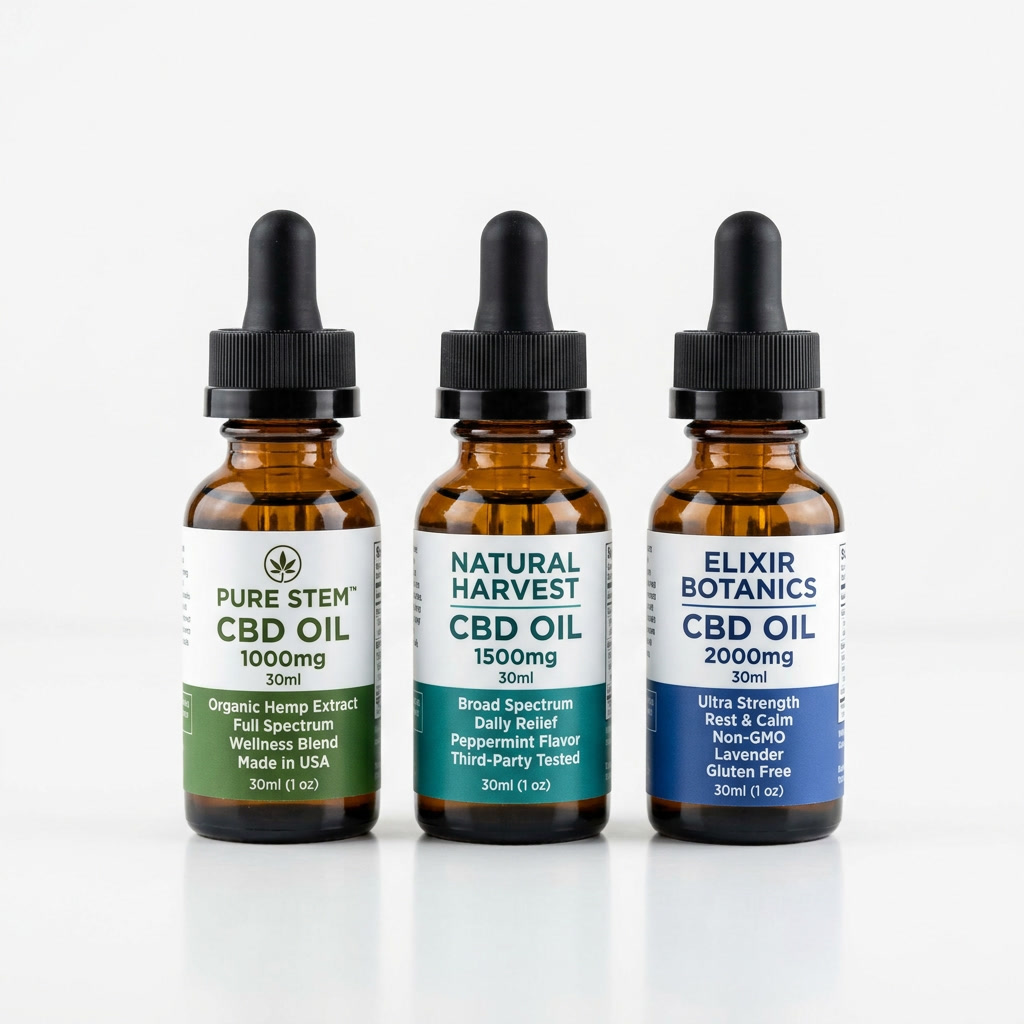
If you and your doctor decide oral or sublingual CBD is worth trying as a complementary option, focus on high-quality oils and tinctures with third-party lab results. Look for full-spectrum or broad-spectrum options, clear COA documentation, and products free of additives. Browse CBD oils and tinctures if you want to compare formats.
Deeper Reading on Related Topics
If you want to understand the science underneath this further, our other guides are helpful companions:
- How CBD actually works in the body, from the ECS perspective
- The existing research on CBD and the immune system
- The general anti-inflammatory evidence base
- Why CBD and seasonal allergies show up in the same conversations
These give useful background to the inflammation and allergy angles that link into what we covered above.
Bottom Line
The honest answer to "can CBD help with asthma?" is: the biology is intriguing, the human proof is missing, and the risk of the popular delivery method (vaping) is real. A 2024 study on a high-CBD extract showed encouraging effects on the Th2-driven inflammation that underlies allergic asthma — in human cells and a mouse model. Reviews published through 2026 echo cautious optimism while warning about route of administration. But CBD is not a bronchodilator, not an emergency treatment, and not a replacement for your asthma medication. The safest interpretation: CBD might someday play a complementary role for inflammation, delivered orally, under the right medical supervision. Right now, science simply hasn't earned a firmer claim than that.
What to Know Before You Try
If you're still curious, here's the responsible checklist:
- Never use CBD during an asthma attack instead of your rescue inhaler
- Avoid all inhaled forms — vaping or smoking CBD is the one thing with real airway harm documented in the 2023–2025 literature
- Only consider oral or sublingual formats if you proceed
- Talk to your doctor or pulmonologist, especially if you take inhaled steroids or other daily meds
- Start low and journal symptoms, but don't chase a "cure"
- Watch the actual literature — a human asthma trial could change the picture
- Keep expectations honest: the science is preclinical, not settled
Find Your Perfect CBD Product
Take our 2-minute quiz to get personalized recommendations based on your needs.
Take the Quiz →Disclaimer: This article is for informational purposes only and does not constitute medical advice. CBD products are not FDA-approved to treat, cure, or prevent any disease. Always consult with a qualified healthcare professional before starting any new supplement, especially if you have a medical condition or take medications.