Can CBD Help You Quit Smoking or Vaping? An Honest Look at the Evidence

You've done it a dozen times. You finish a pack, tell yourself tonight is the night, toss the lighter in a drawer, and swear you're done. Then the morning comes, and with it that familiar crawl of restlessness, the foggy head, the itch in your chest that only one cigarette seems to scratch. By day two, the anxiety is loud enough that a single drag feels less like a relapse and more like survival. If that sounds familiar, you're not weak, and you're not alone. Nicotine is one of the most addictive substances on the planet, and roughly 8.1 million American adults are still using e-cigarettes alone, with the majority of them saying they want to quit. The question isn't whether you have the willpower. The question is whether there's a tool that can make the quitting process genuinely easier, and for millions of people searching online, that tool is CBD.
Walk into any smoke shop or scroll any wellness brand's site and you'll see the promise everywhere: CBD oil for nicotine cravings, CBD gummies for withdrawal anxiety, capsules that claim to "reset your reward system." The marketing is confident. The science, as we'll get into, is far more complicated. As an independent review site, we don't do hype, so let's look at what the research actually says, where the evidence falls short, and how to build a realistic plan if you decide to try it.
Why Quitting Feels So Much Harder Than It Should
Before we talk about any remedy, it helps to understand what you're actually fighting. Nicotine addiction isn't a habit, it's a neurochemical loop. When you inhale, nicotine binds to receptors in the brain and triggers a flood of dopamine, the same neurotransmitter tied to reward and pleasure. Within seconds, that cigarette has "rewarded" you for taking it. Over time, your brain down-regulates those receptors to cope, which means you need the nicotine just to feel normal, and you feel irritable, anxious, and foggy when you don't get it.
This is the cycle behind the failed attempts. Withdrawal typically peaks in the first few days and can include intense cravings, anxiety, depression, difficulty concentrating, increased appetite, and trouble sleeping. Many people don't relapse because they want a cigarette; they relapse because the withdrawal symptoms become unbearable. That's why the most effective quitting strategies rarely rely on willpower alone. They pair a behavioral plan with something that eases the discomfort long enough for the brain to rebalance. CBD is one of the things people increasingly reach for in that window, and it's worth examining whether it actually earns a place in your toolkit.
The Theory: How CBD Might Interfere With the Nicotine Cycle
The reason CBD gets so much attention in the smoking-cessation space is that it acts on systems that overlap with nicotine addiction in three plausible ways.
First, anxiety relief. Nicotine is a well-documented anxiolytic, meaning many smokers use it to manage stress, and the anxiety that appears during withdrawal is a major relapse trigger. CBD is best studied for anxiety of any of its uses, so the logic is straightforward: if CBD calms the anxiety, the withdrawal becomes more tolerable.
Second, craving modulation. Some researchers believe CBD interacts with the endocannabinoid system, which helps regulate mood, stress, and reward processing, in ways that may blunt the intensity of drug-seeking behavior. The idea isn't that CBD replaces the high, but that it reduces the salience, the "loudness," of the craving itself.
Third, reward-system dampening. Preclinical work has shown CBD can reduce how much animals self-administer nicotine without affecting their motivation for food, which hints that it may be interfering specifically with drug-reward processing rather than producing general sedation. That's an important distinction, because it suggests any effect isn't just "CBD makes you too tired to crave."
These mechanisms are biologically plausible. The gap, as we'll see, is between plausible and proven.
What the Research Actually Says (2023 and Beyond)
Here is the honest part, and it's worth reading carefully. The evidence on CBD for smoking cessation is mixed, limited, and largely preliminary. If you've seen confident claims online, they're almost certainly ahead of the science.
The most relevant recent human study looked specifically at vaping. In 2024, an open-label study published in Cannabis and Cannabinoid Research tested whether a single 320 mg oral dose of CBD could ease withdrawal in daily e-cigarette users during a four-hour abstinence period. The results, based on 20 participants, suggested that CBD reduced both nicotine withdrawal severity and state anxiety. That's promising, but note the caveats: it was a small, open-label study without a placebo control, which means participants knew they were getting CBD, and expectation can drive results. The authors themselves framed it as preliminary evidence that warrants a proper trial, not proof that CBD is an effective cessation aid.
Preclinical research is more encouraging. A 2024 study in Neuropharmacology examined CBD as a potential nicotine cessation therapeutic in mice trained to self-administer nicotine intravenously. CBD significantly reduced the number of nicotine rewards earned across multiple doses, and it also attenuated the somatic signs of nicotine withdrawal and prevented the pain-sensitizing effects of withdrawal. Because the mice still worked normally for food pellets, the effect didn't appear to be general sedation. Again, this is animal data, which is valuable for pointing research in the right direction but cannot tell us what will happen in a human body at a human dose.
The broader picture is less flattering to the hype. A 2026 translational systematic review and meta-analysis (currently a preprint on medRxiv) which combined evidence from 52 studies found that cannabis use was actually associated with 35% lower odds of achieving tobacco cessation across 18 observational studies representing over 229,000 people. In plain terms, people who used cannabis were less likely to successfully quit tobacco, not more. The same review noted that CBD showed promise in animal studies for reducing nicotine intake and withdrawal, but that clinical attempts to use CB1 receptor blockers (a different, related strategy) failed because of psychiatric side effects. And a 2026 scoping review in Clinical Drug Investigation looking at all randomized controlled trials of medicinal cannabis for mental health and substance use disorders concluded the evidence remains controversial and under-explored, with inconclusive results due to poor study design and heterogeneity.
So what do we actually know? We know the idea is scientifically plausible. We know small and animal studies show signals worth investigating. We know the human evidence is not yet strong enough to call CBD a proven quit-smoking aid.
CBD vs. Nicotine Replacement Therapy and Other Cessation Aids
It's easy to get caught up in the novelty of CBD and forget that we already have treatments with a much stronger evidence base. Nicotine replacement therapy, or NRT, which includes patches, gum, and lozenges, works by giving you a controlled dose of nicotine without the tar and thousands of other chemicals in cigarette smoke. It's FDA-approved, widely studied, and roughly doubles your chances of quitting. Prescription options like varenicline (Chantix) and bupropion (Zyban) are also proven pharmacotherapies, though they come with their own side-effect profiles and require a doctor's involvement.
Where does CBD fit against these? It's not a replacement, and right now it shouldn't be treated as one. NRT and the prescription medications directly address the biological nicotine dependence. CBD's potential role, based on the limited evidence, is different: it may help with the anxiety and withdrawal discomfort that cause people to fall back to cigarettes, rather than directly replacing the nicotine itself.
This distinction matters for your safety and your chances of success. If you try CBD alone and it doesn't curb your cravings, you may have lost valuable time and confidence that could have gone into an evidence-backed strategy. The smartest approach treats CBD as an adjunct to support the withdrawal window, layered on top of a real plan, not instead of one.
Dosing: How Much CBD Do People Actually Use?
Because there's no established clinical protocol for CBD and smoking cessation, dosing guidance has to be extrapolated from studies and general CBD practice. Here's what that looks like.
In the 2024 e-cigarette study, participants received a single 320 mg oral dose, which is on the high end of typical use. Preclinical studies also used relatively high doses relative to body weight. For a human trying to navigate this without medical supervision, a more measured starting approach is usually wise.
- Beginners: 10 to 25 mg per day, taken consistently
- Moderate users: 25 to 50 mg per day, split into doses
- People seeking stronger effects: 50 to 100 mg per day
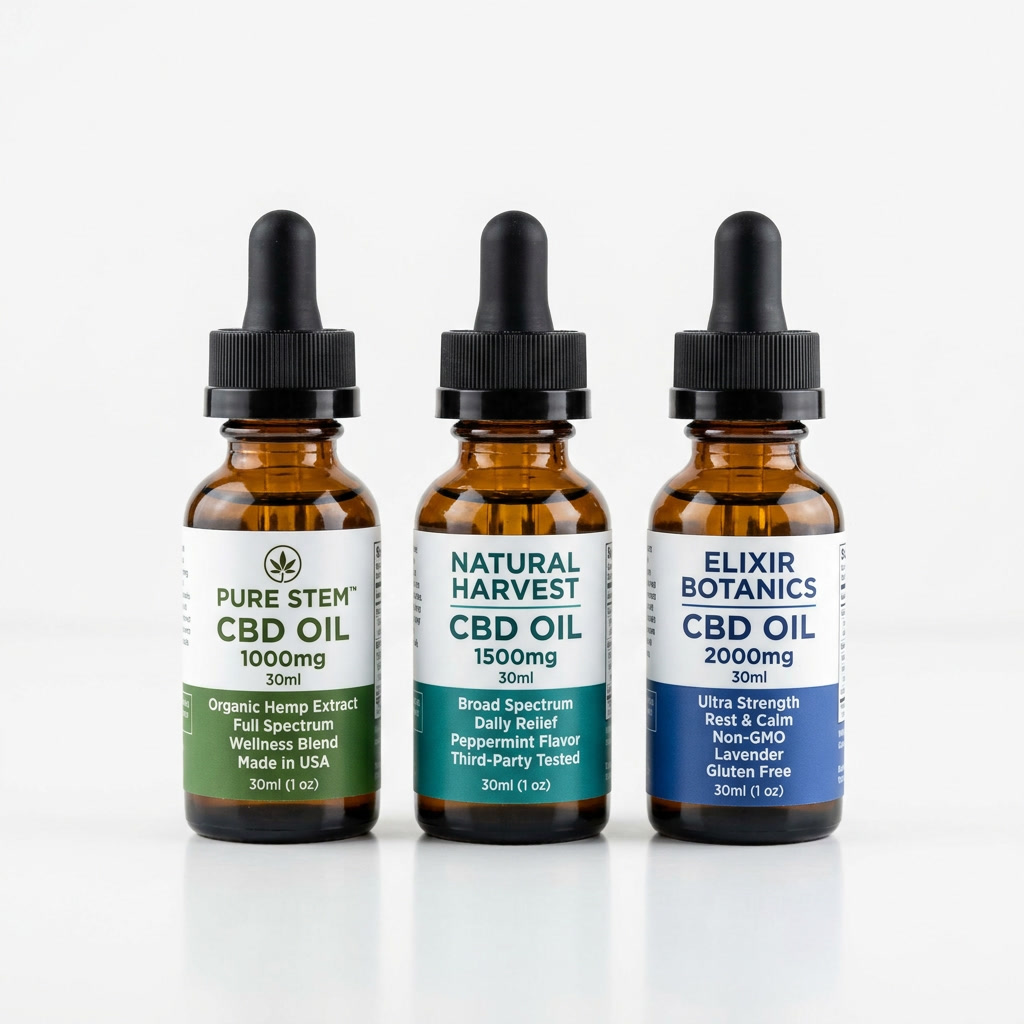
A practical note on format: oils and tinctures taken under the tongue absorb relatively quickly, which helps in the acute moments when a craving or spike of anxiety hits. Gummies and capsules are convenient and consistent but take longer to absorb because they pass through the digestive system. Many people keep an oil for fast-acting support and capsules or gummies for steady, all-day coverage. You can compare what's available across our reviewed CBD oils and CBD gummies to see formats that fit your routine.
The honest guidance is that finding a dose is a process of trial and adjustment, tracking your response over a couple of weeks before changing anything. Start low, be consistent, and don't stack multiple high doses at once. It's a matter of testing your own response rather than chasing a single number.
Safety, Side Effects, and Medication Interactions
CBD has a generally favorable safety profile, but "generally safe" is not the same as "no risks." Side effects can include fatigue, diarrhea, changes in appetite, and dry mouth, especially at higher doses. For most people these are mild and temporary.
The bigger concern is interactions. CBD inhibits certain liver enzymes, particularly the CYP family, which metabolize a wide range of medications. That means CBD can raise the level of other drugs in your bloodstream, potentially amplifying their effects or side effects. This matters especially if you're taking blood thinners, anti-seizure medications, antidepressants, or certain heart medications. We cover this in more depth in our guide to CBD drug interactions.
If you're on any prescription medication, particularly one with a narrow therapeutic window, talk to your doctor or pharmacist before adding CBD. This is not a disclaimer for its own sake; it's a genuine safety step. And if you're pregnant, planning to become pregnant, or breastfeeding, the safest choice is to avoid CBD entirely, as data in these populations is very limited.
CBD vs. THC: An Important Distinction for Quitting
One of the most important details for anyone trying to quit smoking is the difference between CBD and THC, and it directly affects the evidence we've covered. The 2026 meta-analysis finding that cannabis co-use is linked to lower odds of quitting tobacco was measuring people using cannabis, which typically means products containing THC. THC is psychoactive and carries its own dependence and behavioral effects, so it's not surprising that mixing it into a quit attempt could complicate things.
Broad-spectrum and isolate CBD products contain no THC or only trace amounts, so they're a very different animal from smoking weed. When researchers study "CBD for smoking cessation," they are generally studying these non-intoxicating forms. If you're using cannabis products while trying to quit tobacco, be honest about what's in them. The evidence for CBD's benefit is about CBD specifically, not cannabis generally.
A Practical Action Plan for Trying CBD
If you've weighed the evidence and decided CBD is worth incorporating into your quit attempt, treat it as part of a structured plan, not a magic bullet. Here's a realistic sequence.
First, build the foundation. Pick a quit date, and consider using a proven method like NRT or a doctor-supervised prescription as your primary strategy. Think of CBD as the support layer on top of this, not the main event.
Second, start your CBD a week or two before your quit date, not on it. This lets you find a dose and format that works before you're in the middle of withdrawal chaos. Start at 10 to 25 mg daily, track your response, and adjust gradually.
Third, stack it with behavioral supports. Cravings are often triggered by cues, that morning coffee, the car, the smoke break with coworkers. Plan for those triggers, and pair your CBD use with deep breathing, short walks, or a distraction you can reach for the moment a craving hits.
Fourth, track everything for at least two weeks. Note your dose, timing, cravings, anxiety, and any side effects in a simple journal. Patterns will emerge, and data beats vibes when you're deciding whether to adjust your dose.
Fifth, reassess honestly. If CBD helps reduce the anxiety that triggers relapse, keep it. If you don't notice a real difference after a few weeks, it's reasonable to stop; that's not a failure, it just means that tool isn't the one for you. Keep your focus on the proven methods doing the heavy lifting.
To support your supply, you can compare options across our reviewed CBD capsules for consistent daily dosing or CBD topicals if you also want localized relief as part of a broader wellness routine.
Frequently Asked Questions
Can CBD make you quit smoking on its own?
No. There's no evidence that CBD alone reliably produces smoking cessation. The human studies are small and preliminary, and the strongest recent meta-analysis actually associated cannabis use with lower odds of quitting tobacco. Think of CBD as potential support for withdrawal anxiety, not a standalone cure.
Does CBD stop nicotine cravings?
The evidence is limited. One small open-label study in 2024 found CBD reduced nicotine withdrawal severity and anxiety during short-term e-cigarette abstinence, and animal studies show CBD can reduce nicotine self-administration. But these are preliminary signals, not established fact, and you shouldn't expect CBD to erase cravings.
How long does CBD take to work for withdrawal symptoms?
It depends on the format. Oils and tinctures taken under the tongue can start having an effect within 15 to 45 minutes, while edibles like gummies can take one to two hours to kick in. The 2024 study measured effects over a several-hour abstinence window, so CBD there wasn't an instant fix.
Is CBD safe to use with nicotine patches or gum?
CBD doesn't have a direct interaction with nicotine itself, but it can affect how your body processes certain medications through liver enzymes. Nicotine replacement products are generally considered compatible, but if you're on any prescription medication, check with a doctor or pharmacist first.
Bottom Line
Quitting nicotine is genuinely hard, and the fact that you keep trying says more about your persistence than your willpower. CBD is an intriguing, biologically plausible support tool, and recent research offers real signals that it may help ease the anxiety and withdrawal discomfort that cause so many relapses. But the honest truth is that the human evidence is small, preliminary, and mixed, and the strongest recent data actually warns that using cannabis can make quitting tobacco harder. Treat CBD as a complementary aid layered onto a proven method like nicotine replacement therapy, start low, watch for medication interactions, and track your own response. If it helps, great. If it doesn't, you've lost nothing except a tool that wasn't right for you, and the proven path forward is still there waiting.
Find Your Perfect CBD Product
Take our 2-minute quiz to get personalized recommendations based on your needs.
Take the Quiz →Disclaimer: This article is for informational purposes only and does not constitute medical advice. CBD products are not FDA-approved to treat, cure, or prevent any disease. Always consult with a qualified healthcare professional before starting any new supplement, especially if you have a medical condition or take medications.