CBD and anti-doping: what athletes actually need to know
CBD is not a banned substance. That single sentence is why so many athletes assume the risk is over. It is not, and the reason is not CBD itself. It is everything that comes with it in a bottle.
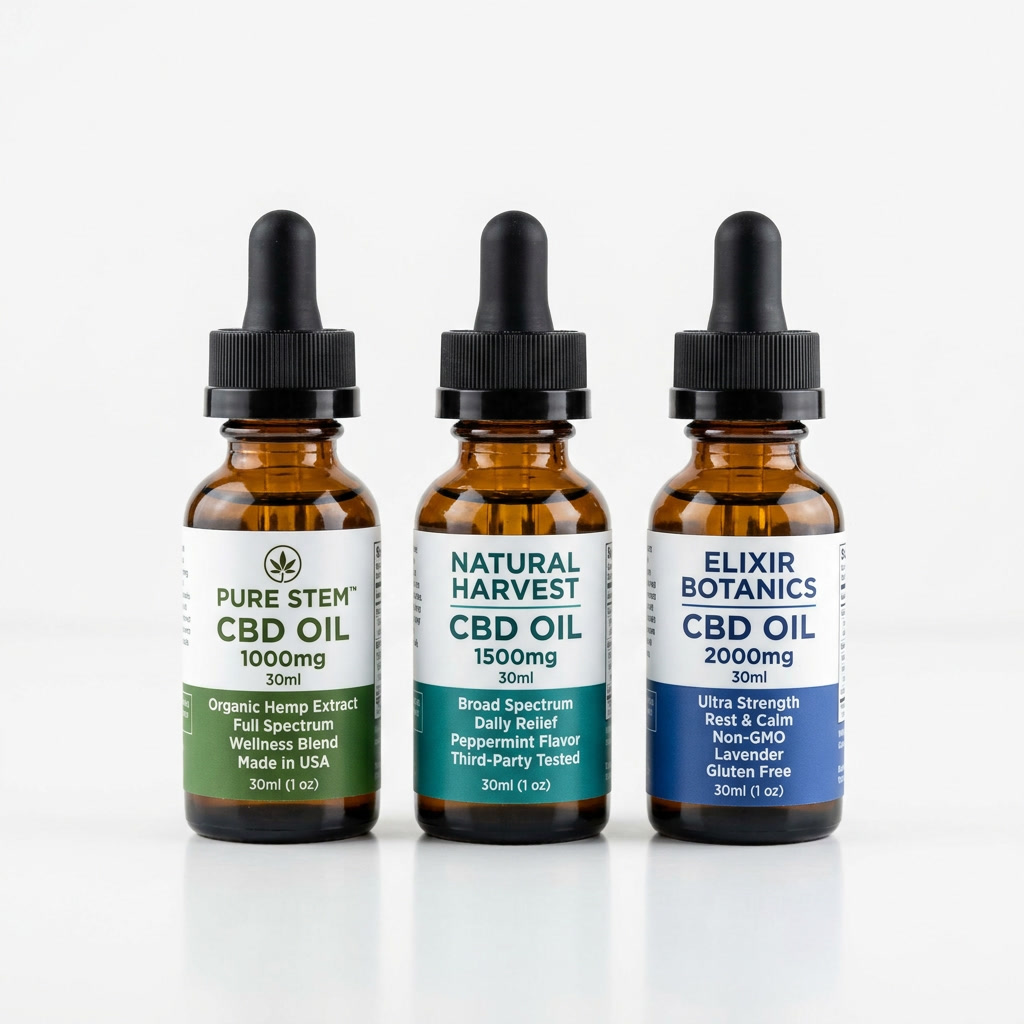
The World Anti-Doping Agency removed cannabidiol from the prohibited list in 2018. THC, the psychoactive cannabinoid, remains prohibited in competition, and so do synthetic cannabinoids. The distinction matters because the products athletes buy are rarely pure, and a certificate that says CBD on the front does not guarantee what is inside.
What the rules actually say
WADA's list prohibits cannabinoids in competition, and the threshold for THC is a urinary concentration of 150 nanograms per millilitre of carboxy-THC, the main metabolite. That threshold exists to separate in competition use from incidental exposure, and it is far lower than most people imagine.
CBD sits outside that list. So an athlete can take a CBD product and remain compliant, in principle.
The problem is the word in principle. Everything that follows is about the gap between a rule written on paper and a product bought in a shop.
The contamination problem is the whole story
The most useful paper for an athlete is not about CBD at all. A 2023 study in Drug Testing and Analysis examined the risk of unintentional anti-doping rule violations from consuming hemp products. That framing is precise. Unintentional is the category most athletes end up in, and it is the one that costs them a result.
Hemp contains trace THC. Extraction methods vary. A product labelled 500 mg CBD might carry enough THC to push an athlete over the urinary threshold, particularly with repeated dosing, and particularly with full spectrum or whole plant products. The 2023 work in the Journal of Analytical Toxicology measured THC, CBD and their metabolites in whole blood after use of light cannabis products, which is the kind of data anti-doping laboratories actually rely on.
A 2025 study in Drug Testing and Analysis went further and compared hemp straw exposure with CBD oil administration in horses, tracking plasma and urinary concentrations of CBD and its acid form. Different species, same lesson. Route and matrix change the exposure profile enormously, and "natural" says nothing about the metabolite curve.
Then there is the 2026 work in Pharmacological Research, a systematic review of urinary THC and metabolite concentrations after cannabis use. If you want to know how long a given exposure remains detectable, that is the sort of paper to read, and it will not give you a single tidy number.
What athletes are actually taking
Two studies describe the population rather than the risk, and they are worth reading together.
A 2025 study in Frontiers in Nutrition surveyed CBD use among elite level Canadian athletes. The reasons given were sleep, pain, and recovery, which is the same triad you would predict from the consumer literature. Notably, it was not performance enhancement. Athletes are using CBD for the same reasons everyone else is.
A 2025 analysis in Sports examined trends in antidepressant, anxiolytic and cannabinoid use among Italian elite athletes across more than a decade. The direction is up. So the practical question is not whether athletes use CBD, it is how many are using it without checking the product.
A 2025 narrative review in Nutrients covered cannabis and sport from the plant component angle, and a 2023 position statement from the South African Institute for Drug-Free Sport set out the CBD and THC position explicitly for athletes in that jurisdiction. National anti-doping organisations have started publishing guidance because the contamination risk is real enough to warrant it.
Why "it says CBD on the label" is not a defence
Three failures happen routinely.
The label is wrong. Independent testing of commercial products has repeatedly found cannabinoid content that does not match the label, in both directions. A product with less CBD than claimed is a waste of money. A product with more THC than expected is a sanction.
Full spectrum means what it says. Whole plant products retain minor cannabinoids including THC. The amount may be small per dose, but athletes are often advised to take large doses, and the exposure accumulates.
The certificate of analysis is not always what it appears. A batch specific certificate with a THC result, from a laboratory you can identify, is the only meaningful evidence. A generic certificate, or one showing only total cannabinoids, tells you nothing about the compound that will end your season. Our guide to CBD purity and contaminants covers what a real certificate should contain, and the CBD safety guide covers the interaction side.
The dose advice that makes it worse
Sports dosing advice often pushes high numbers. Some protocols suggest 25 to 50 mg, some go higher, and a few suggest hundreds of milligrams for recovery.
For an athlete, higher dose is not just a cost and tolerability question. It raises the total THC exposure from a contaminated product, and it lengthens the window in which metabolites remain detectable. If a product carries trace THC at the limit of what the certificate reports, doubling the dose doubles the intake of the thing you are trying to avoid.
There is a second reason to be conservative. A 2025 randomised clinical trial in JAMA Internal Medicine found that high doses of CBD were associated with liver enzyme elevations in healthy adults. An athlete with a heavy training load and a supplement stack is not an ideal candidate for an unnecessary hepatic stress test.
What a careful athlete does
This is not complicated, it is just tedious.
Use isolate, not full spectrum, in competition season. Isolate removes the other cannabinoids by definition. It is also the form with the least evidence for the entourage effect, which is a real trade off and worth understanding before you decide.
Demand a batch specific certificate of analysis that states THC content, with a laboratory name and a date that matches the batch you hold. If the seller cannot supply it, the product is unusable for a tested athlete regardless of how good the reviews are.
Do not change products mid season. Every new bottle is a new analytical risk. The athletes who get caught are rarely careless, they are usually unlucky with a batch.
Check your own federation's guidance, not just WADA's. Some national bodies publish their own position statements, and therapeutic use exemption rules differ by sport and country.
Log what you take, with batch numbers. If a result comes back adverse, a batch number and a certificate are the difference between a contamination finding and an unprovable claim.
The sleep question, which is the real reason athletes use it
Most athletes are not chasing a performance edge from CBD. They want to sleep after a late session, or take the edge off soreness so they can train the next day.
On sleep, the evidence is modest and mixed. On pain, it is thinner than the marketing suggests, and our guide to CBD and exercise recovery works through what the trials show for soreness and repair. For endurance athletes specifically, CBD and endurance sport covers the performance literature, which is where claims about VO2 max and perceived exertion get tested.
None of that literature is strong enough to justify a contamination risk you have not measured. If sleep is the goal, the boring interventions have better data and no anti-doping exposure. If you are going to use CBD anyway, treat the certificate of analysis as part of your kit, alongside your spikes.
How the threshold behaves in practice
Athletes tend to imagine the threshold as a wall with a clear line on either side. It behaves more like a sliding scale that depends on when you last used, how much you used, how much fat and water you carry, and how fast your metabolism clears the metabolite.
The 2026 systematic review in Pharmacological Research is the best available summary of that variability, and its central message is that no single number fits everyone. A heavy chronic user and a first time occasional user at the same dose will not produce the same urinary concentration, and neither will two people with the same habits and different body composition.
That has one practical consequence for a tested athlete. If you use a product with any measurable THC, you are gambling on a variable you cannot control. In competition season, the only defensible position is a product whose certificate states non detectable THC, and even then you keep the paperwork.
Testing does not stop when you stop competing
A common assumption is that the risk window is the competition itself. Many anti-doping programmes test out of competition, at home, at training camps, and with no advance notice.
That changes the arithmetic. An in competition threshold of 150 nanograms per millilitre is generous by design, because it allows for incidental exposure. An out of competition test has no threshold in the same sense, because the question is whether the substance is present at all.
So a product that would have been safe in competition might still produce a result in a random weekday test. If you are in a registered testing pool, your whereabouts obligations mean somebody can knock in six weeks, not on race day only.
A checklist you can hold in one hand
Before the first dose of any new product, an athlete should be able to answer five questions.
Is it isolate? If the answer is full spectrum or broad spectrum, ask what the measured THC is, not what the marketing says.
Is the certificate batch specific, dated, and from a named laboratory? Generic certificates, undated certificates, and certificates that report only total cannabinoids do not answer the question.
Does the certificate state a THC result at all, and what is the limit of detection? A result below a limit of detection is not the same as a result of zero, and the difference matters at 150 nanograms per millilitre.
Does my federation publish its own position? National bodies vary, and some are stricter than WADA's list.
Have I logged the batch number? If you cannot produce it later, you cannot prove what you took.
What changed in 2026 and what to watch
Two things are moving.
Analytical methods are improving. The 2026 systematic review of urinary THC and metabolite concentrations, and the 2023 whole blood method paper, both make it easier for laboratories to distinguish incidental exposure from deliberate use. That helps an athlete with a good paper trail and hurts one without.
Athlete surveys keep showing rising use, which means anti-doping organisations will keep tightening guidance rather than loosening it. A position statement published in 2023 may already be out of date.
If you compete, the rule to carry is simple. CBD is legal, the bottle is not automatically legal, and the burden of proving what was in it falls on you.
Read the certificate, keep the batch number, and assume the threshold is lower than you think.
Find Your Perfect CBD Product
Take our 2-minute quiz to get personalized recommendations based on your needs.
Take the Quiz →Disclaimer: This article is for informational purposes only and does not constitute medical advice. CBD products are not FDA-approved to treat, cure, or prevent any disease. Always consult with a qualified healthcare professional before starting any new supplement, especially if you have a medical condition or take medications.