CBD for Exercise & Recovery: What 2026 Research Actually Shows
It's the morning after leg day, and you already know what's coming. You ease out of bed, plant your feet, and your thighs scream in protest. That familiar delayed onset muscle soreness — the DOMS that peaks anywhere from 24 to 72 hours after a hard workout — has arrived right on schedule. Maybe you've seen the influencer posts and the shelf full of CBD topicals at your local supplement shop, and a thought crosses your mind: does that expensive little tub of cream actually do anything, or am I just paying for a placebo with a nice label?
It's a fair question. CBD has exploded into the wellness market, and athletes are among its biggest fans endurance athletes. But here's the uncomfortable truth about this space: marketing has run far, far ahead of the science. Walk into any store and you'll see tubs claiming to melt away muscle soreness, speed up recovery, and get you back in the gym faster. The actual peer-reviewed research? It's a lot more measured. So before you spend another dollar on CBD for recovery, let's look at what the 2026 research genuinely shows — the good, the null, and the "we need more studies."
What the Research Actually Shows
Here's the honest overview, and it's more nuanced than the marketing would have you believe. The strongest 2026 evidence points in two directions. On one hand, topical CBD showed a real signal for helping one specific measure of muscle recovery — isometric strength — even though it did not reduce general soreness. On the other hand, oral CBD made runners feel calmer and more relaxed, and slightly reduced how hard they perceived their effort, but it did not make them faster.
Neither result is a home run. Neither result is nothing. What both studies share is that they're small pilot efforts with modest sample sizes, which is exactly where the science on CBD and exercise currently sits: promising hints, plenty of open questions, and an urgent need for larger, longer trials.
The most important thing to internalize is this — the evidence is mixed, and anyone who tells you CBD definitively fixes your recovery is overselling you. The honest read of the data is that CBD might help with specific aspects of how you feel and recover, but it is not a magic bullet that erases muscle damage. Let's dig into the two key studies so you can see exactly what the researchers measured and found.
The Topical CBD Muscle Recovery Study
The most relevant study for anyone rubbing cream on sore quads is a 2026 randomized, double-blinded pilot trial published in the Journal of Cannabis Research. Let me break down exactly what they did, because the design matters.
Fifteen physically active students were asked to do 10 sets of 10 drop jumps from a 0.6-meter box — a protocol deliberately designed to induce significant exercise-induced muscle damage. Right after the workout, they applied two grams of either a CBD gel or a placebo to their quadriceps and hamstrings, and they kept applying it over the following 72 hours. Then the researchers tracked how well their muscles recovered on a range of measures.
Here's the key finding, and I'm going to be direct about it:
> Topical CBD did NOT accelerate overall muscle function recovery, and it did NOT reduce delayed onset muscle soreness (DOMS). On the broad measures — general soreness and overall function — the CBD gel and the placebo were statistically indistinguishable.
That's the headline that won't make it into any ad campaign. If you're hoping a CBD cream will wipe out your post-workout soreness, this study does not support that hope.
But here's the part that keeps researchers interested. There was a significant interaction favoring CBD for one specific outcome: isometric torque recovery between 24 and 72 hours after exercise, with effect sizes in the 0.85 to 1.0 range. For the non-statisticians among us, an effect size around 0.9 is considered large. In plain terms, the people using CBD gel showed better recovery of isometric strength — the kind of strength you use when you push against something immovable — in the day or two after the damaging workout, even though they didn't feel less sore and didn't bounce back on every measure.
The honest takeaway from this study is that topical CBD showed a signal on one measure of strength recovery but not on overall recovery or soreness. It's an intriguing pilot result, but it's one small study, and pilots exist to tell you what deserves a bigger, more definitive trial — not to settle the question.
CBD for Running Performance
The second major study flipped the question from recovery to performance, and it involved runners rather than jumpers. Published in Nutrients in late December 2025, this was also a pilot study, this time with 12 recreational runners — eight women and four men, averaging about 25.5 years old.
Here's the setup. Each runner took either 300 milligrams of CBD or a placebo capsule two hours before a two-mile treadmill time trial. That two-hour window matters because it gives the CBD time to be absorbed. Then the researchers compared how the runners performed and, just as importantly, how they felt.
Let's start with the psychological effects, which were the most consistent and positive findings:
> A single 300mg dose of CBD increased feelings of calm by 21% (p=0.04) and feelings of relaxed by 22% (p=0.02) compared to placebo.
Those are real, statistically significant effects on how the runners felt heading into their effort. CBD also reduced their average perceived exertion — the technical term is RPE, or rating of perceived exertion — by about 8% at mile one, which was borderline significant at p=0.05. In other words, at the start of the run, the same physical effort felt slightly easier to the CBD group.
Now the part that matters for anyone hoping for a performance boost:
> CBD did NOT change actual run performance time. The two-mile times were statistically the same between the CBD and placebo conditions.
So the runners felt calmer, felt more relaxed, and perceived the early part of the run as slightly less effortful — but they didn't run faster. That's actually a really clean and instructive result. It suggests CBD's primary effect in a running context is on how you feel and perceive effort, not on raw physical output. It may help you feel more composed and dialed in, but it isn't a legal performance enhancer that shaves seconds off your time.
One more practical plus from this study: there was no increase in GI upset with the 300mg dose. That's worth noting because gut distress is a common worry with oral CBD, and an upset stomach during a race is the last thing any runner wants.
Why the Results Are Mixed
If you're feeling a little whiplash — topical helped one recovery measure but not soreness, oral helped mood but not speed — you're not alone. The mixed picture isn't a sign that the researchers did anything wrong. It's a reflection of how complicated CBD actually is in the body.
Here are a few reasons the results shake out the way they do:
- Small sample sizes. We're talking 12 to 15 participants per study. That's normal for pilot work, but it limits statistical power and makes it hard to detect small but real effects.
- Different delivery methods. Topical CBD works locally at the site where you apply it. Oral and sublingual CBD travel through your bloodstream and affect your whole body. They're almost different products with different timing and bioavailability — a key theme we explore in our CBD bioavailability guide.
- Different outcomes measured. "Recovery" isn't one thing. It's soreness, strength, range of motion, inflammation, and more. A compound could genuinely help one of those without touching the others.
- Huge individual variability. People absorb and metabolize CBD at very different rates, and factors like body composition, what you've eaten, and even genetics can shift the response.
The upshot is that the current evidence is mixed, and that's an honest scientific state, not a marketing problem. When the marketing says "CBD cures soreness," it's taking one favorable measure from one small study and ignoring every null result in the same paper. Real science holds both facts at once.
CBD and the Endocannabinoid System in Recovery
To understand why CBD might help at all — and why the effects are subtle — it helps to understand what it's doing in your body. CBD interacts with the endocannabinoid system, a widespread signaling network involved in regulating pain, mood, appetite, sleep, and inflammation.
The parts of that system most relevant to exercise recovery are the CB2 receptors, which show up heavily in muscle tissue and immune cells. When you train hard, you create micro-damage in muscle fibers, and your immune system responds with an inflammatory cascade. That inflammation is a completely normal and necessary part of how your muscles adapt and get stronger — you don't want to eliminate it entirely, you want to help it resolve smoothly.
This is where CBD's reputation comes from. Because it interacts with CB2 receptors, it's thought to potentially modulate that inflammatory response and, in theory, influence how sore and how quickly you recover. But here's the crucial nuance the research keeps reinforcing: a theoretical mechanism is not the same as a proven clinical effect. The 2026 topical study gives us a hint that CBD might influence one component of strength recovery, but it did not reduce the subjective soreness that most people care about.
There's also a genuinely interesting angle on how exercise and cannabinoids interact in the brain, covered in a 2025 narrative review in the journal Sports. That review explored how both exercise and cannabinoids influence brain function, and it points toward an area of real potential — the possibility that CBD might support the psychological and mood benefits that exercise already provides. That lines up neatly with the running study, where CBD's clearest effects were on calm and relaxation rather than on speed.
Is CBD Legal in Sports?
This is one of the least ambiguous parts of the whole topic, and it's good news for athletes. CBD is not a banned substance. It was removed from the World Anti-Doping Agency's prohibited list, which means it is not prohibited in or out of competition.
That said, there's a serious practical caveat, and it's worth reading carefully. While pure CBD is allowed, many CBD products also contain trace amounts of THC, the psychoactive cannabinoid that remains banned. If you use a full-spectrum product or one with sloppy labeling, you could theoretically test positive for THC and face a sanction — not because you took CBD, but because of the THC contamination. A 2025 review published in ACS Pharmacology & Translational Science, which took a Brazilian perspective on CBD in sports, is one of many sources cautioning athletes to be careful about product choice.
The practical advice for any competitive athlete:
- Choose broad-spectrum or CBD isolate products with clearly documented, third-party-tested labels.
- Look for certificates of analysis showing the THC content, ideally at non-detectable levels.
- Understand that while CBD is permitted, THC is not, and contamination is a real risk.
- Check with your specific sport's governing body, since rules can occasionally differ from WADA's.
If you're a casual exerciser, the legality question barely touches you. But if you compete at any level that drug tests, treating product selection like a safety issue is non-negotiable.
How to Use CBD for Recovery
If, after reading all of this, you decide CBD is worth trying for your own recovery routine, here's how to approach it sensibly. The evidence gives us some genuinely useful guidance about dosing and expectations.
For topical use — the kind you rub on sore muscles — the pilot study applied two grams of gel to the quadriceps and hamstrings immediately after the damaging workout, then continued over 72 hours. The key lessons from that protocol are consistency and timing: use it right after training and keep using it in the days after, since that's the window when recovery is happening. If you want to explore this route, take a look at our topical CBD collection and see what fits your routine.
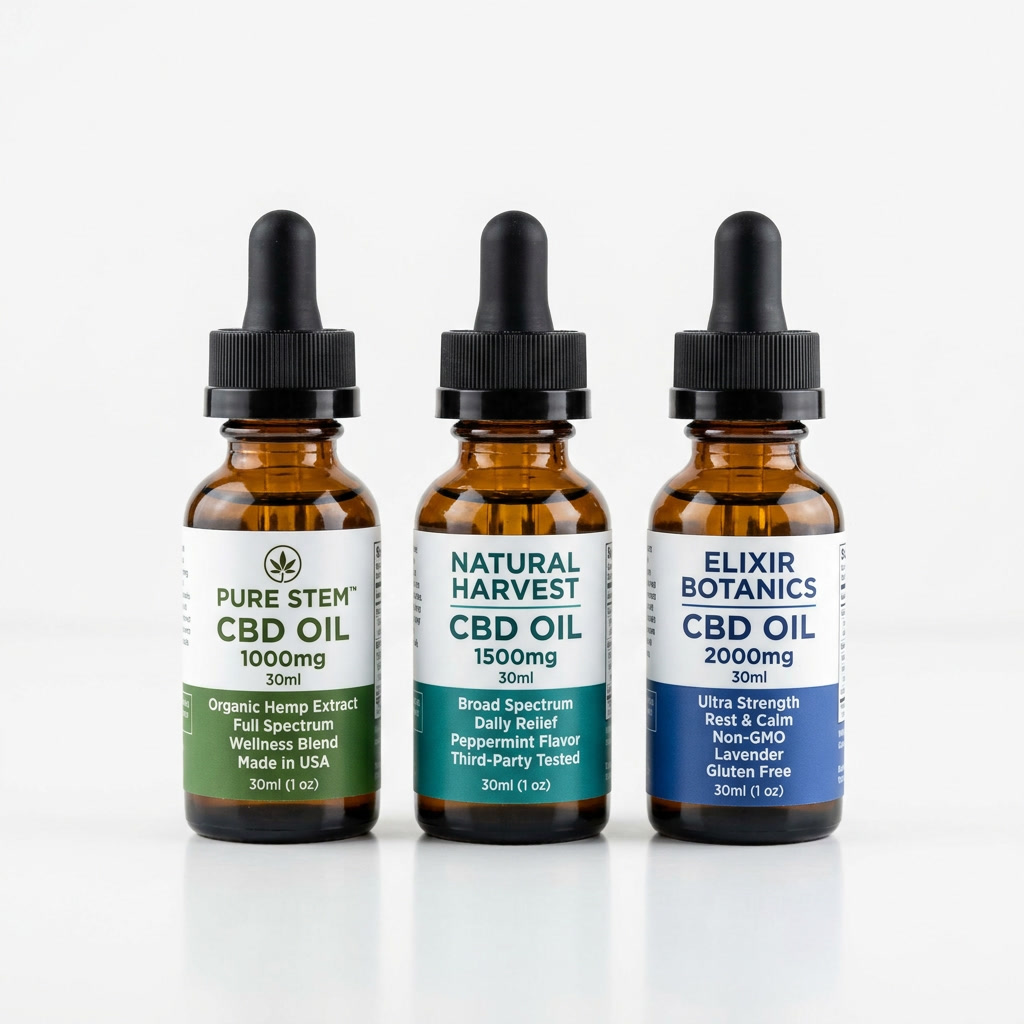
For oral use — capsules or oils that you swallow — the running study used 300 milligrams, taken two hours before exercise. That timing is important because it gives the CBD time to enter your system and reach meaningful blood levels. If you're considering a CBD oil or a capsule for the calm, relaxed effects the research showed, this product category is where to start.
For gummies — a convenient middle ground if you don't love oils or capsules. Gummies are a pleasant way to get a consistent dose, and our CBD gummies category is worth browsing if that appeals to you.
A few practical guidelines to keep in mind:
- Start with a lower dose and see how your body responds before increasing.
- Consistency matters more than a single heroic dose; the studies that showed effects used repeated or carefully timed dosing.
- Don't expect a dramatic performance or pain-masking effect. Expect, at most, subtle changes in how you feel and recover.
- Be aware CBD can interact with some medications, so if you take prescription drugs, it's worth a conversation with your doctor or pharmacist first.
What Athletes Should Actually Expect
Let's reset expectations with what the evidence genuinely supports, so you don't get disappointed — or oversold.
What CBD may reasonably do for you, based on the 2026 research:
- Increase feelings of calm and relaxation before or during exercise, which is a real and consistently observed effect.
- Slightly reduce how hard a given effort feels at the start, at least in a running context.
- Potentially support one aspect of muscle recovery — isometric strength — based on a single pilot study that needs replication.
What CBD probably won't do for you, based on the same research:
- Dramatically eliminate muscle soreness. The topical study explicitly found it did not reduce DOMS.
- Make you faster. The running study found no difference in performance time.
- Erase the normal inflammation and micro-damage that are part of building muscle. That process is supposed to happen.
The single most useful framing is this: CBD's most consistent, best-supported effect is on how you feel — calmer, more relaxed, slightly less bothered by perceived effort. Its effects on physical performance and on the actual mechanics of muscle recovery are weaker, more inconsistent, and still being studied. If you go into it expecting a mood and perception benefit, you'll be aligned with the data. If you go in expecting a recovery super-weapon, you'll be disappointed.
Action Steps
If you want to incorporate CBD into your recovery routine in a way that matches the actual evidence, here's a straightforward plan.
- Decide on your goal first. If you want the calm, relaxed pre-workout effect, oral or sublingual is your route. If you want a local application on a specific muscle group, a topical makes sense. Pick the delivery method that matches your outcome.
- Dose intentionally. The research that showed effects used 300mg orally taken two hours before exercise, and repeated topical application of two grams over 72 hours. Use those as reference points, not rules, and adjust based on how your body responds.
- Time it right. Take oral CBD roughly two hours before training so it has time to absorb. Apply topicals right after your workout and again in the days following.
- Keep your expectations honest. Watch for changes in how you feel — calm, relaxation, perceived effort — more than changes in your stopwatch or your soreness score.
- Choose tested products. If you compete, prioritize broad-spectrum or isolate products with third-party certificates of analysis showing negligible THC.
- Track your own results. Everyone responds differently. Keep a simple log of how you feel, how sore you are, and how your workouts go, and let your own data — not the marketing — tell you whether it's worth continuing.
- Talk to your healthcare provider if you take other medications, since CBD can interact with certain prescriptions.
The Bottom Line
So does that CBD cream on your shelf actually work? The most honest answer, based on the 2026 research, is: maybe a little, for some things, and not for others.
The Journal of Cannabis Research pilot found that topical CBD did not reduce muscle soreness or accelerate overall recovery, but it did show a significant, large-effect-size signal for one measure — isometric strength recovery — between 24 and 72 hours after a damaging workout. The Nutrients pilot found that 300mg of oral CBD made runners feel calmer and more relaxed and slightly reduced early perceived exertion, but it did not make them faster. The evidence is mixed, and it comes from small pilot studies that need larger follow-up.
Here's what I want you to take away. CBD is not a magic recovery pill, and anyone selling it that way is not being straight with you. The normal aches, micro-damage, and inflammation of training are part of how you get stronger, and no compound erases that process. But CBD does show real, reproducible effects on how you feel — calmer, more relaxed, slightly less bothered by effort — and a genuine but preliminary signal on one aspect of strength recovery. For many people, that's enough to make it a worthwhile addition to an otherwise solid recovery routine.
Pair it with the fundamentals that actually move the needle — sleep, protein, hydration, and sensible training load — and treat CBD as a potential support, not a replacement. Used that way, with honest expectations, it's a reasonable tool to have in your kit. Just don't expect it to do the heavy lifting on its own.
Find Your Perfect CBD Product
Take our 2-minute quiz to get personalized recommendations based on your needs.
Take the Quiz →Disclaimer: This article is for informational purposes only and does not constitute medical advice. CBD products are not FDA-approved to treat, cure, or prevent any disease. Always consult with a qualified healthcare professional before starting any new supplement, especially if you have a medical condition or take medications.