CBD for aggression and irritability: what the trials actually measured

Search "CBD for anger" and you will find calm in a bottle. Search the medical literature and you find something narrower and more interesting: a small number of trials, almost all of them in autistic children and adolescents, several of them testing CBD as an add-on to existing medication, and one of them comparing it head to head with an antipsychotic.
That is a real evidence base, not a marketing story. It is also much narrower than the internet implies.
Aggression is a symptom, not a diagnosis
Anger is the output. The cause is somewhere upstream.
Pain makes people short tempered. So does chronic sleep loss, so does untreated ADHD, so does alcohol withdrawal, so does a mood disorder, and so does a nervous system that misreads neutral signals as threats. In autistic children and adults, irritability and aggression are among the most common reasons for a psychiatric referral, and in dementia, agitation and aggression drive many of the hardest decisions families have to make.
This matters for CBD because a drug that helps one of those causes will look useless in another. If someone's aggression is driven by untreated pain, a cannabinoid that does not touch the pain will not touch the temper. If it is driven by a sleep debt, the useful question is whether sleep improves.
So the honest way to read the research is to ask two questions at once. What population was studied, and what was the mechanism supposed to be.
The strongest signal: autism related irritability
The clearest work sits in autistic children and adolescents, and it is recent.
A 2026 randomised clinical trial in the Journal of Autism and Developmental Disorders tested CBD for severe problem behaviours in autistic boys. This is the design that counts: randomised, with a comparison group, measuring behaviour rather than a feeling. It is also the trial that makes the rest of this article possible, because before it the field had almost nothing controlled to point at.
A 2025 study in Autism Research went further and compared CBD with risperidone, looking at behavioural and neurochemical outcomes. Risperidone is not a placebo. It is an antipsychotic that has been used for autism related irritability for years, with real effects and real side effects including weight gain and sedation. Putting a cannabinoid next to it is a genuinely useful question, and the answer is more nuanced than either the CBD shops or the prescribing guidelines would suggest.
A 2025 paper in the International Journal of Clinical Trials reported on CBD for irritability and aggressive behaviour in autistic children and adolescents, and an earlier 2024 preprint on medRxiv covered the same programme of work. A 2025 protocol paper in PLoS One describes a phase 3b/4 study of behavioural outcomes with adjunctive CBD, which tells you where this research is heading rather than where it has arrived.
Read together, the message is consistent. There is a signal for irritability in autism, at doses that need clinical supervision, in a population where behaviour is carefully measured by people who know the child. That is not the same as "CBD calms you down".
Dementia agitation, and a cannabinoid that is not CBD alone
The other human population with real data is older adults with dementia.
A 2025 study in Age and Ageing examined Sativex, a nabiximols spray, for agitation and aggression in Alzheimer's dementia in UK nursing homes. Nabiximols is a 1:1 combination of THC and CBD, standardised and pharmacy grade, and it is licensed in several countries for spasticity in multiple sclerosis.
That distinction matters enormously. A trial of nabiximols is a trial of THC plus CBD in a fixed ratio, and it cannot tell you what CBD alone would do. Anyone quoting it as proof that CBD calms aggressive dementia patients is quoting the wrong drug. What it does show is that cannabinoids can be studied in agitated dementia at all, in a supervised setting, with falls, sedation and cognition as outcomes.
In practice, dementia agitation is the situation where unsupervised experimentation is most dangerous. These patients are usually on several drugs that affect the brain, they fall easily, and they cannot report a side effect.
The animal work, and why it is not a shortcut
Animal behaviour studies keep this field honest about mechanism, and they also show how far a mouse is from a person.
A 2025 study in Behavioural Pharmacology looked at CBD and aggression in betta fish, a species used for exactly this because territorial aggression is easy to score. A 2023 review in the Annual Review of Animal Biosciences assessed how well the evidence for CBD in dog and cat diseases holds up, and a 2025 study in Frontiers in Veterinary Science followed behavioural changes in dogs whose owners gave CBD.
The dog literature is worth knowing for a practical reason. Owners report calmer dogs. The measurement is almost always the owner's impression, which is the least blinded instrument in science. Veterinary behaviour trials with validated scoring exist, and they are the ones to look for.
What the studies measured, and what they did not
Here is the pattern across the human work.
They measured behaviour, not mood. Irritability scales, aggression incident counts, parent and carer ratings. That is appropriate for the population and it means the results do not transfer to a person who simply feels tense.
They used CBD as an add-on. Most participants stayed on their existing medication. That is realistic and it makes the findings hard to attribute cleanly, because the comparison is "usual care plus CBD" against "usual care".
They were short. Weeks to a few months. Aggression in autism or dementia is a years long problem, and tolerability over a year is a different question.
They were small. Even the better trials are in the dozens to low hundreds. A trial that cannot detect a modest effect is not evidence of no effect, and it is not evidence of one either.
The dose and product problem
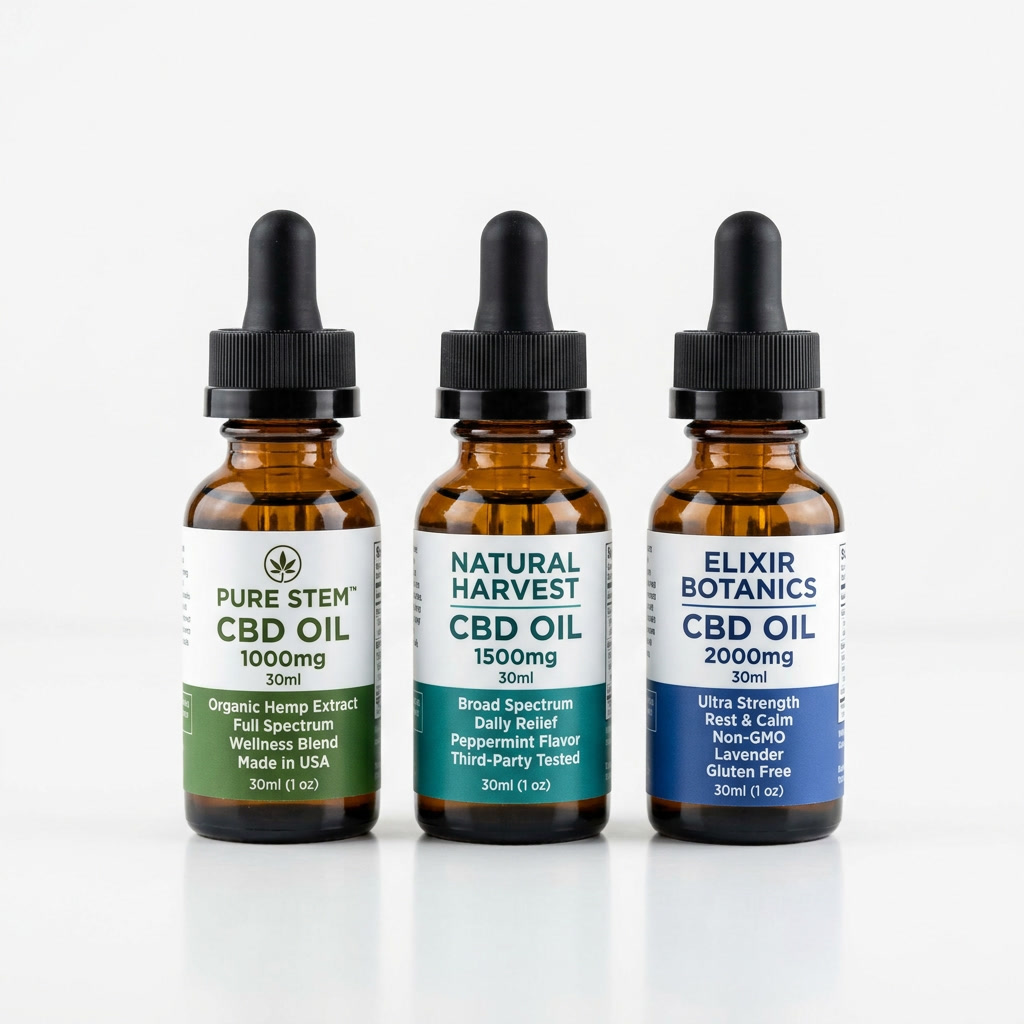
CBD products sold for calming vary from 5 mg gummies to 100 mg oils, and the label is not a reliable guide. A 2025 analysis in Cannabis and Cannabinoid Research tested commercial CBD gummy products by LC-MS/MS and found cannabinoid concentrations that did not match the label. A companion paper on minor cannabinoid profiles found similar discrepancies across unregulated products.
For a parent or carer considering this for a child or an older adult, that is the single most important practical fact in this article. In the trials, the drug was pharmacy grade and the dose was known. In the shop, neither is guaranteed.
Safety: the parts that matter here
Liver enzymes. High dose CBD has been associated with liver enzyme elevations in healthy adults, in a 2025 randomised trial in JAMA Internal Medicine. Children on anticonvulsants and older adults on multiple drugs are not the population you want taking an unmonitored high dose.
Sedation stacking. CBD is not strongly sedating alone, but the population most likely to try it is also the population most likely to be on antipsychotics, benzodiazepines, gabapentinoids or opioids. The sum is what matters.
Interaction with antipsychotics and anticonvulsants. CBD inhibits several cytochrome P450 enzymes. Risperidone, clobazam, and valproate all pass through those pathways, which is why the autism trials were run by clinicians rather than recommended by shops.
The THC question. In dementia, the studied product contains THC. THC brings impairment, falls risk, and in some older adults, paradoxical agitation. If a product's certificate of analysis does not state THC content, that is not a minor omission.
If you are considering it
None of this is a reason to dismiss CBD, and none of it is a reason to try it blind.
For an adult dealing with ordinary irritability, start with the upstream causes. Sleep, pain, alcohol, and stress are treatable and they are where the evidence is strongest. If you still want to test CBD, use a product with a batch specific certificate of analysis, start at 10 to 15 mg, keep everything else steady for two weeks, and keep a one line daily record. Our guide to CBD for social anxiety covers the same test-it-properly structure.
For a child, this is not a self treatment decision. The trials that exist were run under clinical supervision in children with diagnosed autism, with behaviour measured by validated scales. A 2025 comparative study against risperidone exists precisely because this is a prescribing question with real trade-offs.
For someone with dementia, do not add a cannabinoid to a fragile medication list without the prescriber knowing. The Age and Ageing work used a standardised pharmaceutical, in nursing homes, with monitoring.
What to watch for next
Two things would change this picture.
A larger randomised trial in autistic adults, rather than children, would tell us whether the irritability signal holds outside a population where behaviour is externally scored. And a trial of CBD alone, without THC, in dementia agitation would separate the cannabinoids properly. Until those exist, the dementia evidence belongs to nabiximols, not to CBD.
There is also a measurement problem worth naming. Aggression is often reported by the person caring for the patient, who is not blinded to the treatment, especially in an open label extension. Progress in this field will come from better blinding as much as from better drugs.
The honest summary
CBD has a real, if narrow, evidence base for irritability and aggression in autism, built on small randomised trials and one head to head comparison with risperidone. In dementia, the studied drug contains THC as well as CBD, and it is not the same thing. In healthy adults who feel short tempered, there is no trial at all, only a plausible story about stress and sleep.
Aggression is a symptom with a cause, and the most useful thing anyone can do is find the cause before buying a bottle. If you do decide to try CBD, use a product whose contents are tested, keep the dose low, and give it a fair test rather than a hopeful one.
If sleep is part of your picture, our guide to CBD and sleep maintenance is the more evidence-rich place to start, and if attention or restlessness is driving the irritability, CBD and ADHD covers what the trials do and do not show. Before combining anything with prescription medication, read the CBD safety guide.
Calm is not a product feature. It is a state that comes from a nervous system that is not being pushed.
Find Your Perfect CBD Product
Take our 2-minute quiz to get personalized recommendations based on your needs.
Take the Quiz →Disclaimer: This article is for informational purposes only and does not constitute medical advice. CBD products are not FDA-approved to treat, cure, or prevent any disease. Always consult with a qualified healthcare professional before starting any new supplement, especially if you have a medical condition or take medications.