Can CBD Help With Alcohol Use Disorder? What the 2026 Research Really Says
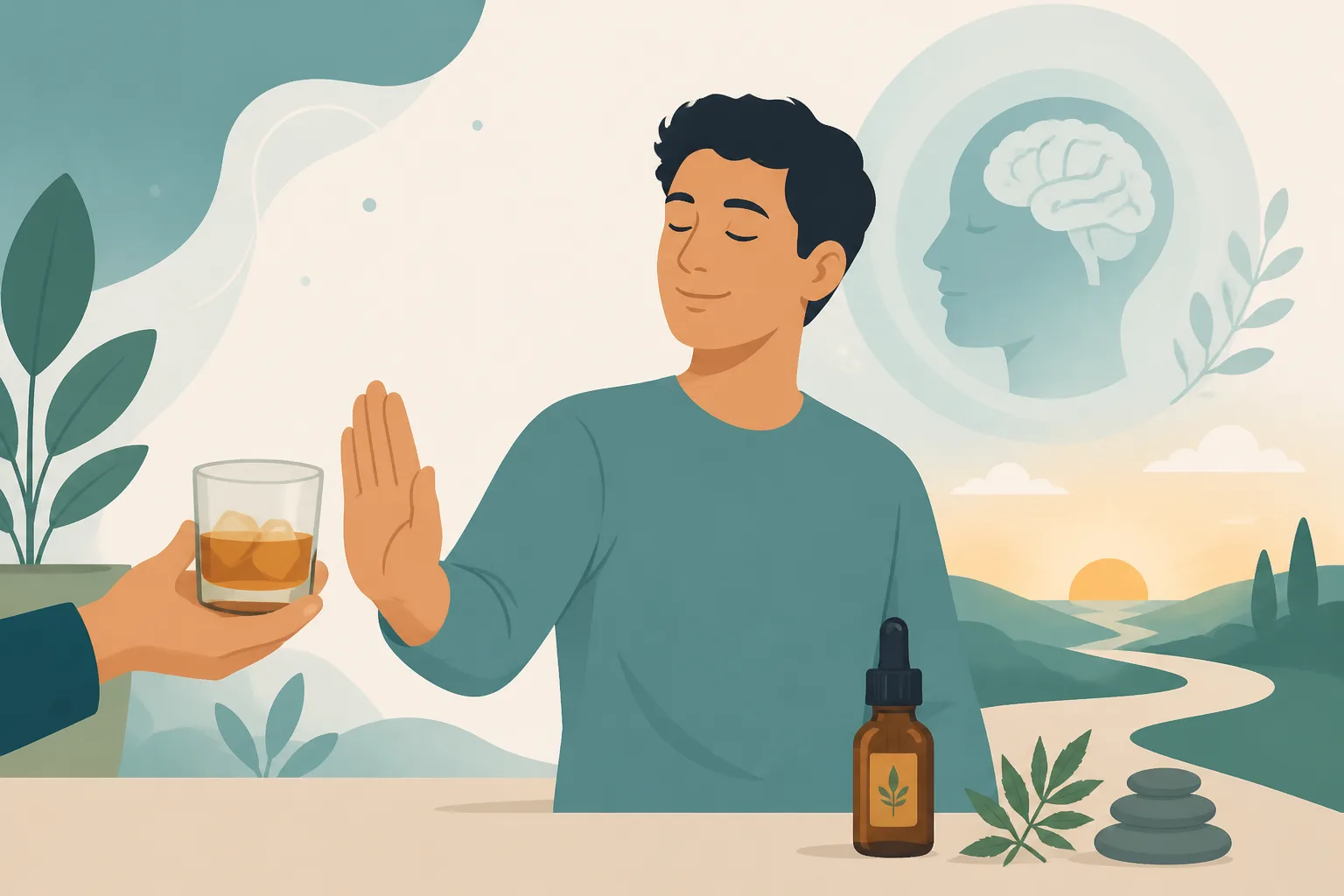
It's 11 p.m. and you've told yourself "just one" for the third night in a row. The craving arrives like clockwork — that familiar pull toward the fridge, the glass, the familiar warmth that promises to quiet the noise in your head. For millions of people, alcohol has become less a choice and more a reflex, and the thought of stopping feels as heavy as the habit itself. If you've been searching for something to soften that pull, you've probably come across CBD — the non-psychoactive cannabis compound that's been linked to anxiety relief, better sleep, and now, potentially, alcohol cravings. But does the science actually back it up?
The short answer is: it's complicated, and the honest answer is more interesting than the hype. A wave of new research published in 2025 and 2026 — including a major systematic review and a landmark animal study — is reshaping what we know about CBD and alcohol use disorder (AUD). Here's what the latest evidence really shows, where it falls short, and how to think about CBD if you're exploring it as a support tool.
What Is Alcohol Use Disorder, Really?
Alcohol use disorder is a chronic brain condition characterized by an impaired ability to stop or control alcohol use despite adverse consequences. It's not a matter of willpower — it's a neurological condition that hijacks the brain's reward, stress, and decision-making circuits.
The World Health Organization has long described alcohol as one of the most widely used psychoactive substances globally, and AUD carries a staggering burden. Yet despite its prevalence, treatment options remain limited. Approved medications exist, but they help only a fraction of people, and many struggle with side effects or incomplete relief.
That treatment gap is exactly why researchers are turning to the endocannabinoid system — the body's own signaling network that helps regulate mood, stress, reward, and appetite — as a fresh target.
The Endocannabinoid System: The Missing Link
Here's the key insight driving this research: alcohol and the endocannabinoid system are deeply intertwined. When you drink, alcohol influences endocannabinoid signaling in the brain, and over time, chronic drinking can dysregulate this system.
The endocannabinoid system works through receptors — most notably CB1 and CB2 — that help modulate everything from anxiety to reward-seeking behavior. Because CBD interacts with this system (though in a more indirect way than THC), researchers have hypothesized it could help "rebalance" the circuits that drive alcohol cravings and withdrawal.
This is the theoretical foundation for a growing body of work, and it's the reason a 2026 systematic review from Yale researchers took such a close look at the evidence.
The Yale 2026 Systematic Review: 63 Studies, One Big Picture
The most important recent development is a translational systematic review and meta-analysis published in Molecular Psychiatry in 2026. Researchers analyzed 63 preclinical and human studies evaluating endocannabinoid system modulators for AUD — the largest synthesis of its kind to date.
The findings were striking on the preclinical side:
- CB1 receptor inverse agonists reduced alcohol intake (standardized mean difference of -1.21)
- CBD reduced alcohol intake (SMD of -0.70)
- CB1 receptor agonists actually increased consumption (SMD of +0.66)
In plain terms, the animal data strongly suggests that dampening CB1 signaling — which CBD does indirectly — reduces alcohol-seeking behavior, while stimulating it does the opposite.
But here's the crucial caveat the review highlighted: human studies showed inconsistent and generally null effects. The authors noted that clinical translation has been "limited by safety concerns, methodological inconsistencies, and under-investigation of novel compounds." In other words, the promise is real, but the human proof is still catching up.
> "While preclinical evidence supports ECS modulation, particularly CB-1R antagonism and CBD, as promising strategies for reducing alcohol use behaviors, clinical translation has been limited by safety concerns, methodological inconsistencies, and under-investigation of novel compounds."
That's the honest state of the science — and it's worth understanding before you read any headline claiming CBD "cures" alcohol addiction.
The Landmark Animal Study: CBD and the Brain
One of the most cited recent studies on this topic is a 2025 paper in Neuropsychopharmacology (published in the journal's 2026 volume) that examined chronic CBD administration in two complementary rodent models of alcohol dependence.
The results were impressive on multiple fronts. In the chronic intermittent ethanol model, CBD:
- Reduced alcohol self-administration during acute withdrawal
- Decreased motivation for alcohol and somatic withdrawal signs
- Reduced withdrawal-induced anxiety and mechanical sensitivity
- Attenuated alcohol-seeking behavior and stress-induced reinstatement during extinction
Perhaps most striking was the neuroprotective finding. The researchers found that CBD prevented alcohol-induced neurodegeneration in the nucleus accumbens shell and dorsomedial striatum — brain regions central to the volitional control of alcohol consumption. Electrophysiological recordings suggested CBD worked by normalizing neuronal excitability in the basolateral amygdala.
The study's authors concluded that chronic CBD "attenuates both behavioral and neurobiological facets of alcohol dependence," supporting its therapeutic potential for AUD. It's a powerful piece of evidence — but it's animal data, and animal data doesn't always translate directly to humans.
What Human Trials Actually Show
This is where the picture gets more nuanced. Several human trials published in 2025 and 2026 have tested CBD in people with AUD, and the results are mixed.
A 2026 study in Alcohol: Clinical and Experimental Research tested CBD in AUD patients with and without co-occurring post-traumatic stress disorder. The headline finding: CBD was well tolerated, but there was no evidence for efficacy in two randomized proof-of-concept trials. Tolerability is meaningful — it means CBD is safe to study further — but efficacy wasn't demonstrated.
Similarly, a 2025 randomized controlled trial in Neuropsychopharmacology tested a single 600 mg dose of CBD in youth with AUD (ages 17-22). The researchers found no significant effects on neurometabolic, neurobehavioral, psychophysiological, or alcohol use outcomes — though again, no adverse events were observed. The authors suggested future studies may benefit from chronic administration.
But there's a more encouraging signal. A 2026 randomized controlled trial in Psychopharmacology found that CBD attenuated amygdala response to negative emotional stimuli in individuals with AUD. This matters because negative affect — stress, anxiety, low mood — is a key driver of craving and relapse risk that existing medications don't fully address.
So the human picture is genuinely mixed: CBD appears safe and may help with the emotional/affective drivers of drinking, but it hasn't yet shown clear, consistent reductions in alcohol consumption in clinical trials.
The Safety Question: Can You Take CBD With Alcohol?
If you're considering CBD, a natural question is whether it's safe to combine with alcohol. A 2026 Phase I study in the Journal of Cannabis Research directly addressed this, assessing the safety and tolerability of CBD and alcohol co-administration among moderate alcohol consumers in both acute laboratory and chronic outpatient settings.
The study was designed to evaluate safety — and that's exactly what it found. The results support that CBD and alcohol can be co-administered without major safety concerns in moderate drinkers, which is reassuring for anyone exploring CBD as a support tool.
That said, "safe to co-administer" is not the same as "CBD cancels out alcohol's effects." CBD doesn't prevent intoxication, and it shouldn't be used as a way to drink more. If you're using CBD, the responsible approach is to treat it as a separate support tool, not a license to increase alcohol intake.
Why the Human Evidence Lags Behind
If the animal data is so promising, why haven't human trials shown clearer results? The Yale review points to several reasons:
- Methodological inconsistencies across studies — different doses, durations, and outcome measures
- Small sample sizes that lack statistical power
- Short treatment periods that may not capture effects that take weeks to emerge
- Under-investigation of novel compounds beyond the few that have been tested
There's also the fundamental challenge that AUD is a heterogeneous condition. What works for one person may not work for another, and the field is still learning which subgroups — if any — respond best to CBD.
The takeaway isn't that CBD doesn't work. It's that we don't yet know for whom and at what dose it works best. That's a very different statement than "CBD is proven to treat alcoholism."
What CBD Might Help With (Based on Current Evidence)
Given the research, here's a realistic picture of where CBD shows the most promise for people with AUD:
- Reducing alcohol cravings — supported by strong preclinical data, though human confirmation is still pending
- Easing withdrawal-related anxiety — animal studies show reduced withdrawal-induced anxiety, and human trials show reduced amygdala response to negative stimuli
- Protecting the brain — the animal study found CBD prevented alcohol-induced neurodegeneration in key reward regions
- Supporting emotional regulation — CBD's effects on negative affect may help address the stress-driven triggers of relapse, a theme we explore in our guide to CBD for social anxiety and CBD for depression and mood
What CBD is not currently shown to do: reliably reduce alcohol consumption in humans, replace medical treatment, or eliminate AUD on its own.
A Balanced View: Hope With Honesty
The most responsible way to read this research is with both optimism and skepticism. The preclinical case for CBD in AUD is genuinely strong — the Yale meta-analysis and the Neuropsychopharmacology animal study both point in the same direction. The human case is genuinely incomplete.
This is actually a healthy sign for the field. Researchers are running rigorous trials, publishing null results alongside positive ones, and being transparent about limitations. That's how science progresses — and it's a far cry from the marketing hype that often surrounds CBD products.
If you're considering CBD as part of your approach to alcohol, the evidence supports treating it as a complementary tool — one that may help with cravings, anxiety, and emotional regulation — rather than a standalone cure.
How to Approach CBD Responsibly
If you're exploring CBD for AUD-related support, here's a practical, evidence-informed approach:
1. Talk to your doctor first — especially if you take medications, have liver issues, or are in treatment for AUD. CBD can interact with certain drugs.
2. Choose a high-quality product — look for third-party lab testing, clear CBD content per serving, and minimal THC. Full-spectrum and broad-spectrum options differ in their compound profile.
3. Start low and go slow — begin with a modest dose and track your response over a few weeks. The research suggests chronic use matters more than single doses.
4. Track your patterns — keep a simple journal of cravings, mood, and alcohol use to see if CBD is actually helping you.
5. Don't use CBD to drink more — it's a support tool, not a shield against alcohol's effects.
6. Pair it with real support — therapy, support groups, and medical treatment remain the foundation of AUD recovery. CBD is not a replacement.
Choosing a CBD Product for Support
If you decide to try CBD, the format matters for consistency. For daily, steady support, a CBD oil you can dose precisely is often the most flexible option. If you prefer convenience and a fixed dose, CBD gummies make it easy to stay consistent. And if you want a no-fuss option that fits a routine, CBD capsules offer a straightforward, measured approach.
Whatever you choose, prioritize products with transparent third-party testing and clear labeling — the quality of what you take matters as much as the dose.
The Bottom Line
The 2026 research on CBD and alcohol use disorder is genuinely exciting — and genuinely incomplete. A major systematic review found strong preclinical evidence that CBD reduces alcohol intake, and a landmark animal study showed it can ease withdrawal and protect the brain. But human trials have been mixed, with CBD showing good tolerability and promising effects on emotional regulation, yet not yet clear, consistent reductions in drinking.
The honest takeaway: CBD is a promising, safe-to-study support tool that may help with cravings, anxiety, and the emotional drivers of alcohol use — but it is not a proven treatment for AUD on its own. If you're exploring it, do so with a doctor's guidance, a high-quality product, realistic expectations, and a foundation of professional support. The science is moving fast, and the next few years of clinical trials will tell us a lot more about who CBD can truly help.
Find Your Perfect CBD Product
Take our 2-minute quiz to get personalized recommendations based on your needs.
Take the Quiz →Disclaimer: This article is for informational purposes only and does not constitute medical advice. CBD products are not FDA-approved to treat, cure, or prevent any disease. Always consult with a qualified healthcare professional before starting any new supplement, especially if you have a medical condition or take medications.