CBD for Social Anxiety: What the 2026 Research Actually Says

You know the feeling. The meeting is in twenty minutes, your name is on the agenda, and your heart is already racing. Your palms are damp, your throat is tight, and you're rehearsing the same sentence for the fifth time while everyone else seems completely at ease. For people with social anxiety, this isn't a rare bad day — it's a recurring script that plays out before presentations, parties, first dates, and even casual group lunches. The fear of being judged, embarrassed, or exposed can turn ordinary social moments into exhausting performances.
Social anxiety is far from rare. The most recent Global Burden of Disease analysis, published in the Lancet in 2026, estimated that roughly 1.17 billion people worldwide were living with a mental disorder in 2023, and anxiety disorders ranked among the leading causes of disability-adjusted life years globally (PMID 42167272). Against that backdrop, it's no surprise that millions of people are looking beyond conventional treatments for relief — and CBD has become one of the most talked-about options.
But here's the honest part: the research on CBD specifically for social anxiety is growing, yet still limited. Some studies point to real potential, while others find little to no effect. This guide walks through what social anxiety is, how CBD might help, what the 2023–2026 science actually shows, how to dose it, and where it fits — and doesn't fit — in your toolkit.
What Is Social Anxiety Disorder?
Social anxiety disorder (SAD) is more than shyness. It's a persistent, intense fear of social situations where you might be scrutinized, negatively evaluated, or humiliated. Common triggers include public speaking, meeting new people, eating in front of others, and being the center of attention. A narrower but related problem is test and performance anxiety, which shows up around exams, interviews, and presentations.
The anxiety often shows up physically — a racing heart, sweating, trembling, blushing, and a dry mouth — alongside a flood of self-critical thoughts. Many people with SAD avoid these situations entirely, which can shrink their world over time and affect work, relationships, and quality of life.
It's worth distinguishing between two flavors of the condition:
- Generalized social anxiety — a broad fear across many social settings, often present for years.
- Performance anxiety — a more situational fear, like stage fright or dread before a presentation, that may not extend to everyday socializing.
Understanding which type you're dealing with matters, because it shapes how you might approach CBD — as a daily support or as an occasional, situational tool.
How CBD Might Help with Social Anxiety
CBD (cannabidiol) is a non-intoxicating compound from the cannabis plant. Unlike THC, it doesn't get you high. Its potential relevance to anxiety comes down to a few biological pathways.
The most commonly cited mechanism involves the serotonin system. CBD is thought to interact with the 5-HT1A serotonin receptor, which plays a central role in mood and anxiety regulation. A 2026 review in CNS & Neurological Disorders Drug Targets described CBD as a "neuroadaptive modulator" that regulates serotonin (5-HT1A) and dopamine receptors, along with endocannabinoid tone, producing anxiolytic, neuroprotective, and sleep-regulatory effects (PMID 42299011).
CBD also appears to influence the amygdala — the brain region that flags threats and drives the fight-or-flight response. In people with social anxiety, the amygdala tends to be hyperactive in social situations. The idea is that CBD may help dampen that overreaction, making social encounters feel less alarming.
Finally, CBD interacts with the endocannabinoid system, which helps regulate stress responses, mood, and emotional balance. By supporting this system, CBD may help your body return to a calmer baseline more quickly after a stressful event.
What the 2023–2026 Research Actually Shows
Here's where we need to be careful and honest. The evidence for CBD and anxiety is real, but it's not settled — and the picture is more nuanced than many headlines suggest.
A 2026 systematic review and meta-analysis in Molecular Psychiatry pooled 123 animal studies and found that CBD consistently reduced anxiety-like and depressive-like behaviors, with moderate effect sizes across several standard behavioral tests. The authors pointed to serotonergic signaling (notably 5-HT1A receptors), endocannabinoid modulation, and anti-inflammatory pathways as likely contributors. But they were explicit about the catch: "clinical evidence in humans is still limited and inconclusive, underscoring the need for further research" (PMID 42380607).
That human gap is the key caveat. A 2026 systematic review in Frontiers in Neuroimaging examined adult human neuroimaging studies of CBD under stress and anxiety conditions. It found substantial heterogeneity across studies, with mixed directions of brain activation, and rated the certainty of evidence as low to very low. The authors concluded that "there is a lack of consistent evidence showing the acute effects of CBD on the brain across various study designs" (PMID 42494831).
Even more sobering, a 2026 meta-analysis in Lancet Psychiatry — covering 54 randomized controlled trials of cannabinoids for mental disorders — found no significant effects on anxiety outcomes overall, while noting that most trials had a high risk of bias and low certainty of evidence (PMID 41856154).
So what does this mean? The preclinical case for CBD and anxiety is reasonably strong, but the human clinical evidence is still thin and inconsistent. That's not a reason to dismiss CBD — it's a reason to approach it with realistic expectations rather than treating it as a guaranteed fix.
The Promise of Situational Use
Where CBD looks most promising is in acute, situational anxiety — the kind you feel before a specific event rather than all day long.
A 2024 protocol in BMJ Open describes a randomized, double-blind, placebo-controlled trial testing a low oral dose (150 mg) of CBD against a virtual reality "Public Speaking" task designed to induce acute psychosocial stress and situational anxiety. The trial measures self-reported stress, salivary cortisol, heart rate, and skin conductance (PMID 38531572). It's a protocol rather than results, but it reflects a growing research interest in whether low-dose CBD can blunt the spike of anxiety before a stressful moment.
The idea is intuitive: if CBD can take the edge off a racing heart and a churning stomach before a presentation, it could be genuinely useful — even if it doesn't change your underlying anxiety disorder. That's a different job than daily maintenance, and it's worth treating them separately.
Dosing: Situational vs. Daily Use
Dosing is where a lot of people go wrong, and the research offers some useful signals.
For situational use, the timing and dose matter. A 2026 randomized crossover trial in the Journal of Psychopharmacology tested single oral doses of 20, 50, 100, and 200 mg of synthetic CBD in healthy volunteers. The 200 mg dose produced a small but perceptible pleasant effect, while the authors concluded that "single doses of 100 mg synthetic CBD or less are unlikely to produce any discernible psychoactive effect" in healthy, occasional users (PMID 42454450). That suggests that if you're using CBD for a situational boost, a higher single dose — taken well before the event — is more likely to be noticeable.
For daily use, a 2026 randomized placebo-controlled trial in Experimental and Clinical Psychopharmacology looked at CBD for sleep disturbances in people with high trait worry. Participants took 300 mg, 50 mg, or placebo daily for two weeks. The 300 mg dose reduced sleep disturbances significantly more than 50 mg, though it didn't separate from placebo on the primary measure (PMID 41678223). The takeaway: higher doses tend to outperform lower ones, but effects can be modest.
A few practical dosing principles:
- Start low and go slow. Begin with a modest dose and adjust over several days.
- Give it time to work. Oral CBD takes 60–90 minutes to peak, so dose well before your event.
- Consider your body weight and metabolism. These affect how much you need.
- Be consistent for daily use. Situational use is one-off; daily support requires regular dosing.
- Track your response. Keep a simple log of dose, timing, and how you felt.
For a deeper dive into finding your sweet spot, see our CBD dosage guide.
Choosing the Right Product
Not all CBD products are created equal, and the delivery method can change the experience.
A 2026 naturalistic study in the International Journal of Environmental Research and Public Health followed 345 adults using cannabis for anxiety relief over 30 days. In the flower group, THC+CBD and CBD products were associated with larger anxiety reductions (39.5% and 34.8%) than THC-only products (7.8%). In the edibles group, using CBD-dominant products was associated with a 24.9% reduction in anxiety over the month (PMID 41752306). The clear signal: CBD-dominant products, and avoiding high THC, were linked to better anxiety outcomes.
When you're choosing a product, consider:
- Full-spectrum vs. isolate. Full-spectrum contains trace cannabinoids and terpenes; isolate is pure CBD. Some people prefer full-spectrum for the "entourage effect," though evidence is mixed.
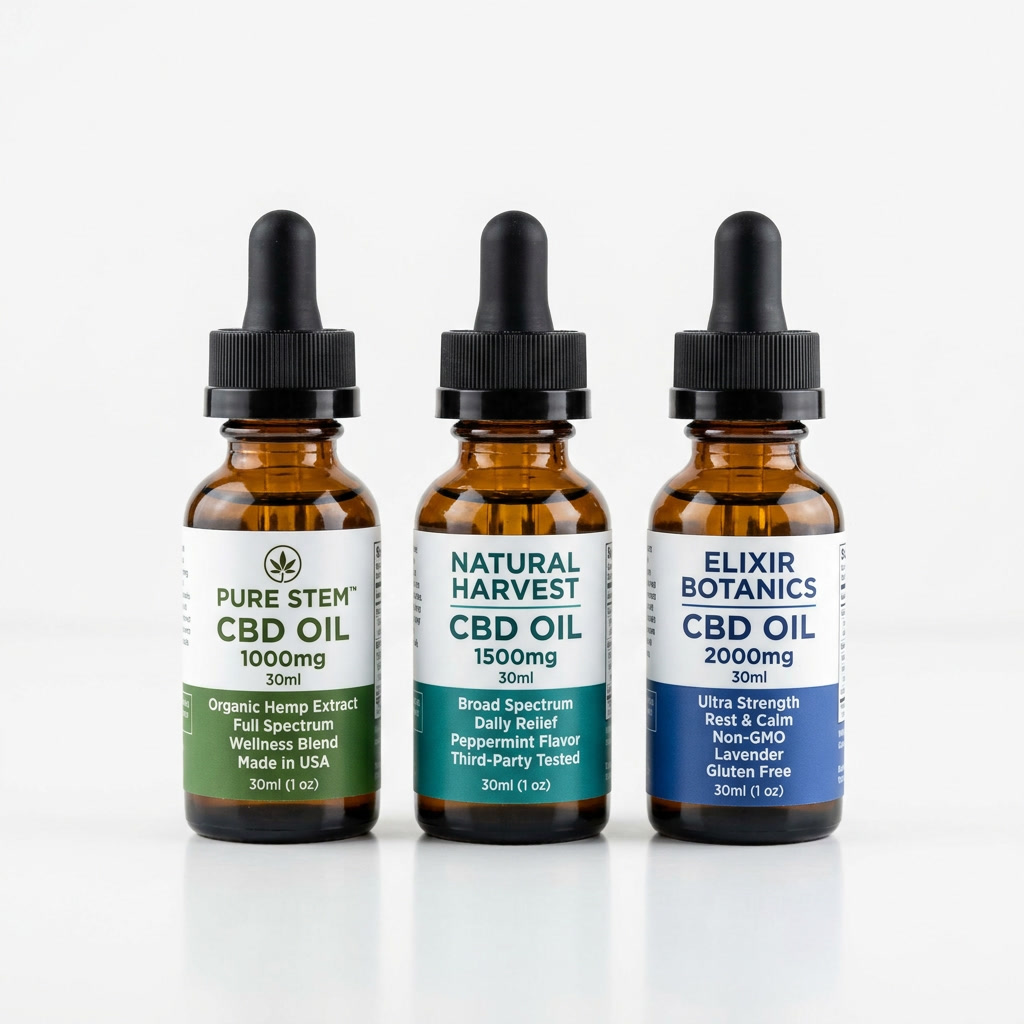
- Third-party lab testing. Always check for a certificate of analysis confirming the CBD content and checking for contaminants.
- Delivery method. Oils and tinctures are absorbed under the tongue and act relatively quickly; edibles take longer to kick in but last longer; capsules are convenient but slow.
- THC content. For anxiety, low or zero THC is generally the safer choice, since THC can worsen anxiety in some people.
Safety, Side Effects, and Interactions
CBD is generally well tolerated, but it's not risk-free. The 2026 Lancet Psychiatry meta-analysis found that cannabinoid use was associated with higher odds of any adverse events (odds ratio 1.75) compared with control, though not higher odds of serious adverse events (PMID 41856154). Common side effects include fatigue, diarrhea, changes in appetite, and dry mouth.
The bigger concern is drug interactions. CBD can affect how your liver processes certain medications by inhibiting cytochrome P450 enzymes. If you take prescription drugs — especially antidepressants, anti-anxiety medications, blood thinners, or seizure medications — talk to your doctor before adding CBD.
A few safety notes:
- Don't stop prescribed medication to switch to CBD without medical guidance.
- Avoid high doses if you're pregnant, nursing, or have liver conditions without checking with a professional.
- Be aware of the legal status of CBD in your region, and buy from reputable brands with transparent testing.
CBD vs. Conventional Anxiety Treatments
It's important to position CBD honestly alongside established treatments. Cognitive behavioral therapy (CBT) and exposure therapy are the gold-standard, evidence-based approaches for social anxiety, and selective serotonin reuptake inhibitors (SSRIs) are commonly prescribed. These have decades of research behind them.
CBD is not a replacement for therapy or medication. At best, it's a complementary tool that some people find helpful for managing acute symptoms or as part of a broader self-care routine. If you're considering CBD alongside treatment, keep your clinician in the loop — especially because of potential interactions with psychiatric medications.
For a fuller comparison of CBD and anxiety medications, see our guide on CBD vs. anxiety medications at /blog/blog-cbd-vs-anxiety-medications-2026-08-01.
The Stress Connection
Social anxiety and chronic stress often travel together, and the two can feed each other. Stress raises cortisol, which can amplify anxiety and make social situations feel more threatening. CBD's potential role in the stress response is one reason it's studied for anxiety at all.
A 2026 review in Progress in Neuro-Psychopharmacology & Biological Psychiatry examined how cannabinoid receptor signaling modulates the gut-brain axis under chronic stress, touching on neuroinflammatory mechanisms and microbial metabolism (PMID 42526737). While this is more about the broader stress system than social anxiety specifically, it underscores that CBD's effects may ripple through multiple stress-related pathways.
If stress is a big part of your picture, you might find our guide on CBD and stress, or our wellness overview.
Who Should Be Cautious
CBD isn't for everyone, and certain groups should be especially careful.
- People on multiple medications — the interaction risk is real.
- Those with a history of substance use — CBD is non-intoxicating, but the cannabis association can be a concern for some.
- Pregnant or nursing individuals — evidence on safety is limited.
- People with liver conditions — high doses may be a concern.
- Anyone expecting a "cure" — CBD is not a magic bullet, and disappointment is common when expectations outpace the evidence.
If you fall into any of these categories, have an honest conversation with a healthcare provider before starting.
How to Try CBD for Social Anxiety: A Practical Plan
If you've weighed the evidence and want to try CBD, here's a sensible, low-risk approach.
Step 1: Talk to your doctor. Especially if you take any medication, get the green light first.
Step 2: Choose a quality product. Look for third-party lab testing, clear labeling, and low or zero THC. Start with a tincture or oil for flexibility.
Step 3: Start low. Begin with a modest dose (for example, 25–50 mg) and see how you respond over a few days.
Step 4: Test it in a low-stakes setting first. Don't make your first CBD experience a big presentation. Try it at home or with a trusted friend to gauge how it feels.
Step 5: For situational use, dose ahead of time. If you're using it before a specific event, take a higher dose 60–90 minutes beforehand, based on your earlier testing.
Step 6: Track and adjust. Keep notes on dose, timing, and anxiety levels. Adjust gradually.
Step 7: Pair it with real strategies. CBD works best alongside breathing exercises, preparation, and — ideally — professional support. It's a tool, not a substitute.
The Bottom Line
Social anxiety is common, exhausting, and deeply personal — and it's completely reasonable to want more options. The 2023–2026 research suggests CBD has genuine potential, particularly for situational anxiety and as part of a broader stress-management routine. The preclinical evidence is encouraging, and real-world studies link CBD-dominant products with better anxiety outcomes than THC-heavy ones.
But the honest truth is that human clinical evidence for CBD and social anxiety specifically remains limited and inconsistent. High-quality trials are still needed, and the most rigorous meta-analyses have yet to show a clear, reliable effect on anxiety in humans. That doesn't mean CBD can't help you — it means you should approach it with realistic expectations, start low, choose quality products, and keep it in perspective alongside proven treatments like therapy.
If you're curious, the smartest first step is a conversation with your doctor, followed by a careful, low-dose trial of a lab-tested product. Used thoughtfully, CBD can be one more tool in your kit for facing the room with a little more calm. Explore our CBD for anxiety collection and our CBD for stress collection to see what fits your needs.
Find Your Perfect CBD Product
Take our 2-minute quiz to get personalized recommendations based on your needs.
Take the Quiz →Disclaimer: This article is for informational purposes only and does not constitute medical advice. CBD products are not FDA-approved to treat, cure, or prevent any disease. Always consult with a qualified healthcare professional before starting any new supplement, especially if you have a medical condition or take medications.