CBD vs Ashwagandha for Stress: Which One Actually Works?
Category: Comparison
Slug: blog-cbd-vs-ashwagandha-stress-2026-08-16
Target: 1,750-2,500 words, 10+ H2 sections
---
It's 10:47 PM on a Tuesday. You've just closed your laptop after a day that started with a 6 AM email and never really let up. Your shoulders are up around your ears, your jaw is tight, and your brain is still replaying that tense meeting. You've heard two names come up again and again in the wellness world — CBD and ashwagandha — and both are sitting in your browser tabs right now. One is a hemp extract you've seen in oils and gummies. The other is an ancient herb that's suddenly everywhere in capsules and powders. Both promise to take the edge off. But they work in completely different ways, act on different timelines, and suit different kinds of stress. Picking the wrong one can mean weeks of waiting for relief that never quite arrives — or paying for a daily habit you don't actually need. So which one is right for you? Let's break down the evidence, the timing, and the honest trade-offs so you can make a decision you won't second-guess.
What CBD Actually Does in Your Body
Cannabidiol, or CBD, is one of over a hundred compounds found in the hemp plant. Unlike THC, it doesn't get you high. Instead, CBD interacts with your endocannabinoid system — a network of receptors and signaling molecules that helps regulate mood, sleep, appetite, and the body's stress response. It also influences the 5-HT1A serotonin receptor, which is the same family of receptors targeted by some conventional anxiety treatments. That's why researchers have spent years investigating whether CBD can blunt the acute, in-the-moment experience of stress and anxiety.
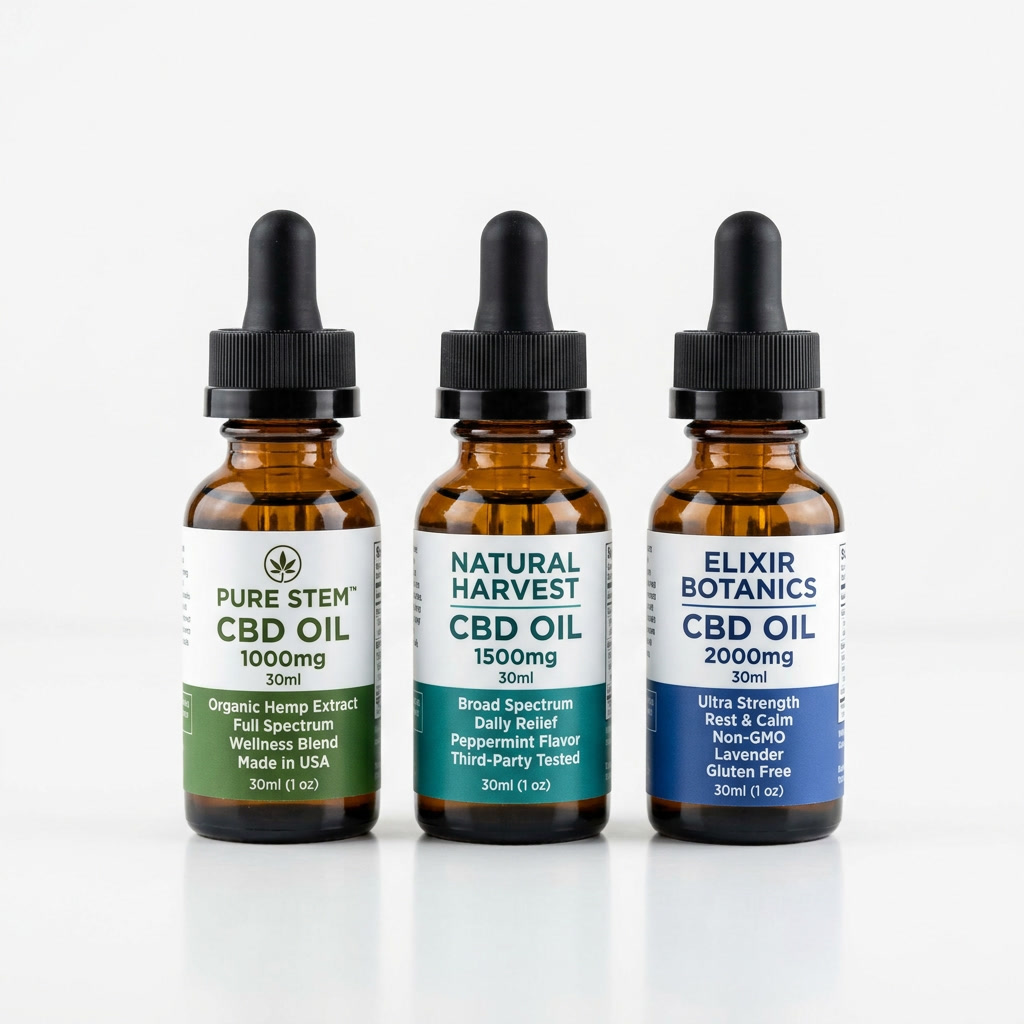
The key word there is acute. CBD is generally thought of as a fast-acting option. When taken as a sublingual oil — held under the tongue for 60 to 90 seconds — it can begin to take effect within 15 to 45 minutes, which makes it attractive for situational stress like a big presentation, a flight, or a difficult conversation. That speed is one of the main reasons people reach for it over a daily supplement that needs weeks to build up. If you're shopping for a fast-acting option, our roundup of CBD products for stress is a good place to start.
How Ashwagandha Works — The Adaptogen Angle
Ashwagandha (Withania somnifera) is a small shrub native to India and North Africa, and it has been used in Ayurvedic medicine for centuries as a tonic for vitality and resilience. It belongs to a class of herbs called adaptogens — substances believed to help the body adapt to stress. Its active compounds, called withanolides, are thought to influence the hypothalamic-pituitary-adrenal (HPA) axis, the system that controls your cortisol output and your fight-or-flight response.
Unlike CBD, ashwagandha is not built for the moment. It's a cumulative, daily-use supplement. Most clinical trials run for 6 to 12 weeks, and the benefits — lower perceived stress, calmer mood, better sleep — tend to build gradually over that window. If you're looking for something to take every morning as part of a routine, ashwagandha fits that mold. If you need relief in the next half hour, it won't help you.
The Evidence for CBD: What 2023-2026 Research Shows
Let's be honest about the CBD evidence, because it's more mixed than the marketing suggests. A 2026 systematic review in Frontiers in Neuroimaging looked at functional neuroimaging studies of CBD in stress and anxiety and found substantial heterogeneity across studies, with low to very low certainty of evidence overall. In plain terms: the brain-imaging picture of how CBD affects stress is not yet consistent.
That said, there are encouraging signals. A 2026 triple-blind, randomized crossover trial in the Journal of Psychopharmacology gave 70 healthy volunteers single oral doses of 20, 50, 100, and 200 mg of synthetic CBD. The 200 mg dose produced a modest but perceptible pleasant drug effect compared to placebo, while lower doses showed no significant effect. The authors noted the effect may depend on whether you've eaten. This tells us two things: CBD's effects are dose-dependent, and they're subtle at the doses most people actually take.
A broader 2026 systematic review and meta-analysis in Lancet Psychiatry examined cannabinoids for mental disorders and concluded that their efficacy for these conditions is not yet established. That's a sobering but important finding. It doesn't mean CBD does nothing — it means the high-quality evidence for CBD as a treatment for clinical anxiety is still thin. For everyday, situational stress, many people report real benefit, but the science is catching up rather than leading.
The Evidence for Ashwagandha: What 2023-2026 Research Shows
The ashwagandha evidence base is actually stronger and more consistent than CBD's, at least for self-reported stress. A 2026 randomized, double-blind, placebo-controlled trial in Advances in Therapy tested a low-dose ashwagandha extract (30 mg/day) in 60 stressed adults over 28 days. Compared to placebo, the ashwagandha group showed greater reductions in self-reported stress, lower daily stress ratings, and — notably — salivary cortisol stayed relatively stable in the ashwagandha group while it rose in the placebo group during a stress test, suggesting the herb blunted cortisol reactivity.
A 2026 systematic review and meta-analysis in Planta Medica pooled 23 randomized controlled trials with 1,706 patients and found that ashwagandha significantly reduced cortisol and increased serotonin, with possible dose-response effects based on withanolide content. That's a meaningful body of evidence for a natural supplement.
There's also a 2025 randomized, double-blind, placebo-controlled study in Advances in Therapy testing a 125 mg ashwagandha formulation (Zenroot) over 84 days in 90 adults with mild to moderate stress. It reported improvements in stress, anxiety, mood, and sleep quality. And a 2026 three-arm trial in the Journal of Medicine and Life gave 141 adults either 300 mg of a proprietary ashwagandha extract twice daily, a standard root extract, or placebo for 8 weeks, measuring changes in serum cortisol and stress scales.
The pattern across these studies is consistent: ashwagandha tends to reduce perceived stress and cortisol over weeks of daily use, and it's generally well tolerated.
Onset of Action: Fast vs Cumulative
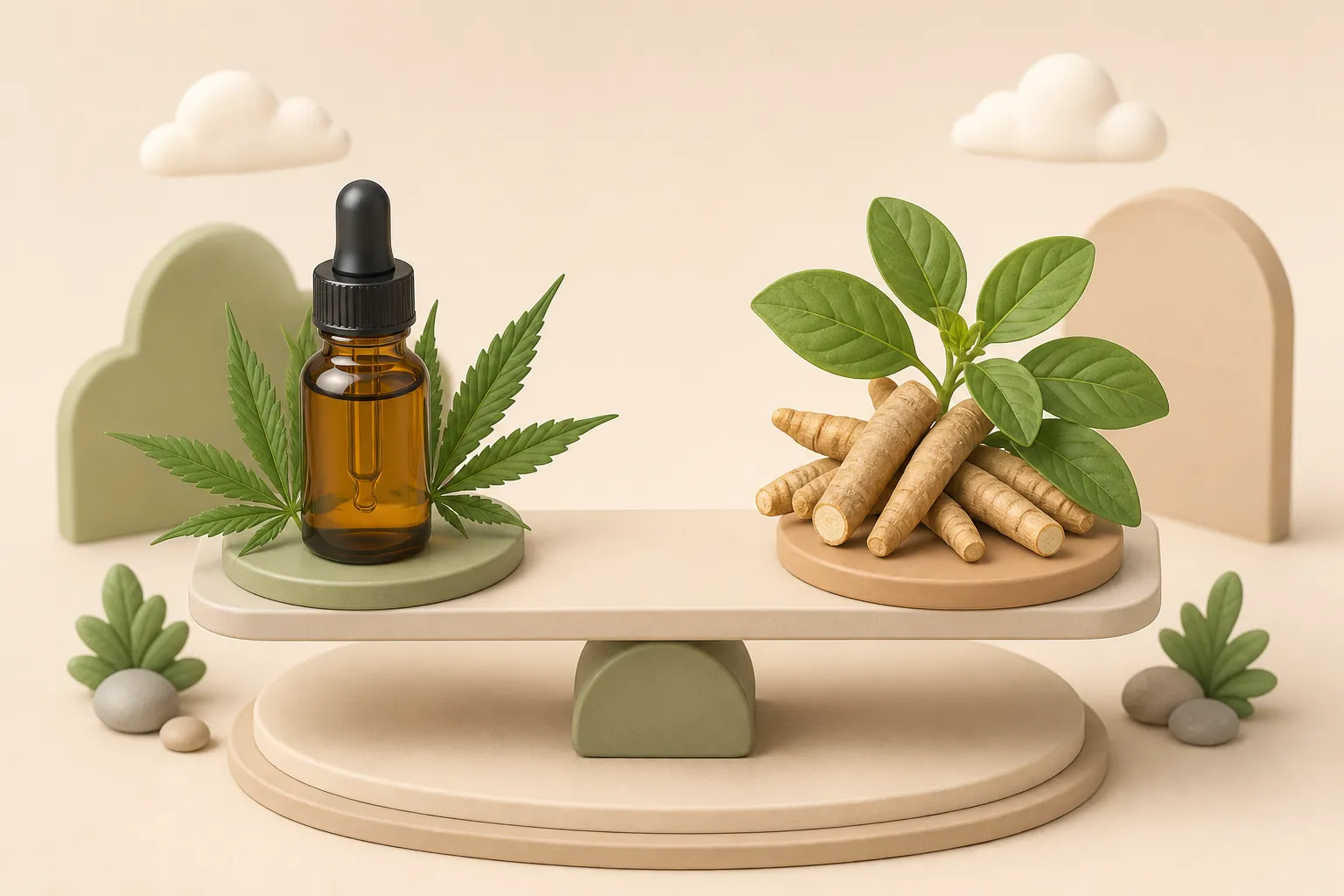
This is the single most practical difference between the two. CBD is the sprinter; ashwagandha is the marathoner.
CBD, especially as a sublingual oil, is designed for the moments when stress hits. You take it, wait 15 to 45 minutes, and feel a shift. It's situational. Ashwagandha, by contrast, needs to accumulate in your system. Most trials show meaningful effects only after several weeks of daily dosing. If you're dealing with chronic, low-grade, everyday stress — the kind that's always there in the background — ashwagandha's slow build is actually a feature, not a bug. If you're dealing with acute, predictable stress events, CBD's speed is the advantage.
Side Effects and Safety: What to Watch For
Both are generally well tolerated, but neither is risk-free.
For CBD, the most common side effects include dry mouth, drowsiness, diarrhea, and changes in appetite. It can also interact with certain medications because it affects liver enzymes that process many drugs — so if you're on prescription medication, especially blood thinners or seizure medications, talk to your doctor first. The 2026 crossover trial noted all adverse events were mild or moderate, which is reassuring, but interactions remain a real concern.
For ashwagandha, a 2026 systematic review in Pharmaceuticals examined the safety of standardized ashwagandha root extract across 23 studies and 2,317 participants. It found that hepatic, renal, hematological, endocrine, and cardiovascular biomarkers stayed within normal ranges, with no serious adverse events attributable to the extract. Mild side effects like gastrointestinal discomfort, headache, and transient drowsiness were infrequently reported. However, ashwagandha can affect thyroid hormone levels and, in some reports, has been linked to liver issues in rare cases — so people with thyroid conditions or liver disease should be cautious. It's also not recommended during pregnancy.
Who Is CBD Best For?
CBD is a reasonable choice if your stress is situational and you want something fast-acting. Think: public speaking, travel anxiety, a stressful workday, or the occasional sleepless night before a big event. It's also a fit if you prefer a sublingual oil or gummy you can take on an as-needed basis rather than committing to a daily pill — and you can browse CBD products for anxiety to compare options. Just be realistic about dosing — the research suggests effects are dose-dependent, and many over-the-counter products contain far less CBD than the doses studied in trials.
Who Is Ashwagandha Best For?
Ashwagandha is the better fit for chronic, background stress that's been simmering for months. If you wake up tense, carry stress through the day, and struggle to switch off at night, a daily ashwagandha routine over 6 to 12 weeks is where the evidence is strongest. It's also a good option if you want a single daily capsule you don't have to think about, and if you're comfortable waiting a few weeks for the effects to build. The cortisol-lowering data is among the more consistent findings in the natural-supplement space, and it's a theme we've explored in our deep dive on CBD and the stress hormone cortisol.
Can You Take CBD and Ashwagandha Together?
Yes, many people do combine them, and there's no strong evidence of a dangerous interaction. The logic is appealing: ashwagandha for the daily, cumulative baseline, and CBD for the acute spikes. Some products even combine both in a single formula. That said, the research on combining them specifically is limited, so it's best to start with one at a time to see how your body responds, and to introduce the second only after you've established a baseline. If you're on any medication, check with a healthcare provider before stacking supplements.
How to Choose: A Practical Decision Framework
If you're still torn, work through these questions.
- Is your stress acute and situational, or chronic and constant? Acute points to CBD; chronic points to ashwagandha.
- Do you want relief in the next hour, or are you willing to wait weeks for a cumulative effect? Fast means CBD; patient means ashwagandha.
- Do you prefer an as-needed oil or a daily capsule? As-needed favors CBD; daily routine favors ashwagandha.
- Are you on prescription medication? If so, check interactions with your doctor before either, and especially before CBD.
- Do you have thyroid or liver concerns? Be cautious with ashwagandha and talk to your doctor.
Dosing: Where to Start
For CBD, start low and go slow. A common starting point is 10 to 25 mg per day, taken sublingually, and you can adjust based on how you feel. The 2026 crossover trial that showed a measurable effect used 200 mg, which is far above typical retail doses — so if you're not feeling anything at a low dose, that's not surprising. For ashwagandha, most studied doses range from 125 to 600 mg per day of a standardized extract, typically taken once or twice daily. Effects build over weeks, so give it at least 4 to 8 weeks before judging whether it works for you. Our CBD dosage guide has more detail on finding your sweet spot, and our wellness guide to CBD for anxiety covers how it fits into a broader stress-management routine.
The Honest Bottom Line
CBD and ashwagandha are both legitimate natural options for stress, but they're not interchangeable. Ashwagandha has the stronger, more consistent evidence for reducing perceived stress and cortisol over weeks of daily use — it's the better choice for chronic, background stress. CBD is faster-acting and better suited to situational spikes, but its evidence base is thinner and its effects are dose-dependent and often subtle. Neither is a replacement for medical care, therapy, or medication if you're dealing with clinical anxiety or depression — and if you're weighing natural options against prescription treatments, our comparison of CBD vs anxiety medications is worth a read. If you're unsure, start with the one that matches your stress pattern, give it a fair trial, and talk to a healthcare provider if stress is significantly affecting your life. And if you want to explore further, our guides on CBD for stress and CBD for anxiety can help you compare products and find what fits your routine.
Find Your Perfect CBD Product
Take our 2-minute quiz to get personalized recommendations based on your needs.
Take the Quiz →Disclaimer: This article is for informational purposes only and does not constitute medical advice. CBD products are not FDA-approved to treat, cure, or prevent any disease. Always consult with a qualified healthcare professional before starting any new supplement, especially if you have a medical condition or take medications.