CBD for Stress and Cortisol: Can Cannabidiol Actually Lower Your Stress Hormone?
It's 4:45 PM on a Tuesday. Your inbox is still glowing, your shoulders feel welded to your ears, and even though you've done nothing physical all day, you feel wired, heavy, and ready to snap. You've heard the phrase "stress hormone" thrown around, and you know cortisol is somehow involved. And lately, every other feed post is telling you that a dropper of CBD oil can "lower your cortisol" and "calm your stress response."
It sounds appealing. But is it true? Can a natural compound really quiet the biological alarm system that's been shouting at you since breakfast? Or is this just another wellness promise built on shaky science?
Here's the honest answer: the relationship between CBD, stress, and cortisol is real, but more nuanced than the marketing suggests. We'll cover what cortisol actually does, how CBD interacts with your stress pathways, what the research genuinely shows (including some fascinating 2024 findings about your expectations), how much to take, and how to pick a product that works.
What Cortisol Actually Does in Your Body
Cortisol is the primary glucocorticoid hormone produced by your adrenal glands. Often called the stress hormone, that label undersells it: cortisol is a hardworking messenger that helps regulate your blood sugar, immune system, blood pressure, metabolism, and sleep-wake cycle. You need it to function.
Cortisol follows a daily rhythm. It surges in the morning to help you wake, peaks about 30 to 45 minutes after you rise, then gradually declines, reaching its lowest point around bedtime.
The problem starts when stress keeps the system turned on. In short bursts, cortisol sharpens your focus and mobilizes energy. But when your brain keeps signaling "danger" day after day — from deadlines, screens, noise, and constant overstimulation — the alarm doesn't get to switch off.
When Stress Turns Chronic: What It Does to the Body
Chronic stress is a different animal from an acute stress response. When your stress axis (the hypothalamic-pituitary-adrenal, or HPA, axis) stays activated, cortisol can run higher than it should, or its daily rhythm can flatten out. Over time, that dysregulation has been linked to poor sleep, weight gain around the midsection, elevated blood pressure, a weakened immune response, low mood, and a general feeling of being burned out.
This is why so many people chase stress relief in the first place. They're not looking for a brief calm — they want their body's stress response to stop overreacting. And that's precisely the question CBD researchers have been exploring for decades.
Here's an important reality check: most of the strongest cortisol data comes from animal and laboratory studies. Human research on CBD and cortisol specifically is still limited and mixed.
How CBD Interacts With Your Stress Pathways
Cannabidiol (CBD) is the most abundant non-intoxicating compound in the cannabis plant. Unlike THC, it won't get you high, and it has very low affinity for the classic cannabinoid receptors. Instead, CBD seems to work through a broad set of molecular targets that overlap with stress and anxiety regulation.
One of the most studied mechanisms involves the serotonin 5-HT1A receptor. A 2020 review in Pharmacology Research & Perspectives, from the Icahn School of Medicine at Mount Sinai, describes how CBD engages multiple targets, with the serotonin 5-HT1A receptor and the TRPV1 channel being two of its main ones.
A separate 2021 review in the International Journal of Molecular Sciences highlights CBD's ability to stimulate serotonin type 1A receptors and support endocannabinoid signaling by inhibiting the breakdown of anandamide — sometimes called the "bliss molecule." These effects are thought to be part of why CBD shows anxiolytic (anxiety-reducing) properties in animal models.
The key point: CBD isn't a single-molecule lock-and-key drug. It's more like a subtle modulator that tugs on several stress-related systems at once.
The 5-HT1A Serotonin Connection
Let's zoom in on the serotonin connection, because it's central to the stress story. Serotonin is a neurotransmitter heavily involved in mood, anxiety, and the body's response to stress. The 5-HT1A receptor is a specific subtype that, when stimulated, tends to produce calming, anxiolytic effects.
CBD has repeatedly been shown in laboratory research to activate 5-HT1A receptors, and some of its anxiety-reducing effects can be blocked in animal studies when 5-HT1A antagonists are given first — a strong hint that this receptor plays a causal role. A 2017 review in Current Neuropharmacology on CBD's anti-panic actions reached a similar conclusion.
It's worth being clear about the limits here: most of this mechanistic evidence comes from preclinical (animal and cell) work. It tells us how CBD plausibly acts in the brain, but it doesn't guarantee the same effect in every human.
The Public Speaking Studies: Where the Anxiolytic Evidence Comes From
If you've read about CBD and stress, you've probably come across the "simulated public speaking test" (SPST) — a method central to the research on CBD and cortisol. It's a research tool that puts people in a controlled, mildly stressful situation — giving a speech in front of evaluators — and measures their anxiety before, during, and after.
The lineage goes back to a landmark 1993 study by Zuardi and colleagues, published in the Journal of Psychopharmacology. In that double-blind trial, healthy volunteers received a placebo, the anxiety medication diazepam (see how CBD compares to traditional anxiety medications), a drug called ipsapirone, or 300 mg of CBD, then did the speech test. The results suggested CBD reduced anxiety after the stressor. It's a famous study, often cited as early human evidence for CBD's anxiolytic potential.
A follow-up in 2011, published in Neuropsychopharmacology, took this further. Researchers gave 600 mg of CBD to treatment-naive patients with social anxiety disorder before a simulated public speaking test. Compared with placebo, CBD significantly reduced anxiety, cognitive impairment, and discomfort during speech — bringing their responses close to the healthy control group's.
The 2020 Parkinson's study continued the thread. In a 2020 randomized, double-blind trial in the Journal of Psychopharmacology, patients with Parkinson's disease received 300 mg of CBD before the speech test; CBD attenuated the experimentally induced anxiety and also reduced tremor amplitude.
Across three decades, the simulated public speaking model has consistently shown that a single high dose of CBD reduces situational anxiety.
What Newer Research (2024–2026) Shows — Including the Placebo Twist
Here's where the 2026 picture gets genuinely fascinating. As CBD research has matured, scientists have started testing an important question: how much of CBD's stress effect comes from the compound itself, and how much from what you expect it to do.
A 2024 paper in the journal Cannabis and Cannabinoid Research looked at cortisol specifically. In healthy adults undergoing a laboratory stressor, cortisol levels were significantly lower in a "CBD expectancy" condition than in a CBD-free condition — but this effect appeared largely driven by males, and the participants actually received the same CBD-free oil in both conditions. In other words, believing you took CBD appeared to blunt the cortisol response to stress, particularly in men.
That finding was echoed in other 2024 work from the same group. A replication study in the Journal of Psychopharmacology found that CBD expectancy alone blunted subjective stress and anxiety, and a neuroimaging follow-up showed it altered functional connectivity between the amygdala and the anterior cingulate cortex.
What does this mean for you? It doesn't mean CBD is fake. It means the stress response is influenced by both biology and expectation. The placebo effect is real, measurable, and not a sign of weakness. CBD's benefits likely combine its pharmacology with the genuine power of a calming ritual.
Meanwhile, a 2024 systematic review and meta-analysis in Psychiatry Research pooled eight eligible studies (316 participants) and found a substantial, significant effect of CBD on anxiety, with a large effect size. The authors urged caution given the limited sample size.
The research on low doses is still emerging. A 2024 protocol in BMJ Open from the University of Sydney's Lambert Initiative is testing whether a low oral dose (150 mg) of CBD affects acute psychosocial stress, situational anxiety, and cortisol — important because most over-the-counter CBD products deliver far less than the 300–600 mg doses used in the clinical trials above — more on this in our 2026 anxiety clinical trial results.
CBD vs Adaptogens for Stress
You might also be hearing about adaptogens — herbs like ashwagandha, rhodiola, and L-theanine that are marketed for stress support. How does CBD compare? We break down the evidence in our CBD vs ashwagandha for stress comparison.
Adaptogens are botanical compounds traditionally used to help the body "adapt" to stress, and several, like ashwagandha, have their own research on perceived stress and cortisol. The catch is that adaptogen research often uses standardized extracts in specific doses, and the products on the shelf don't always match what was studied.
CBD and adaptogens aren't really competitors; they work through different systems. CBD's primary evidence is in acute, situational anxiety, while adaptogens are more often framed around energy, fatigue, and long-term resilience. Some people find combining them helpful, but that also means more variables to track. If you experiment, change one thing at a time: try CBD alone first, give it a few weeks, and only then consider layering in an adaptogen.
How Much CBD to Take for Stress
Dosing is where a lot of CBD products fall short, because the clinical evidence almost entirely uses higher doses than most bottles recommend.
In the stress and anxiety research, the effective single doses were substantial: Zuardi 1993 used 300 mg, Bergamaschi 2011 used 600 mg, de Faria 2020 used 300 mg, and the Bawa 2024 protocol tests 150 mg. Those are one-time doses given under supervision. Compare that with the 10–25 mg per serving on a typical over-the-counter label, and the gap is clear. That doesn't mean low doses are useless — plenty of people report benefits at lower doses — but be realistic. A common, evidence-informed starting approach:
- Start with 10–25 mg daily for a low to moderate dose
- Assess your response for one to two weeks
- Increase gradually if needed
- Consider higher acute doses (100–300 mg) only for specific stressful situations, ideally under guidance
Because CBD dosing is highly individual, the best tool is a simple CBD journal. Track your dose, timing, and how you feel. Patterns usually show up within two weeks.
When to Take It: Timing Matters
Timing depends on your goal. If you want help with an acute stressor — a big presentation, a difficult conversation, a nerve-wracking appointment — a single dose taken about 60 to 90 minutes beforehand lines up with how CBD is absorbed and how the studies were designed. In the clinical trials, participants took CBD roughly 90 minutes before the speech test.
If you're using CBD for general daily stress and sleep support, consistency matters more than exact timing. Many people find that a steady daily dose, often in the evening, helps settle their stress response over time.
The key principle: for acute relief, plan ahead. CBD isn't an instant calm like a benzodiazepine; it takes time to absorb, and its effects build over about an hour or more.
Full Spectrum vs Isolate for Stress
Another decision is whether to choose a full-spectrum, broad-spectrum, or isolate product. Full-spectrum products contain CBD along with the other compounds naturally found in hemp — including trace amounts of THC (usually under 0.2–0.3%). Broad-spectrum keeps the extra cannabinoids and terpenes but removes the THC. Isolate is pure CBD.
The "entourage effect" hypothesis suggests the various compounds in cannabis work better together than CBD alone. While still debated, many people report that full-spectrum or broad-spectrum products feel more effective for stress and mood than isolate.
There's a trade-off: if you're sensitive to THC, are drug-tested, or prefer to keep things simple, an isolate or broad-spectrum product removes that concern. For stress, most users point toward full or broad spectrum as the better starting point — but individual response always wins. If one format doesn't work, try another.
What to Look for in a CBD Product
Given how variable the market is, quality matters enormously. Here's what separates a trustworthy stress tincture or gummy from a waste of money:
- Third-party lab testing with a certificate of analysis (COA) you can actually view
- Labeled CBD content that matches the tested amount (mislabeling is a documented problem in the industry)
- Minimal added ingredients and clear serving sizes
- A reputable brand that publishes batch results
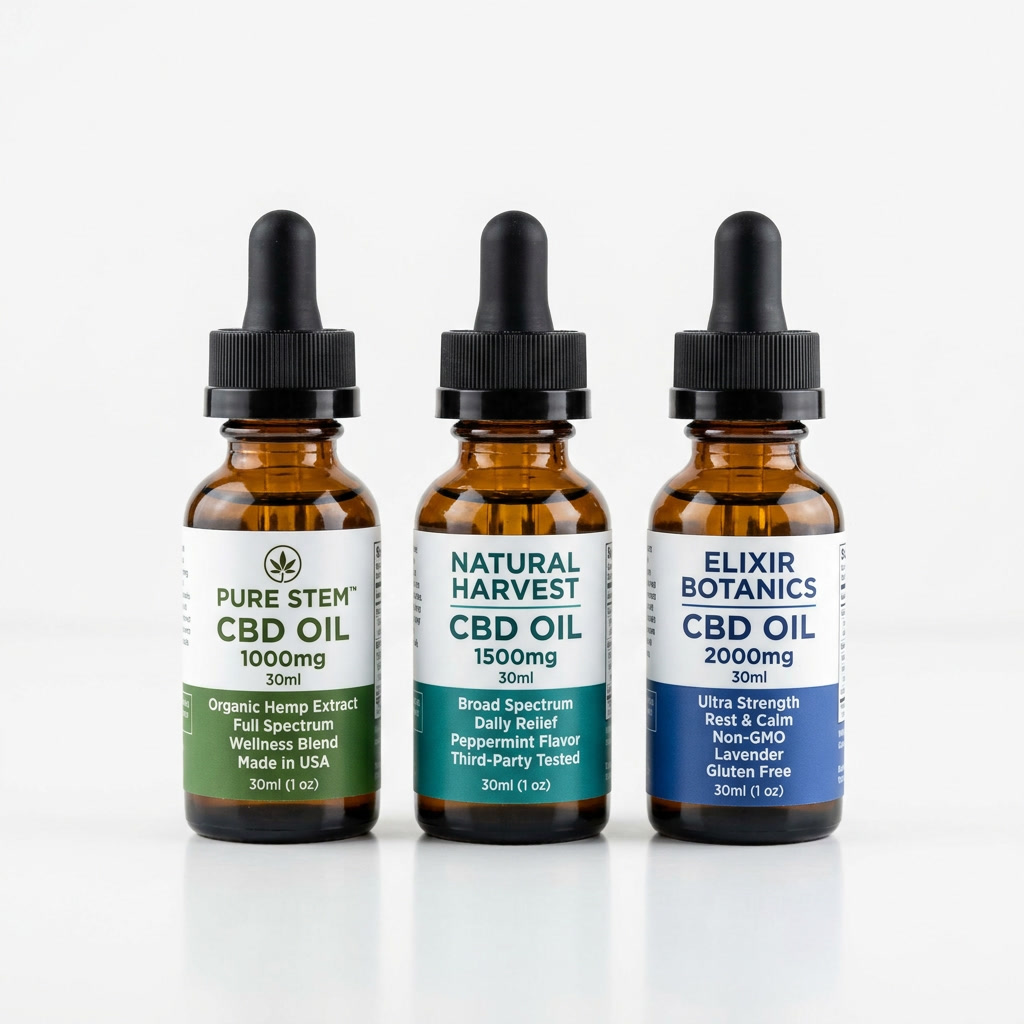
If you're buying oil or tincture, look for a clean carrier oil and a dropper that lets you measure precisely. For gummies, check the exact CBD content per gummy and watch out for high sugar. Our CBD oils and tinctures and CBD gummies and edibles are good places to start.
A quick note on safety: CBD is generally well tolerated, but it can interact with certain medications, especially blood thinners, antidepressants, and seizure medications. If you take any prescription, talk to your doctor before adding CBD.
Realistic Expectations: What CBD Can and Can't Do
Let's be honest about the boundaries. The research supports CBD as a promising tool for situational anxiety and for supporting an overactive stress response. It has a good safety profile, doesn't get you high, and the direction of the evidence across three decades is consistent.
But CBD is not a cure for chronic stress, a replacement for therapy or medication, or a magic cortisol reset button:
- It won't fix the root causes of your stress, like a toxic job, financial strain, or relationship problems
- It's not a substitute for sleep, movement, or professional mental health care
- It won't dramatically lower your cortisol the way the boldest marketing claims suggest — the human cortisol data is mixed and partly driven by expectancy effects
- It can't guarantee the same result for everyone
What CBD does well is take the sharp edge off acute anxiety and help your nervous system settle, especially when paired with good sleep, movement, and stress-management habits. It's a support tool, not a solution in a bottle.
Your Action Plan
If you want to try CBD for stress, here's a practical, responsible starting plan:
1. Talk to your doctor first, especially if you take medication
2. Choose a third-party-tested, clearly labeled product (oil or gummy)
3. Start with a low dose, around 10–25 mg daily, and keep a simple journal of dose, timing, and mood
4. Stick with it for one to two weeks before judging results
5. For an acute stressor, take a slightly higher dose about 90 minutes beforehand
6. Increase gradually and only as needed
7. Pair it with basics that actually move cortisol: consistent sleep, daily movement, and time away from screens
Stress management is a whole-life practice. CBD can be a genuinely useful part of it — but it works best alongside the fundamentals.
The Bottom Line
So, can CBD lower your stress hormone? The honest answer is: the biological evidence is promising but not definitive, and the human research on cortisol specifically is mixed. What's clearer is that CBD has repeatedly reduced situational anxiety across well-designed public speaking studies, works through stress-related pathways like the serotonin 5-HT1A receptor, and a 2024 meta-analysis found a substantial effect on anxiety. The research also teaches us something valuable: your expectation of relief is itself part of the medicine.
The most sensible takeaway is to treat CBD as a genuinely helpful support tool for stress — one that works best when you choose a quality product, dose realistically, time thoughtfully, and pair it with the sleep, movement, and mental-health habits your nervous system needs. If anxiety is the thing fragmenting your attention, our guide to CBD for focus and productivity digs into that connection. If you're looking for a tested place to start, our CBD oils and tinctures and CBD gummies and edibles are a solid, transparent choice. Go in with honest expectations, give it time, and listen to your own body.
Find Your Perfect CBD Product
Take our 2-minute quiz to get personalized recommendations based on your needs.
Take the Quiz →Disclaimer: This article is for informational purposes only and does not constitute medical advice. CBD products are not FDA-approved to treat, cure, or prevent any disease. Always consult with a qualified healthcare professional before starting any new supplement, especially if you have a medical condition or take medications.