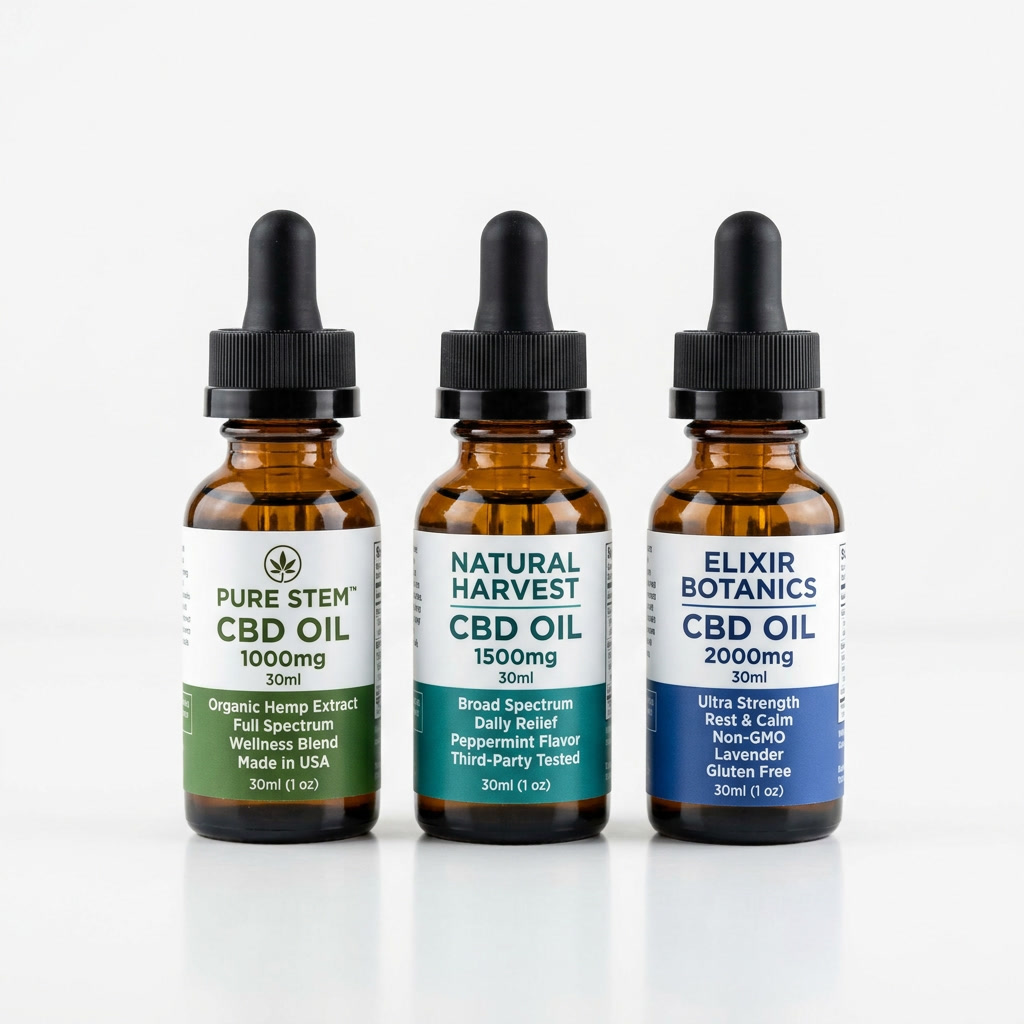
CBD vs Lemon Balm: Which Calming Herb Actually Has the Evidence
You are standing in the supplement aisle with a knot in your stomach that has been there since March. Two bottles face you. One is a lemon balm tincture with a picture of a bee on it. The other is a CBD oil with a dropper and a price tag three times higher. Both promise calm. Both are described somewhere on the label as gentle, mild, or natural.
They are not the same kind of product, and they are not backed by the same kind of science. One has small randomised trials in humans going back years, testing it for anxiety, sleep, and stress. The other has a louder reputation, a bigger market, and a human evidence base that is thinner and messier than almost anyone selling it will admit.
This comparison covers what each one is, what the trials measured, and which is the more sensible first experiment.
Two Bottles, Same Shelf, Different Evidence
Start with the shape of the literature, because it matters more than any single study.
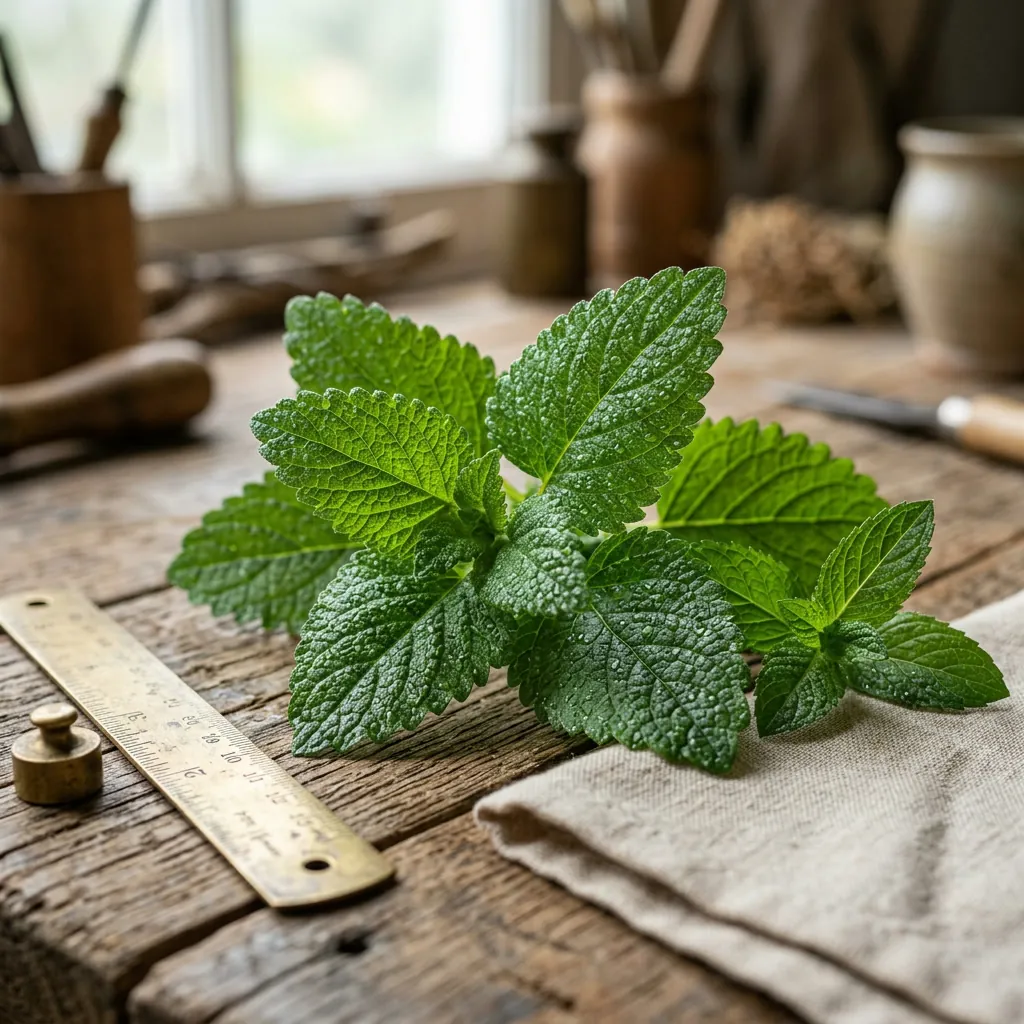
Lemon balm, Melissa officinalis, is a garden herb in the mint family. It has been used as a calming tea for centuries, which by itself proves nothing, but it has also been the subject of a modest and steady stream of clinical work. A 2024 review in Nutrients set out to collate the clinical efficacy and tolerability data across the conditions it is sold for.
CBD has vastly more research funding, more public attention, and more product variety. It also has a strange problem. Most of the excitement comes from animal work, mechanistic studies, and small single dose human experiments, while the large replicated trials that would settle the question mostly have not happened. A 2026 review in the Journal of the American Medical Association examined the therapeutic use of cannabis and cannabinoids across indications. It paints a field with real signal in some areas and thin ground in others.
So the honest framing is not herb versus drug. It is small consistent trials versus a large inconsistent literature. The lemon balm risk is that the trials are too small to be confident. The CBD risk is that the trials are small, the products are inconsistent, and the marketing has run years ahead of the data.
What Lemon Balm Actually Is
Lemon balm contains rosmarinic acid, citral, citronellal, and a group of flavonoids. Rosmarinic acid gets the most attention because it has documented antioxidant and anti-inflammatory activity in laboratory work.
The mechanism is not fully worked out, and anyone who tells you otherwise is overselling. What the preclinical work suggests is that lemon balm extracts interact with GABA signalling, the same broad system that alcohol and benzodiazepines act on, but in a far gentler and less targeted way. Some work points to inhibition of GABA transaminase, the enzyme that breaks GABA down, which would raise GABA availability rather than mimic it.
The distinction matters. A molecule that slows the breakdown of a neurotransmitter is not a drug that binds the receptor. It produces a softer effect, with a softer ceiling, and it needs repeated dosing rather than working in twenty minutes.
Lemon balm is also sold in forms that are not interchangeable. Dried leaf for tea, a standardised capsule extract, a phytosome bound to a lipid carrier, and an essential oil are four different products with four different pharmacokinetics. That explains a lot of the confusing results.
What the Lemon Balm Trials Actually Show
The 2024 Nutrients review is the most useful single document on lemon balm, because it puts the human trials in one place and describes their limits honestly. It covers anxiety, stress, sleep, and cognitive performance, and reports that the trials generally show favourable effects with good tolerability.
Read that carefully. Favourable effects with good tolerability is not proven efficacy. The direction of effect is consistent and the sample sizes are modest.
A 2023 trial in Frontiers in Pharmacology tested subchronic supplementation with a standardised lemon balm extract, meaning repeated daily dosing over weeks rather than a single dose. That design matters because it matches how people actually use the product, and because a single dose study of a mild herb will often find nothing simply because the effect takes time.
The sleep data has its own character. A 2024 prospective study in Nutrients examined a lemon balm phytosome on sleep quality. A phytosome is not a cup of tea, it is an engineered formulation designed to push more extract across the gut wall. If a phytosome works and your tea does not, the tea may simply deliver too little.
Then there is the aromatherapy literature, larger than most people expect. A 2025 trial in BMC Complementary Medicine and Therapies tested lemon balm essential oil inhalation on anxiety. A separate 2025 trial in the International Journal of Reproductive BioMedicine tested inhalation aromatherapy with the same oil. Inhaled oil is a different intervention from an oral extract, and the outcome is often a subjective rating scale taken shortly after exposure.
Where Lemon Balm's Evidence Runs Out
The trials are small. That is the recurring theme across every paper above, and the 2024 review says so directly. Small trials are not worthless, but they are fragile. A trial with a few dozen participants can produce a result a larger trial would not replicate, and nobody has run the larger trial.
The durations are short. Weeks, not months. Nobody knows whether the effect holds at six months, whether tolerance develops, or whether the benefit fades. For a product people take daily for years, that is a real gap.
The formulations are inconsistent. The two most encouraging recent studies used a phytosome and an essential oil. Neither is the dried leaf you would steep in a mug. Extrapolating from a lipid-bound extract to a teabag is the leap marketing copy makes and your head should not.
And the outcome measures are soft. Anxiety here is usually a self-report questionnaire, sometimes after a single exposure, sometimes in a narrow population like students during exam period. Those are legitimate designs, and they are narrow. A drop on a state anxiety inventory taken twenty minutes after inhaling an oil is not the same claim as treating an anxiety disorder, and no lemon balm paper makes that claim.
So lemon balm has real human data with a consistent direction. It does not have proof that it treats clinical anxiety.
What CBD Is Doing in the Same Aisle
CBD is cannabidiol, one of the two best known cannabinoids in cannabis. It does not produce a high, it does not bind CB1 receptors with meaningful affinity, and it is sold legally almost everywhere as a supplement or a food.
Its pharmacology is interesting and messy. CBD interacts with a long list of targets, including serotonin receptors, TRP channels, and enzymes in the endocannabinoid system. It also inhibits several cytochrome P450 enzymes, which is the mechanism behind most of its drug interaction risk. A molecule that touches that many systems is hard to characterise.
The useful question is not what CBD is but what the human trials of CBD for anxiety and sleep have produced. A 2026 review in the Lancet Psychiatry examined the efficacy and safety of cannabinoids for the treatment of mental disorders. Reviews of that kind are not written to generate enthusiasm. They establish what a clinician could responsibly act on, and for anxiety the evidence is not yet at that standard.
For the granular version of that argument, our breakdown of CBD anxiety evidence walks through the individual trials, and the CBD anxiety clinical trials piece covers the study designs and why they struggle to replicate.
The CBD Anxiety Evidence, Honestly
Here is the pattern. CBD anxiety research is dominated by small acute dosing studies, often in healthy volunteers, often using a simulated stressor like public speaking. Those studies are clever and some show a genuine blunting of the stress response. They are also a long way from everyday use.
The gap is between acute and chronic. A single large dose in a laboratory is not the same intervention as a low daily dose from a dropper for six months. Most positive findings sit on the acute side. Most real world use sits on the chronic side. Almost nobody has bridged them with a long, adequately powered trial.
The second gap is population. Volunteers recruited for a lab stress test are not people with generalised anxiety. When CBD has been tested in clinical populations, the samples shrink fast and the results get mixed. That is not a conspiracy, it is how hard this research is to fund.
The third gap is product. A trial using a pharmaceutical grade isolate at a measured dose, and a full spectrum oil with a certificate you have not read, are not the same exposure. The trial result belongs to the trial product.
> The honest summary of CBD for anxiety is that it has plausible mechanism, some encouraging acute human data, and no large replicated trial in clinical populations.
That is not nothing. It is also not what the shelf talk implies.
Why the CBD Literature Looks Bigger Than It Is
Search PubMed for CBD and you will find thousands of papers. That number is real and misleading. Most of it is preclinical, meaning cell cultures and rodent models, and rodent anxiety tests are useful for generating hypotheses and unreliable for predicting human effect sizes. A lot of it covers other indications. Epilepsy, chronic pain, and multiple sclerosis spasticity have far better human data than anxiety does, and those results get borrowed to support claims they do not cover. The rest is largely commentary, which is interpretation of evidence rather than evidence.
The lemon balm literature, by contrast, is small, unglamorous, and mostly primary, so its limits are easier to see.
The Formulation Problem, Which Hits CBD Harder
Both products suffer the same basic issue, and CBD suffers more.
A 2023 study in Frontiers in Pharmacology tested a standardised lemon balm extract, meaning the manufacturer had characterised what was in the pill. Standardisation is the minimum bar for a trial and not for a retail product. You can buy lemon balm capsules that claim a percentage of rosmarinic acid and capsules that claim nothing.
For CBD the variability is worse, because the plant material is more variable and the market less regulated. Full spectrum, broad spectrum, and isolate are different products. Carrier oil changes absorption. A trial of one formulation tells you about that formulation.
This is why the certificate of analysis matters more than the milligram number on the front. If a brand will not show third party testing for cannabinoid content and contaminants, you are buying a hope rather than a dose.
Side Effects and Interactions Compared
Lemon balm is well tolerated in the trials, and the 2024 review reports that plainly. The common complaints are mild and gastrointestinal. There is a theoretical interaction with thyroid medication, and sedation is possible alongside other sedating substances.
CBD has a more specific set of concerns. It inhibits CYP450 enzymes, so it can raise blood levels of drugs metabolised by that route, including some anticonvulsants, some immunosuppressants, and warfarin. It can cause drowsiness, dry mouth, and diarrhoea. Liver enzyme elevations have been reported at higher doses in clinical use, which is why pharmaceutical CBD carries monitoring requirements retail CBD does not.
Neither is dangerous in the way that phrase usually implies. Both deserve a check against whatever else is in your medicine cabinet.
If sleep is the actual goal, our comparison of CBD versus magnesium for sleep is a better starting point than either of these, because magnesium has a cleaner evidence base for a narrower claim.
Which One to Try First
Here is a direct answer, with its reasoning attached.
For mild, situational stress and trouble winding down, lemon balm is the more rational first experiment. Not because it is stronger, but because the trial literature is more consistent, the safety profile is simpler, and the downside of being wrong is small. A standardised oral extract taken daily for a few weeks is a fair test, and it matches the 2023 Frontiers in Pharmacology design better than a teabag does.
If the main complaint is sleep, the calculus shifts. Lemon balm has a phytosome study on sleep quality, which is encouraging but formulation specific. CBD has plenty of anecdotal sleep support and much less rigorous trial data for insomnia. Neither is a hypnotic. If sleep is severe or chronic, that is a medical question.
CBD becomes the more reasonable choice when the problem is broader than calm. If stress also shows up as physical tension, poor sleep, and a sense of inflammation, CBD's wider pharmacology is why people report it doing several things at once. That breadth is also why it is harder to study and harder to dose.
The order I would suggest for most people is lemon balm first, CBD second, and never both at once. Starting together destroys the experiment, because you learn nothing about which one did what.
If you already know you want CBD, the CBD for stress category is the sensible starting shelf, and the CBD for anxiety category covers the higher dose formats. Read the certificate of analysis before the copy.
How to Test It on Yourself
Pick one product. Write down the dose and the time you take it. Hold that dose for at least three weeks before judging, because mild herbal effects build slowly and the lemon balm trials that showed something used repeated dosing.
Rate two things daily, on a zero to ten scale, at the same time each day. How calm you feel, and how well you slept. Keep it in your phone, not in your head. Retrospective memory is a poor instrument and it flatters whatever you spent money on. Change one variable at a time. If you add magnesium in week two, you have ended the experiment.
At three weeks, look at the trend rather than the best day. If the line has not moved, stop. Do not escalate hoping for a different answer, and do not keep taking something because you already bought it. If it did move, hold the dose. More is not better with either of these, and the CBD dose response literature is unclear about whether higher is better at all.
The Bottom Line
Lemon balm has the better evidence for the specific job of taking the edge off, and it has it in randomised trials rather than testimonials. That evidence is small, short, and built on formulations that may not match what is on the shelf, so hold it with a light hand. It is still a more solid footing than most of what passes for calm in a supplement aisle.
CBD has the bigger reputation and the thinner anxiety file. Its 2026 reviews in JAMA and the Lancet Psychiatry describe a field with real promise and insufficient proof for mental health indications, and the marketing has not caught up with that gap. That does not make CBD useless. It makes it a compound whose plausible breadth outruns its trial base, and whose product variability means your bottle may not be the bottle anyone studied.
Try lemon balm first if the goal is simply to feel less wound up. Try CBD if the problem is broader and you are willing to buy carefully, from a brand that shows its testing. Give whichever you choose three weeks and an honest written record. That record will tell you more than any of these studies can.
Find Your Perfect CBD Product
Take our 2-minute quiz to get personalized recommendations based on your needs.
Take the Quiz →Disclaimer: This article is for informational purposes only and does not constitute medical advice. CBD products are not FDA-approved to treat, cure, or prevent any disease. Always consult with a qualified healthcare professional before starting any new supplement, especially if you have a medical condition or take medications.