How Many People Actually Use CBD?

Ask ten people whether they use CBD and the answer you get depends almost entirely on how the question is put. Ask about last week and the number shrinks. Ask about ever and it grows. Ask a cancer patient in a day hospital and you get one figure. Ask a national probability panel and you get another.
That is not a flaw in the research. It is the research. Prevalence estimates move with the recall window, the sample, the country and the wording. What has changed since 2023 is that we finally have enough studies to see the shape of the thing rather than one snapshot from one population. For the deeper evidence on this, see CBD for Menstrual Migraines.
And once you line those studies up, a second gap appears. The usage numbers are large and fairly consistent. The products people are using are not consistent at all. That gap is the story worth understanding.
What the 2026 Meta-Analysis Found
The 2026 meta-analysis in Addiction is the first serious attempt to pool the evidence properly. Its authors searched PubMed, PsycINFO and Web of Science in March 2025 and ended up with 43 studies covering 48 distinct samples and 388,447 participants. Just over half the pooled sample was female. Thirty studies came from North America, with 353,088 participants, and thirteen from Europe, with 35,359.
In Europe, pooled lifetime CBD use was 12.8 percent, past-month use 7.2 percent, past-week use 4.3 percent and daily use 2.1 percent.
In North America, the figures were roughly double. Lifetime use was 28.9 percent, past-year use 19.5 percent, past-month use 12 percent, past-week use 10.5 percent and daily use 6.4 percent.
The authors concluded that CBD use appears more prevalent in North America than in Europe, and the pattern was consistent across every window.
One detail in the paper is worth pausing on. The pooled twelve-month estimate for Europe came out at 17.6 percent, higher than the pooled lifetime estimate of 12.8 percent for the same continent. A past-year figure cannot logically exceed a lifetime figure. When it does, you are looking at heterogeneity rather than a finding. Read these numbers as orders of magnitude. Roughly one in eight Europeans has ever used CBD. Roughly three in ten North Americans have.
Why the Two Continents Diverge
The obvious explanation is retail access. The United States legalised hemp cultivation and hemp-derived cannabinoid sales through the 2018 Farm Bill, and CBD subsequently appeared in pharmacies, grocery aisles, convenience stores and vape shops. Europe kept most products in a grey zone as unauthorised novel foods while allowing them to sell anyway.
But the meta-analysis found something more interesting than an access story. Sample type was the one moderator that significantly changed estimates, and it changed them in opposite directions.
In Europe, clinical samples reported past-year CBD prevalence of 25.6 percent, against 11.6 percent in community samples. In North America, community samples reported 26.1 percent, while clinical samples reported only 4.1 percent.
That inversion is worth thinking about. In Europe, where over-the-counter access is tighter, users are more likely to be patients already inside the medical system. In North America, easy access turned CBD into a general consumer behaviour, and the people sitting in clinics are comparatively less likely to be the ones buying it.
The 2023 Snapshot: Four Cannabinoids in One Survey
If the meta-analysis gives you the shape, a 2023 survey in JAMA Network Open gives you the detail. The authors used the NORC AmeriSpeak probability panel over five days in June 2023 and asked about past-year use of four cannabinoids in a single instrument.
Of 6,666 panellists invited, 1,169 completed the survey, a completion rate of 17.5 percent. After exclusions the analytic sample was 1,142, weighted to represent the adult population.
Past-year CBD use was 21.1 percent. Past-year delta-8 THC use was 11.9 percent. CBG was 5.2 percent and CBN was 4.4 percent. Any of the four together came to 25.2 percent, meaning a quarter of American adults had used at least one in the previous year.
Awareness told a different story from use. 71.7 percent had heard of CBD, against 41.2 percent for delta-8 THC, 18.4 percent for CBG and 16.8 percent for CBN. CBD is the only one of the four with household-name status. The others are being bought by people who often do not know what they are called.
The survey also found that past-year cannabis use was associated with dramatically higher odds of using any emerging cannabinoid, with an odds ratio of 23.9. Non-Hispanic Black respondents had lower odds of use, at 0.36, a pattern that repeats across the literature.
Twenty Percent of U.S. Adults, and Who They Are
A 2024 study in Drug and Alcohol Dependence Reports used a larger and more authoritative dataset, analysing the adult sample of the 2022 U.S. National Survey on Drug Use and Health, which included 47,100 respondents.
In 2022, 20.6 percent of U.S. adults reported using CBD in the preceding twelve months. 23.0 percent reported using cannabis. That is a remarkable convergence. A product with no approved over-the-counter status, no standard dosing and no consistent regulation had reached roughly the same past-year penetration as cannabis itself.
The same study found that 63 percent of CBD users also used cannabis, so the co-use group is the majority of the market.
The correlates are where this paper earns its keep. CBD-only use, as opposed to cannabis-only use, was significantly higher among women, with an incidence rate ratio of 1.43, and significantly lower among Black respondents at 0.71 and Hispanic respondents at 0.79. Older age, higher socioeconomic status, chronic medical conditions, mental illness and high perceived risk from cannabis were all associated with CBD-only use.
That last cluster matters. People who use CBD but not cannabis tend to be older, more affluent, more medically burdened and more risk averse about cannabis. They are exactly the profile wellness marketing targets, and the group most likely to be taking prescription medication, which makes the interaction question urgent rather than theoretical.
CBD in Cancer Care
Population surveys tell you how widespread use is. They do not tell you what happens at the bedside. A 2026 study in the Journal of Oncology Pharmacy Practice is instructive here.
The authors ran a prospective study in a French oncology day hospital between late October and late December 2021, enrolling 363 patients and measuring CBD health literacy with a validated eight-item scale.
Twenty patients, or 5.5 percent, reported using CBD.
The associated factors were specific. Being under 60 carried an odds ratio of 7.80 compared with being 60 or older. A history of smoking carried 5.53. Not having stopped smoking carried 5.07. CBD users also scored better on the health literacy scale than non-users, which cuts against the assumption that use is driven by ignorance.
Set that 5.5 percent against the 25.6 percent the meta-analysis found for European clinical samples. The numbers are not in conflict, but they are far apart. This was one day hospital, in one country, asking about current rather than lifetime use, which shows how much a prevalence figure depends on where you stand when you count.
Substitution for Prescribed Medicines
The most consequential paper in this set is a 2026 survey in Frontiers in Public Health, because it moves past prevalence into behaviour.
The authors used Ipsos KnowledgePanel, a probability-based panel covering about 97 percent of U.S. adults. In late 2023 they invited 4,505 adults, of whom 2,880 responded and 1,523 qualified, including 1,008 people who had ever used CBD.
Prevalence came out at 35.2 percent ever use, which the authors translated as approximately 90.8 million American adults, and 21.8 percent past-year use. Those sit above the NSDUH figures and close to the meta-analysis, which is what you expect from a panel with different framing.
Among people who had ever used CBD, 32.0 percent had used it as a substitute for, or an adjunct to, at least one medication.
Adjunct use was more common than substitution. 24.2 percent combined CBD with a medication. 11.0 percent replaced one with CBD.
The conditions targeted were mostly ordinary. Musculoskeletal and connective tissue disorders, chiefly joint pain, came in at 10.1 percent. Psychiatric disorders, chiefly anxiety, at 7.4 percent. General disorders and administration site conditions, including procedural pain, at 6.8 percent.
The medications being replaced or supplemented were equally ordinary. Ibuprofen at 4.8 percent, and paracetamol, sold in the U.S. as Tylenol, at 3.9 percent.
Only 2.4 percent of ever users reported a health problem they believed resulted from CBD. A low self-reported harm rate is reassuring as far as it goes, but self-reported harm is a weak instrument. It cannot capture interactions nobody attributed to the CBD or liver enzyme rises nobody tested for.
What Is Actually in the Bottle
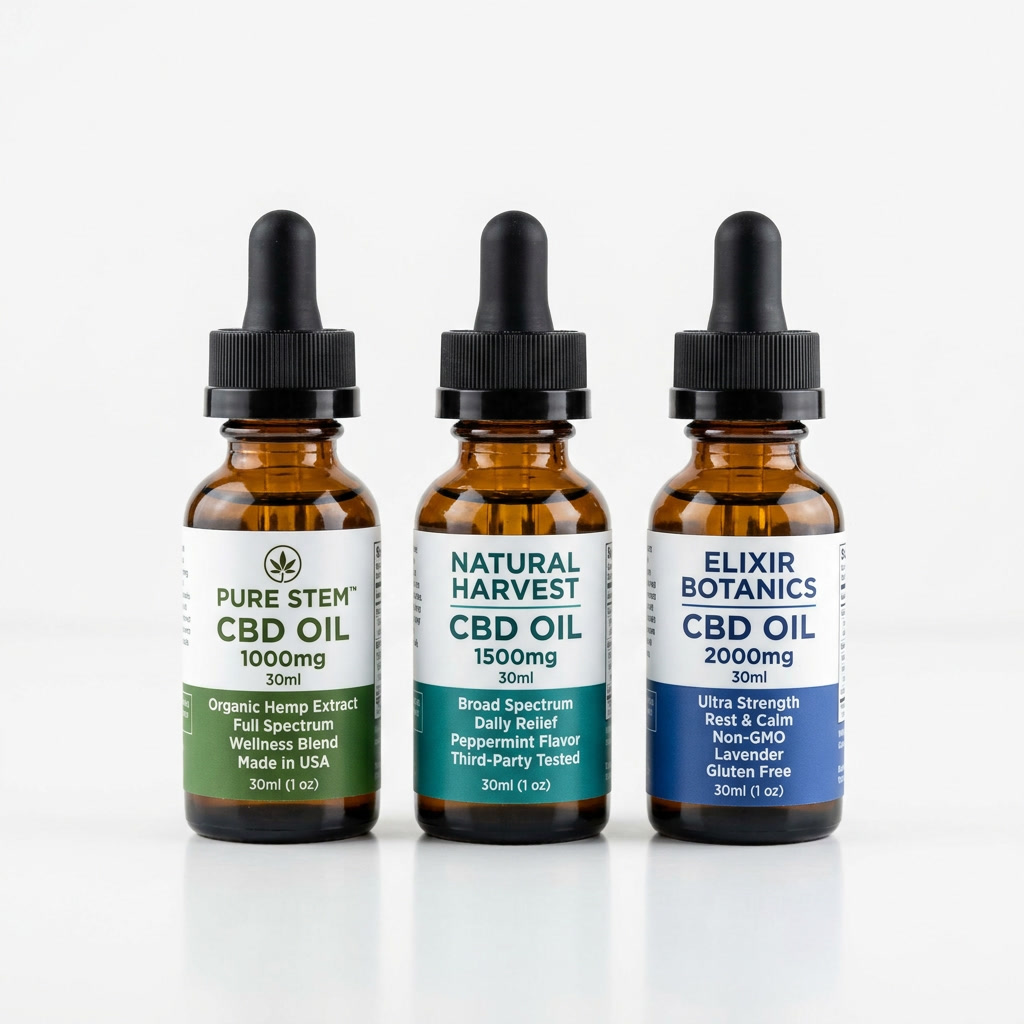
Now the other half of the story. A 2026 study in Cannabis and Cannabinoid Research bought 18 CBD tinctures from different brands sold online in the United States and measured them with reverse-phase high-performance liquid chromatography.
The threshold for inaccuracy was a deviation of more than 10 percent from the labelled CBD concentration. That is a generous threshold, since it allows a product to be a tenth off and still count as accurate.
Twelve of the 18 samples failed.
The study also found a significant difference in label accuracy between broad-spectrum and full-spectrum tinctures, with a p value of 0.0282, and no significant correlation between the cost of a tincture and its accuracy, at 0.2117. Paying more did not buy a more honest label.
The THC findings should stop a shopper cold. None of the broad-spectrum tinctures contained delta-8 THC, though two contained delta-9. All of the full-spectrum tinctures contained both, at levels below the federal hemp limit of 0.3 percent on a dry weight basis.
That clause is where consumer confusion lives. A product can be legally hemp-derived, sit under the threshold, and still deliver a measurable THC dose per serving. The percentage is calculated on dry weight of plant material, while the millilitres in your dropper are a different calculation. If you are subject to workplace testing, that distinction matters enormously, and our guide to CBD and drug testing covers it.
Bioavailability and Supplement Formats
Even a correctly labelled product does not tell you what you absorb. A 2026 review in Molecules examined CBD in dietary supplements and landed on the central problem, which is that oral bioavailability is both low and highly variable.
The review covers oils, capsules, gummies and e-liquids, and notes that each presents different challenges for stability and absorption. CBD taken orally passes through the gut wall and the liver before reaching systemic circulation, and a large fraction is lost on the way. Formulation changes that fraction substantially, so the same milligram in a capsule and in a nano-emulsion is not the same dose in practice. The review also notes limited long-term safety data and the EU position, where CBD products are classified as novel foods and require a safety assessment before authorisation.
Put the two product papers together and the arithmetic gets uncomfortable. A label that is 20 percent off, in a formulation with variable absorption, sold to a consumer with no way to measure either, produces a dose that is essentially unknown.
The European View: No Authorised Products
The sharpest regulatory analysis in this set comes from a 2025 review in Nutrients, produced by the Permanent Senate Commission on Food Safety of the German Research Foundation.
The commission looked at non-medicinal CBD oils, which it describes as typically containing 5 to 40 percent CBD, and made two observations that sit awkwardly together. No CBD-containing product has been authorised as a novel food in the European Union. They remain widely available on the European market anyway.
On safety, the commission found increased liver enzyme activity in healthy volunteers at doses of 4.3 mg per kilogram of body weight per day and above, over three to four weeks. Because lower doses were not tested, no no-observed-adverse-effect level could be derived. The 4.3 mg/kg figure was therefore set as the lowest observed adverse effect level.
On claims, the conclusion was blunt. A critical evaluation of the data at or below that level found no scientific evidence to substantiate health claims relating to physical performance, the cardiovascular system, the immune system, the nervous system, anxiety, relaxation, stress, sleep, pain or menstrual health.
That is a blunt conclusion. It is not a finding that CBD is dangerous. It is a finding that the marketing is unsupported.
Dose Reality: Running the LOAEL Math
The commission then did something every CBD user should see. It took the lowest observed adverse effect level and compared it to real products.
For a 70 kilogram adult, 4.3 mg/kg works out to roughly 300 mg per day. A 20 percent CBD oil contains about 200 mg per millilitre. Thirty drops is roughly 1.5 millilitres, which is roughly 300 mg. So thirty drops of a standard-strength oil lands at the threshold where liver enzymes started moving in the trials.
Thirty drops is not an exotic dose. It is a slightly generous dropper. And the commission noted that this level may be easily reached through normal consumption of products already on the market, or exceeded.
The comparison to consumer dosing guidance is stark. Most beginner protocols suggest 10 to 20 mg per day, an order of magnitude below the threshold. But the market's implicit message, repeated across influencers and product pages, is that more is better and stronger is more effective. That escalation runs directly at the one number regulators have been able to pin down. For the fuller picture on hepatic risk, our article on CBD and liver safety goes deeper.
Why COAs Matter More Than Brand Claims
Return to the label study for a moment. Twelve of eighteen products failed a 10 percent accuracy threshold. Price predicted nothing. Every full-spectrum product contained both delta-8 and delta-9 THC.
None of that is visible from the front of the bottle. All of it is visible in a certificate of analysis, provided the COA is real, current and matched to the batch you are holding.
A brand claim is a marketing statement with no external verification, no standard format and no consequence when it is wrong. A COA is a laboratory report with a method, a date, a batch identifier and an accredited lab behind it. It can still mislead if it is from an old batch or a different product, which is why the batch match matters more than the logo.
This is the practical conclusion of everything above. Prevalence studies say tens of millions of people use CBD. Product studies say a large share of what they use does not match its label. The only defence available to an individual in an unregulated market is documentation.
What a COA Tells You
A full-panel COA should cover four things.
- Potency, broken down by cannabinoid rather than one total, so you can see CBD, THC and any minor cannabinoids the product claims
- Contaminants, meaning heavy metals, pesticides and residual solvents, which is where a cheap supply chain shows up
- Microbiology, meaning total yeast and mould, E. coli and salmonella
- The administrative layer, where the batch number on the report matches the batch on your bottle, the lab is independent and the test date is recent
Our walkthrough of reading a CBD certificate of analysis covers each of these in detail.
What a COA does not tell you is how much you will absorb, how the product will interact with your medication, or what happens with long-term daily use at high dose. Those questions do not have clean answers yet, which is exactly why product quality is the question you can actually act on.
What This Means If You Use CBD
Treat the milligram number on the bottle as a claim rather than a measurement, and look for the batch-level COA that supports it.
Check THC content if you are subject to drug testing, and remember that full-spectrum products contain both delta-8 and delta-9 even when they comply with the hemp threshold.
Tell your pharmacist what you take if you use prescription medication, particularly anything metabolised through cytochrome P450, including blood thinners, antidepressants, anti-seizure drugs and immunosuppressants.
Start below the label recommendation rather than at it, and stay there if it works.
Keep some record of what you take and how you respond, because the one thing every study in this set lacks is good data on individual dosing over time.
The prevalence numbers will keep being argued over. The product numbers are harder to argue with. In a market where two out of three bottles fail their own label, the certificate of analysis is not a marketing extra. It is the only part of the transaction that anyone has checked.
Usage being common is not the same as usage being informed. The CBD safety guide covers the questions worth asking about interactions and side effects before the first dose, and our CBD oils and tinctures range lists testing documentation alongside each product.
Find Your Perfect CBD Product
Take our 2-minute quiz to get personalized recommendations based on your needs.
Take the Quiz →Disclaimer: This article is for informational purposes only and does not constitute medical advice. CBD products are not FDA-approved to treat, cure, or prevent any disease. Always consult with a qualified healthcare professional before starting any new supplement, especially if you have a medical condition or take medications.