CBD for Menstrual Migraines: What the Research Shows in 2026
The Monday That Almost Didn't Happen
It starts like clockwork. Two days before your period, the telltale aura flickers at the edge of your vision, and by morning you're in a dark room with a cold cloth over your eyes, rescheduling meetings, canceling dinner, and wondering why your own body keeps hijacking your week. You're far from alone. Menstrual migraine affects an estimated 50-60% of women who get migraines, and the attacks are typically longer, more disabling, and harder to treat than other migraine subtypes. If you've ever googled "CBD for period migraines" at 2 a.m. while clutching your temples, you already know the real question underneath: does any of it actually work, or is it just wellness-industry hype?
That's exactly what I wanted to answer. So I went straight to the primary research — peer-reviewed studies published from 2023 through 2026 — and separated what the evidence actually supports from what's still speculative. Here's what the science says, what it doesn't, and how to think about CBD realistically if you're navigating hormonal headaches.
Why Menstrual Migraines Are Different
Before we talk about CBD, it helps to understand why period-related migraines deserve their own conversation. Menstrual migraine is a distinct subtype of migraine linked to the natural drop in estrogen that happens right before menstruation. That hormonal shift is a well-documented trigger, and it changes the clinical picture.
A 2026 bibliometric analysis in Frontiers in Medicine — which mapped over 1,100 published papers on menstrual migraine from 1994 to early 2026 — confirmed what many headache specialists already knew. Compared with other migraine types, menstrual migraine is characterized by increased disability, longer attack duration, and a more challenging treatment response. The same analysis found that research output in this area is rising steadily, peaking in 2025, with emerging research keywords like "sex differences" signaling that scientists are finally paying more attention to how migraine differs in female biology.
In plain terms: this isn't just "a migraine that happens to fall near your period." It's a biologically distinct beast, which means the treatment playbook may need to look different too.
What We Actually Know About Cannabinoids and Migraine
Here's the honest starting point. When researchers talk about cannabis and migraine, they're usually looking at two main compounds — CBD (cannabidiol) and THC (tetrahydrocannabinol) — and the evidence for each is not the same.
A 2023 review in Current Pain and Headache Reports concluded that preliminary studies show promise for cannabis and cannabinoid therapies in migraine, but emphasized that more randomized, controlled trials are needed to support routine clinical use. The authors positioned cannabinoids as a potential integrative treatment for people who are refractory to standard care — not as a first-line replacement. It's worth noting that as of that review, cannabinoid therapies were not included in official migraine treatment guidelines like the American Headache Society's 2021 consensus statement.
That's the cautious frame. But the research landscape has moved fast since 2023, and a few genuinely important studies have landed since then.
The 2026 Clinical Trial That Changes the Conversation
The most significant development is a randomized, double-blind, placebo-controlled crossover trial published in Headache in 2026. This was the first real clinical trial to put vaporized cannabis head-to-head against placebo for acute migraine attacks.
The design was rigorous. Adults with migraine treated up to four separate attacks, each with a different vaporized product: a THC-dominant flower (6% THC), a CBD-dominant flower (11% CBD), a combined 6% THC + 11% CBD product, and a placebo — all in randomized order. The results, measured at the two-hour mark, are genuinely interesting:
- THC + CBD beat placebo for pain relief (67.2% vs. 46.6%), pain freedom, and relief of the most bothersome symptom
- THC alone beat placebo for pain relief but not for full pain freedom
- CBD alone did NOT beat placebo for pain relief or pain freedom
- There were no serious adverse events across the trial
That last line is the one you need to sit with. This is the best evidence we have to date, and it tells us something counterintuitive: CBD by itself didn't outperform placebo for an acute migraine attack. The benefit showed up when CBD was combined with THC.
CBD Alone vs. CBD Plus THC: The Nuance
If you're reaching for a pure CBD oil hoping it'll knock out an active migraine, the 2026 trial suggests that expectation may not be well supported. But that doesn't mean CBD has no role — it means the nuance matters, and here's where the picture gets more interesting.
Preclinical research has repeatedly found that CBD and THC work better together than either alone. This is sometimes called the "entourage effect." A 2025 study in Cephalalgia tested a 100:1 CBD-to-THC combination in mice and found it rescued migraine symptoms — including light aversion and pain — triggered by CGRP, a key molecule involved in migraine. Another 2025 study in female rats found that CBD alone reduced migraine-like pain responses in some models, but CBD combined with THC was often the most effective, particularly for the light sensitivity that's so disabling during attacks.
The takeaway is genuinely practical: if you're considering CBD for migraine, the formulation matters. Full-spectrum or combination products (which contain trace amounts of other cannabinoids) may behave differently than pure CBD isolates. And notably, a 2025 study in Frontiers in Pharmacology following women with chronic pain syndromes who used full-spectrum cannabis extracts found that all participants reported some level of pain relief — though that was a retrospective, real-world report rather than a controlled trial.
What the Studies Actually Measure (and What They Don't)
Here's the part that often gets lost in wellness marketing. When we look at the evidence, most of the strong, recent data on CBD and migraine is either preclinical (animal models) or observational (surveying what people already do). Both are valuable, but neither is the same as a large controlled human trial proving CBD treats menstrual migraine.
Consider the biggest observational study we have. A 2024 survey of 1,373 patients at a tertiary headache center in Neurology: Clinical Practice found that 55.7% had used cannabis-based products in the past three years, and a majority reported perceived improvements:
- 78.1% reported reduced headache intensity
- 73.4% reported shorter headache duration
- 62.4% reported lower headache frequency
- 56.3% reported improvement in nausea
That sounds encouraging. But here's the catch: these are perceived benefits reported by people who chose to use cannabis — not measured outcomes in a randomized trial. And it's not universal. About 1 in 5 users (20.9%) reported side effects, most commonly fatigue. The study authors were explicit that these findings "warrant experimental trials to confirm the perceived benefits."
The honest summary: people who use cannabinoids for migraine often report it helps, and that's real data worth taking seriously. But perception is not proof, and we don't yet have a large human trial specifically proving CBD works for menstrual migraine.
Is There Any Direct Evidence for CBD and Period-Related Pain?
This is where things get a little more encouraging — even if we have to be careful about extrapolation. While there isn't yet a dedicated trial of CBD for menstrual migraine specifically, recent research on CBD and other female reproductive pain conditions gives us a useful parallel.
A 2026 observational cohort study in BMC Complementary Medicine and Therapies followed women with endometriosis — a condition marked by severe pelvic pain and painful periods — who used medicinal cannabis (CBD oil, sometimes with dried flower). Over 12 weeks, participants reported meaningful reductions in overall and worst pelvic pain, and their quality-of-life scores improved significantly. It's an observational study, so we can't say CBD caused the improvement, but it's consistent with a growing signal that cannabinoids may help with period-related pain.
A related 2026 literature review in JBRA Assisted Reproduction on CBD and THC in endometriosis (which affects roughly 10% of reproductive-age women) highlighted the compounds' anti-inflammatory and pain-modulating properties — while carefully noting that most use remains off-label and higher-quality human evidence is still needed.
Here's the key translation for menstrual migraine specifically: CBD research is showing a plausible mechanism for helping with hormone-linked pain, and observational data in related conditions is promising, but the direct evidence for CBD in menstrual migraine specifically remains thin. Any claim that "CBD cures period migraines" is not supported by the science — yet.
Why the Mechanism Matters (and Why It's Plausible)
Despite the gaps in clinical evidence, there are genuine biological reasons researchers are interested in CBD for migraine — and for hormonal migraine in particular.
CBD interacts with the body's endocannabinoid system, which helps regulate pain, inflammation, and stress responses. It also acts on receptors and channels involved in pain signaling, including TRPV1 (the same receptor capsaicin activates) and 5-HT1A serotonin signaling. Preclinical work from 2025 in Cephalalgia showed that CBD-containing combinations could dampen the effects of CGRP — the peptide at the center of migraine attacks — reducing both light aversion and pain-like behavior.
When you factor in estrogen's influence on pain processing and the endocannabinoid system's own sensitivity to hormonal fluctuations, the hypothesis that CBD could help with menstrual migraine becomes biologically coherent. A coherent hypothesis, however, is not the same as proven treatment. That distinction is the whole ballgame.
Realistic Expectations: The Bottom Line
So where does that leave you? Let me be direct about what the 2023-2026 evidence supports and what it doesn't.
The evidence supports treating CBD as a potential adjunct worth discussing with a healthcare provider — particularly given the strong observational reports of perceived benefit, the generally favorable safety profile in recent trials (no serious adverse events in the 2026 RCT), and the plausible biological mechanism.
The evidence does not support the idea that CBD is a proven, first-line treatment for menstrual migraine, that pure CBD reliably stops an acute attack (the 2026 trial found CBD alone didn't beat placebo), or that CBD should replace conventional migraine care without medical guidance.
The smartest framing comes from the 2025 JAAPA review on whether CBD should be used for migraine. It noted that migraine is the top cause of years lived with disability among women aged 15-49 globally — and that people with migraine lose about 3.5 hours of productive time per week to their condition. Given that burden, exploring safe adjunctive options is entirely reasonable. But it recommended doing so as an adjunct or alternative to primary treatment modalities, ideally with clinician awareness.
My practical takeaway: CBD is a promising, biologically plausible, and relatively low-risk tool to consider — especially in full-spectrum formulations for people interested in the combination benefits seen in research. But treat the "miracle cure" marketing with deep skepticism, track your own response carefully, and never use it to replace prescribed migraine medication without talking to your doctor first.
How to Approach CBD for Menstrual Migraine, Responsibly
If you and your healthcare provider decide CBD is worth exploring, here's a sensible, evidence-aware approach:
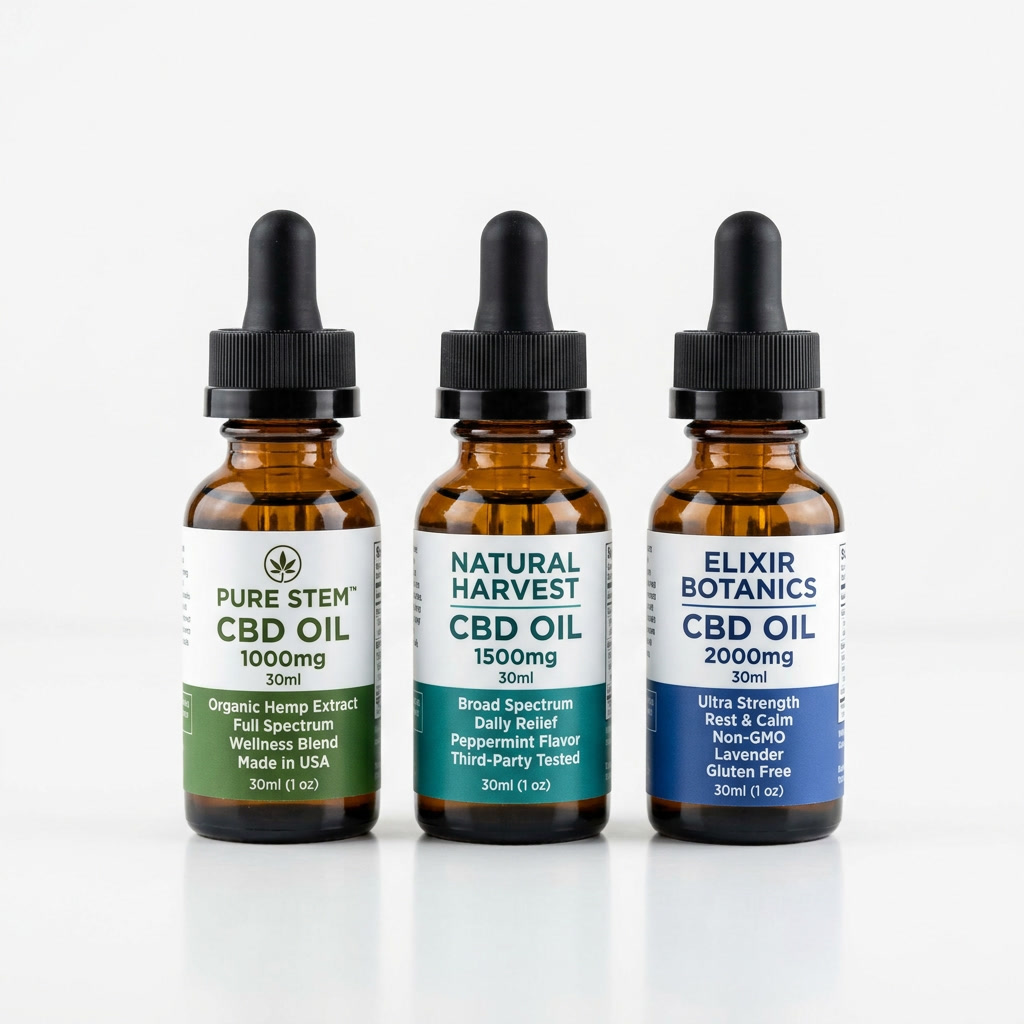
Start with the right product. Given the research showing CBD performs best in combination with other cannabinoids, a full-spectrum oil is worth considering over a pure isolate. Always check third-party lab testing to confirm what's actually in the bottle.
Choose your delivery method thoughtfully. Oral oils and capsules offer longer-lasting, steadier effects — useful for prevention-style use across the premenstrual window — so it's worth browsing CBD oils and tinctures if that's the route you prefer. Vaporized or inhaled products act faster but that route is associated with the more acute-use pattern studied in clinical trials.
Time it around your cycle. Since menstrual migraine clusters in the days just before and during your period, some people use CBD as a short-term preventive through that window rather than daily year-round. CBD capsules and softgels can be a convenient way to keep a steady, consistent dose for that premenstrual stretch. Track whether it changes your pattern.
Start low and go slow. Begin with a modest daily dose and give it a couple of weeks before judging effects. Keep a simple journal of dose, timing, period phase, and headache severity — you'll spot patterns far faster than relying on memory. If pain is your primary concern, products formulated for that goal — see the CBD for pain range — may be worth comparing alongside standard oils.
Never replace prescribed medication without guidance. If you take blood thinners, antidepressants, or certain seizure medications, talk to your doctor before using CBD, because interactions are possible.
Manage the whole picture. CBD isn't a magic bullet. Sleep, stress, hydration, and consistent eating around your cycle all influence migraine burden — and research increasingly treats hormonal migraine as something to manage holistically, not with a single compound. Because disrupted sleep is such a common migraine trigger and co-factor, a product aimed at CBD for sleep could be worth exploring if insomnia or poor rest is part of your cycle. And if topical application appeals to you, some people prefer the localized relief of a CBD topical cream for neck and shoulder tension that often accompanies attacks.
The Bottom Line
Menstrual migraine is a real, disabling, and biologically distinct condition affecting the majority of women who get migraines — and research into it is finally accelerating. The 2023-2026 evidence on CBD is genuinely encouraging, but it's also more nuanced than the marketing suggests: CBD shows real promise as an adjunct, works best in combination with other cannabinoids in the strongest recent trial, and has a favorable safety profile, yet it is not yet a proven, first-line treatment for menstrual migraine. The most honest takeaway is that CBD is a plausible, low-risk tool worth discussing with your clinician — not a guaranteed cure. Used thoughtfully, with realistic expectations and the right formulation, it may earn a place in your toolkit. If you decide to try it, explore the range of CBD products and choose based on how you prefer to dose — but let the evidence guide your expectations, not the hype. But the real victory is giving yourself permission to take your hormonal headaches seriously enough to explore all the options — informed by evidence, not hype.
Cannetics is an independent review site. Always consult a qualified healthcare professional before starting any new supplement or treatment, especially for a medical condition like migraine.
Find Your Perfect CBD Product
Take our 2-minute quiz to get personalized recommendations based on your needs.
Take the Quiz →Disclaimer: This article is for informational purposes only and does not constitute medical advice. CBD products are not FDA-approved to treat, cure, or prevent any disease. Always consult with a qualified healthcare professional before starting any new supplement, especially if you have a medical condition or take medications.