CBD Before the Big Moment: What It Can and Cannot Do for Test and Performance Anxiety

Your hands are cold. Your mouth is dry. Somewhere in your chest, your heart is doing that thing — too fast, too loud, like it's trying to escape. You've studied for weeks, rehearsed the pitch a dozen times, or prepared an answer for every question they might ask. And now, ten minutes before it starts, your body has decided to betray you.
Maybe it's an exam hall with the clock ticking. A job interview that feels like it's riding on the next thirty minutes. A presentation, a wedding speech, a first recital, an audition behind a closed door. The details change, but the feeling is the same: a surge of fear that arrives exactly when you need your mind to be calm.
This is performance anxiety, and it's one of the most common forms of anxiety there is. Millions of people quietly search for something that will take the edge off without leaving them foggy, sedated, or dependent. CBD has become one of the most popular answers. The question is whether the hype matches the evidence.
Let's look at what the research actually says — where CBD genuinely helps, where it doesn't, and how to think about using it before a high-stakes moment.
Why Performance Anxiety Is Its Own Beast
Everyday anxiety is background noise. Performance anxiety is a fire alarm. It shows up on a schedule, tied to a specific event with a clear outcome, and it peaks in the minutes right before the thing you're afraid of.
That timing matters. Unlike generalized worry that drifts through your week, performance anxiety is acute, situational, and anticipatory. It hijacks the stress response on cue — adrenaline, cortisol, a racing pulse, shallow breathing, a knotted stomach. Your prefrontal cortex, the part you need for recall and reasoning, gets partly sidelined by a nervous system that thinks you're about to be eaten.
The frustrating part is the paradox. The more the situation matters to you, the harder your body fights you. For many people, the same acute spike that shows up before an exam also shows up in social settings — which is why the lessons from CBD and social anxiety overlap so heavily with performance nerves. And the symptoms themselves become a second fear: you worry your shaking hands or cracking voice will be noticed, which makes them worse.
So when people ask whether CBD can help, they're really asking something specific: can it blunt the acute spike without dulling the sharpness they need to perform?
What the Research on CBD and Anxiety Really Shows
Here's the honest starting point: the evidence on CBD for anxiety is early, and it is mixed. Anyone who tells you the science is settled is selling something.
A 2026 systematic review from MIT researchers, published in Frontiers in Neuroimaging, pooled the functional brain-imaging studies comparing CBD with placebo under stress or anxiety conditions. Twelve studies with 146 participants met the bar. The result was a wide spread of effects across many brain regions, with mixed directions of activation, substantial heterogeneity, and high risk of bias in several studies. The authors rated the certainty of evidence as low to very low, and concluded there is a lack of consistent evidence that acute CBD changes the brain in a reliable way during stress.
A 2025 scoping review in Medical Cannabis and Cannabinoids looked across 29 studies of cannabinoids for anxiety and sleep. Roughly 45% reported positive effects, but the authors flagged substantial differences in study design, product types, and dosing, and noted that few studies provided standardized dosing protocols or effect sizes. The signal is interesting, but the studies don't line up well enough to make firm promises.
The largest and most rigorous attempt to settle things came in 2026. A meta-analysis in The Lancet Psychiatry examined 54 randomized controlled trials of cannabinoids for mental health and substance use disorders. For most outcomes, the certainty of evidence was low, and for anxiety the picture was not strong enough to support cannabinoids as a first-line treatment. A 2026 review in JAMA reached a similar place: promising in some areas, unproven in others, and not a substitute for established care.
None of that means CBD does nothing. It means we have to be precise about what "does something" looks like.
The Dose Problem Nobody Talks About
Most of the dramatic CBD results in the media come from studies using high doses — often 300 mg or more, sometimes taken daily for weeks. That is not what's in the bottle most people buy.
A 2026 randomized crossover trial published in the Journal of Psychopharmacology tested this directly. Seventy healthy volunteers received single oral doses of 20, 50, 100, and 200 mg of synthetic CBD, plus a placebo, after a high-fat meal. Single doses of 100 mg or less were unlikely to produce any discernible psychoactive effect at all. Only the highest dose, 200 mg, produced a slight but perceptible effect, and even that was modest.
In other words, if you take a low-dose gummy before an interview and feel something dramatic, the most likely explanation is not the pharmacology. It's expectation.
Why the Waiting Is Usually Worse Than the Event
If you've ever had performance anxiety, you know the peak isn't during the performance. It's before.
The anticipation is where the nervous system does its worst work. You rehearse disasters. You imagine the blank stare, the wrong answer, the audible laugh. Your body starts producing stress hormones hours ahead of time, so by the time the event starts, you're already running on fumes.
This is exactly the window where people hope CBD will help: take something calming an hour before, let the cortisol settle, walk in steady.
But here's the catch. The most rigorous test of that scenario — a low-dose CBD trial built around an acute stress task, including a virtual-reality public speaking challenge — was still only published as a study protocol in BMJ Open in 2024. That trial planned to give 150 mg of CBD 90 minutes before a public speaking task, a walk-the-plank task, and a rollercoaster. The design was smart, but the results haven't fully landed in a way that lets us claim a proven benefit for pre-speech anxiety.
So when someone online says CBD "completely fixed" their interview nerves, treat it as an anecdote, not evidence.
CBD vs. Beta-Blockers vs. Benzodiazepines
This is where clarity matters most, because people often lump these together. They are not the same, and they are not interchangeable.
Beta-Blockers
Beta-blockers like propranolol block the physical symptoms of the stress response — the racing heart, the trembling hands, the shaky voice. They're prescribed for certain heart conditions and sometimes used off-label for performance anxiety by musicians and public speakers. They act fast and are well understood, but they require a prescription and a conversation with a doctor, because they affect heart rate and blood pressure.
Benzodiazepines
Benzodiazepines like diazepam or lorazepam are central nervous system depressants. They reduce anxiety powerfully and quickly, which is exactly why they carry real risks: sedation, cognitive slowing, tolerance, and dependence with regular use. They are not something to self-prescribe before an exam or a presentation.
CBD
CBD is a non-intoxicating cannabinoid. It does not work like a sedative, and at typical over-the-counter doses it does not work like a beta-blocker either. Its proposed calming effects are indirect — interacting with serotonin receptors and other pathways rather than directly sedating the brain.
Here's the part that matters: CBD is not a replacement for prescribed medication, and no one should stop or change a prescribed anxiety treatment because they read a blog post. If you take medication for anxiety, heart conditions, or anything else, talk to your doctor before adding CBD. It can interact with certain drugs, including some antidepressants and blood thinners.
If you want the fuller picture, how CBD compares with conventional anxiety medications is worth reading on its own.
How Long Before the Event Should You Take It?
Timing is one of the few things we can speak about with reasonable confidence, because it comes down to how the body absorbs CBD.
Taken orally as a gummy or edible, CBD has a slow, variable onset — often 30 to 90 minutes, and sometimes longer, especially after a meal. Taken sublingually, held under the tongue as an oil or tincture, absorption is a bit faster. Vaping produces the fastest onset but is not appropriate for everyone and carries its own risks.
For a performance event, that timing problem is real. Take it too early and the effect may have faded; too late and it won't have kicked in. Most people experimenting with CBD for situational stress aim for roughly 60 to 90 minutes before the event, then adjust based on their own experience — not someone else's dose.
If you're new to CBD, the guide on how long CBD takes to work is a better starting point than guessing on the day of your exam.
A Sensible Pre-Event Timing Approach
Test your timing on a low-stakes day first. Pick a day when nothing important is happening, take your chosen dose, and note when you feel anything at all — and when it fades. Then, on the real day, back-time from the event using your own data.
Never try a brand-new product at a new dose for the first time on the day of something that matters. That's the fastest way to discover a sensitivity you didn't know you had.
What CBD Can and Cannot Do
Let's be straight about both lists.
What CBD realistically might do:
- Take a slight edge off anticipatory tension for some people
- Support general daily stress management when taken consistently over weeks
- Fit into a wind-down routine before an early night before an event
- Offer a lower-risk option than alcohol for people who want to avoid drinking before a performance
What CBD cannot do:
- Instantly dissolve acute panic in the middle of a presentation
- Replace studying, rehearsal, or preparation — the actual drivers of performance
- Guarantee a calm outcome, because much of the effect appears to be expectation-driven
- Substitute for prescribed anxiety medication, beta-blockers, or therapy
- Work the same way for everyone, because dosing, absorption, and response vary widely
The gap between those two lists is where honest CBD education lives.
The Placebo Problem — and Why It Isn't an Insult
One of the most important studies in this space wasn't about whether CBD works. It was about why people feel like it works.
A 2025 randomized controlled trial in the Journal of Cannabis Research followed 180 highly stressed university students at risk of depression. They were split into three groups: daily sublingual low-dose full-spectrum CBD oil for 30 days, a placebo oil, and no treatment at all. After a month, the CBD group and the placebo group both improved significantly more than the no-treatment group on stress, depressive symptoms, and somatization. But there was no significant difference between CBD and placebo on any outcome. The benefit was real — it just wasn't coming from the CBD itself.
This isn't a reason to sneer at CBD. Placebo effects are genuine, measurable, and can be helpful. If a calming ritual helps you walk into an exam hall steadier, that's a real benefit. But it does mean honesty is required when we describe what's happening.
The pattern shows up in clinical settings too. A 2026 double-blind trial in Experimental and Clinical Psychopharmacology tested 300 mg versus 50 mg of CBD daily in people with high trait worry. The 300 mg group improved more than the 50 mg group — but did not significantly beat placebo. And a 2025 Sydney trial of acute CBD before endurance exercise found no meaningful effect on mood or anxiety afterward at either 50 mg or 300 mg.
Where the Positive Signal Actually Lives
It would be misleading to end there, because some studies do point in a hopeful direction.
An open-label pilot from McLean Hospital and Harvard Medical School, published in Biomedicines in 2025, gave 12 patients with at least moderate anxiety a hemp-derived, full-spectrum, high-CBD sublingual product twice daily for six weeks. Patients reported significant reductions in anxiety, along with improvements in mood, sleep, and quality of life, with few side effects. The obvious caveat: it was open-label and tiny, so everyone knew they were taking CBD and there was no placebo group — a design prone to exactly the expectation effect described above. The authors themselves called for double-blind trials.
A 2026 randomized crossover trial in Autism Research found CBD reduced anxiety on a secondary behavioral measure in autistic children, even though the primary outcome missed. And a 2026 review in Expert Review of Neurotherapeutics on social anxiety disorder listed CBD among the more promising newer pharmacological options — while keeping SSRIs as the first-line treatment when therapy isn't available.
The pattern across all of this: signals exist, but they're modest, inconsistent, and often tied to specific populations or secondary outcomes. That's what early-stage science looks like.
What People Actually Do With CBD for Anxiety
It's worth knowing how common this is. A 2026 national survey in Frontiers in Public Health found that an estimated 35.2% of U.S. adults — roughly 90 million people — have ever used CBD, and about 32% of ever-users had used it as a substitute for or an adjunct to a medication. Anxiety was among the top conditions people targeted.
That scale is exactly why honest information matters. A 2025 study of medical cannabis patients in Pennsylvania, published in the American Journal of Drug and Alcohol Abuse, found that patients with the most severe anxiety were more likely to be using CBD alongside prescription benzodiazepines — a combination that deserves clinical oversight, not guesswork.
A Practical Pre-Event Protocol
If you're curious about CBD for situational anxiety, here's a grounded way to approach it.
Start well before the event. Don't debut a new product on the day that matters. Give yourself at least a week of low-stakes testing.
Choose a delivery method and stick with it. Oils and tinctures under the tongue typically come on faster than edibles. Keep it consistent so you can compare results.
Begin low. Many people start around 10 to 20 mg and observe. Because low doses may produce little perceptible effect, you may need to adjust upward carefully over several trials — or accept that CBD may simply not do much for you.
Time it from your own data. Typical onset for oral CBD is 30 to 90 minutes. Back-time from your event using what you learned in testing, not a forum post.
Write it down. Note the date, dose, time taken, how you felt at 30, 60, and 90 minutes, and how the event went. Patterns show up faster than memory allows.
Keep your preparation intact. CBD doesn't replace sleep, rehearsal, or study. The strongest predictor of how a performance goes is still how prepared you are.
Never mix in surprises. Avoid alcohol, avoid new supplements, and check with your doctor if you take any prescription medication.
Who Should Be Careful
CBD is generally well tolerated, but it isn't risk-free for everyone.
If you take blood thinners, antidepressants, seizure medications, or medications for heart or liver conditions, talk to a doctor first — CBD can affect how some drugs are processed. If you're pregnant or breastfeeding, if you have liver disease, or if you're under 18, skip it unless a clinician specifically advises otherwise. And if your performance anxiety is severe, recurring, or interfering with your life, CBD is not the tool you need — a doctor or therapist is. Anxiety disorders are highly treatable with evidence-based approaches like cognitive behavioral therapy, and that's a door worth walking through.
How to Tell If It's Helping
Run a simple honest check after a few weeks of situational use.
Did the event go better than similar events without CBD? Did you notice fewer physical symptoms, or the same ones? Did the effect feel dose-dependent, or the same at every dose? Were you calmer on days you didn't take it too?
If the answers point toward "it helps, but I can't tell if it's the CBD," that's a normal, honest place to land — and it's exactly what the research would predict.
Bottom Line
CBD is not a magic switch for test, interview, or stage anxiety. The strongest evidence suggests that at typical over-the-counter doses it may produce little perceptible effect, that much of the calm people feel is expectation and ritual, and that high-quality trials have not yet proven it beats placebo for acute performance anxiety. Some early studies point to modest benefits, particularly with consistent high-CBD products over weeks, but the certainty of that evidence is low.
What CBD can be is a low-intoxicating part of a broader plan — one that includes preparation, sleep, breathing techniques, and, when anxiety is serious, real clinical support. It is not a replacement for prescribed medication, and it is never a substitute for doing the work.
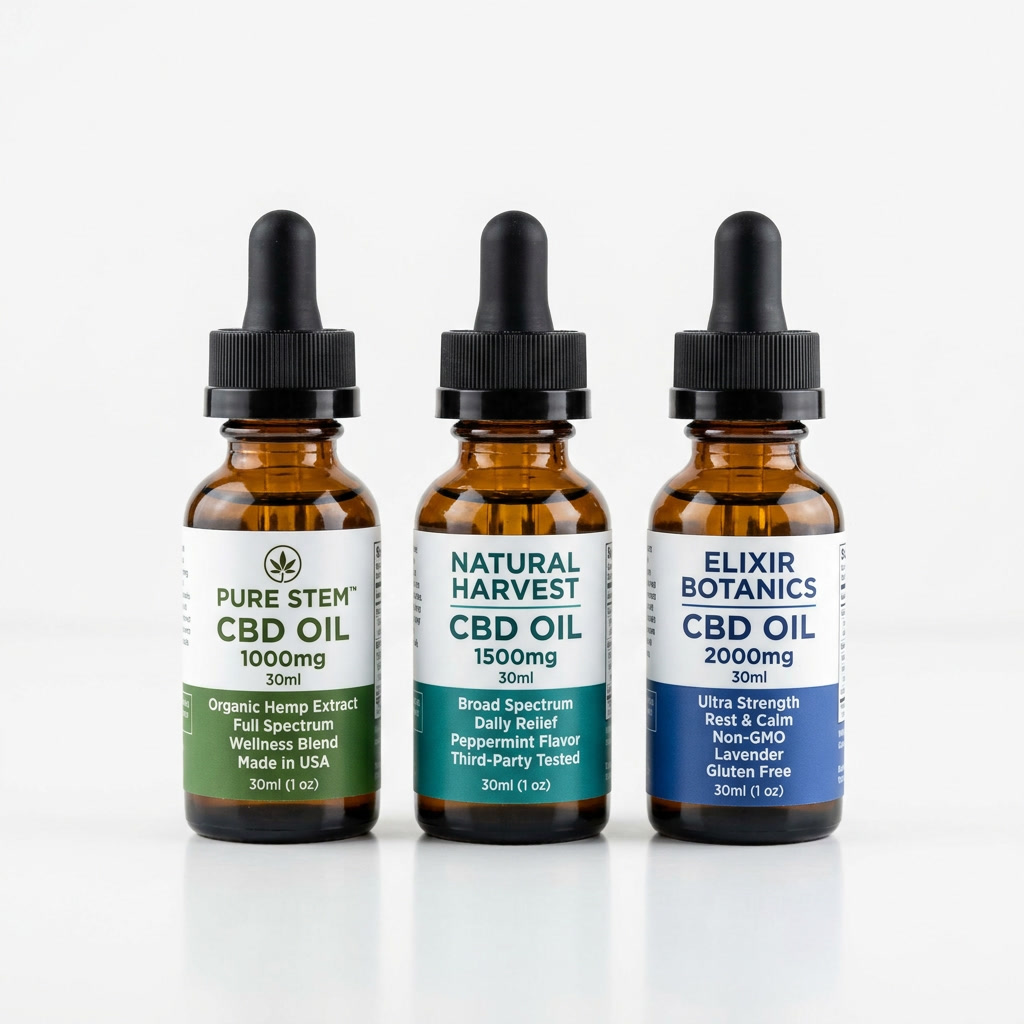
If you want to explore calming options, it's worth starting with a reputable, clearly labeled product and a realistic dose — many people begin with CBD oils and tinctures, while others prefer CBD gummies and edibles. You can also read more about CBD for anxiety specifically. And if the pressure you feel before the big moment isn't easing, that's not a sign to take more CBD. It's a sign to talk to someone who can help.
Find Your Perfect CBD Product
Take our 2-minute quiz to get personalized recommendations based on your needs.
Take the Quiz →Disclaimer: This article is for informational purposes only and does not constitute medical advice. CBD products are not FDA-approved to treat, cure, or prevent any disease. Always consult with a qualified healthcare professional before starting any new supplement, especially if you have a medical condition or take medications.