CBD & Metabolic Syndrome: What 2026 Research Says
You already know the numbers from your last checkup: blood pressure creeping up, fasting glucose a little high, a waistline that keeps expanding, and cholesterol that your doctor keeps flagging. Individually, none of it feels alarming. Together, it's a pattern with a name — metabolic syndrome — and it affects a surprisingly large share of adults. If you've been wondering whether CBD could help, you're not alone. A wave of 2025 and 2026 research has started to take the question seriously, moving beyond anecdote into actual lab work on how cannabinoids interact with fat, blood sugar, and liver health.
Here's the honest picture: the science is promising but still early, and most of the strongest evidence comes from animal models and reviews rather than large human trials. That doesn't mean the research is worthless — it means we need to read it carefully. In this guide, we'll break down what the newest studies actually found, how CBD appears to work in the body, and what realistic expectations look like if you're considering it as part of a broader metabolic health plan.
What Is Metabolic Syndrome, Exactly?
Metabolic syndrome isn't a single disease. It's a cluster of conditions that tend to travel together and raise your risk for heart disease, stroke, and type 2 diabetes. Doctors typically diagnose it when you have at least three of the following:
- Elevated blood pressure (130/85 mmHg or higher)
- High fasting blood sugar (100 mg/dL or higher)
- Excess belly fat (a large waist circumference)
- High triglycerides (150 mg/dL or higher)
- Low HDL cholesterol (the "good" kind)
The common thread underneath all of these is insulin resistance — your cells stop responding normally to insulin, so your body has to pump out more of it to keep blood sugar in check. Over time, that drives inflammation, fat accumulation in the liver, and the cascade of problems that define the syndrome.
Why CBD Is Suddenly Getting Attention
CBD (cannabidiol) is the non-intoxicating compound in cannabis that has exploded in popularity for pain, anxiety, and sleep. But researchers have long suspected it might do more. Because CBD is anti-inflammatory and interacts with the endocannabinoid system — a signaling network that helps regulate appetite, metabolism, and energy balance — it's a natural candidate for metabolic research.
A 2025 review in the British Journal of Pharmacology laid out the case directly, examining whether CBD has a role in obesity, metabolic syndrome, and binge eating. The authors noted that CBD influences eating behavior and metabolism through multiple pathways, including dopamine signaling in the brain's reward system, and that animal models of diet-induced obesity show CBD improving glucose and lipid metabolism while also reducing inflammation.
> "The evidence collected from preclinical research, together with preliminary findings from clinical studies, supports further investigation of CBD in the context of obesity, metabolic syndrome and binge eating behaviour."
That's the key phrase: preclinical and preliminary. The review is enthusiastic about the potential but honest that human data is still thin.
The 2026 Study Everyone Is Talking About: CBD + CBG and Fatty Liver
The most striking recent finding came from a 2026 study in the British Journal of Pharmacology that looked at CBD combined with another cannabinoid, CBG (cannabigerol), in a mouse model of diet-induced obesity and metabolic dysfunction-associated steatotic liver disease (MASLD) — the modern name for what used to be called fatty liver disease.
The results were notable. Treatment with CBD or CBG:
- Improved glycemic control (better blood sugar handling)
- Reduced hepatic triglycerides (less fat stored in the liver)
- Normalized serum lipids (healthier blood fat profile)
What made this study stand out was the mechanism. The researchers found that CBD and CBG boosted a process called phosphocreatine buffering — essentially giving liver cells a better energy reserve — and restored lysosomal function, which helps cells break down and clear fat. This worked independently of the endocannabinoid system, pointing to a novel way these compounds support liver health.
> "These findings identify a novel, endocannabinoid system-independent mechanism by which CBD and CBG enhance hepatic energy buffering and lysosomal function, contributing to improved liver lipid handling."
It's important to be clear: this was a mouse study. It tells us how CBD might work and gives strong reason to fund human trials, but it doesn't prove the same effects will appear in people. Still, for anyone with fatty liver concerns, it's genuinely encouraging direction.
How CBD May Affect Blood Sugar and Insulin
Insulin resistance is the engine of metabolic syndrome, and skeletal muscle is where most of your body's glucose gets used up. A 2026 narrative review in the European Journal of Translational Myology examined exactly this connection — whether CBD could influence skeletal muscle insulin resistance.
The review found that CBD may act on several pathways relevant to insulin resistance, including chronic low-grade inflammation, oxidative stress, lipotoxicity, and ceramide accumulation. These are all processes that gum up the way muscle cells respond to insulin.
But here's the crucial caveat the authors emphasized: current human studies remain limited and do not show consistent improvements in glycemic control or insulin sensitivity with CBD alone. They concluded that CBD is a "biologically plausible but clinically unproven" modulator of muscle insulin resistance, and should be considered an experimental adjunct rather than an established treatment.
> "CBD represents a biologically plausible but clinically unproven modulator of skeletal muscle insulin resistance. At present, it should be considered an experimental adjunct rather than an established therapeutic strategy."
That's the honest state of the evidence, and it's worth holding onto when you read more enthusiastic claims online.
The Gut-Liver Connection
Another angle researchers are exploring is the gut-liver axis — the two-way communication between your digestive tract and your liver. A 2026 review in Current Reviews in Clinical and Experimental Pharmacology examined how CBD might influence this pathway in metabolic and liver disease.
According to the review, CBD may offer liver protection by:
- Improving gut barrier integrity (reducing "leaky gut")
- Decreasing intestinal permeability
- Altering the gut microbiota
- Suppressing inflammatory signaling like NF-κB and the NLRP3 inflammasome
The review also noted that CBD may improve insulin sensitivity and reduce liver fat by modifying lipid and glucose metabolism through PPARγ and CB1/CB2 receptor pathways. But it flagged real limitations too: clinical data is inconsistent because of differences in dosage, formulation, and how CBD is administered, and there are concerns about drug interactions and regulatory hurdles.
What About the Female-Specific Picture?
Most metabolic research has historically been done in male animals, which is a real gap — metabolic syndrome affects women too, and often differently. A 2026 study in Frontiers in Nutrition addressed this directly by testing a full-spectrum cannabis oil (with a 2:1 CBD-to-THC ratio) in female rats with diet-induced MASLD.
The results were encouraging. The cannabis oil:
- Improved liver lipid metabolism
- Reduced NAFLD activity score and fibrosis markers
- Attenuated oxidative stress and lipid peroxidation
- Normalized hepatic CB1 expression and circulating endocannabinoid levels
This matters because it suggests the benefits aren't limited to one sex, and it highlights how the endocannabinoid system itself becomes overactive in metabolic liver disease — something CBD may help bring back into balance.
The Honest Reality Check: What We Still Don't Know
It's easy to get swept up in promising headlines, so let's be direct about the gaps. Here's what the 2025-2026 research does not yet tell us:
- Human trials are scarce. Most of the strongest evidence comes from mice and rats. We don't yet have large, well-controlled human studies confirming CBD improves metabolic syndrome markers.
- Dosing is unresolved. There's no established "metabolic dose" of CBD. Studies use wildly different amounts, routes, and formulations.
- CBD alone may not be enough. The insulin resistance review specifically noted that CBD alone hasn't shown consistent glycemic benefits in humans.
- Drug interactions are a real concern. CBD affects liver enzymes (CYP450) that metabolize many medications, including blood pressure and diabetes drugs.
- Full-spectrum vs. isolate matters. Some studies use pure CBD, others use full-spectrum oils with other cannabinoids, and the results may differ.
None of this means CBD is useless for metabolic health. It means the responsible framing is: promising, biologically plausible, and not yet proven — especially in humans.
How CBD Compares to the Lifestyle Basics
Before reaching for a supplement, it's worth remembering that the most powerful tools for metabolic syndrome are free and well-established. CBD, if it helps at all, works best as a complement, not a replacement.
- Weight loss of 5-10% reliably improves blood sugar, blood pressure, and cholesterol
- Regular exercise is the single best lever for insulin sensitivity
- A Mediterranean-style diet reduces inflammation and liver fat
- Sleep and stress management directly affect cortisol and blood sugar
CBD's potential role is as an adjunct — something that might support these efforts by reducing inflammation, improving sleep, or helping with the stress that drives metabolic problems. It is not a shortcut around the fundamentals.
What to Look For in a CBD Product
If you decide to explore CBD for metabolic health, product quality matters enormously. The market is uneven, and what's on the label isn't always what's in the bottle. Here's what to check:
- Third-party lab testing with a certificate of analysis you can actually see
- Clear CBD content per serving (in milligrams) rather than vague "hemp extract" claims
- Full-spectrum or broad-spectrum options if you want the entourage effect of multiple cannabinoids
- A reputable brand with transparent sourcing and manufacturing
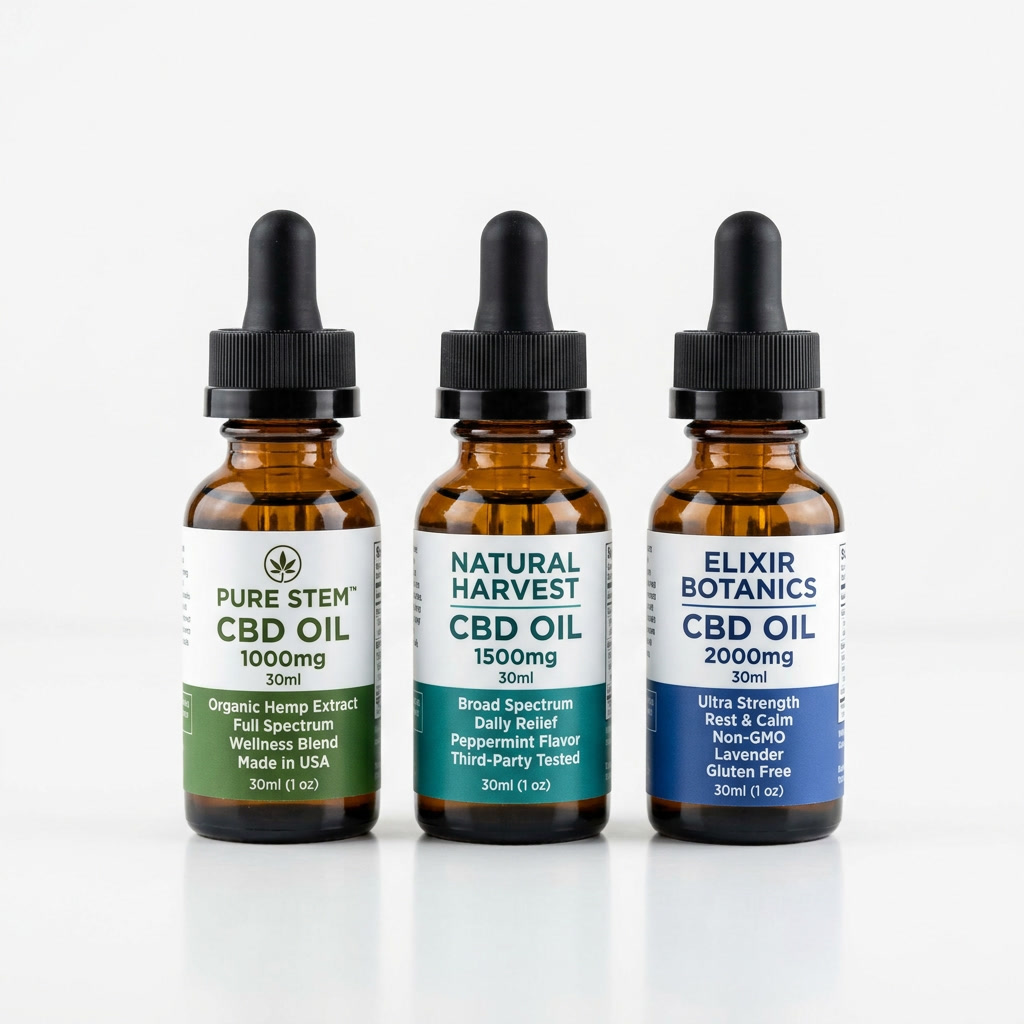
For most people, a CBD oil or tincture is the most flexible starting point because it's easy to adjust the dose drop by drop. If you prefer convenience and consistency, CBD capsules or softgels offer a fixed dose in a familiar format. Both are reasonable options — it comes down to how you like to take supplements. For deeper context, our guide to CBD and cholesterol and CBD and blood sugar unpack related metabolic markers you may be tracking.
A Realistic Action Plan
If you're considering CBD as part of a metabolic health approach, here's a sensible, evidence-aware way to go about it:
1. Talk to your doctor first, especially if you take blood pressure, diabetes, or cholesterol medication — CBD can interact with these.
2. Start low and go slow. Begin with a modest dose (10-20mg daily) and track how you feel for a couple of weeks.
3. Keep a simple journal. Note dose, timing, sleep, stress, and any side effects. Patterns show up within a few weeks.
4. Don't stop your medications. CBD is a complement, not a replacement for prescribed treatment.
5. Pair it with the fundamentals. Exercise, diet, sleep, and stress management remain the foundation.
6. Re-test your markers. If your doctor agrees, check blood pressure, fasting glucose, and lipids after a few months to see if anything moved.
The Bottom Line
The 2025 and 2026 research on CBD and metabolic syndrome is genuinely interesting. A landmark mouse study showed CBD and CBG reducing liver fat and improving metabolic markers in fatty liver disease, and multiple reviews point to plausible mechanisms involving inflammation, insulin resistance, and the gut-liver axis. But the honest truth is that human evidence is still limited, and no study yet proves CBD alone reverses metabolic syndrome. Treat it as a promising, biologically plausible adjunct — one that might support your efforts through better sleep, less inflammation, and lower stress — while you lean on the proven fundamentals of diet, exercise, and medical care. If you're curious, talk to your doctor, choose a high-quality product, and track your own results. That's the most responsible way to let the emerging science inform your decisions without overpromising what it can deliver.
Find Your Perfect CBD Product
Take our 2-minute quiz to get personalized recommendations based on your needs.
Take the Quiz →Disclaimer: This article is for informational purposes only and does not constitute medical advice. CBD products are not FDA-approved to treat, cure, or prevent any disease. Always consult with a qualified healthcare professional before starting any new supplement, especially if you have a medical condition or take medications.