CBD and Insulin Resistance: Where the Metabolic Research Actually Stands

You have probably seen the claim by now. Somewhere between a protein powder ad and a sleep supplement, a brand tells you that CBD can "support healthy blood sugar" or "improve insulin sensitivity." It sounds plausible. The endocannabinoid system really is involved in how your body manages energy, and CBD really does interact with it.
But if you or someone you love is dealing with insulin resistance, prediabetes, or type 2 diabetes, plausible is not good enough. You need to know what the research actually shows, where it stops, and what it cannot yet promise.
That is what this article is for. We are going to walk through what insulin resistance really is, why the endocannabinoid system keeps turning up in metabolic research, what the newest animal and lab studies found, and why human diabetes data is still surprisingly thin. We will look at the delivery problem that keeps tripping up CBD research, and at the safety signal that deserves a straight conversation. And we will be clear about the things CBD cannot replace. No hype. Just a careful look at the evidence, including the parts that should make you cautious.
If you have already read our earlier piece on CBD and blood sugar, treat this as the deeper dive into the biochemistry that one only sketched.
What Insulin Resistance Actually Is
Insulin is the hormone that tells your cells to take in glucose from your blood. After a meal, your pancreas releases insulin, cells respond by opening their doors, and blood sugar settles back down. That is the healthy version.
Insulin resistance is what happens when those cells stop responding as well. The pancreas compensates by pumping out more insulin to get the same job done. For a while, this works. Blood sugar stays normal even though insulin levels are creeping higher. This silent phase can last for years, and it is exactly why fasting glucose alone can look fine while something is already going wrong underneath.
Eventually the compensation fails, glucose starts to rise, and prediabetes or type 2 diabetes follows. Insulin resistance sits at the center of that slide. It is also tangled up with excess fat around the organs, low-grade inflammation, fatty liver, high blood pressure, and abnormal cholesterol. That cluster is often called metabolic syndrome.
A few things are worth holding onto here. Insulin resistance is a spectrum, not a switch. It is measured with tools like fasting insulin, HOMA-IR, and glucose tolerance tests, not just a single number on a lab sheet. And it responds strongly to lifestyle, including movement, sleep, weight, and diet.
Why the Endocannabinoid System Sits in the Middle of Metabolism
The endocannabinoid system is a signalling network your body uses to fine-tune a lot of processes. It has its own molecules, mainly anandamide and 2-AG, its own receptors, primarily CB1 and CB2, and its own enzymes that build and break those molecules down.
Researchers keep connecting it to metabolism because CB1 receptors are not only in the brain. They are also in the liver, fat tissue, muscle, and the pancreas, all of which matter for how your body handles glucose and fat. When this system is overactive in those tissues, it tends to push toward storing fat, eating more, and burning less energy.
That idea is not new or fringe. A drug called rimonabant blocked CB1 receptors and helped people lose weight, but it was pulled because of serious psychiatric side effects. The lesson was not that the system is irrelevant. The lesson was that blasting it with a sledgehammer is dangerous, and that we need gentler ways to nudge it.
This is where CBD enters the conversation. CBD is not a direct CB1 agonist in the way THC is, and it appears to act more like a modulator, subtly influencing how the system behaves rather than switching it hard on or off. That is the theory behind the interest. It is a genuinely reasonable mechanism to study.
But here is the careful part. Showing that a system is involved in metabolism is not the same as showing that a specific molecule improves a specific outcome in a person. Mechanism is the beginning of a research program, not the end of one. Keep that distinction in your head as we go, because most of the headlines blur it.
What the Preclinical Work Shows
Most of the recent excitement comes from cells and animals. That work is real, it is often creative, and it is worth understanding. It is also a long way from your bloodstream.
Preclinical studies let scientists test mechanisms under controlled conditions. They can dose precisely, measure tissue directly, and rule out a hundred confounders that wreck human studies. The trade-off is translation. A mouse is not a person, a lab dish is not a liver, and the doses used in these experiments do not always match anything a human would take.
Muscle Lipid Handling and Fatty Acid Transporters
A 2023 study in Scientific Reports looked at how cannabidiol affects the lipid profile of muscle, with a focus on the proteins that ferry fatty acids in and out of cells. Muscle is a major site of glucose disposal, and when fat handling inside muscle goes wrong, insulin signalling tends to suffer too. The researchers found that CBD influenced the expression of these fatty acid transporters, which shifted the muscular lipid profile in a way that could plausibly matter for metabolic health.
Read that carefully. It is a finding about fat handling in muscle tissue, not a finding that CBD lowers blood sugar in people. It tells researchers where to look next. It does not tell you what to buy.
The GPR55 Pathway and a Combination Study
Another strand runs through a receptor called GPR55. A 2023 study in Biochemical Pharmacology tested a GPR55 agonist called Abn-CBD, both on its own and alongside sitagliptin, a common prescription diabetes drug, in obese-diabetic mice fed a high-fat diet. The researchers were probing whether this cannabinoid-related pathway could improve metabolic outcomes, and whether it might add something on top of an existing treatment.
The interesting part is what it implies about mechanism. It suggests that some metabolic effects attributed to cannabis might run through receptors other than the classic CB1 and CB2, which is scientifically valuable because it opens new targets. It is not evidence that a CBD product on a shelf will do the same thing, especially since Abn-CBD is a distinct compound and the study was done in mice.
Macrophage Inflammation in Obesity
Chronic, low-grade inflammation is one of the threads that ties obesity to insulin resistance. Immune cells called macrophages move into fat tissue and release inflammatory signals that make insulin signalling worse. A 2025 study in the American Journal of Physiology Cell Physiology examined cannabis treatment in obese mice and reported improvements in metabolic dysfunction alongside changes in macrophage signatures, essentially a shift in the inflammatory behaviour of those immune cells.
This is a meaningful piece of the puzzle, because it connects the endocannabinoid system to the immune side of metabolic disease. It also stays firmly in the animal lane. Mice lost or gained metabolic function under a cannabis preparation, and the immune environment of their fat tissue changed. Whether any of that transfers to a human with prediabetes is an open question, and the honest answer today is that we do not know.
The Delivery Problem: Why Formulation Matters
If you have ever wondered why CBD studies struggle to show clean results, part of the answer is that getting CBD to the right tissue in a useful amount is genuinely hard. Swallowed CBD has poor and inconsistent absorption. A large share is broken down before it reaches the bloodstream, and two people taking the same labelled dose can end up with very different levels in their body.
This is why a 2025 study in the Journal of Biomedical Materials Research Part A is worth noticing even though it is early. The researchers built CBD-loaded PLGA nanoparticles, essentially tiny carriers designed to package and deliver CBD, and evaluated them in the context of managing metabolic syndrome. The point was not to prove CBD treats metabolic disease. The point was to explore a delivery system that could make CBD more stable, better absorbed, and more precisely targeted.
For a metabolic condition, that matters. If a compound is going to influence insulin signalling, fat tissue, or inflammation, it has to actually reach those tissues in a controlled way. Slapping a vague milligram number on a dropper bottle does not guarantee that. The formulation angle is one of the more interesting frontiers here, and it is also a reminder that a lot of consumer products are not built with this problem in mind.
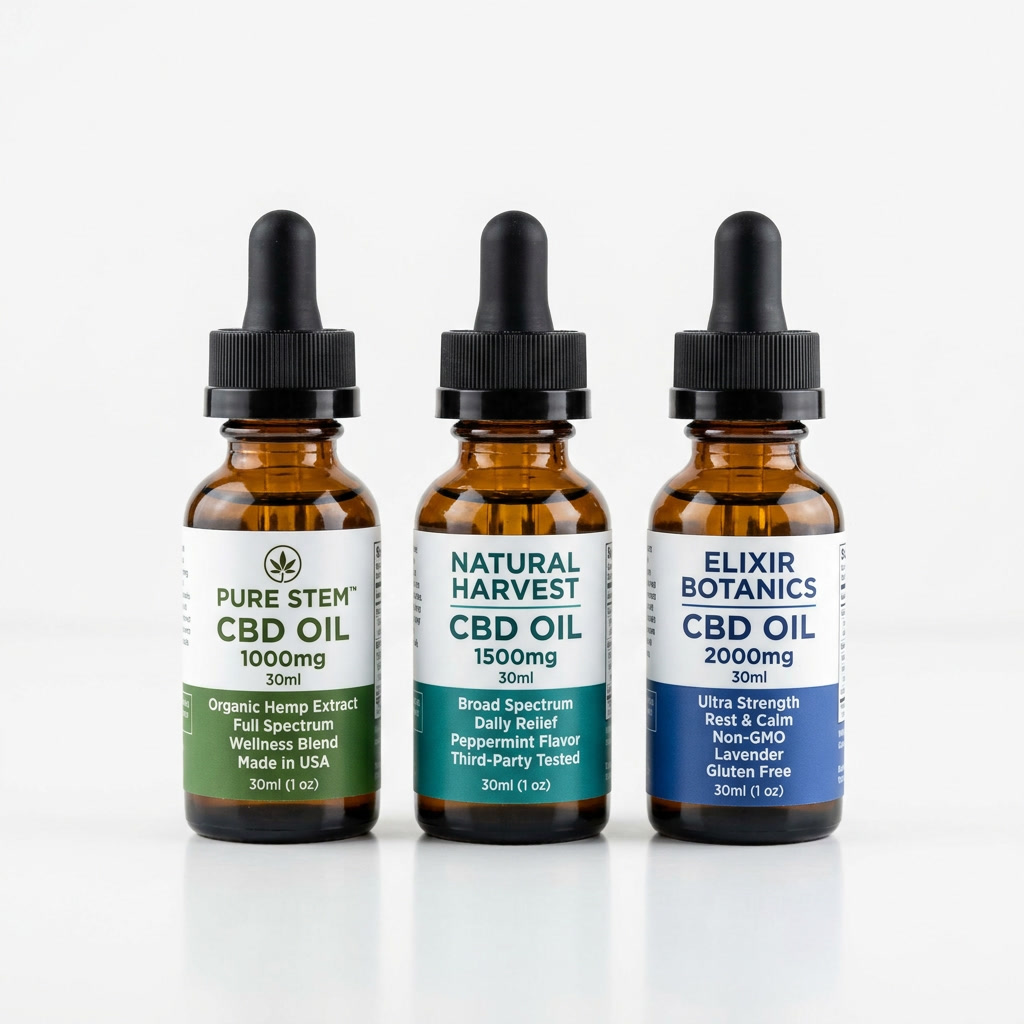
Practically, this means two things for you. First, when you read a study, ask what form of CBD was used and how it was delivered. Second, when you choose a product, treat absorption quality as a real variable rather than a marketing line. The full-spectrum and broad-spectrum oils in our CBD oils and tinctures section show what an oil-based delivery route looks like, though the same honesty applies to all of it.
When Diabetes and Depression Travel Together
Metabolic health rarely fails in isolation. Depression and diabetes show up together far more often than chance would suggest, and each tends to make the other worse. Poor sleep, low motivation, inflammation, and changes in appetite all run in both directions.
A 2024 review in CNS Neuroscience and Therapeutics examined the neurological and metabolic pathophysiologies that link diabetes with depression, and discussed treatment approaches for people living with both. The review highlights shared biological ground, including inflammatory signalling and disrupted energy regulation, that sits underneath the two conditions at once.
This matters for how you think about CBD. Many people reach for it not to fix their blood sugar but to help with mood, sleep, or stress, all of which ripple into metabolic health. That is a legitimate reason to be curious, and a reason to be careful, because treating one part of a connected picture and neglecting the rest rarely works. If mood and metabolism are linked, then sleep, movement, and mental health support are not side quests. They are part of the same conversation.
The Safety Signal You Should Not Skip
It would be irresponsible to write this article and only talk about promise. One of the most important recent findings is a caution, and it deserves the same weight as everything above.
A 2024 study in the Journal of Endocrinology found that gestational exposure to cannabidiol led to glucose intolerance in three-month-old male offspring. In plain terms, when pregnant animals were exposed to CBD, their male pups showed poorer glucose handling later in life. This is an animal study, so we cannot claim it proves the same in humans. But it is a clear signal that CBD is not automatically benign across every life stage, and that the timing of exposure can matter enormously.
If you are pregnant, planning a pregnancy, or breastfeeding, this is a conversation to have with your clinician before using CBD. The evidence is not strong enough to say CBD causes harm in human pregnancy, and it is not weak enough to ignore. Being responsible here means sitting with that uncertainty rather than waving it away.
There is a second safety dimension worth naming. CBD can interact with medications, including some drugs that affect blood sugar, blood pressure, and how the liver processes other medicines. Anyone managing diabetes is often on several prescriptions at once, which raises the stakes. It is a reason to talk to a pharmacist or doctor who knows your full list before you add anything.
What Human Data Actually Tells Us So Far
Here is where we have to be most disciplined, because this is where the marketing and the science drift furthest apart.
Human data on CBD and metabolic outcomes is still thin, and the studies that exist are small. A 2026 paper in the British Journal of Clinical Pharmacology evaluated the pharmacokinetics, efficacy, and safety of low-dose cannabidiol. Work like this is valuable precisely because it looks at what low doses actually do in the human body, how they move through it, and whether they hold up on safety. It is the unglamorous, essential groundwork that has to exist before anyone can make confident claims.
Notice what this kind of research is and is not. It is a careful characterisation of a compound in people. It is not a large, long, randomised trial showing that CBD reverses insulin resistance. We simply do not have that trial yet. Almost everything specific to glucose control and insulin sensitivity in humans is either small, short, or still in the realm of mechanism rather than outcome.
So the honest summary of the human picture is this. We have a plausible mechanism, promising animal data, active research into delivery, and a growing but still early human safety and dosing literature. What we do not have is proof that taking CBD will improve your insulin sensitivity. Anyone telling you otherwise is ahead of the evidence.
Why Human Diabetes Data Is Still So Thin
It is fair to ask why, after years of interest, the human evidence is still this limited. The reasons are practical rather than conspiratorial.
Metabolic trials are hard and expensive. To show that something changes insulin resistance, you need enough participants, a long enough duration, and careful control of diet, activity, and medication, because all of those sway the outcome far more than any supplement would. Recruiting people willing to be randomised and followed for months is slow, and funding for a compound that cannot be patented in its natural form is limited.
There is also a measurement problem. Blood sugar and insulin resistance move around, and small studies can miss a real effect or invent one. That is why a single small study should never be the final word, in either direction, and why the field leans so heavily on animal models to decide what deserves a human trial.
The result is a genuine gap. The gap is not evidence that CBD fails. It is evidence we have not yet done the work to know. Until that changes, the responsible stance is curiosity with a firm grip on uncertainty.
What CBD Cannot Replace
This section matters more than any other in this article, so read it twice.
CBD is not a treatment for insulin resistance, prediabetes, or type 2 diabetes. It is not a substitute for the things that have strong, repeated human evidence behind them. If you take one thing from this piece, take this.
- Diet quality. How you eat shapes insulin sensitivity more than any supplement on the market. Fibre, protein, and fewer refined carbohydrates do measurable work.
- Movement. Muscle contractions pull glucose out of the blood without needing much insulin at all. Walking after meals and resistance training are among the most reliable tools we have.
- Sleep and stress. Short sleep and chronic stress both worsen insulin resistance. These are not soft factors. They are physiology.
- Prescribed care. If a clinician has prescribed metformin or another medication, or recommends a structured program, that plan is built on evidence that CBD does not have. Do not swap it out for a supplement.
- Monitoring. Regular checks of glucose, insulin, and related markers tell you what is actually happening. Guessing is not a strategy.
If CBD has a role, it is as a small supporting player in a plan that already has the fundamentals in place, and only after a conversation with your clinician. It is not the plan.
How to Think About CBD If You Care About Metabolic Health
Assume for a moment that you still want to explore CBD, perhaps for sleep, stress, or soreness, all of which can indirectly support metabolic health. Here is a sensible frame.
Start with honesty about what you are using it for. If your goal is blood sugar, the evidence does not support that use today. If your goal is sleep or calm, the evidence base is different and you should judge it on its own terms.
Treat dose and form as variables, not constants. Absorption from oils varies, and low doses behave differently from high ones. The 2026 pharmacokinetic work in the British Journal of Clinical Pharmacology reminds us that the human body handles CBD in ways still being mapped.
Keep a simple record. Note the dose, the time, and how you feel, and watch your actual labs rather than your mood alone. If you see no benefit after a fair trial, and especially if you see side effects, stop and reassess with your clinician.
And keep the main thing the main thing. The walks, the sleep, the vegetables, and the prescribed care come first. Everything else is optional.
Action Steps
If you are serious about insulin resistance and wondering where CBD fits, here is a grounded sequence.
1. Talk to your doctor or pharmacist first, especially if you take medication or are pregnant, breastfeeding, or planning a pregnancy.
2. Get baseline labs so you have real numbers to compare against, not a feeling.
3. Put the fundamentals in place before adding anything. Movement after meals, better sleep, and a diet built around fibre and protein.
4. If you still want to try CBD, choose a reputable product with a clear dose, and start low.
5. Keep it consistent and record the dose, timing, and any effects for a few weeks.
6. Recheck your labs and be honest about whether anything actually changed.
7. Stop if there is no benefit or any unwanted effect, and never reduce prescribed treatment on your own.
That order protects you from spending money on a supplement while ignoring the levers that genuinely move insulin sensitivity.
Bottom Line
The biology linking the endocannabinoid system to metabolism is real and worth studying. The recent animal and lab work, from fatty acid transporters in muscle to GPR55 signalling to macrophage inflammation, is creative and points toward genuine mechanisms. The formulation research into better CBD delivery is a serious attempt to solve the absorption problem that has frustrated this field for years. And the 2024 finding on gestational exposure is a necessary reminder that CBD is not automatically safe in every situation.
But the human evidence for CBD improving insulin resistance is still thin, and the strongest statements in either direction outrun the data. CBD is not a diabetes treatment, and it cannot replace diet, movement, sleep, or prescribed care. If you are curious, treat it as a small optional extra within a plan built on things that actually work, and keep your clinician in the loop. That is not a disappointing conclusion. It is the honest one.
Find Your Perfect CBD Product
Take our 2-minute quiz to get personalized recommendations based on your needs.
Take the Quiz →Disclaimer: This article is for informational purposes only and does not constitute medical advice. CBD products are not FDA-approved to treat, cure, or prevent any disease. Always consult with a qualified healthcare professional before starting any new supplement, especially if you have a medical condition or take medications.